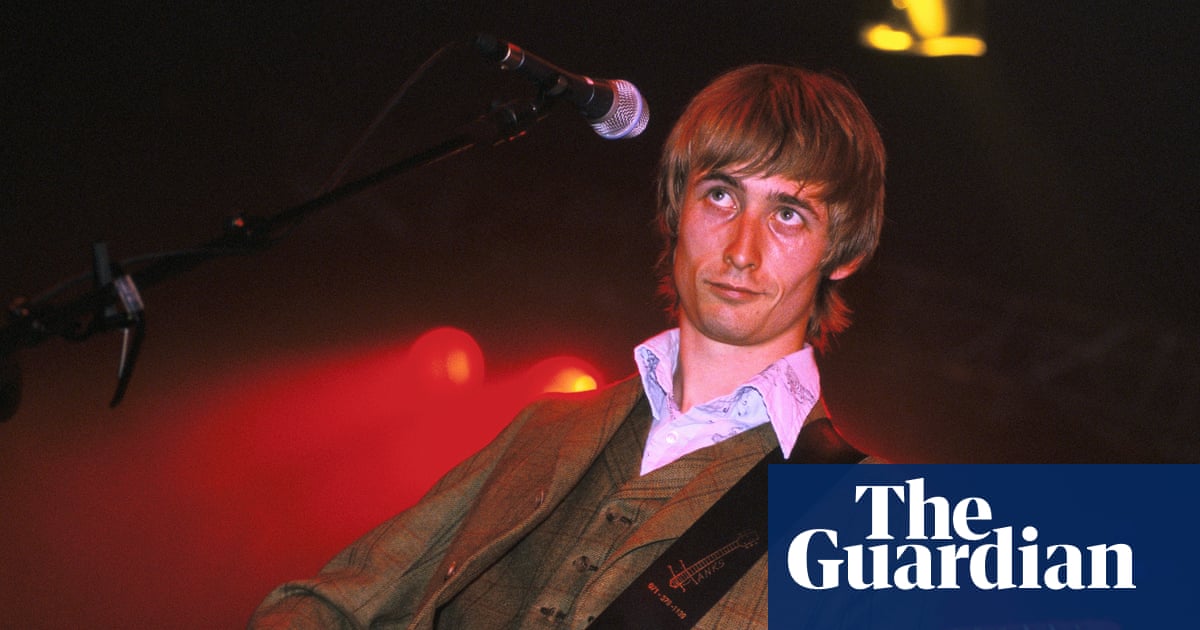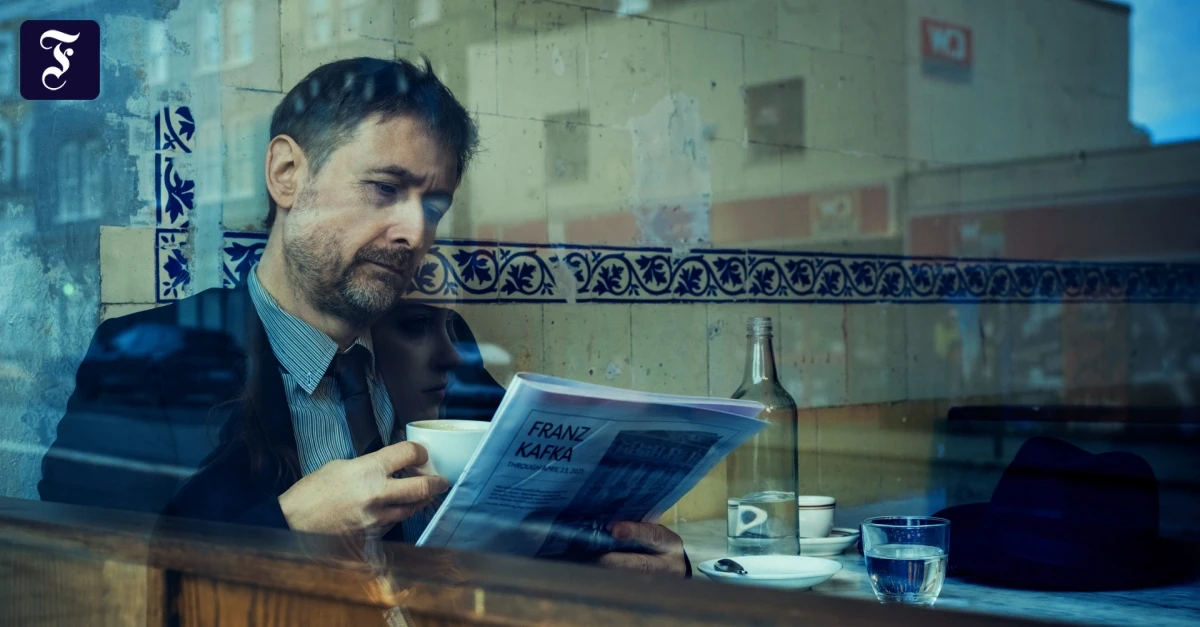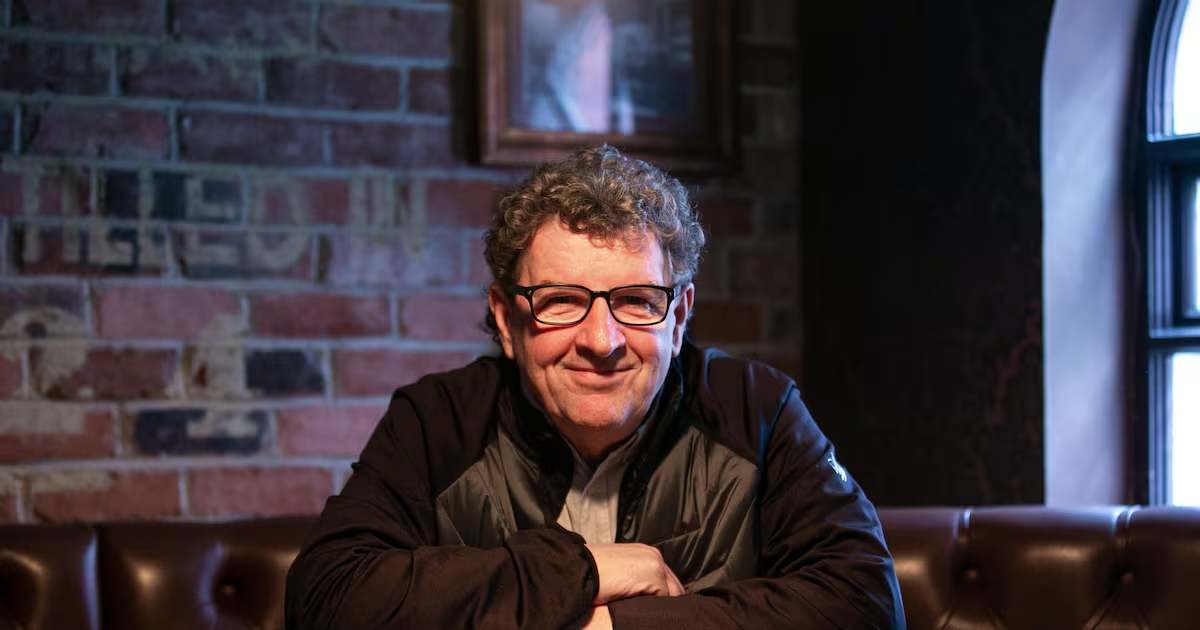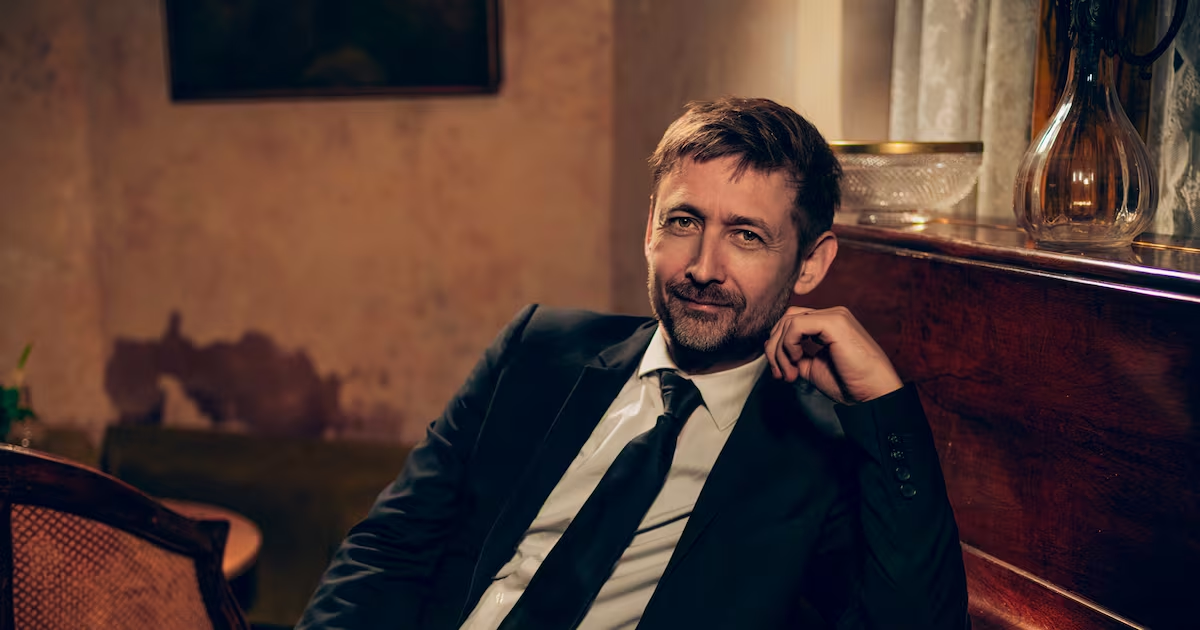
“This is how you do it,” Neil Hannon says. Standing in his driveway in Co Kildare, Hannon leans over a stile to scratch a black-and-white kunekune pig behind the ears, a good scratch in just the place he likes. A 1990s Irish pop phenomenon famous for chart-topping hits that include National Express and Becoming More Like Alfie, Hannon has at 55 transformed himself into a kind of accidental rural gentleman – a pig whisperer if you will.It’s quite the sight. A cherry tree in full blossom is scattering pale pink petals as pigs snuffle the unmanicured earth in front of the house, a Georgian residence that Hannon bought in the mid-2010s. There are bustling sheep, chilled-out donkeys and good-living chickens, all members of the My Lovely Horse Rescue charity located on the grounds, cofounded by Hannon’s wife, the singer-songwriter and activist Cathy Davey.There’s something to draw the eye everywhere you look: a polytunnel at the rear of the house, a slab of wood repurposed as a footbridge, ivy creeping up the walls, a wreath adding pep to the front door, new bay windows gleaming.It’s a vision of pretty practicality. The house and its grounds are cluttered and elegant and purposeful, very much the relaxed idyll of the two people who have made it their own, along with their pets and Davey’s 150-odd rescue animals. To borrow a line from Wonka, the Timothée Chalamet-starring movie that Hannon composed the songs for in 2023, it’s a world of pure imagination.Hannon is happy to be home. He makes tea in the kitchen while ruminating about the chaos of recent years, when builders came in to renovate the property and didn’t leave.“I’ve been out of this house, in various small rented places, while we renovated,” he says. Hannon and Davey had thought the renovation would take six months. It ultimately took about 15.What happened? “Just the usual crap. If you watch Grand Designs, you know when the glass doesn’t get delivered?” he says with a sigh. The couple had longed for the renovation; he shows me the new decor with delight: the Boråstapeter patterned wallpaper, the range stove, the slim double-glazing. [ Paul Simon in Dublin review: An emotionally flooring, intimate performanceOpens in new window ]“It was a very draughty old Georgian house and impossible to heat. It’s now got the highest energy rating. But at what cost?” He lets out a cackle both dry and despairing. “It put me in a bad place. I started writing the album when we got back in.”Witticisms and droll wordsmithery are usually stock-in-trade for Hannon. The Divine Comedy, of which he is the founder and mainstay, made their name with breezy, knowing ditties such as Generation Sex and Something for the Weekend. But Hannon’s most recent album, Rainy Sunday Afternoon, his 13th, surprises with its vulnerability. Thoughts about loss and mortality loom large, undisguised by cheery major chords or effervescent trumpet parps.Hannon’s father, Brian, a former bishop of Clogher, died in 2022, 15 years after he was diagnosed with Alzheimer’s disease. For Hannon and his family, their loss happened over years, and it was painful. “The person is taken away from the people who love them very gradually,” he says. “It’s a slow demise. That was hard. When he died there was no great mourning, because I feel I’ve been doing it for about a decade.”His father is captured on The Last Time I Saw the Old Man, a song as stark as it sounds, with lyrics about his hands “so fragile and grey / I was worried I might break them”.Hannon struggles with the idea of being so vulnerable on record. “I’ve a dread of constant sincerity,” he says, looking suddenly even more slight than usual. “That sets my teeth on edge. I hate people saying that it’s a very vulnerable record.”Is that because it makes him feel vulnerable generally? He laughs. “Probably.”Hannon isn’t a fan of going to therapy – “I guess I have a 1970s brain. It seems a bit Californian” – but songwriting allows him to gauge his inner temperature. He doesn’t want to pretend so much any more or cavort for the sake of a youth pop audience. “I have done ridiculously jolly songs in my life,” he says, “but I don’t think they’re a good representation of my personality. As I get older I’m less willing to put on a happy face.”Neil Hannon:'While we were doing Wonka I was dreaming of doing another Divine Comedy record.' Photograph: Kevin Westenberg For many years Hannon would, as he puts it, do anything for fame. “I grew up with pop stars, and I loved them, and I wanted to be one,” he says. A self-confessed dweeb – “‘nerd’ was wrong, because that implies I was academically advanced” – he had grand ambitions for himself and his music. Escapism was part of his dream: he lived in Derry until 1982, then in Enniskillen.“I was insulated from the Troubles in many ways growing up,” he says. “My family were the rector’s family. Usually a nice house, even if they didn’t pay my dad bugger all. It was a pleasant upbringing. But the news was always horrific. The effect it had on me was to convince me I wanted to leave.”After attending Portora Royal School in Enniskillen, where Oscar Wilde and Samuel Beckett also studied – “It’s a good roll-call” – Hannon rerouted to London and Setanta Records, where, as a young man in sharp suits, hammering out chords on the piano, his wildest dreams started coming true.He appeared on Top of the Pops, the BBC’s weekly music show. He partied at Food Records, a label that championed Blur, among other bands. He drank fine wine with Neil Tennant of the Pet Shop Boys. He posed for Cosmopolitan in a glossy spread, it appears, that would make a vicar blush.Neil Hannon circa 2001. Photograph: Tim Roney/Getty Images Was he nude? “It was me draped,” he says. “We were re-creating the cover of Lovesexy, by Prince” – which features the singer lying naked against an orchid – “to the point that I shaved my legs. The only problem was I had forgotten to tell my mum, and somebody at the pony club brought the magazine up to her. They said: ‘Look, it’s your son.’ She was horrified.”It’s a long time since those halcyon days, and Hannon rarely hangs out with big names from that era now. “Tim Wheeler,” he says, volunteering the name of the Ash frontman. “Whenever we bump into each other it’s genuinely pleasant. He’s the nicest man in rock. I’m a grumpy old bastard now, but he seems to still have that childlike enthusiasm. Good on him.”As Hannon began to retreat from mainstream pop fame, his love affair with music deepened.Exhibitionism became a thing of the past. A purer kind of engagement with songwriting emerged – over the decades his career has laid bare beautiful delights: an Ivor Novello-nominated album with his friend Thomas Walsh, for The Duckworth Lewis Method; soundtrack work on Wonka and the Irish film Lola, for which he won an Ifta; and album after album of meticulous songwriting.At a recent gig at the National Concert Hall in Dublin, part of his ongoing tour, he cherry-picked with aplomb from different parts of his career. “There’s now quite a long list of songs that seem undroppable,” he says. Highlights included Norman and Norma, At the Indie Disco, and A Lady of a Certain Age – perhaps the finest song he has written, with a wry, observational tone worthy of Noël Coward: “You chased the sun around the Cote d’Azur / Until the light of youth became obscured / And left you on your own and in the shade / An English lady of a certain age.”“I don’t think I’d have been able to write that had I not met people like that – posh friends of my mum’s,” he says. “There was a friend of hers, a lovely lady, who arrived every couple of years in a Triumph Spitfire, with a headscarf and massive glasses. That kind of person.”As a youth Hannon was a committed socialist. Not much has changed since other than his capacity to withstand the news cycle. “I always enjoyed politics growing up,” he says. “But it’s not enjoyable any more. I can’t go a couple of hours without checking in on things. It’s a freak show.” One new song, Mar-a-Lago by the Sea, reflects on “sycophants and narcs / cannibals and sharks”. “Donald Trump is a c**t,” he says. “My knowledge of politics is more nuanced than that might suggest. But that sums it up.”Hannon tries to live his life by sound principles. Davey is vegan; he’s doing his best to travel in that direction. “I’ve successfully transitioned into plant-based butter, and I have Oatly on my cereal, but when it comes to tea I just can’t drink it without real milk,” he says with a grimace.Neil Hannon's talent took him to pop's inner circle. Photograph: Kevin Westenberg. Propped up in the kitchen is a tile showing a couple who bear a resemblance to Hannon and Davey. It was a present, he says. The pair married in 2023, going about the rites in a relaxed fashion that felt right to them. “There was no proposal,” he says. “It was something we’d meant to do for a long time but had never got around to. We did it on the sly, on the cheap. After the registry office we went to Pizza Express with the relis [relatives]. We have a slightly weird life. We’re both so busy in completely different directions, but we enjoy it.”Maybe every couple create their own love language. Hannon and Davey regularly sing to each other, in a daft way, at home. When Hannon is in the shower in the morning and the water is a little hot, he emits an “oh yeah” that’s exactly the yelp Prince makes at the start of his song Sign o’ the Times. “And now everyone can imagine me in the shower,” he says. Dogs are a huge part of their lives: four furry, burly handlers are present for this interview: Rufus (nosing beneath my arm), Poppy, Ailsa and Daisy – “I’m afraid she won’t get up. She’s the oldest of the crew.” When Molly, their favourite dog, was alive they’d make up narratives and jokes for her. “All these dogs have colourful back stories that we’ve invented for them,” he says. “It’s part of the fun.”Marriage means something different to Hannon now, perhaps, than it used to. “I think just going, ‘Did you feed the birds this morning?’ is an important part of life and to be enjoyed. It’s not expecting any sort of grand resolution to this funny old life.”Neil Hannon performs with Ian Watson, Andrew Skeet, Lucy Wilkins, Tim Weller, Simon Little and Tosh Flood in Milan, Italy. Photograph: Sergione Infuso/Corbis via Getty Images Hannon shows me into his music room, where, alongside his keyboards, guitars and jackets hanging on the walls (for soundproofing), as well as a scattering of awards, there’s a beautiful poster for The Nameless, Davey’s 2010 album.Proximity is useful when it comes to trying to persuade Davey, who has been semi-retired from music for the last while, to contribute vocals to his records – “as a rule she would rather do anything else”. Willow, Hannon’s twentysomething daughter from his marriage to Orla Hannon, is also a musician. He asked her on to the record, to contribute backing vocals on a song, Invisible Thread, that poignantly examines their bond.Hannon never told her that directly. “We’re not the sort of family that talks about those things,” he says. “When I was dropping her home she said, ‘Thanks for having me on your album.’” I said, ‘Thank you for doing it. I’m not paying you.’”He laughs. “We’re alike. I can even pinpoint periods when I had the exact same haircut.” Her band Burglar are very cool, I say. “I know. Much cooler than me. They sound like the stuff I wanted to sound like when I started out, but I didn’t know how. They’re so much better than I would have been.”You sense a regret that those days are behind Hannon now, even if he is still grateful for having come up in the industry at a time when musicians were paid their dues.“We’ve had sticky periods, [but] we’ve done well over the years. A part of it is just cumulative. If you make enough songs and some get used for disparate reasons, it gradually mounts up until the [royalty] cheque is healthy. Which is wonderful. I might have to downsize if I stopped doing this, but I could probably survive.”Not that he plans to go away any time soon. “While we were doing Wonka I was dreaming of doing another Divine Comedy record. Also, I don’t know how to do anything else.”The Divine Comedy are at Leisureland, Galway, on Friday, June 5th, as part of the city’s folk festival; and appearing with David Gray at the Marquee, Cork, on Saturday, June 13th, and Sunday, June 14th; SSE Arena, Belfast, on Tuesday, June 16th, and Fairview Park, Dublin, on Wednesday, June 17th
The Divine Comedy’s Neil Hannon on fame and farming: ‘I’m a grumpy old bastard now’
The Divine Comedy songwriter on his journey from pop star to accidental country gent and why he’s ‘less willing to put on a happy face’
2,196 words~10 min read