(Image credit: Shutterstock)
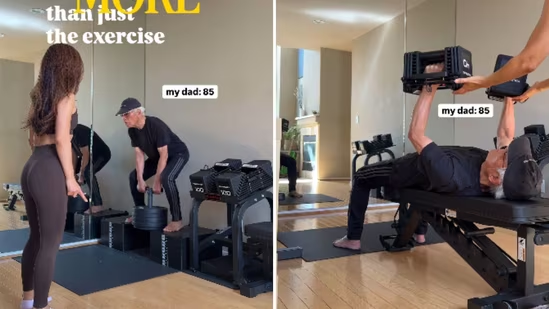
I've been training my dad for about six years, and amongst the grumbles I get for "going too hard on him," I have watched his balance, strength and mobility transform in that time.There are some essential strength exercises I add to his routine (in various forms) regularly, but we often work on his mobility twice a week. We try to stay as low on equipment as we can, but for the exercise I'm sharing with you, you don't need anything except a resistance band, but even that's optional.As you get better at this exercise, you can adapt the load, reps and sets to suit your needs. If you’re ready to get started, check out one of my go-to strengthening mobility exercises below, plus the many benefits for your body.How to do the good morning squat comboThe combo move is a prisoner squat combined with a good morning. A prisoner squat is simply a squat performed with your hands behind your head. A good morning is a hip hinge exercise that involves leaning forward and pushing your butt back.You can move from the good morning to the bottom of the squat, then stand, or perform the squat first, then move to the bottom of the good morning and stand.Here's how:Stand tall with your feet slightly wider than shoulder-width apartPlace your hands behind your head and draw your elbows backEngage your core muscles by bracing your stomachSit your hips back and lower into a squat. Your depth will depend on your overall mobility, but aim for your thighs to sit parallel to the groundAt the bottom of the squat, tilt your chest forward, lift your butt and straighten your legs slightly, mimicking the bottom of a good morning; you should feel a stretch down the backs of your legsLift your chest to stand, maintaining a soft bend in your knees. Squeeze your glutes at the topTry this in reverse by:Get instant access to breaking news, the hottest reviews, great deals and helpful tips.Softly bending your knees and pushing your butt back as you lower your chest toward the ground. Stop when your chest is parallel to the groundSit your butt down and lift your chest, keeping your hands behind your head and elbows drawn backRise to stand and squeeze your glutes at the top.Benefits of this exercisePrisoner squats engage your upper body, test thoracic mobility (using the arm position) and improve range of motion in your hips, knees and ankles as you try to remain upright while you squat. If you know you lean forward during squats, this signals a lack of mobility, and so prisoner squats are essential to practice.The good morning exercise targets and strengthens the muscles along the posterior chain, including your back, glutes and hamstrings, while the squat primarily targets your hips, glutes, quads, hamstrings and core for stability.The most challenging part of this exercise is the transition from either the bottom of the squat to the good morning or vice versa. This will really help you work out how mobile you are in your spine, hips, knees and ankles.This will really help you work out how mobile you are in your spine, hips, knees and ankles. If you experience limited mobility in your hips, knees, ankles, or spine, go easy and take this exercise slowly. You could progress by adding weight to your upper back, a band above your knees, or slowing the exercise down more.You could regress this exercise by adapting the depth of your exercises, reducing sets, or trying fewer reps. You don't need to use load or bands if you don't want to. If you experience pain, or you're unsure if this exercise is for you due to pregnancy, a health condition, illness, or injury, I recommend seeking medical advice first.Common mistakes