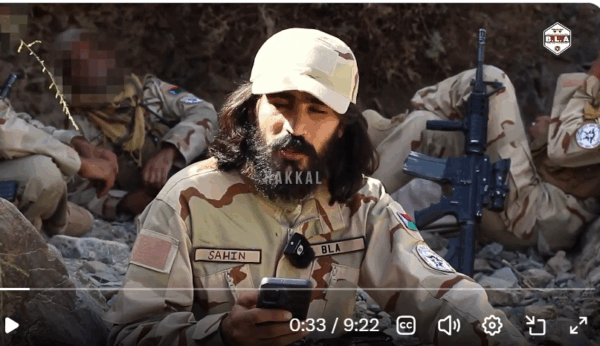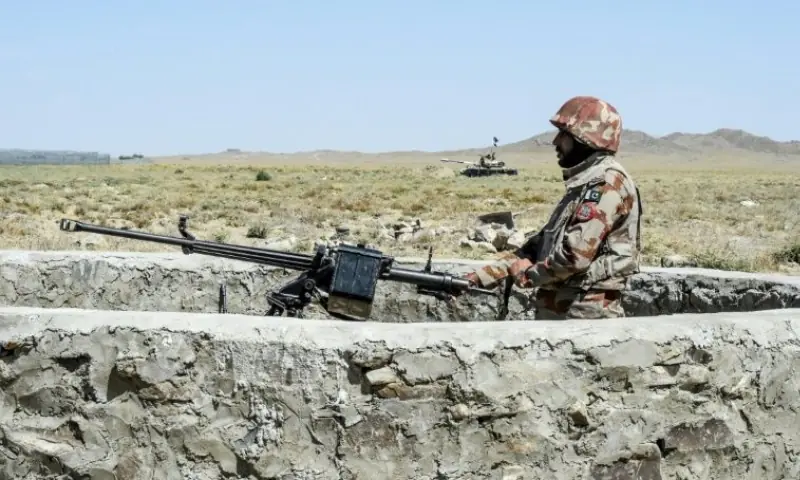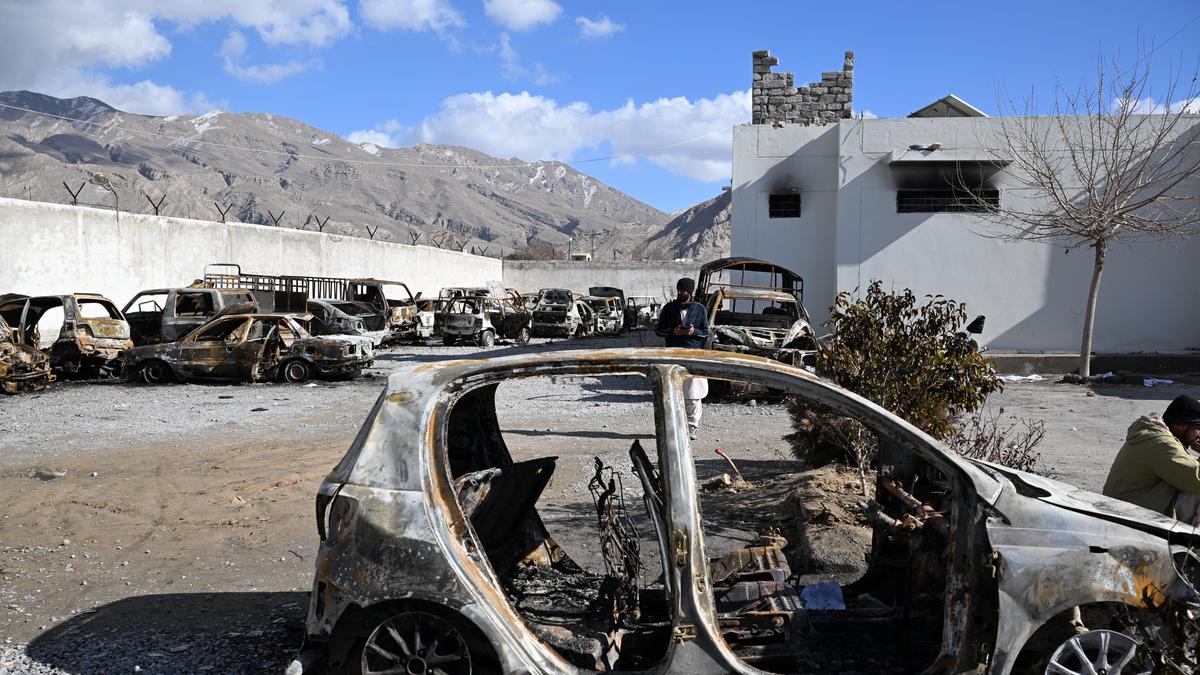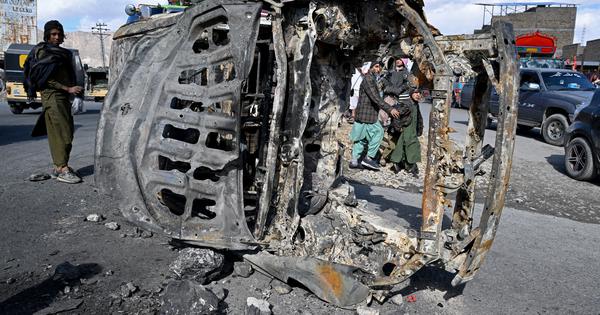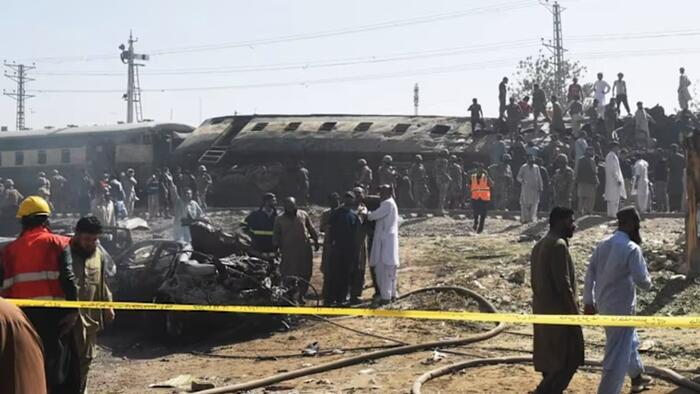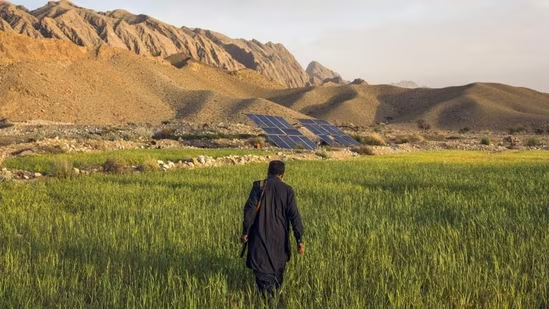
This article is authored by Mohammed Shoaib Raza, research scholar, School of International Studies, Jawaharlal Nehru University, New Delhi. Recently, a vehicle-borne suicide attack targeted a military shuttle train in the high-security Quetta Cantonment area. The attack resulted in about 30 casualties and injured more than 70 others. Attributed to the insurgent group Baloch Liberation Army (BLA), the strike bypassed Pakistan’s newly-engineered, clandestine military transit protocols. This sophisticated operation followed close on the heels of Operation Herof 2.0 in the Balochistan province earlier this year; launched by BLA, it was a massive, synchronised multi-district offensive that briefly cut off vital national highways and seized administrative centres. It is important to note that in the current phase, the Baloch conflict is not a rehash of the random, seasonal battles that were commonplace in a maturing low-intensity insurgency. Instead, it indicates a qualitative and structural change that makes the evolution of the situation improbable on the part of the state, considering such episodes as another expected peak in the cycle of uprisings. This framework no longer holds true. The insurgency has transformed from a device for elites to bargain about marginal issues to an institutionalised, operationally capable, and ideologically-loaded movement.One potential factor behind this structural change is demographic and sociological displacement at the heart of the Baloch movement. Previously, the Pakistani state managed the conflict by exploiting the sardari system. This was done by co-opting or neutralising aging tribal patriarchs like the Marris or Bugtis. The elite-negotiated leverage model is evidently dead in the present context. The current Baloch leadership has moved on to a highly educated and urbanised middle-class vanguard developed in the universities. As a result of de-tribalization, the ideological limits of the conflict have been modified in a systematic manner. This change can be seen in the backgrounds of many key operatives. The operational chief of the brigade, Hammal Rehan Baloch, is said to be well educated and to know English, Urdu, and Persian. Shari Baloch, who executed a suicide bombing at Karachi University, Pakistan, in 2022, was a master’s degree holder and was in the process of completing an MPhil. Sumaiya Qalandarani, another woman associated with the organisation, was previously a journalist, and other recruits have been from professional fields like law and media.The modus operandi of this new insurgent vanguard is reflected in the movement's transition from localized and reactive guerrilla operations to a highly regularised form of economic warfare. Now, the insurgent strategy has evolved from sporadic pipeline sabotages into highly synchronised, multi-district operations designed to isolate the province and choke state infrastructure. The tactical shift was amply displayed in the multi-axis Operation Herof 2.0, which attacked key installations, security check posts, and transit points across twelve districts simultaneously. The BLA exhibited a level of command-and-control ability that no tribal rebel of similar decentralisation ever exhibited before, with strikes coordinated across a span from Quetta to the coast. This form of warfare aims at the economic vulnerability of the State, particularly the China-Pakistan Economic Corridor (CPEC) project. Insurgent groups have attacked Chinese nationals, engineers, and major energy assets by portraying the infrastructure push as a form of dual colonisation by Islamabad and Beijing.Balochistan (Bloomberg)This tactical sophistication is further enhanced through a strong, unprecedented synergy between armed insurgent narratives and organic mass civil resistance. The Baloch Yakjehti Committee (BYC) represents a new chapter in the global articulation of Baloch grievances. Rather than a fragmented front of smaller groups with similar demands, the BYC has successfully opened up the Baloch grievance. Now, it is no longer a remote mountain cry. The BYC has brought the Baloch grievance into the urban mainstream. The political weight of this movement is visible in the aggressive attempts of the state to stop it. In recent years, the Pakistani state has taken deliberate steps to criminalize peaceful civil rights advocacy, which ensures that major civil society leaders, including Mahrang Baloch and many core BYC activists, are incarcerated in jail and facing highly contested closed trials on counter-terrorism and sedition charges. According to human rights organisations, these arrests have taken place with serious due process violations. There have been repeated denials of bail, a total lack of transparency on formal charges. Similarly, detainees like Mahrang, who suffers from severe spine issues, have been denied critical medical care.The combination of armed irregular warfare and high-visibility civil defiance has disrupted the state's governance and security apparatus. Islamabad is not engaging in any political reconciliation but rather instituting what philosopher Giorgio Agamben calls a ‘state of exception’, which normalises conditions that create a legal and physical vacuum in which constitutional guarantees are wholly suspended. This blunt approach uses measures that constantly inflame the people of the region. The authorities are now going for collective punishments against the families of activists through crackdowns; a prime example, in this regard, is the unwarranted abduction of Daad Shah, brother of BYC human rights defender Fozia Baloch, by plainclothes security forces in Karachi in April 2026. Along with this, tensions have flared up after recent custodial deaths. In another incident that took place in late May 2026, the BYC accused security personnel of killing young Baloch men who were detained at a frontier checkpoint without any charges. By defining the Balochistan issue as a treason charge and terming the armed insurgency as a law-and-order issue, the state has created a hurdle in a political settlement, at least for the medium term.Thus, Pakistan has tried to contain the region primarily through the use of kinetic containment, financial patronage, mass detentions, and internet shutdowns. The State's collapse of authority is clear from the complete failure of its own security apparatus to protect its most vital strategic assets. The Pakistani government is, therefore, increasingly trapped in a strategic blind spot. The government's inability to act as required is also being worsened by Pakistan's increasing financial constraints and multi-front border tension with Afghanistan and Iran, which severely drains the national exchequer's capability to support an open-ended domestic war. Since Islamabad continues to treat Balochistan primarily as a frontier to be controlled rather than constitutional grievances to be addressed, the state is bound to fail in this regard.(The views expressed are personal)This article is authored by Mohammed Shoaib Raza, research scholar, School of International Studies, Jawaharlal Nehru University, New Delhi.
Why Islamabad is losing the battle for Balochistan
This article is authored by Mohammed Shoaib Raza, research scholar, School of International Studies, Jawaharlal Nehru University, New Delhi.
1,044 words~5 min read