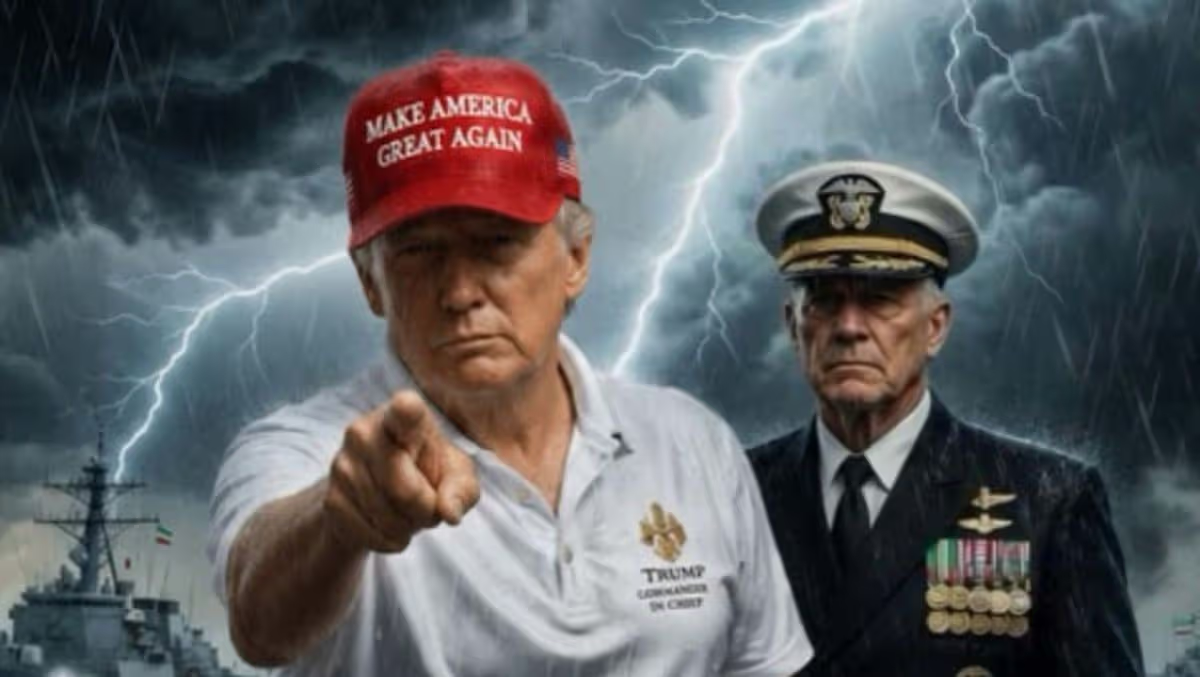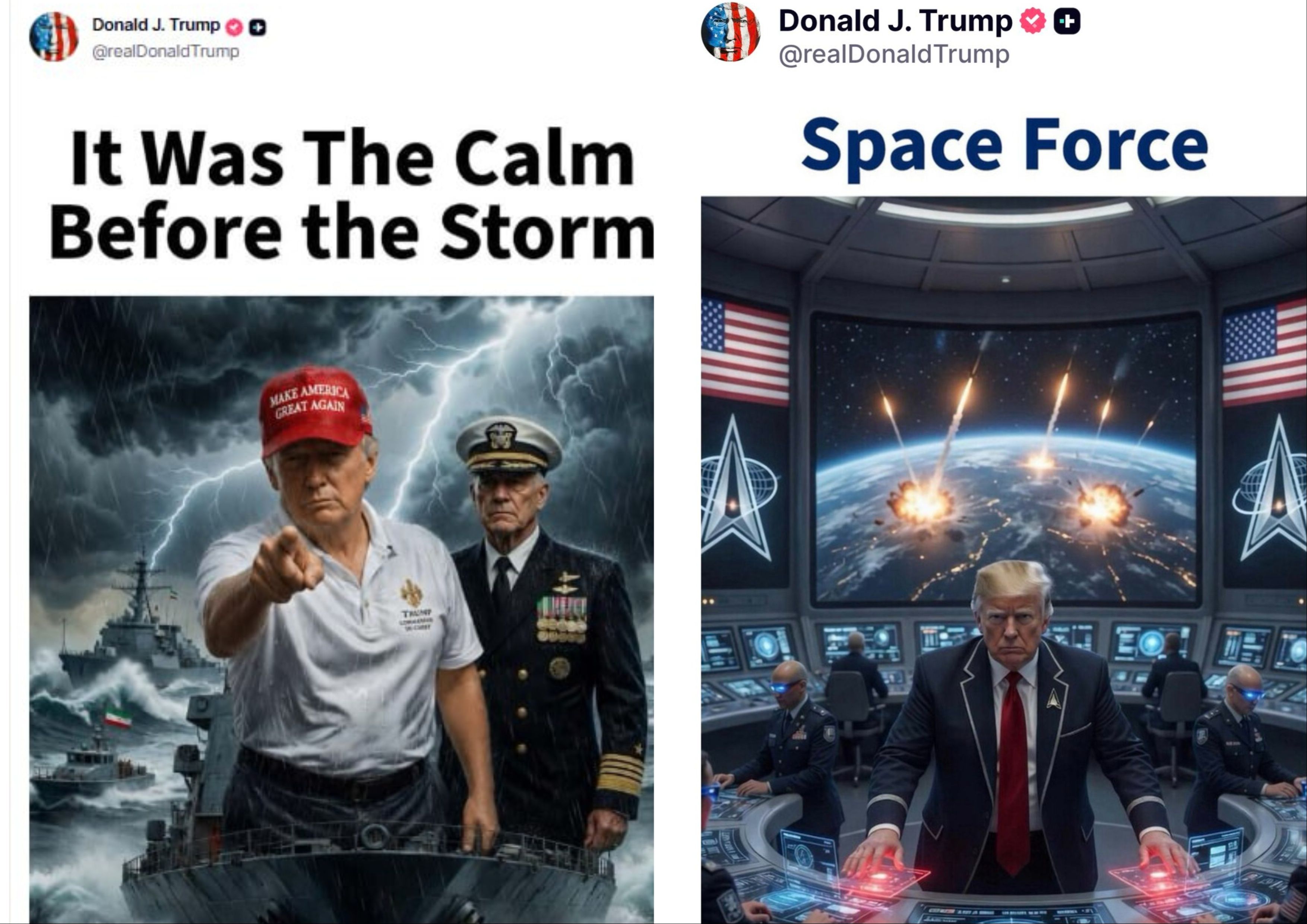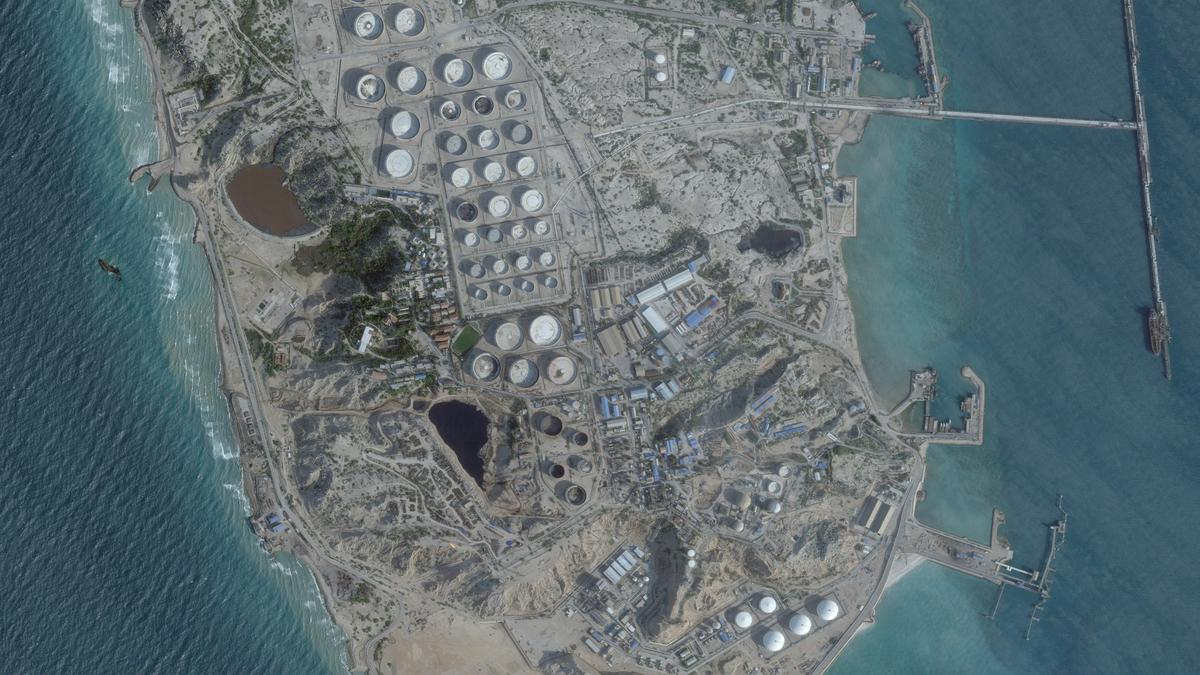
Iran war news LIVE: US President Donald Trump's post comes as geopolitics in West Asia reach a critical junctureIran war news LIVE: US President Donald Trump shared a highly stylised, artificial intelligence-generated image of himself on social media, showing a digitally fabricated portrait depicting him wearing an elaborate military uniform while pointing directly ahead. Adding to the confrontational tone of the post was a cryptic caption that read, 'YOU'RE GETTING DISCOMBOBULATED.'In the background of the dramatic graphic, multiple fighter jets streak across the sky above his head, while several US-flagged warships cut through rough seas. The post shared on Saturday (local time) comes as geopolitics in West Asia reach a critical juncture, and no long-term peace between Iran and the United States seems to be in sight. US' Hormuz prohibitionThe US affirmed that deals with Iran to safely sail through the Strait of Hormuz — even those which don’t involve paying a toll — aren’t allowed, as the conflict between the two nations grinds on. “Regardless of whether a payment is made, US persons are prohibited from receiving services from the Government of Iran, including services related to a guarantee of safe passage,” the US Treasury said in an updated statement dated May 29. Shipping through Hormuz — the vital waterway that connects energy infrastructure inside the Persian Gulf to the rest of the world — has slowed to a trickle since the Iran war began on Feb. 28, sending the price of oil soaring. The White House has sent conflicting messages on the prospects for a deal with Iran, a pattern that continued on Friday. Iran created a new entity called the Persian Gulf Strait Authority to “collect tolls and extort vessels transiting the Strait of Hormuz,” Treasury said in the statement. The US Office of Foreign Assets Control has designated the PGSA “pursuant to our counterterrorism authorities,” and warned that having dealings with it carries sanctions risks. Pete Hegseth's warning to IranAddressing a defence summit in Singapore on Saturday, US Secretary of War Pete Hegseth underscored Washington's operational preparedness, asserting that the US was "more than capable" of restarting the war if required. He further affirmed that "our stockpiles are more than suited for that". To provide immediate operational backing for Hegseth's statements, the US Central Command (CENTCOM) reinforced the message through a public post on X. The command confirmed that American military assets "remain present and vigilant across the region". These hardline warnings emerged amid conflicting signals about a potential diplomatic breakthrough. Mixed signals about peace dealWhile the White House has signalled that President Trump is currently assessing a tentative framework, Iranian authorities have firmly countered that the ongoing discussions have not yet produced a final deal. Even though a fragile ceasefire negotiated in April has generally been maintained, underlying hostilities continue to flare across the region. Highlighting this volatility, Iran's state-run IRNA news agency reported that domestic air defence networks successfully intercepted an unmanned aerial vehicle on Saturday. The agency characterised the asset as one "belonging to the US-Zionist aggressor enemy". The Israel-Lebanon situationSimultaneously, parallel diplomatic tracks are being aggressively pursued with negotiators expanding their focus to the overlapping conflict in Lebanon. Tehran has rigidly insisted that ceasefire in Lebanon must be a precondition to any overarching settlement with Washington. This diplomatic manoeuvring is unfolding alongside active ground developments, as Israeli forces continue their territorial advance into southern Lebanon. This push persisted even as military delegations representing both Israel and Lebanon convened for direct discussions at the Pentagon on Friday. In defining the path forward, US President Trump has explicitly outlined several non-negotiable benchmarks for a binding accord. Trump's non-negotiables and Iran's denialThese include ironclad guarantees that Iran will never acquire nuclear weapons, alongside the immediate and full reopening of the economically vital Strait of Hormuz. Tehran, conversely, has flatly dismissed what it perceives as an American attempt to unilaterally impose dictates. In a critique of the diplomatic tone, Foreign Ministry spokesman Esmaeil Baqaei stated that the Islamic Republic "said goodbye to the language of 'must' 47 years ago". While openly acknowledging that bilateral communications continue between the adversarial nations, Baqaei explicitly stated that "no final agreement has been reached". Compounding this diplomatic gridlock, the Tasnim news agency reported that the highly restrictive US maritime blockade remains fully operational at sea. The agency documented that vessels attempting to navigate the strategic strait are systematically "receiving warnings from CENTCOM to stop and not cross the blockade line". ...Read MoreIn the background of the dramatic graphic, multiple fighter jets streak across the sky above his head, while several US-flagged warships cut through rough seas. The post shared on Saturday (local time) comes as geopolitics in West Asia reach a critical juncture, and no long-term peace between Iran and the United States seems to be in sight. US' Hormuz prohibitionThe US affirmed that deals with Iran to safely sail through the Strait of Hormuz — even those which don’t involve paying a toll — aren’t allowed, as the conflict between the two nations grinds on. “Regardless of whether a payment is made, US persons are prohibited from receiving services from the Government of Iran, including services related to a guarantee of safe passage,” the US Treasury said in an updated statement dated May 29. Shipping through Hormuz — the vital waterway that connects energy infrastructure inside the Persian Gulf to the rest of the world — has slowed to a trickle since the Iran war began on Feb. 28, sending the price of oil soaring. The White House has sent conflicting messages on the prospects for a deal with Iran, a pattern that continued on Friday. Iran created a new entity called the Persian Gulf Strait Authority to “collect tolls and extort vessels transiting the Strait of Hormuz,” Treasury said in the statement. The US Office of Foreign Assets Control has designated the PGSA “pursuant to our counterterrorism authorities,” and warned that having dealings with it carries sanctions risks. Pete Hegseth's warning to IranAddressing a defence summit in Singapore on Saturday, US Secretary of War Pete Hegseth underscored Washington's operational preparedness, asserting that the US was "more than capable" of restarting the war if required. He further affirmed that "our stockpiles are more than suited for that". To provide immediate operational backing for Hegseth's statements, the US Central Command (CENTCOM) reinforced the message through a public post on X. The command confirmed that American military assets "remain present and vigilant across the region". These hardline warnings emerged amid conflicting signals about a potential diplomatic breakthrough. Mixed signals about peace dealWhile the White House has signalled that President Trump is currently assessing a tentative framework, Iranian authorities have firmly countered that the ongoing discussions have not yet produced a final deal. Even though a fragile ceasefire negotiated in April has generally been maintained, underlying hostilities continue to flare across the region. Highlighting this volatility, Iran's state-run IRNA news agency reported that domestic air defence networks successfully intercepted an unmanned aerial vehicle on Saturday. The agency characterised the asset as one "belonging to the US-Zionist aggressor enemy". The Israel-Lebanon situationSimultaneously, parallel diplomatic tracks are being aggressively pursued with negotiators expanding their focus to the overlapping conflict in Lebanon. Tehran has rigidly insisted that ceasefire in Lebanon must be a precondition to any overarching settlement with Washington. This diplomatic manoeuvring is unfolding alongside active ground developments, as Israeli forces continue their territorial advance into southern Lebanon. This push persisted even as military delegations representing both Israel and Lebanon convened for direct discussions at the Pentagon on Friday. In defining the path forward, US President Trump has explicitly outlined several non-negotiable benchmarks for a binding accord. Trump's non-negotiables and Iran's denialThese include ironclad guarantees that Iran will never acquire nuclear weapons, alongside the immediate and full reopening of the economically vital Strait of Hormuz. Tehran, conversely, has flatly dismissed what it perceives as an American attempt to unilaterally impose dictates. In a critique of the diplomatic tone, Foreign Ministry spokesman Esmaeil Baqaei stated that the Islamic Republic "said goodbye to the language of 'must' 47 years ago". While openly acknowledging that bilateral communications continue between the adversarial nations, Baqaei explicitly stated that "no final agreement has been reached". Compounding this diplomatic gridlock, the Tasnim news agency reported that the highly restrictive US maritime blockade remains fully operational at sea. The agency documented that vessels attempting to navigate the strategic strait are systematically "receiving warnings from CENTCOM to stop and not cross the blockade line". Follow all the updates here:May 31, 2026 6:51:23 AM ISTThe US affirmed that deals with Iran to safely sail through the Strait of Hormuz — even those which don’t involve paying a toll — aren’t allowed, as the conflict between the two nations grinds on.“Regardless of whether a payment is made, US persons are prohibited from receiving services from the Government of Iran, including services related to a guarantee of safe passage,” the US Treasury said in an updated statement dated May 29.Shipping through Hormuz — the vital waterway that connects energy infrastructure inside the Persian Gulf to the rest of the world — has slowed to a trickle since the Iran war began on Feb. 28, sending the price of oil soaring. The White House has sent conflicting messages on the prospects for a deal with Iran, a pattern that continued on Friday.Iran created a new entity called the Persian Gulf Strait Authority to “collect tolls and extort vessels transiting the Strait of Hormuz,” Treasury said in the statement. The US Office of Foreign Assets Control has designated the PGSA “pursuant to our counterterrorism authorities,” and warned that having dealings with it carries sanctions risks.
Iran war news LIVE: Trump shares cryptic post as US prohibits deals with Tehran to cross Strait of Hormuz
Iran war news LIVE: Adding to the confrontational tone of the post by US President Donald Trump, the striking visual artwork carried the explicit caption: "YOU'RE GETTING DISCOMBOBULATED." | World News
1,607 words~7 min read