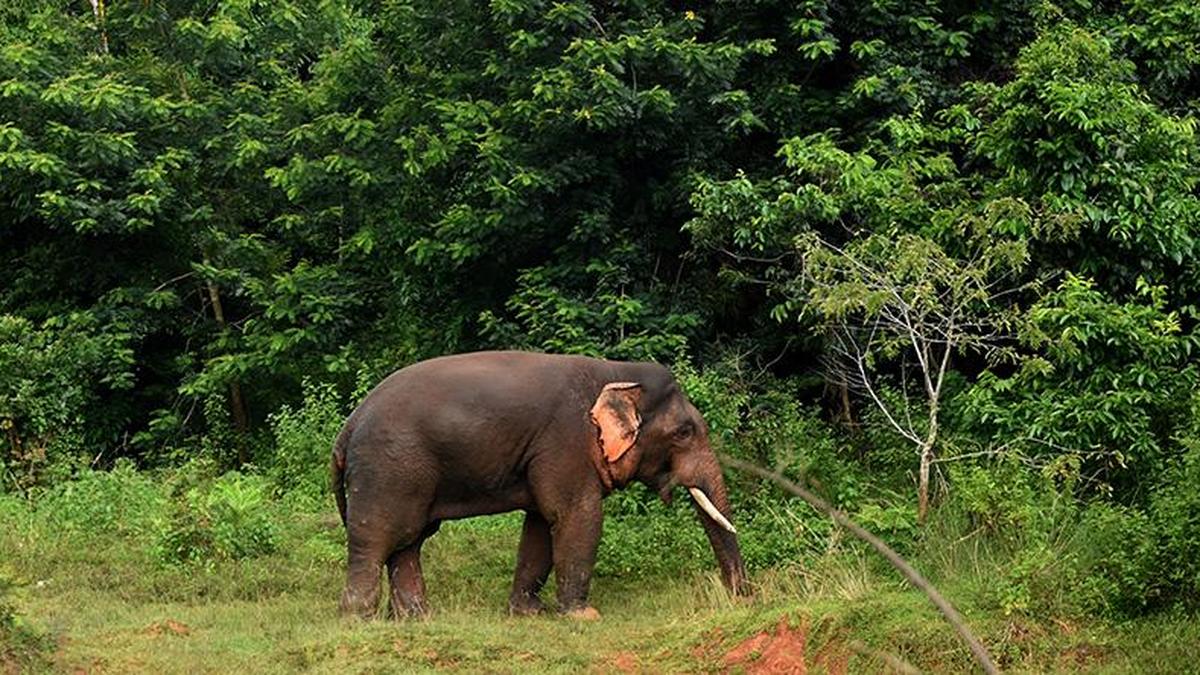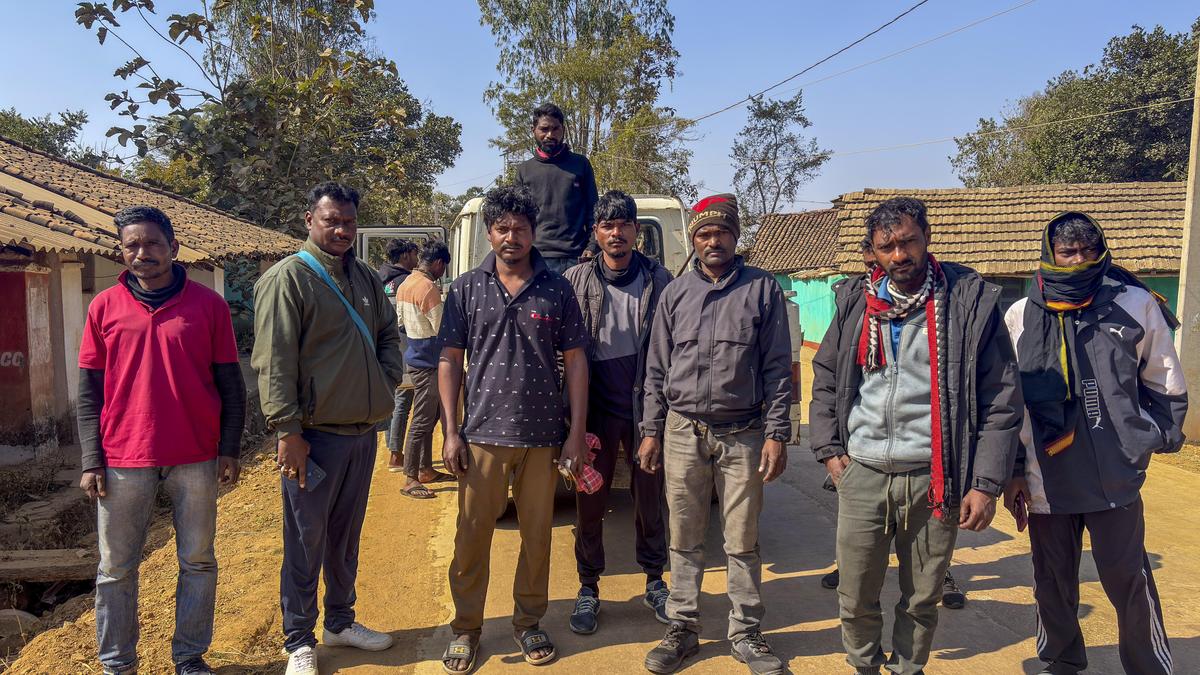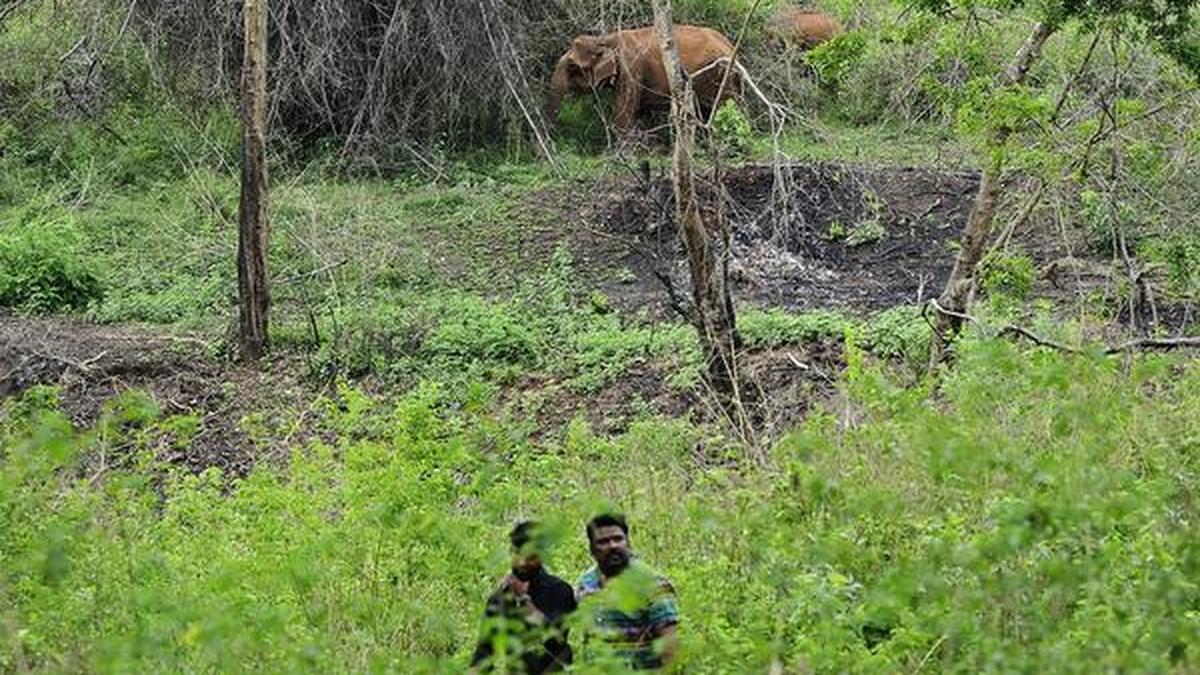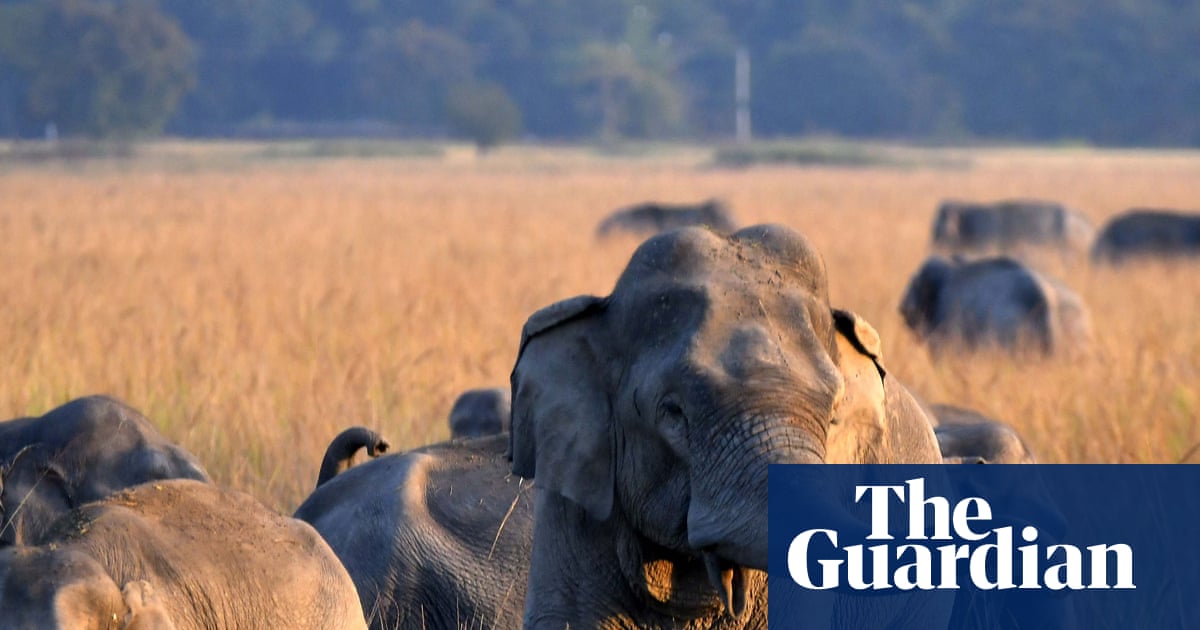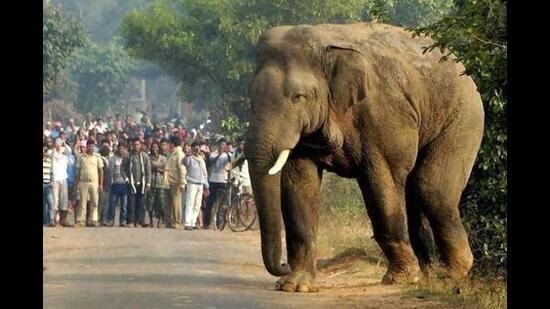
A decade ago, Jharkhand’s mascot for industrial progress was a bright red ‘flying elephant’, a symbol of a mineral-rich state ready to take flight through global investment. Today, that imagery has been replaced by a grim reality: an ‘elephant emergency’ where the state’s national heritage animals are increasingly associated with tragedy rather than triumph.An elephant herd from Dalma in Jharkhand (PTI FILE)The crisis reached a breaking point in early 2026. In just nine days, a single-tusked male elephant—believed to be in a state of ‘musth’ (heightened aggression)—killed 22 people across West Singhbhum district. The rampage, which began on New Year’s Day, targeted villages bordering Asia’s largest Sal forest, Saranda. Entire families were victims of the nighttime attacks, forcing the Jharkhand government to declare an unprecedented ‘elephant emergency’ and deploy over 100 personnel to track the animal.A forest official observing the transition argue the transition from a ‘flying’ to a ‘dying’ elephant was predictable. While the 2017 ‘Momentum Jharkhand’ summit invited global mining giants to tap into the state’s mineral-rich soil, the resulting infrastructure has strangled the animals’ traditional paths. Jharkhand’s 20 identified elephant corridors—primarily spanning the Kolhan and South Chotanagpur divisions across East Singhbhum, West Singhbhum, and Seraikela-Kharsawan districts—are increasingly ‘impaired’ by highways, mines and railway tracks.He said large-scale mining in the Saranda forest had caused plant diversity to plummet, forcing elephants out of the deep woods and into human settlements in search of food. While human fatalities are rising, elephants are also victims. Between 2018 and 2025, approximately 100 elephants died unnaturally in the state due to electrocution, train hits, and poisoning. Most recently, on May 6, 2026, a 30-yr-old male elephant was found dead in a paddy field in Chandil area of Seraikela-Kharsawan district, electrocuted by low-hanging live wires that snapped during a thunderstorm.DS Srivastava, a noted environmental expert in the state, held poor wildlife management and short-sighted infrastructure responsible for the escalating crisis.“It is entirely wrong to blame elephants for the conflict. They get angry only after they find their habitat missing due to faulty development plans. Otherwise, elephants and humans have coexisted for centuries,” Srivastava said.Srivastava explained that elephants operated on fixed, cyclical migratory routes. “An elephant moves from place to place in search of food. When they leave a habitat and return a year later, they find human encroachment in their homes and become aggressive. When forest officials interfere to control them, herd members get separated from each other. This separation severely worsens the animal’s distress,” Srivastava said.“Elephant society is female-dominated, and mothers share an incredibly close bonding with their children. In a desperate bid to reunite, they keep roaming different areas, eventually wandering into human localities where they become confused and provoked by artificial obstructions. Compounding this, humans are now collecting forest resources that elephants rely on for sustenance, causing a severe food crisis deep within the woods,” Srivastava added.In a desperate bid to curb the violence, the state is turning to high-tech solutions. By March 2026, Jharkhand began piloting AI-powered thermal cameras and automated hooter systems that detect elephant movements from 4 kilometres away, sounding sirens for villagers and sending instant SMS alerts to officials.Railways also deployed AI-enabled Intrusion Detection Systems (IDS) on critical tracks to prevent train-hit fatalities.Ravi Ranjan, principal chief conservator of forests (Wildlife) and chief wildlife warden of Jharkhand, said reports reaching headquarters suggested a highly concerning trend this year, with five elephants and over 140 human lives lost so far across different parts of the state due to intensifying human-elephant conflict.“Every life lost underscores the urgency of our mission, and we cannot allow this situation to escalate further,” he added.He talked about a three-layered strategy and technology for elephant management.“We have planned a comprehensive, three-layered strategy for elephant management in Jharkhand, built upon technical, administrative, and social pillars. Under the technical layer, we are initiating extensive habitat enrichment by arranging dedicated food and water inside the forests to deter herds from venturing into human settlements. Parallelly, we are installing an advanced, AI-based camera surveillance system to map and identify elephant movements. This dual-system will deploy long-range thermal cameras for wide-area coverage alongside short-range infrared cameras for precise close-up tracking, feeding directly into a highly effective community alert network,” he said.Officials said securing structural pathways was vital to ensuring safe passage. Apart from optimising the 20 traditional elephant corridors, the forest department is actively working to identify potential new pathways. “These upcoming corridors will be structurally designed to span at least 3 kilometres in width, organised systematically into three distinct 1-kilometre segments. Furthermore, we are strictly monitoring linear infrastructure projects, including railways, roads, and canals, to stop accidental deaths,” an official said.Officials said five new rescue centres were being established and 24 new specialised vehicles to empower the Quick Response Teams were being deployed. Trained Kumki elephants from Karnataka are also being brought to assist the state’s ground teams in safely managing rogue elephants.Ranjan shared the plan of engaging the public and developing the stewardship approach.“Technical and administrative fixes cannot succeed without the local community. Through our social layer, we are rolling out widespread awareness campaigns under Project GANESH to bridge the gap between villagers and conservationists. We are fundamentally executing a ‘Gathering and Advancing through Stewardship Approach.’ By organising specialized stewardship training programmes, we aim to transforming local residents from passive victims of conflict into active, empowered guardians who can co-manage these boundaries safely alongside our field personnel.”As the Supreme Court pushes the state to notify parts of the Saranda forest as a wildlife sanctuary to halt further mining damage, Jharkhand faces a defining choice: whether it can sustain its industrial flight without grounding its most iconic species forever.
From mascot of progress to emergency: How J’khand’s ‘flying elephant’ became a crisis
Jharkhand faces an 'elephant emergency' as mining disrupts habitats, leading to rising human-elephant conflicts and fatalities. A comprehensive management plan is underway.
940 words~4 min read