CHICAGO -- Combining two targeted therapies with standard-of-care chemotherapy extended progression-free survival (PFS) in patients with newly diagnosed B-cell lymphomas, according to data from the frontMIND trial.
In the phase III study, tafasitamab (Monjuvi) and lenalidomide (Revlimid) were added to R-CHOP (rituximab, cyclophosphamide, doxorubicin, vincristine, and prednisone) for frontline therapy in patients with untreated high-risk diffuse large B-cell lymphoma (DLBCL) and high-grade B-cell lymphoma (HGBL).
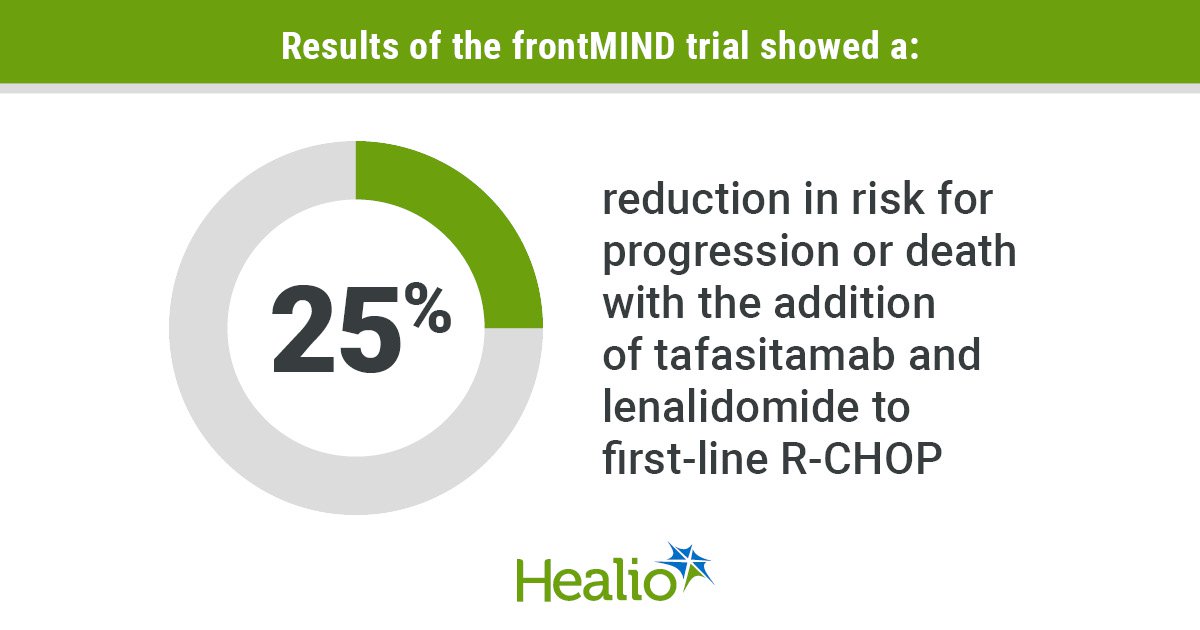
At a median follow-up of 35.2 months, treatment with the combination regimen reduced the risk of progression by 25%, compared with R-CHOP alone, for a median PFS that was not reached (HR 0.75, 95% CI 0.59-0.96, P=0.0194), according to Georg Lenz, MD, PhD, of the University Hospital Münster in Münster, Germany.
The 2-year PFS was 71.1% with the combination versus 62.9% with R-CHOP, while the 3-year PFS rates were 67.3% and 60.7%, respectively, he reported at a press briefing at the American Society of Clinical Oncology (ASCO) annual meeting.
PFS benefit (primary endpoint) was seen in both activated B-cell-like-type and germinal center B cell-like-type DLBCL, according to Lenz, who noted that "we believe the combination of tafasitamab and lenalidomide and CHOP is a potential new standard or frontline therapy" in high-risk DLBCL or high-grade HGBL.