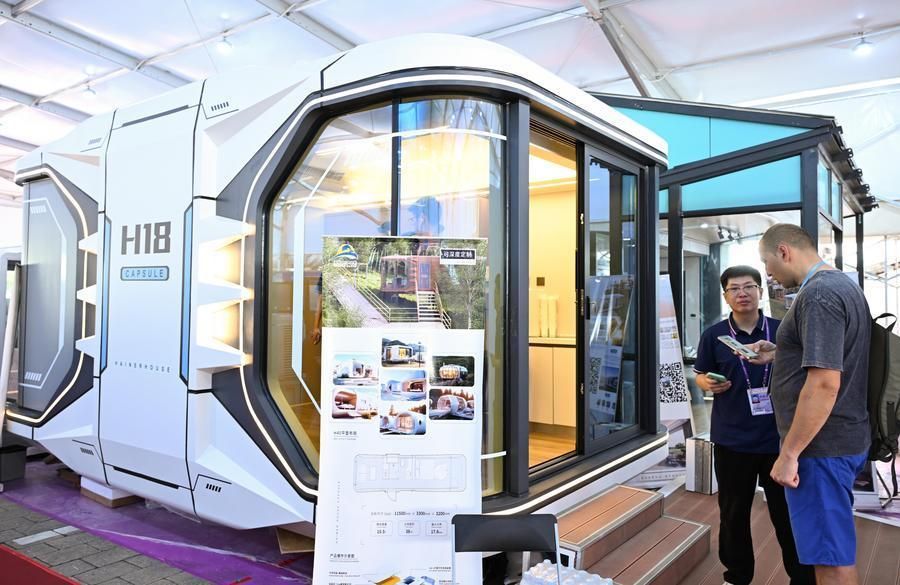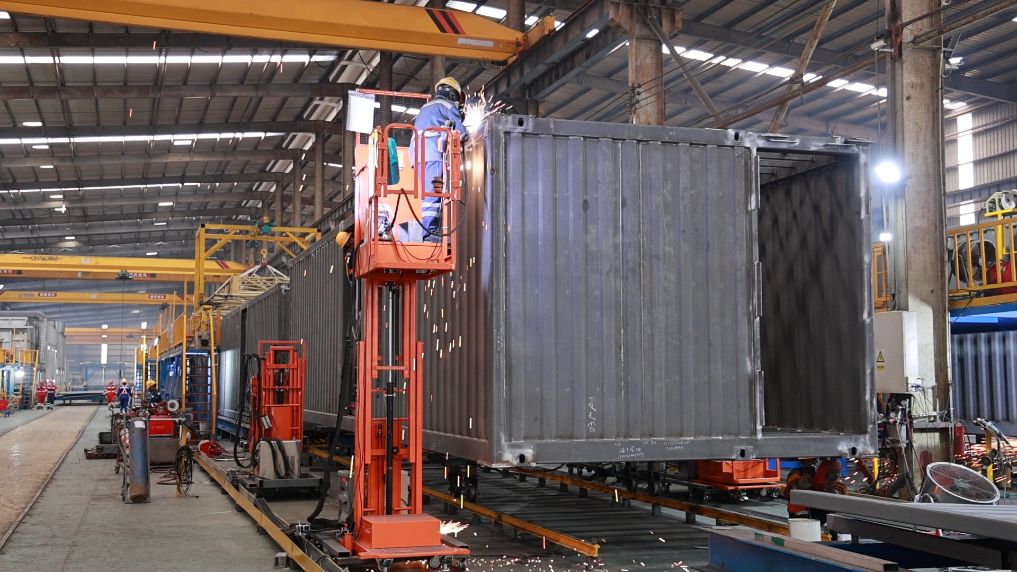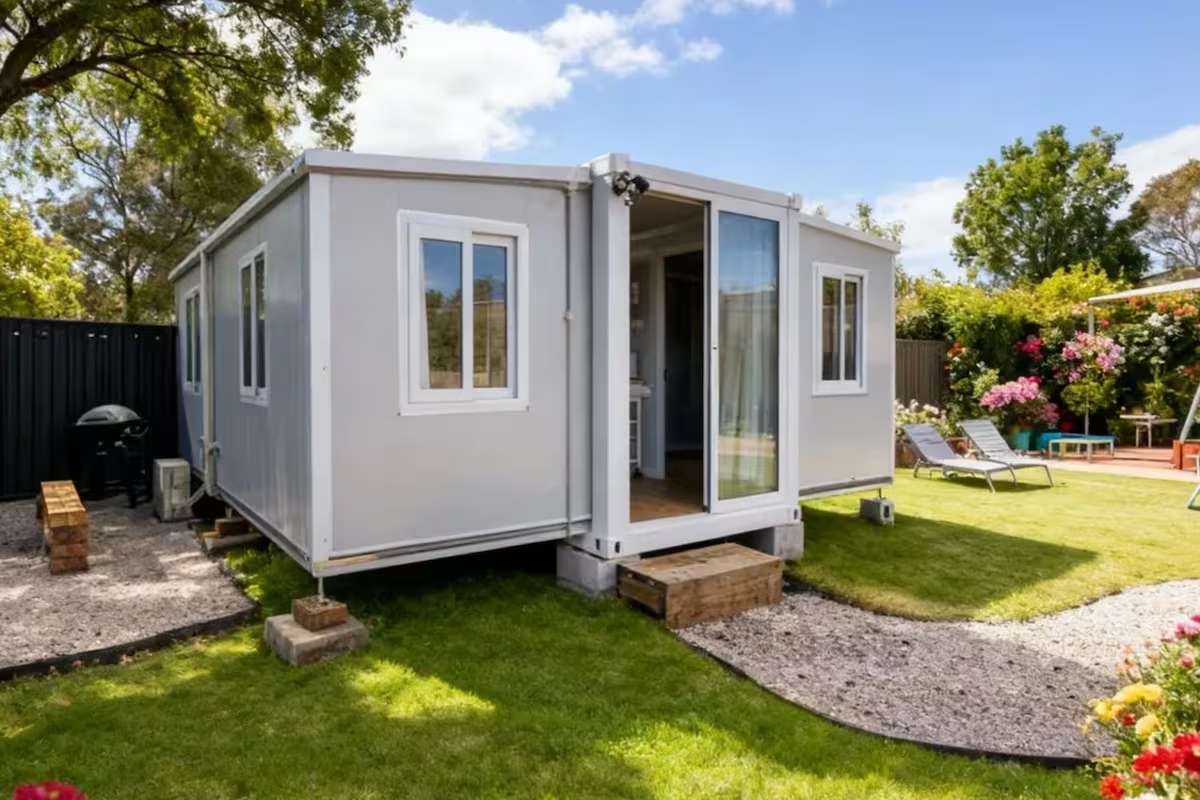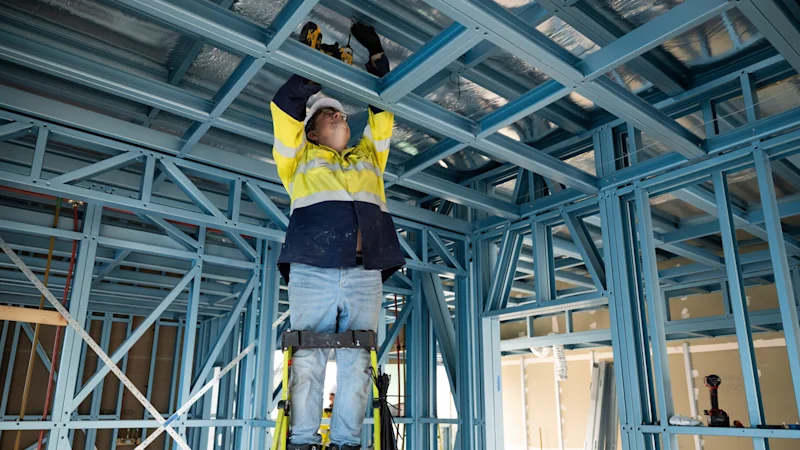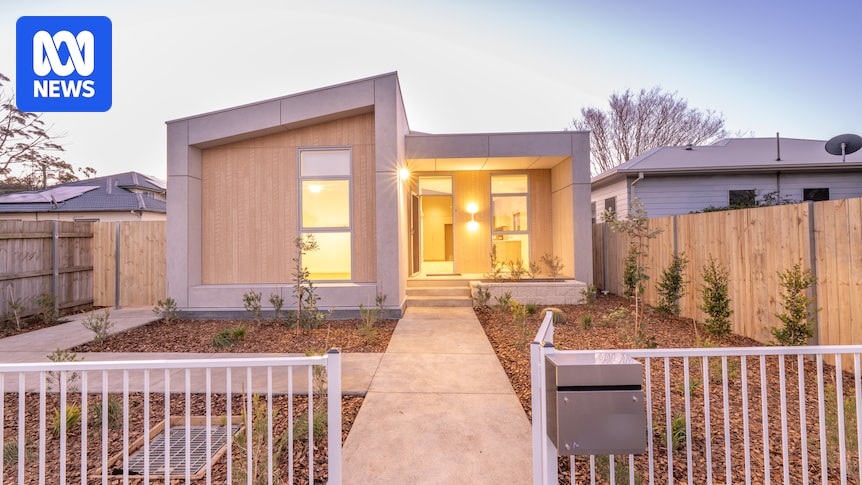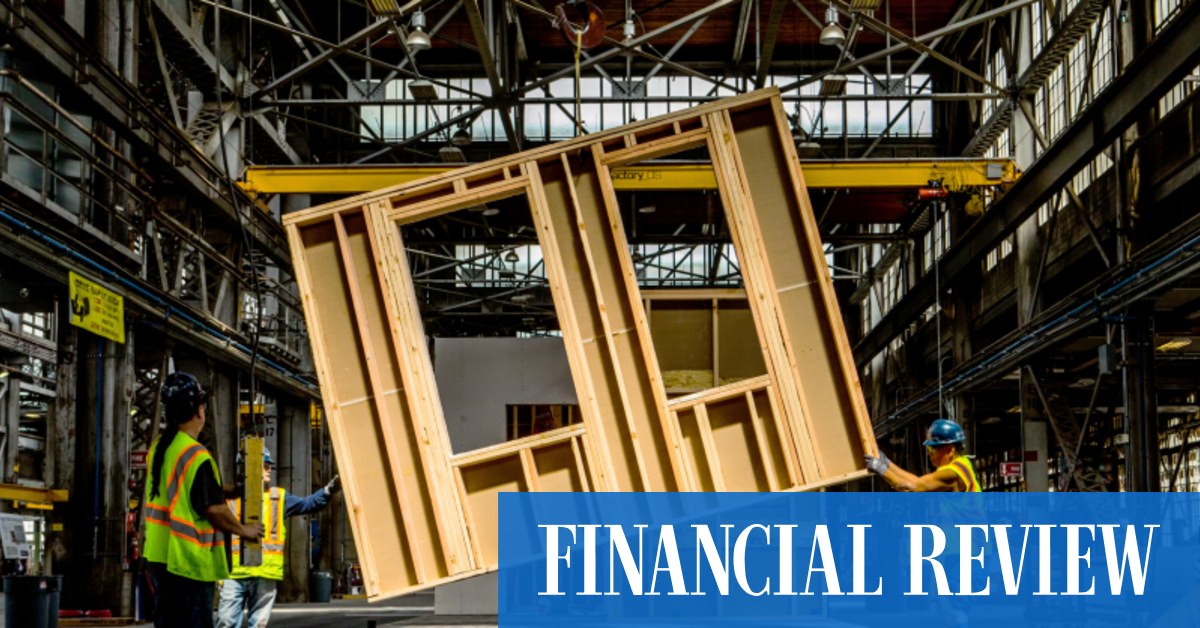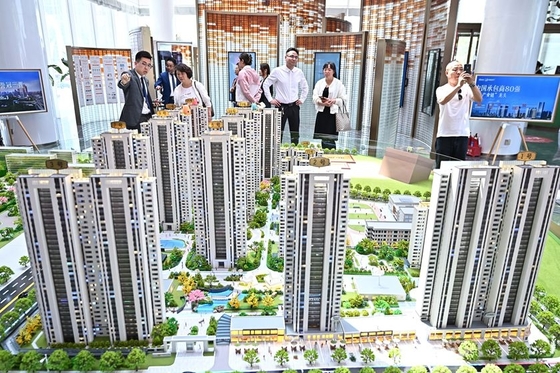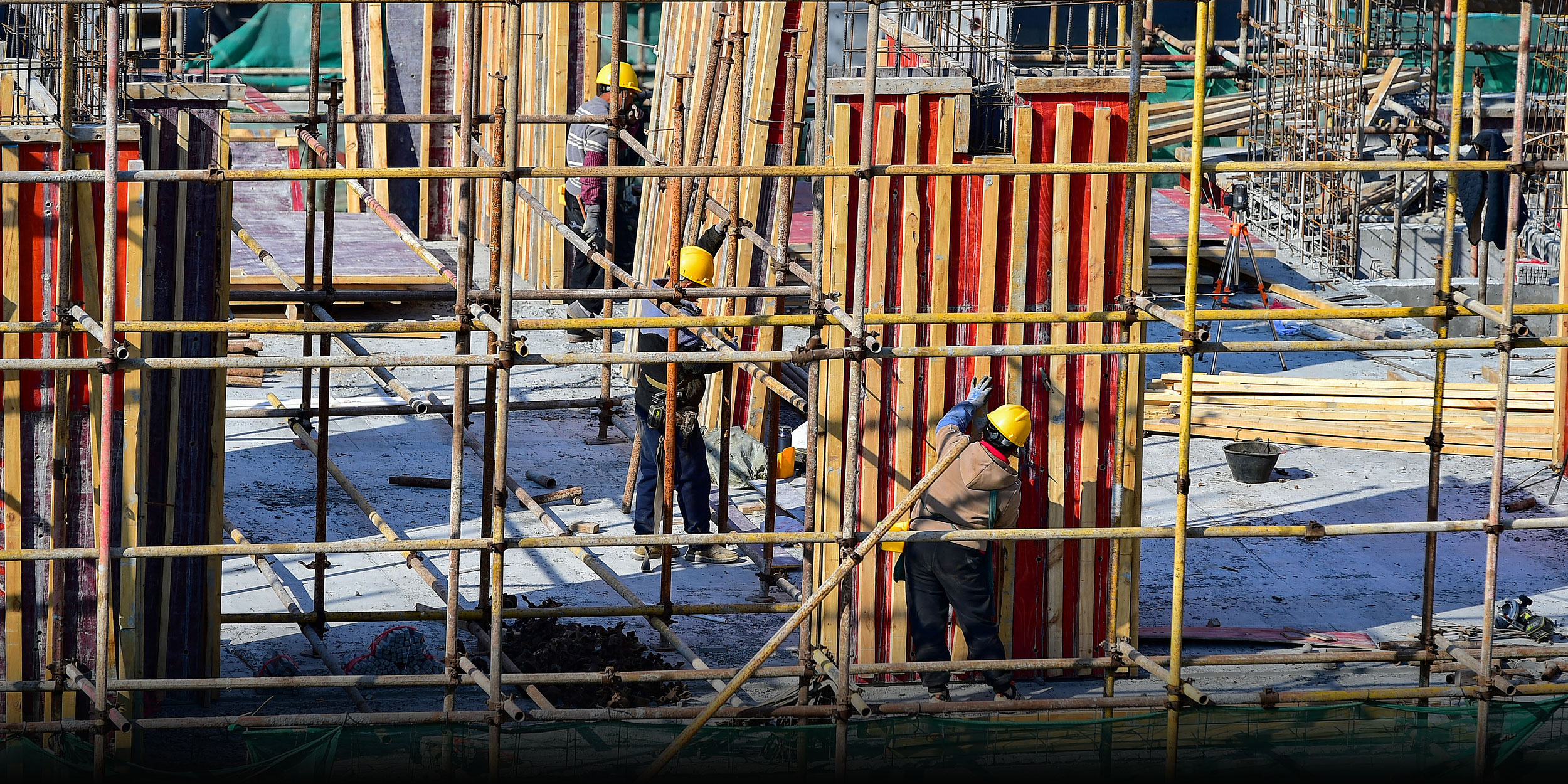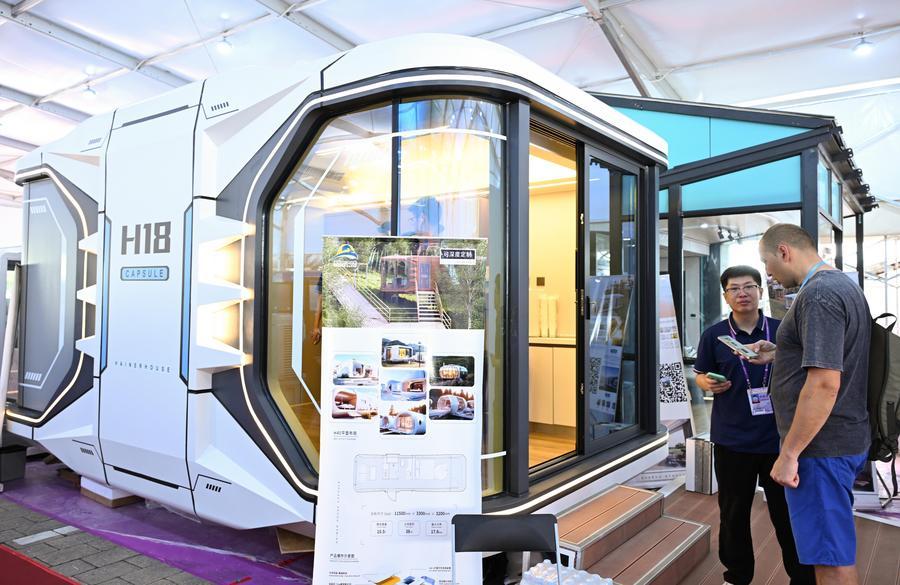
An overseas buyer talks with an exhibitor at an area featuring integrated housing products at the 137th edition of the Canton Fair in Guangzhou, south China's Guangdong Province, April 23, 2025. (Xinhua/Deng Hua)BEIJING, May 30 (Xinhua) -- When Chinese national Anna decided to locate a granny flat in her backyard in the Australian city of Perth, a video showing a prefabricated Chinese house got her attention.The clip showed a white, folded house resting on a lawn, four workers unfastening the locks, swinging open the walls, and unfolding the floor. Within hours, a 70-square-meter home stood ready, complete with a bedroom, living room, kitchen, bathroom, windows and lights.The price of the house was just 12,500 Australian dollars (about 8,957 U.S. dollars), far lower than the local builders' quotes, which were usually more than 100,000 Australian dollars."The Chinese house is fast and cost-efficient. It's hard not to be drawn to it," said Anna. Local builders told her she would need to wait six months for the work to begin, she added.Anna is unsurprisingly not the only one interested. At a housing expo held in May in Guangzhou, south China's Guangdong Province, Russian trade agent Mark was scouting prefabricated units for his clients.As a 16-year veteran of sourcing furniture from China, the industry insider spotted a new business opportunity -- Chinese modular units like space capsule houses and apple cabins are increasingly popular in Russia. "These units are a hit at Russian tourist spots. Visitors come just to take photos," Mark said.In recent years, China's prefabricated building exports have increased rapidly, rising from 1.47 billion U.S. dollars in 2015 to about 4.34 billion U.S. dollars in 2025. In the first quarter of 2026, the figure continued to increase, with a year-on-year growth of 45 percent, according to China's General Administration of Customs.Major destinations for the exports include the United States, Indonesia, Malaysia, Russia, and Australia, the administration said.Observers note that the demand for prefabricated buildings in developed markets is primarily driven by soaring labor and material costs, housing supply gaps, and the lengthy construction cycles of conventional on-site building methods. In developing markets, by comparison, the growth of such demand is mainly fueled by the lack of stable industrial supply chains, skilled technical workers, and efficient construction management.In October 2024, a 12-story apartment building with 24 two-bedroom units featuring built-in air conditioning and purifiers was erected in Mindanao, an island in the Philippines. Through traditional construction methods, a project like that would have taken 12 to 18 months, but this one was completed in just nine days.Chinese company Broad Group built the structure as one of its Holon buildings, using prefabricated modular methods that work just like Lego blocks.Li Shun, deputy general manager of Broad Group's Holon subsidiary, said that 95 percent of the work was completed in a Chinese factory following standardized processes, leaving only five percent for on-site assembly. "We want to minimize on-site work to keep projects on schedule and ensure quality delivery," Li said.Such capabilities did not come overnight. Broad spent over 1 billion U.S. dollars during a decade developing its core technologies, enduring hundreds of failed attempts before getting it right.Their main result, the B-core slab, is an ultra-light and ultra-strong structural material composed of two stainless steel plates and an array of extremely thin core tubes. It significantly improves the buildings' resistance to earthquakes and typhoons and offers a lifespan 20 times that of reinforced concrete. It also reduces carbon emissions by 80 to 90 percent compared to conventional buildings.The rapid development of China's prefabricated building industry has also benefited from strong government support.In October 2025, when Broad sent its shipment of modular building components to the United Arab Emirates for another Holon project, local customs authorities in Yueyang City, central China's Hunan Province, tailored a full-process clearance plan, cutting customs processing time by more than 10 days and reducing logistics costs by about 3,000 yuan (about 440 U.S. dollars) per container.Last year, authorities in Shanghai released an action plan to promote the integration of prefabricated and intelligent construction, offering financial support to qualified prefabricated projects. Other Chinese regions with similar supportive policies include Beijing, Guangdong, and Shanxi.According to a notice issued by Chinese authorities in 2025, city and district-level governments should promote new industrialized construction methods such as prefabricated and smart technologies, and establish long-term mechanisms to support the green and low-carbon transformation of the construction sector.Nationwide efforts will be made to facilitate the large-scale adoption of ultra-low-energy and prefabricated buildings as China begins implementing the goals set out in the outline of its 15th Five-Year (2026-2030) Plan."China's prefabricated market is growing rapidly," said Qin Zhanxue, president of the China Building Materials Circulation Association. "In 2026, the compound annual growth rate is expected to exceed 15 percent, driven by policy, market demand and technology. The industry is shifting from traditional temporary structures to high-performance, intelligent and green solutions."Looking forward, Broad is thinking bigger. It plans to build a 258-story, 1,037-meter Holon building in a major overseas tourist city by 2027. According to a company staff member, the design and wind tunnel testing of the new project have already been completed. ■
Faster, greener, more affordable: China's modular building solution goes global
Faster, greener, more affordable: China's modular building solution goes global-
855 words~4 min read