CHICAGO -- Radioactive tiles implanted immediately after the surgical resection of a newly diagnosed brain metastasis improved local control over standard stereotactic radiotherapy (SRT) given weeks later, findings of a phase III trial showed.
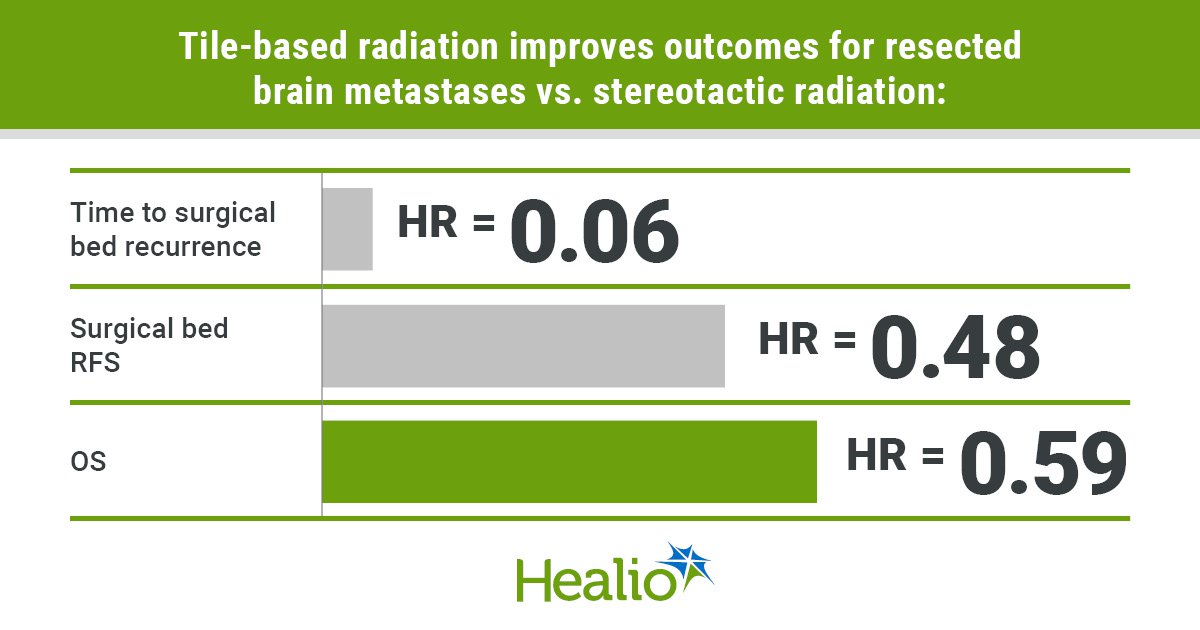
Median time to recurrence at the surgical bed was not reached with the Cesium-131 tiles (GammaTile), as compared with 17.4 months with SRT (HR 0.06, 95% CI 0.01-0.46, P=0.007). At 1 year, the cumulative incidence of recurrence at the cavity site was 1.3% and 15.4%, respectively, reported Jeffrey Weinberg, MD, of the University of Texas MD Anderson Cancer Center in Houston.
Tile-based radiation also improved surgical bed recurrence-free survival (RFS) and was associated with improved overall survival versus SRT:Surgical bed RFS: median not reached vs 10.9 months (HR 0.48, 95% CI 0.30-0.76, P=0.0021)Overall survival: median 42.5 vs 17.6 months (HR 0.59, 95% CI 0.37-0.96, P=0.032)
"The cancer was less likely to grow back in the treated area, patients were less likely to have negative imaging changes on their follow-up MRI scans, and patients have a lower risk of death," Weinberg said during a press conference at the American Society of Clinical Oncology (ASCO) annual meeting. "And this increased efficacy did not come with increased side effects."