By
Jake Nevins,
a writer who covers books, sports, and pop culture
If you have been following this year’s NBA playoffs and, like me, prefer to do so in the company of your fellow armchair-pundits on social media platforms like X and Reddit, then you have probably been exposed to the groaning of basketball fans who feel that the game has become unwatchable. This, of course, does not stop any of us from watching it; sports fans, since time immemorial, reserve the right to kvetch about that which we love. And most of us advocate for “ethical hoops,” the triumph of a pure and aesthetically uncompromised brand of basketball rooted in talent, skill, and integrity.
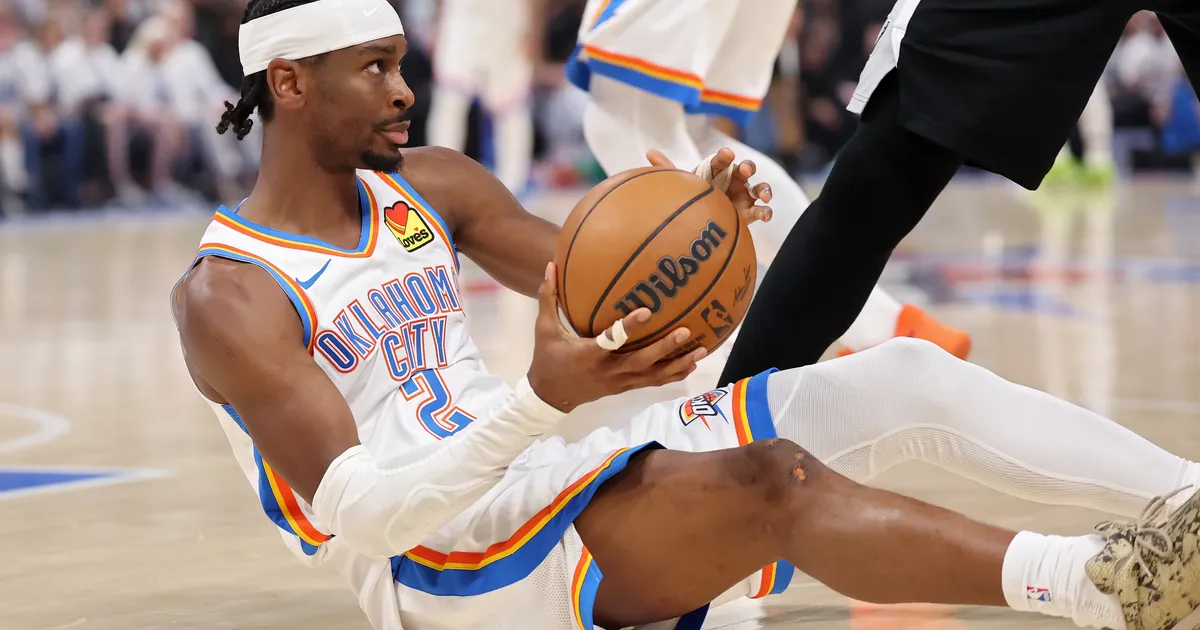
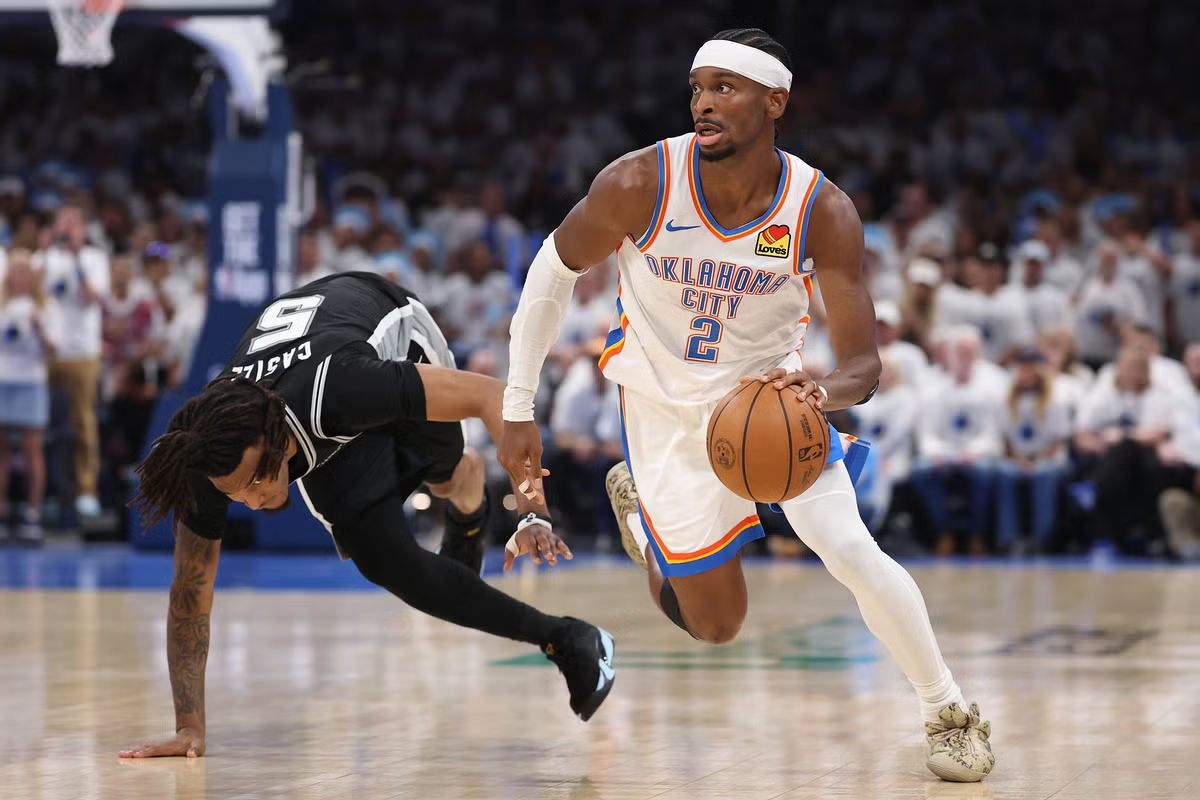
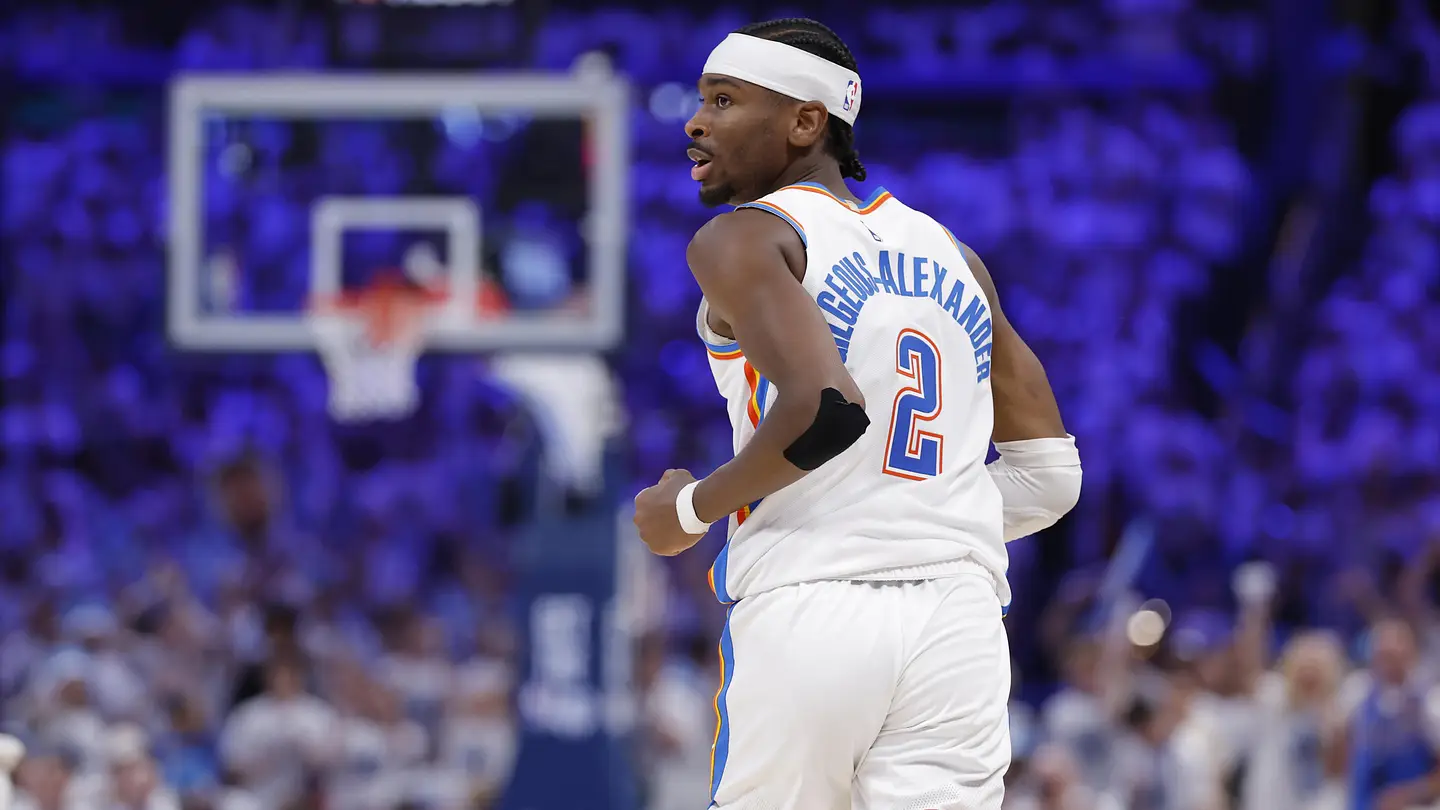
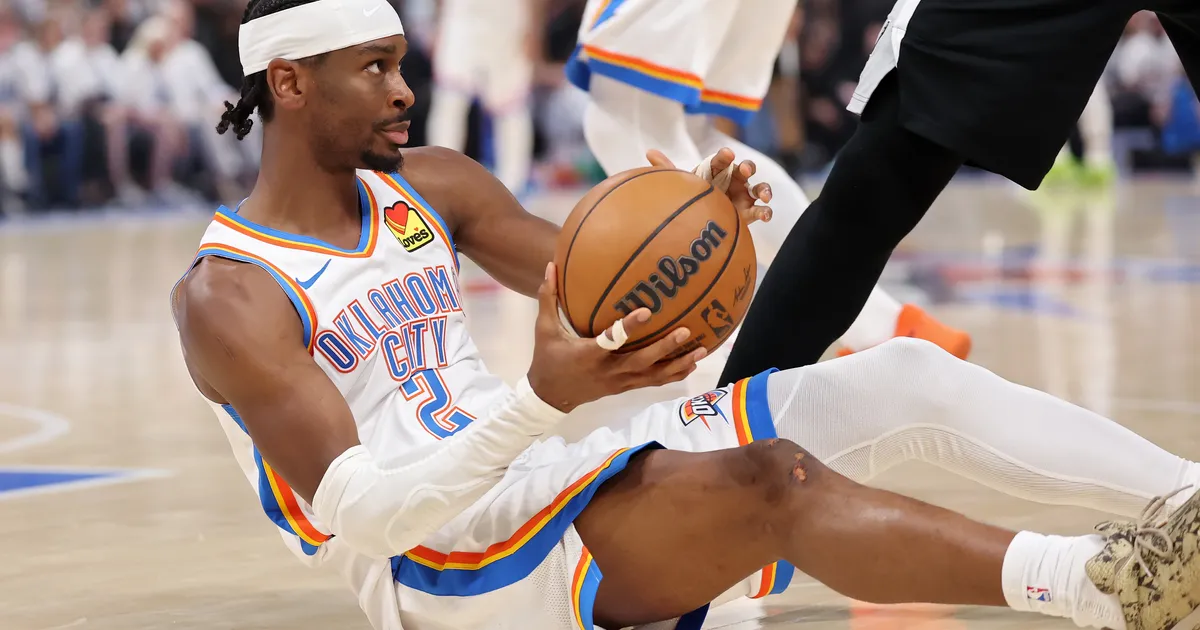
The greatest threat to ethical hooping, if the discourse is any indication, are the Oklahoma City Thunder. On the weaponized shoulders of their star and two-time MVP Shai Gilgeous-Alexander, the defending NBA champions have mastered a maximally efficient and spiritually corrosive style of basketball predicated, at least in part, on baiting credulous referees into calling fouls on the opposing team. One way they do this is by flopping, the umbrella term for the parade of pratfalls and head-jerks intended to exaggerate the appearance of defensive contact when shooting. The floppers of yore had the luxury of degrading the sport in an era of less intense scrutiny. Not so with SGA, whose antics have become the cause célèbre of basketball fans everywhere, from the court-side seats in San Antonio, where one Spurs fan was seen brandishing a miniature Academy Award, to the pick-up courts of China, where TikTokers are going viral with videos demonstrating their best SGA imitations. (SGA did himself no favors by sending a cease and desist letter this week to Underdog Sports, the prediction market that’s using his image and likeness to promote a parody boardgame called “Unethical Hoops.”) Villains make for good engagement, and during each Thunder game this postseason my feeds have been littered with supercuts of SGA flops carefully stitched together by outraged spectators, one of whom correctly suggested the San Antonio/OKC series was a “civilizational struggle between Wembanyama Enlightenment and the petrofascism of the American heartland.”