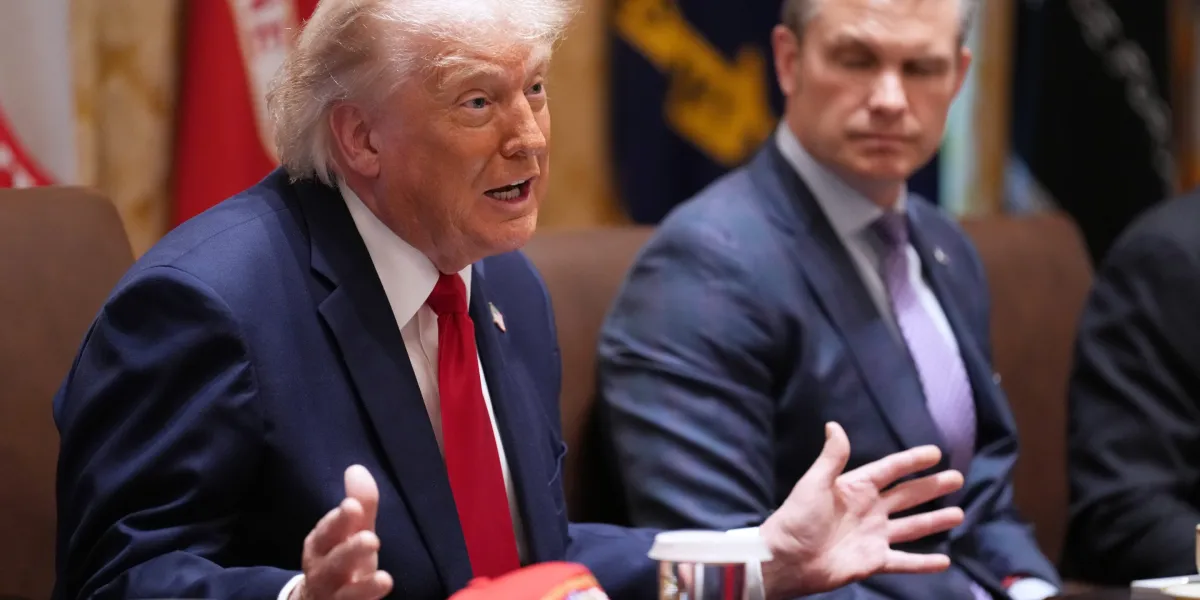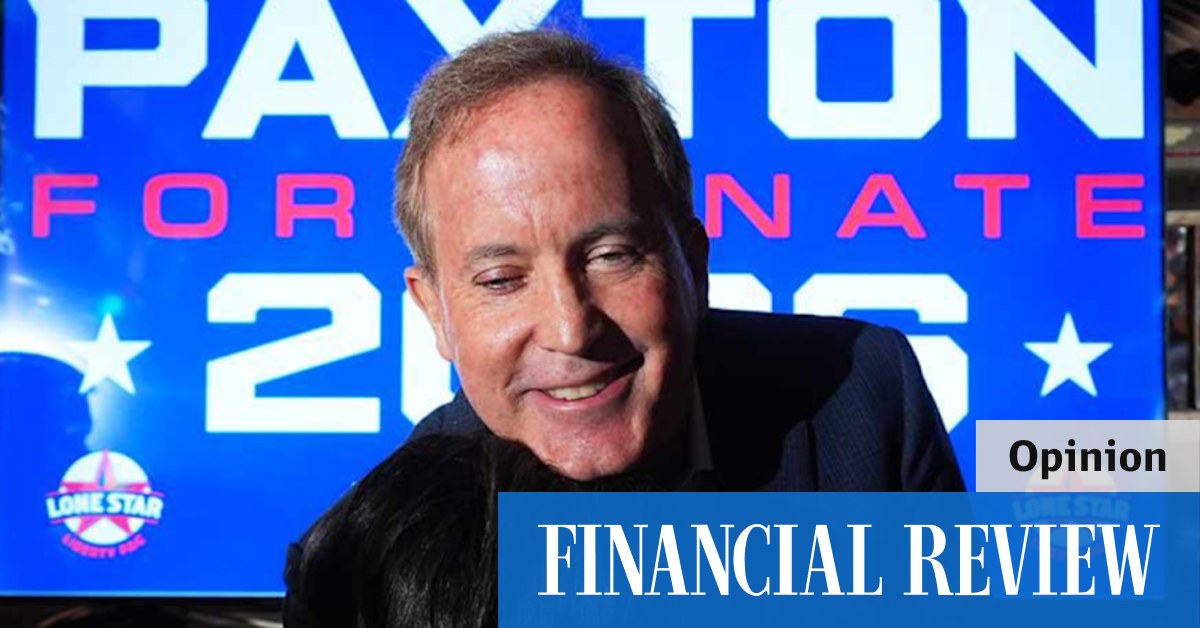
For such an uncannily successful politician, Donald Trump exhibits a perplexing political myopia. His most recent own-goal was endorsing Ken Paxton, a state attorney general, against four-term senator John Cornyn in the Republican primary for Senate in Texas. Trump’s endorsement helped push the ethically compromised Maga firebrand over the top, to run against popular Democrat James Talarico in November, complicating the Republicans’ chances to keep the seat.But what truly screams “I want us to lose the midterms” is what Trump is doing about inflation, which is becoming his most vulnerable issue. According to a New York Times/Siena poll of registered voters earlier in May, Trump’s approval on handling the cost of living is underwater by 42 percentage points, poorer than his rating on handling the economy (minus 31 points) and the unpopular war in Iran (minus 34 points).It’s not unusual that one of his most effective weapons in defeating Kamala Harris in 2024 has been turned against him now that he is running things. What’s truly astonishing is how Trump seems willing to build a track record of inflationary policymaking. He seems to have decided that whatever fork appears in his path, he must take the one that leads to higher prices.The list of inflationary gambits probably starts with the round of “reciprocal” tariffs Trump unleashed in April of last year, which he tweaked, rejiggered, raised, cut and dropped after the supreme court told him to. A report by the Yale Budget Lab concluded that tariffs boosted the price of durable goods by up to 3.8% in the 13 months to January of 2026.Trump got lucky. Importers stocked up on imports in late 2024 and early 2025, in anticipation of his tariffs. Even when the tariffs hit, they absorbed the higher costs via compressed margins. Moreover, the fast-rising prices of goods were masked by falling inflation in services, which were not hit by the levies.He has also been lucky, so far, with his mass deportation campaign, which has not yet done much to reduce employment in immigrant-heavy industries such as food processing, construction, childcare and health services. As deportations continue, a more limited supply of workers is expected to push up wages and feed into higher prices.And that’s where the luck ends. Notable was his decision last year to end the enhanced subsidies for health insurance under the Affordable Care Act. Insurance premiums have jumped 58% on average, according to the Kaiser Family Foundation. Deductibles increased 37%, on average, to a record $3,706. Altogether, KFF estimated, up to 6 million Americans could drop their insurance this year.Energy is his main sore spot. His zero-regulation, pedal-to-the-metal approach to artificial intelligence may not be the main driver of the massive investment in power-hogging AI datacenters, which is raising the price of electricity. But, adding in his efforts to cancel wind power projects, it’s clear he is not helping consumers with rising electricity bills. Despite his claims to be fighting for cheaper electricity, household energy prices in April were 6.4% more expensive than a year earlier.Then there’s that war Trump decided to wage against Iran, which, predictably, led Tehran to strangle the strait of Hormuz and sharply curtail the global supply of oil and gas. The nationwide average price of regular gasoline is hovering around $4.50 a gallon, about $1.30 higher than a year ago. That has driven a surge in consumer prices, which increased 3.8% in the year to April, their highest annual rate in two years.The effect of the war is unlikely to end soon. An analysis by economists at the Dallas Fed estimated that the rise in oil prices due to the war could add anything between 0.2 and 1.8 percentage points to annual inflation by the end of the year, depending on how quickly the strait reopens, whether it stays open and uncertainty over its future status.People’s attitudes about inflation are difficult to parse. They think less about the alphabet of indices policymakers focus on, such as CPI and PCE, and more about how much the price of eggs and gas have risen since they last remembered. They hate inflation even if wages keep up with prices, as they have, on average, since Trump came into office, viewing the wage gain as a just reward and inflation as an unfair burden, even if both were driven by the same macroeconomic forces.In the eyes of many Americans, dealing with inflation means not slowing the rate but forcing prices to fall, a predilection that Trump paid lip service to in the presidential election, even though bringing about lower prices across the board would almost certainly require a deep recession.Whatever their biases, they seem eager to punish incumbents for rising prices. One study based on polling just before the 2022 midterms found that people who felt the burden of inflation personally and observed it in their local community were less likely to vote for the Democrats than those who did not. (Those who blamed it on government spending tilted particularly heavily toward Republicans.)Inflation was lower than it is today on election day in 2024. Still, researchers found that merely asking people to think about inflation caused support for the Biden-Harris administration and the Democratic party to fall. A third study based on actual votes cast found that Trump’s vote share in 2024 improved more relative to 2020 in counties where inflation was higher.This may not be statistically robust, but since George HW Bush lost to Bill Clinton in 1992, there has been only one presidential election in a year with inflation as high as it is today. The incumbent, George W Bush, lost to Barack Obama.One might have thought Trump understands this stuff, given his successful deployment of inflation as a political cudgel not two years ago. But who knows? He has been hammering at the Fed not because he wants it to bring inflation under control, but because he wants it to lower interest rates. At this stage, that would be dramatically bad for inflation. Maybe he wants to lose?
Inflation won Trump the presidency, but could cost him the midterms
Trump’s pursuit of policies that drive up prices, including tariffs and war, might be punished in November’s elections
999 words~5 min read