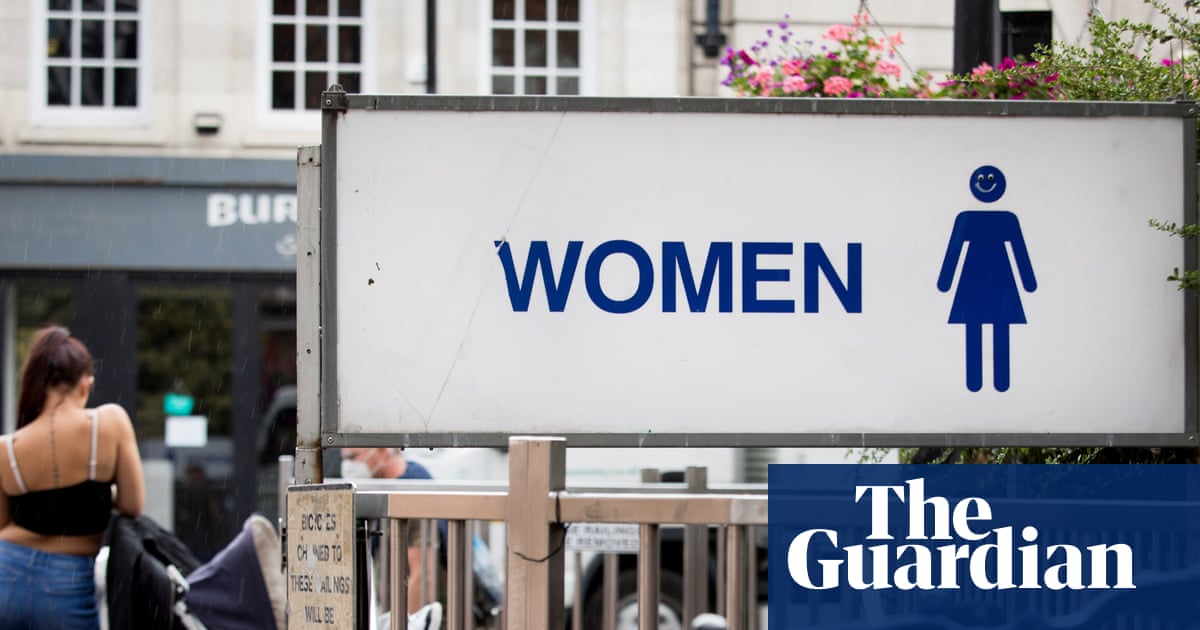
The first flushing public toilets were invented 175 years ago. Now 60% have vanished from our streets, and public urination is once again causing a health hazard.11:33, 30 May 2026Updated 11:59, 30 May 2026If a 19th century urine deflector or “wazzbaffle” had been protecting the West London wall where Lord Mandelson was caught short recently, it wouldn’t have been the first time the disgraced peer’s mistakes had come back to haunt him. Britain’s Victorian plumbing was the envy of the world when the first flushing public toilets were invented 175 years ago – but now up to an estimated 60% of all public loos have vanished from our streets, and public urination is once again causing a health hazard.As William Roberts, chief executive of the Royal Society for Public Health, says drily: “If Lord Mandelson can’t find a loo, then what hope is there for the rest of us?” Using the streets as a toilet has always been a stain on our less than sanitary past, and architects over the ages have had to invent ways to discourage gentlemen from urinating in dark alleyways and corroding the brickwork.Metal “splash backs” installed to redirect urine straight back onto the culprit’s shoes can still be seen today in Clifford’s Inn Passage and by the Bank of England in London. “In Henry VIII”s reign they used to paint red crosses on the walls of Hampton Court to stop people urinating on them because that would be desecrating a holy symbol,” explains Dr David Musgrove, content director of HistoryExtra, and host of HistoryExtra’s Toilets through Time podcast series.Public urination is still an offence which is why a lack of public loos is no excuse, and Mandelson was slapped with a £300 fine under the Public Disorder Act 1986. When sanitary engineer George Jennings installed his Monkey Closet at The Great Exhibition in Hyde Park, London, in May 1851, up to 800,000 visitors were encouraged to “spend a penny” using his flushing toilets in the ladies and men’s retiring rooms.The following year, the first public flushing toilets opened for both men and women on Fleet Street. An underground network of Victorian municipal conveniences, with ornate ironwork and gleaming ceramic tiles, were then built in the 1880s to service an increasing number of city dwellers, finally releasing housebound ladies from their “urinary leash”.Mr Roberts says: “The RSPH was founded at roughly the same time as the flushing toilet to look after public health. A public toilet was called a convenience, because it was meant to be convenient.” But according to a recent RSPH report, public toilets in England declined by 14% since 2016, leaving a shocking ratio of just one loo for every 15,481 people, creating widespread “toilet deserts”.The situation is less critical in Scotland and Wales where stronger planning requirements compel councils to have toilets in local areas. Mr Roberts says: “From a human perspective, we all have to go to the loo. And there’s a good swathe of the population who need to be able to go to the toilet when they're out and about, including those who work in the community.”A dearth of public loos means many of us have to nip into a pub or a McDonalds if we’re caught short. But older people and the disabled are being trapped in their houses. Mr Roberts says: “They're scared to go out. If they don't know there’s a toilet where they’re going, they won't go out. And those that do restrict their fluid intake. It also has a really big impact on the homeless population.”Much of the dilapidated council-run Victorian toilet stock was closed or sold-off in the 1960s, because underground loos were inaccessible and prone to flooding, while male urinals gained a reputation for attracting illicit behaviour. “Vandalism and antisocial behaviour played quite a big role in public toilets being closed,” says Mr Roberts.One public toiled in the early 1960s was even involved in espionage. Dr Musgrove says: “British civil servant Harry Houghton stole classified military secrets and hid them in a public lavatory in Alresford, Hampshire. He was part of the Portland Spy Ring and was collecting information for his Soviet paymasters. Sentenced to 15 years for using the loo as a dead drop, his covert activities have even been inscribed on a plaque on the loo wall.”Some Victorian conveniences have been converted into bars and restaurants. Customers can now sip their coffees among the highly-polished porcelain urinals at The Attendant in Fitzrovia, London. Our civic-minded forebears have been wrestling with the job of keeping the streets clear of human waste since the Romans arrived and declared us a bunch of barbarians.Historian Dr Musgrove says: “While the Victorians were indeed the municipal masters who invested in toilet technology, they were also quite keen on denigrating the efforts of their ancestors, because there were communal public toilets in Britain’s urban centres long before the invention of the flushing loo.“Roman public toilets definitely existed, but in the medieval period in York, at the start of the 14th century, there was an ordinance written down which said that there had to be four public toilets – one in every quarter of the city – because authorities were worried about ordure building up in the street.”Public loos were even found in the Middle Ages. Dr Musgrove says: “People didn’t know about water-borne diseases but the smell or ‘miasma’ was a massive concern. As towns and cities grew bigger, they insisted facilities were provided.”In the 1530s, Henry VIII famously had a 28-seat outdoor latrine called the Great House of Easement built at Hampton Court, for thousands of low-ranking servants to relieve themselves directly into the palace’s moat. Dr Musgrove adds: “In London, Whittington’s Longhouse famously provided the first segregated public toilets for men and women.”Built in Cheapside in 1421 by Lord Mayor of London Dick Whittington, the long drop seated 128 people." Although they were doing their business straight into the Thames,” he continues. “And then we know from 17th century diarist Samuel Pepys, who took a great interest in his bowel movements, that he visited public facilities as he moved around the city.“But it was not until the Victorian period when flushing loos came along that a drainage system was needed and that’s when you get the start of the great engineering projects and Bazalgette’s sewage system.”After hundreds of years of civic pride, it’s not hard to see that the disappearance of public spaces like libraries and toilets is linked to our country’s general feeling of decline. However, Mr Roberts, says the changing landscape of modern Britain has also had an impact on public loos. He explains: “It costs £15,000-£25,000 a year to maintain just one standalone public toilet, so there is a cost element, too.He adds: “We haven’t rebuilt our lost Victorian infrastructure, apart from in new towns in the post war period. And the closure of libraries and other public buildings also mean other publicly available toilets have been lost – not out of design, but by accident.”The RSPH wants to encourage redevelopers to “build back toilets on our streets… using a mixture of private partnerships and schemes where people can go in and use toilets in shops with a card”. Mr Roberts makes the sound business case that more toilets will help revive neglected town centres, saying:. “High streets need to generate income and if you want people to go to your town, you need to encourage them with better facilities.”We may no longer want to sit at a communal long drop with 127 of our closest neighbours, but perhaps in our more fractured society and never-ending pursuit for progress, we’ve also lost our [need for] human connection. Dr Musgrove adds: “I hear a lot from historians who say that one of the things we could learn from history is the value of neighbourliness and community. That feels like something which we are not so good at nowadays, and perhaps the loss of public toilets is a reflection of that.”Article continues below
Britain's dying high streets 'could be saved' by unlikely revival
The first flushing public toilets were invented 175 years ago. Now 60% have vanished from our streets, and public urination is once again causing a health hazard.
1,330 words~6 min read