For three decades, Richard Glossip lived on concrete. First at the Oklahoma County jail, after his arrest for murder in 1997, and then in the underground bunker housing death row inmates at the Oklahoma State Penitentiary. As with the rest of his surroundings, he eventually got used to the hard, unforgiving floors, although recently he’d developed painful swelling in his legs.
It was only when he stepped onto the carpeted courtroom at the Oklahoma County Courthouse last June that Glossip, now 63, realized how unaccustomed his body had become to anything other than concrete. He almost fell over — one of his lawyers had to catch him. “You’re not balanced for that,” Glossip said. “You’re balanced for walking on very hard floors. It’s just really weird to, like, walk on carpet and stuff again.”
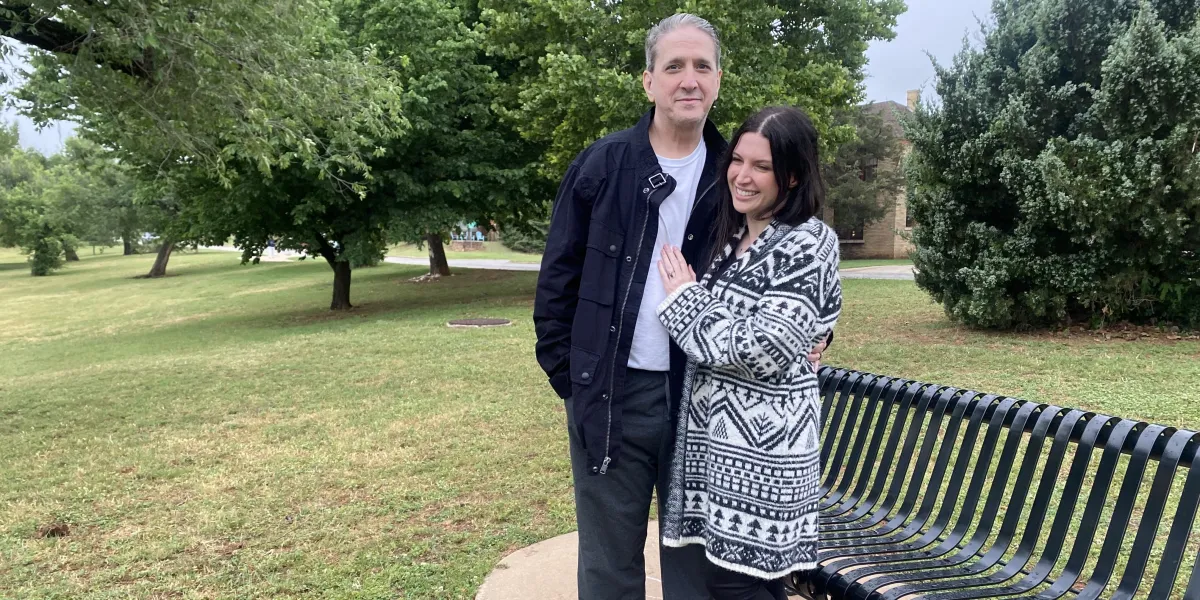
Now, sitting on a mint green loveseat next to his wife, Lea, Glossip was getting used to softer surfaces, including a new pair of black moccasin-style sherpa-lined slippers.
“My leg hasn’t been swollen since I got out.”
Just five days earlier, Glossip was still locked up at the county jail with no idea when — if ever — he would be released. Even though the U.S. Supreme Court vacated his conviction in 2025, he had been held indefinitely as Oklahoma prepared to try him again. Months earlier, his lawyers had asked Oklahoma County Judge Natalie Mai to grant bond, and Mai had finally said she would issue an order on May 14. That morning, just after 10 a.m., she handed down her decision: Glossip’s bond was set at $500,000.