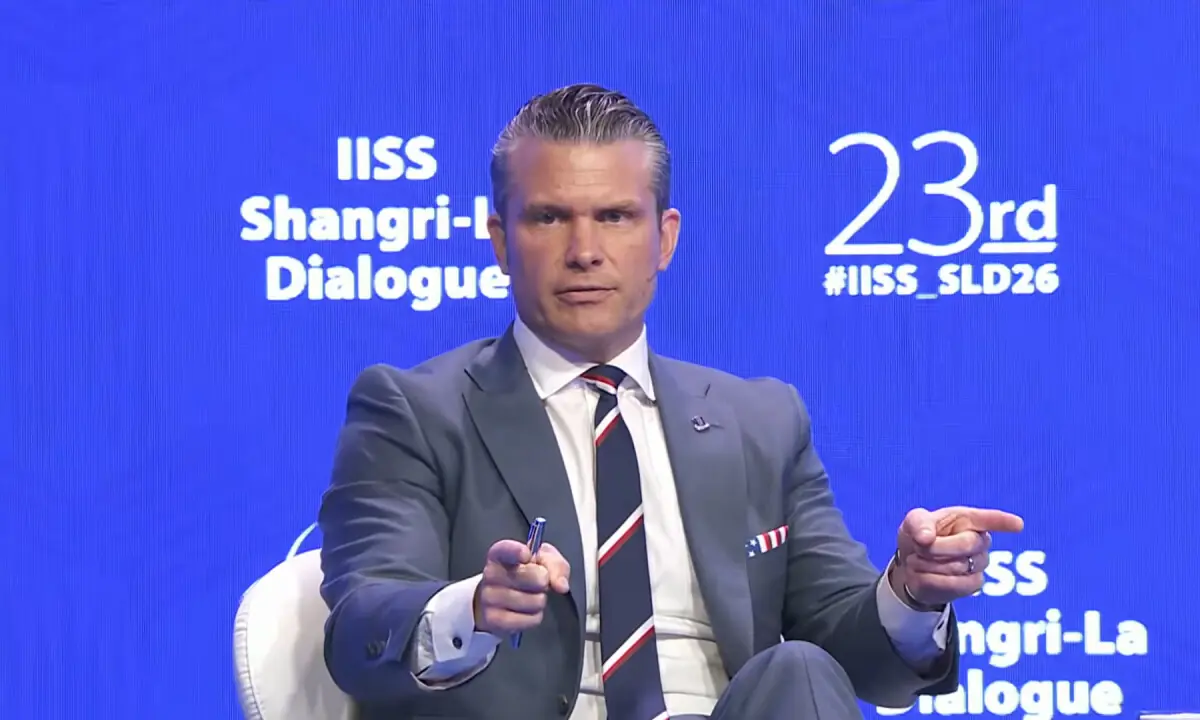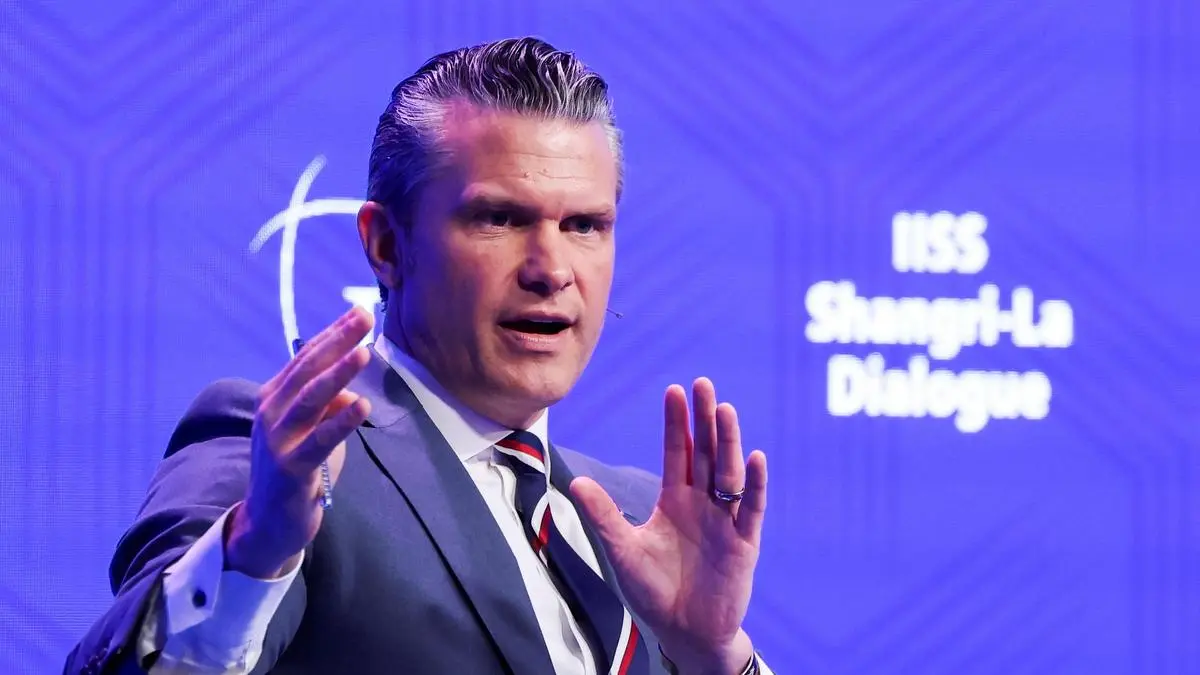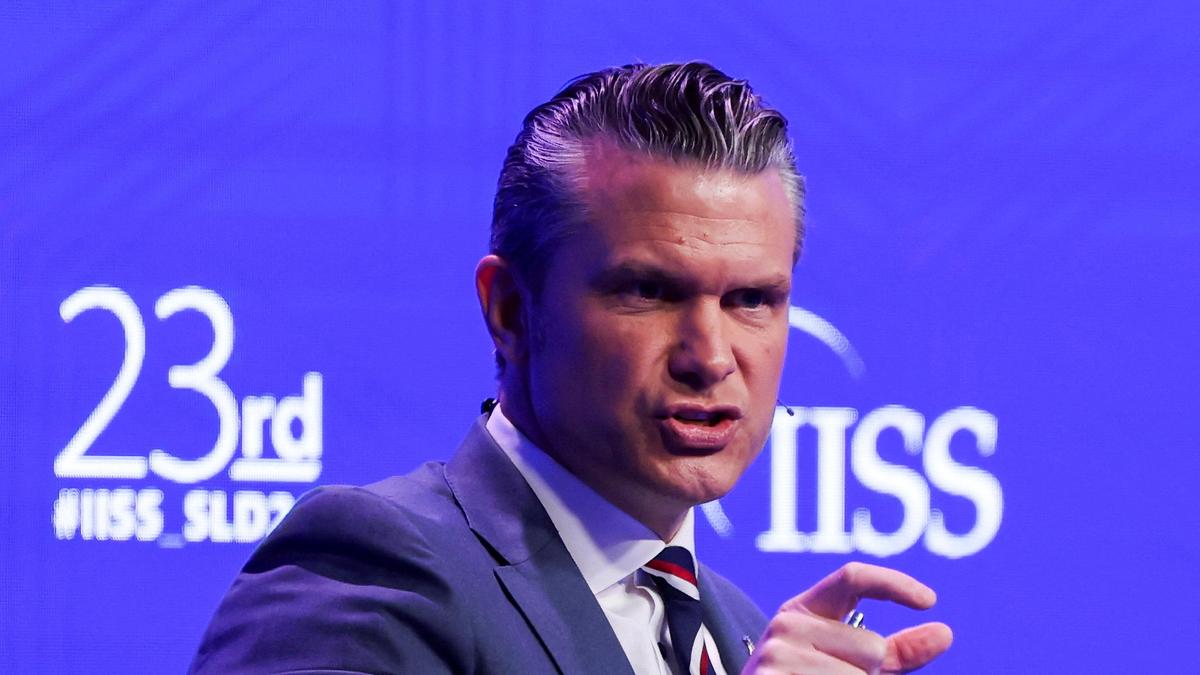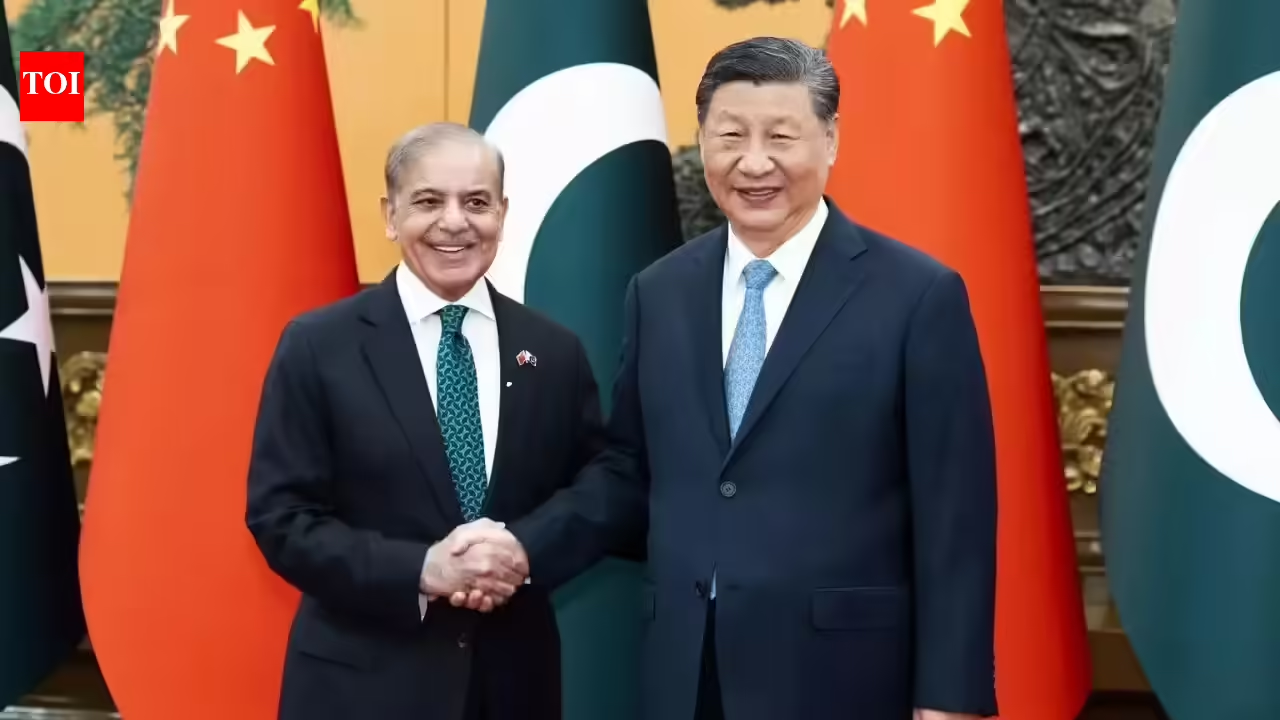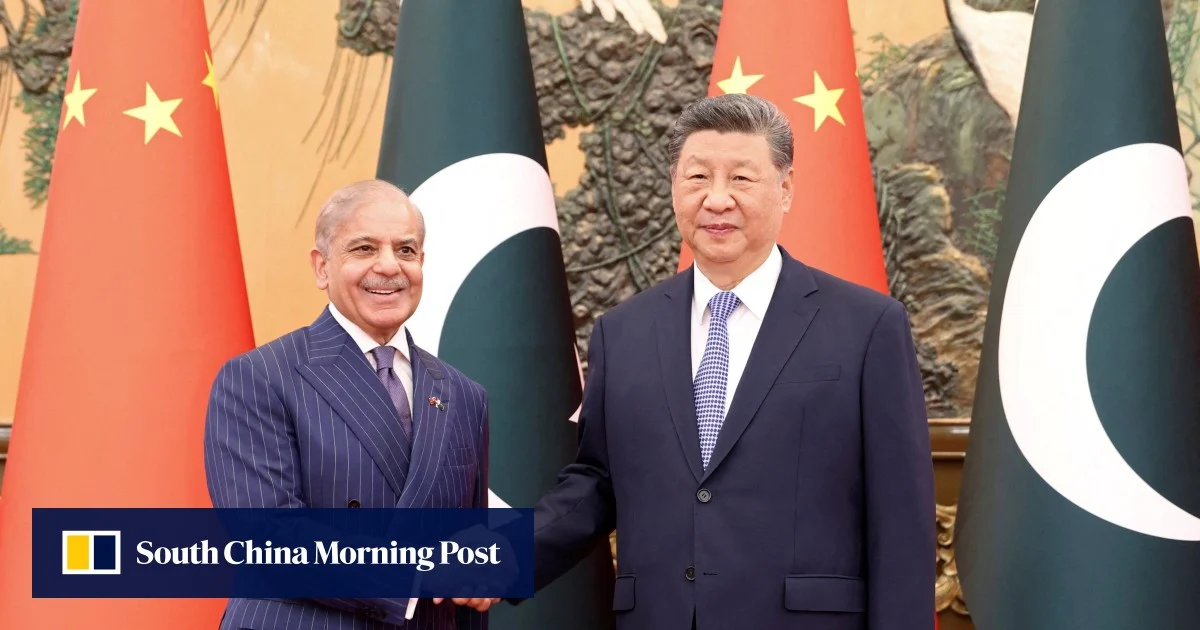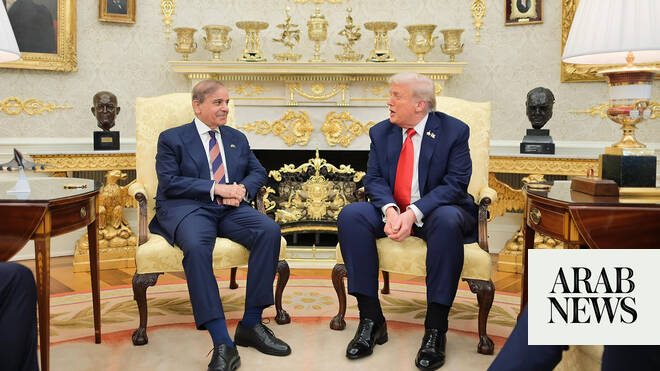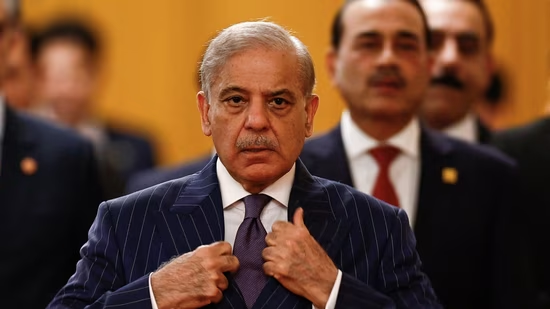
Crediting Donald Trump for brokering peace between India and Pakistan in May last year, US Secretary of War Pete Hegseth on Saturday that an “ unexpected true friendship” is developing with Pakistani Prime Minister Shehbaz Sharif as well as country's army chief field marshal Asim Munir.File: Pakistan's Prime Minister Shehbaz Sharif arrives for a meeting with Chinese President Xi Jinping at the Great Hall of the People, in Beijing (REUTERS)Speaking at the Shangri-La Dialogue in Singapore, Hegseth referred to the understanding reached between India and Pakistan after their military confrontation last year and praised Trump's role in easing tensions. "You saw that in the ability of the president to come together on brokering a peace between India and Pakistan, two nuclear capable countries," PTI news agency Hegseth quoted as saying.Hegseth described India as a key partner in United States' Indo-Pacific strategy and highlighted growing defence cooperation between the two countries.Trump has repeatedly claimed that he helped secure peace between India and Pakistan following a four-day military conflict last year triggered by the terror attack in Jammu and Kashmir's Pahalgam that killed 26 people. India, however, has consistently maintained that the understanding was reached directly between the two countries and has denied claims of third-party mediation.Noting that both India and Pakistan would continue to see each other through the prism of security concerns, HegsethThe US secretary on Saturday said he thinks both India and Pakistan are going to see understandable threats coming from the other, “maybe some of which we see differently, and countries are going to want to develop ICBM (Intercontinental Ballistic Missile) threats.” But we are not pointing a finger, at least from our view right now, at either country and calling them a threat to us," he added.‘True friendship developing’ with PakHegseth praised India and Pakistan for what he described as their contributions to international stability. "We are grateful for, you know, in each of their lanes, the benefits they have given to peace around the world," he said.Referred to Pakistan's military and political leadership in his address while discussing regional developments, Hegseth said an “unexpected true friendship” is developing there."I mentioned India here, but I very easily could have mentioned Pakistan and the role that the field marshal and the prime minister are playing in peace negotiations… I think an unexpected development and a true friendship developing there, which I think is important," he said.The remarks come in the backdrop of Pakistan emerging as the main mediator in the ongoing West Asia conflict, trying broker a peace deal between the US and Iran after months of fighting that started on February 28.Top officials from both sides met in Islamabad last month for peace talks, but they failed to clinch a deal. Earlier this week, Pakistan's Prime Minister Shehbaz Sharif said that he hopes to host the next round of peace talks very soon.Hegseth, during his address to a delegation at the Singapore summit, also spoke on India's growing military and industrial capabilities, describing the country as an increasingly important security partner in the Indo-Pacific.He said India was modernising its armed forces and helping maintain a balance of power, particularly in the Indian Ocean region, as he noted that India was building industrial and logistics capacity to sustain high-end military operations. "We have also committed to pursuing co-production with India to advance capabilities," he said."What we seek ... is a genuinely stable equilibrium that works for Americans as well as for our allies," he said. "A favourable, but durable, balance of power in which no state, including China, can impose its hegemony and hold the security or prosperity of our nation and our allies in question," Hegseth said.He emphasised that the Indo-Pacific remained central to US security and prosperity and sought to reassure regional partners that Washington remained committed to the region despite security challenges elsewhere, including in West Asia.
'Unexpected true friendship brewing': US war secy Hegseth on Pakistan PM Sharif, army chief Munir
US Secretary of War Pete Hegseth also praised India and Pakistan for what he described as their contributions to international stability. | World News
642 words~3 min read