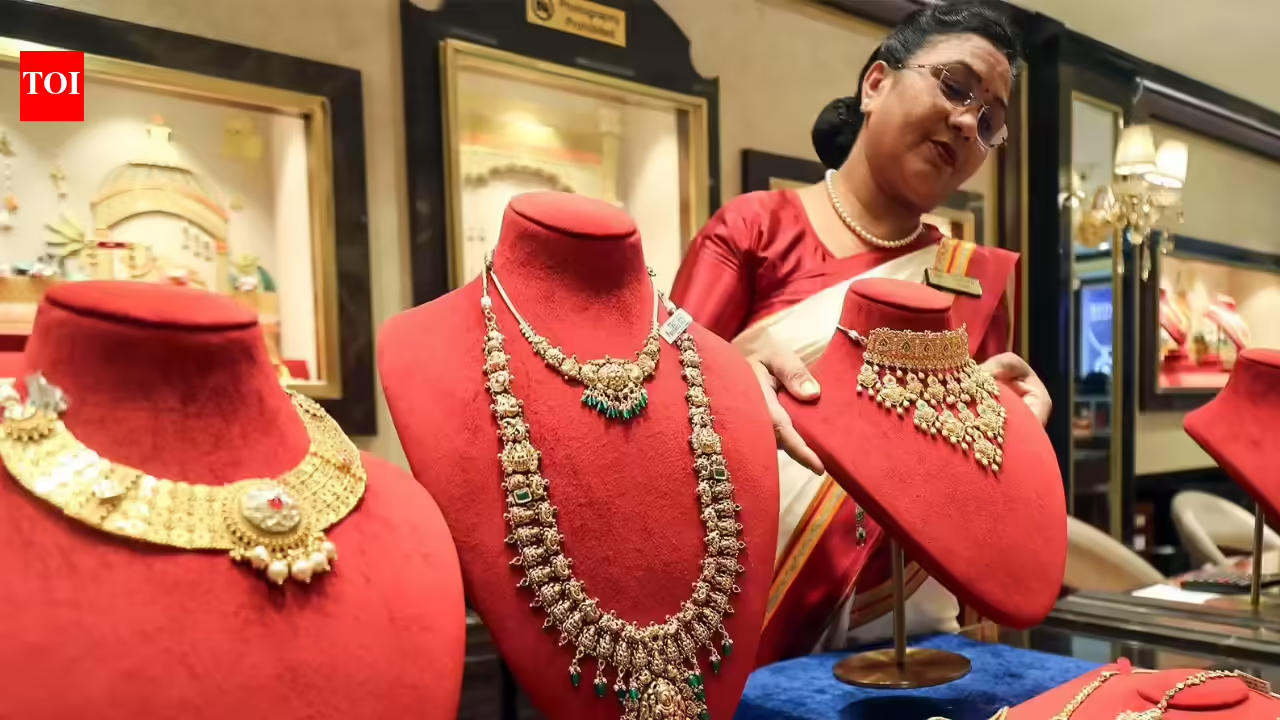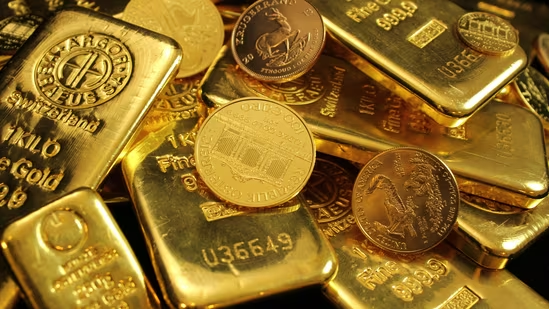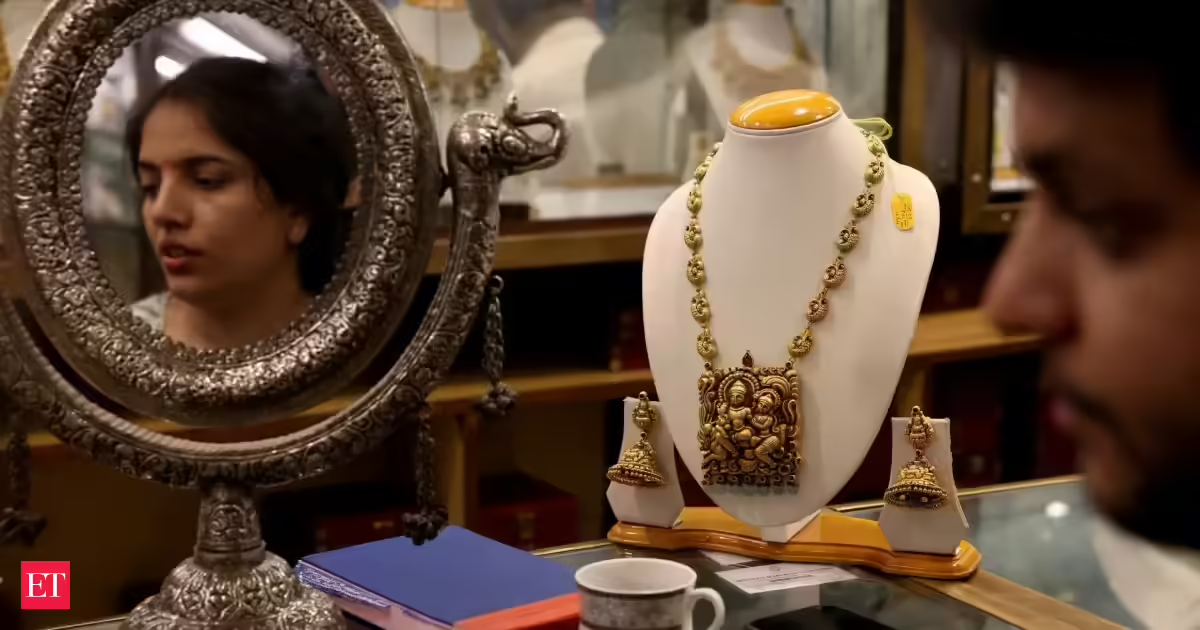
With the gold price staying elevated through 2026, many households are rethinking how they buy jewellery. A fresh purchase now feels more expensive than it did even a year ago, and that changes the conversation at the counter. Instead of asking only what to buy, buyers are also asking what they already own, what can be reused, and whether old jewellery can reduce the cost of a new purchase. In a market like India, where gold buying is both emotional and practical, that shift is starting to matter more than ever.Tanishq's transparent gold exchange process alleviates buyer concerns, allowing families to maximise the value of their existing jewelry, reducing the need for new imports.The Economic BackdropIndia continues to depend heavily on imported gold, which means every surge in demand has implications beyond retail. India import export data has repeatedly shown how significant bullion remains in the country’s import basket.As India gold import volumes rise, more foreign exchange moves out, and that becomes a larger issue when international prices stay firm. So while jewellery buying may feel like a personal decision, the gold import in India also connects to a much wider economic picture than most people usually consider.The Real Issue Is Trust, Not IntentThe idea of exchanging gold is not new. What has historically stopped many consumers is uncertainty. People worry about whether purity will be judged fairly, whether stones and metal will be separated accurately, whether old jewellery bought from another jeweller will be discounted unfairly, and whether hidden deductions will quietly reduce the final value. In many cases, the hesitation is not about willingness to exchange but about not wanting to feel blind during the process.This is exactly where Tanishq’s gold exchange proposition becomes more relevant than generic exchange messaging. The strength of the proposition is not only that old gold can be exchanged, but that the process is designed to remove the anxiety usually attached to it.Customers can bring in old gold from any jeweller, across purities ranging from 9KT to 22KT, and even pieces that are small, mismatched, or broken are considered.Bills are not mandatory, which is especially helpful for inherited jewellery or pieces bought years ago. That immediately makes the proposition feel practical in real Indian households, where not every old ornament comes with perfect paperwork.What Makes Tanishq’s Exchange Process Stand OutThe bigger difference is in how the exchange is handled inside the store.At Tanishq, the old gold does not disappear into the back room during valuation. The customer can see the process unfold, from weighing and purity testing to melting and assessment.Dedicated karigars handle the jewellery in-store, and scientific equipment is used to evaluate purity and weight with much greater clarity.Stones and gold are measured separately, which is important because buyers increasingly want to know exactly what value is being assigned to each part of the ornament. That transparency changes the entire experience.Instead of feeling like a negotiation built on assumptions, the exchange begins to feel structured and visible. Tanishq also makes the proposition stronger by keeping the valuation model easy to understand: the buying rate and selling rate are aligned, and the process is positioned without hidden deductions that often make customers suspicious elsewhere.That means the customer can walk in with old gold, know how it is being assessed, watch the process, and make a more informed decision about upgrading. For a category built so heavily on trust, this matters more than glossy claims ever could.Why This Matters More in 2026?At a time when the gold price is already testing buyer patience, transparency is no longer a bonus feature. It is part of the product itself. A family exchanging old jewellery wants to feel that every gram counts, whether the item is a full necklace or a tiny, broken piece tucked away for years. Tanishq seems to understand that the emotional side of jewellery is real, but so is the financial one. That is why the proposition goes beyond simple exchange and opens up multiple possibilities: exchanging old gold jewellery throughout the year, upgrading to contemporary gold designs, or even moving into diamond jewellery using the value of existing gold.So, is Exchange a Good Idea Right Now?In 2026, the answer is yes, especially when gold prices are high. Exchange allows families to use the value of old jewellery instead of paying entirely for freshly imported gold at current rates. It reduces purchase pressure while making existing assets more useful.It also benefits India more broadly. Since the country imports large quantities of gold every year, recycling and exchanging old jewellery can help reduce dependence on fresh imports and lower foreign exchange outflow. That makes exchange not just a practical financial decision for buyers, but also a more efficient and sustainable way to participate in India’s gold economy.Note to the Reader: This article is part of Hindustan Times' promotional consumer connect initiative and is independently created by the brand. Hindustan Times assumes no editorial responsibility for the content.
Is Gold Exchange a Good Idea When Prices Are at Record Highs In 2026?
As gold prices remain high through 2026, Indian households are reconsidering jewelry purchases, focusing on reusing old pieces.
823 words~4 min read