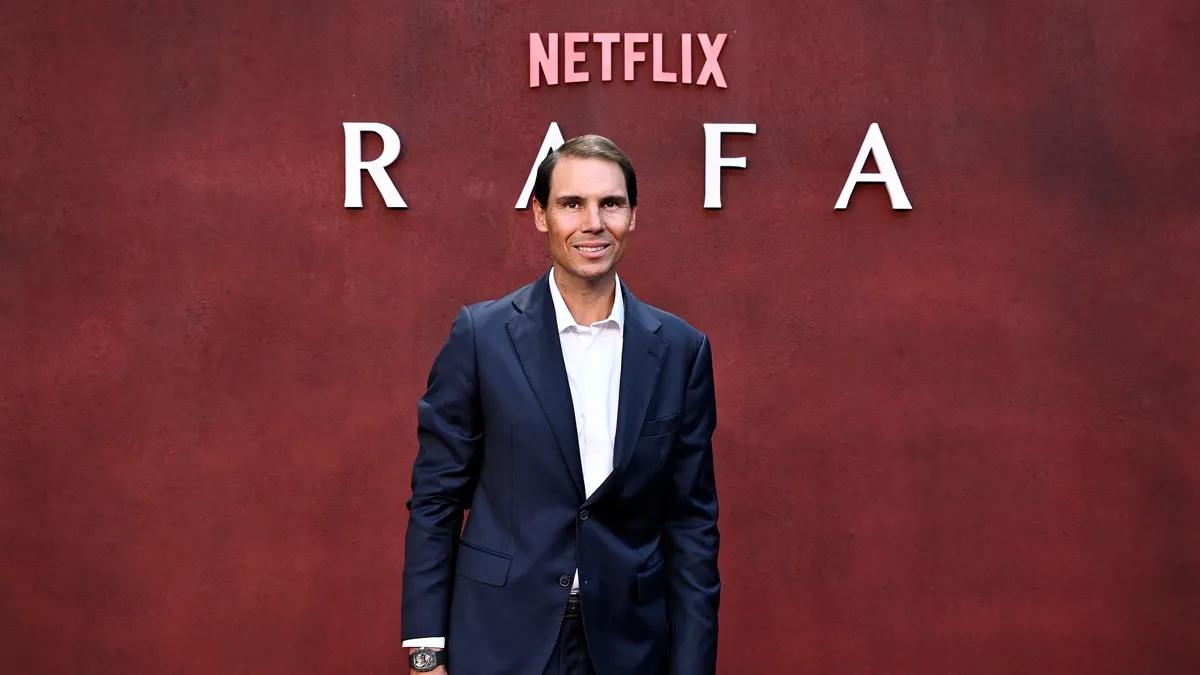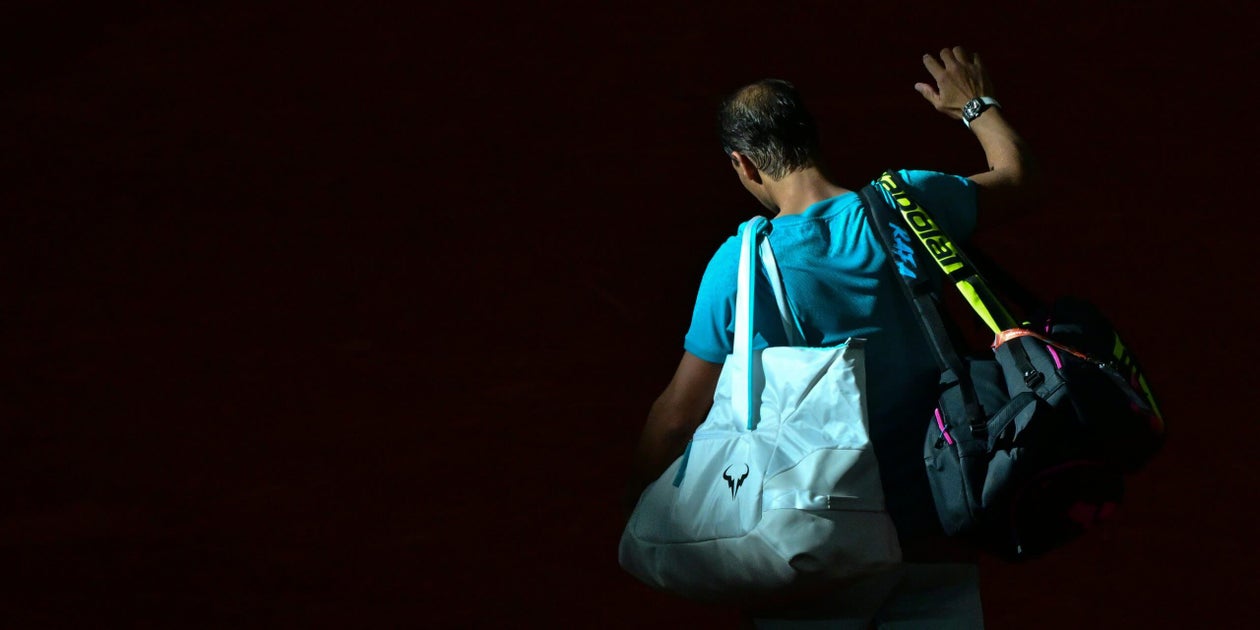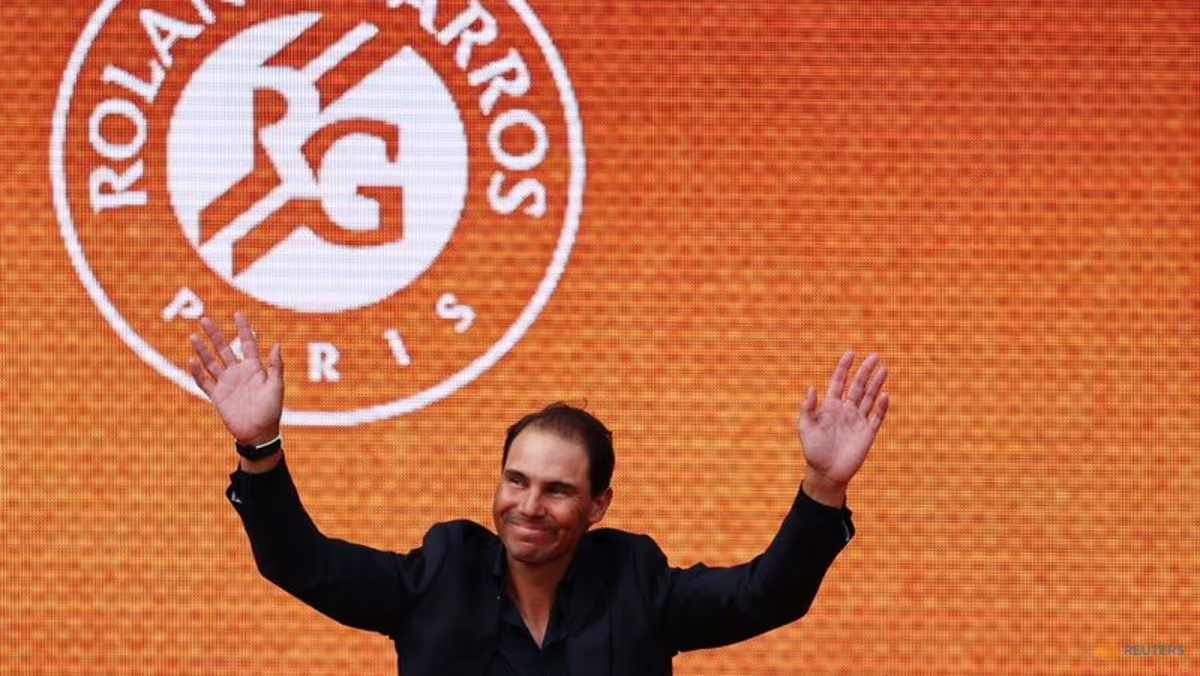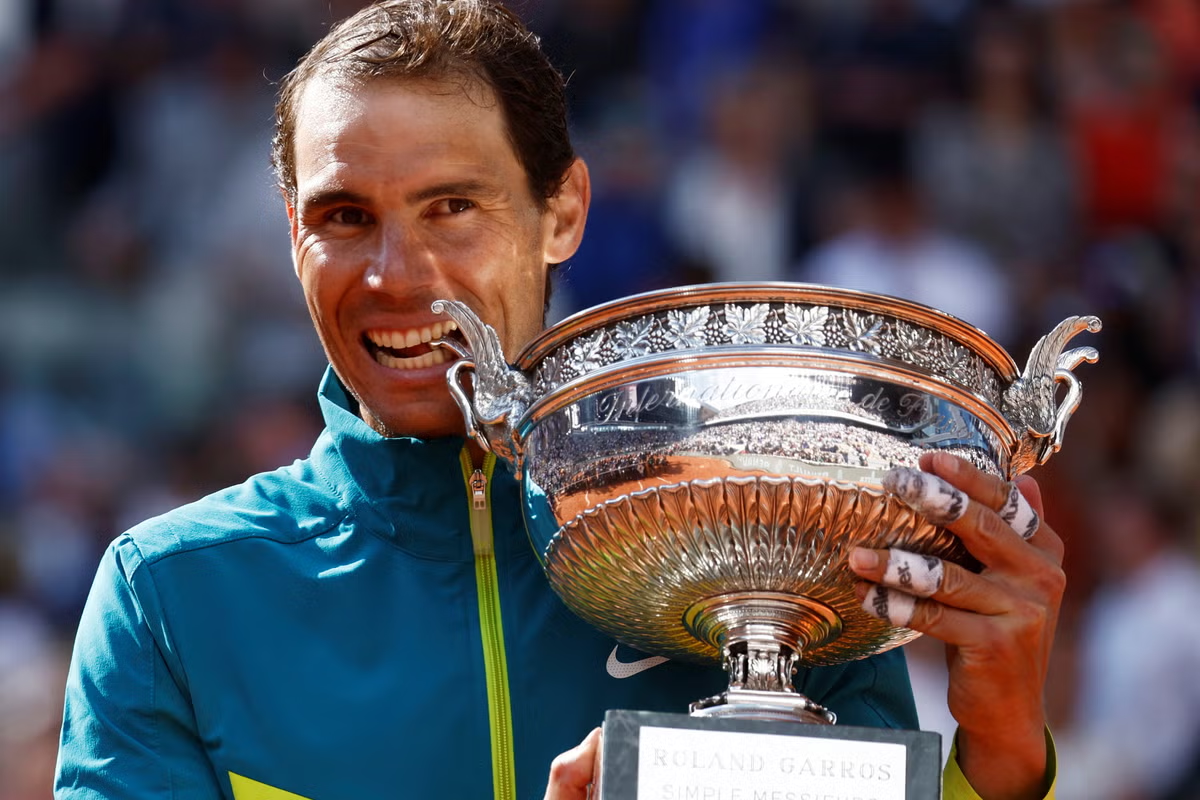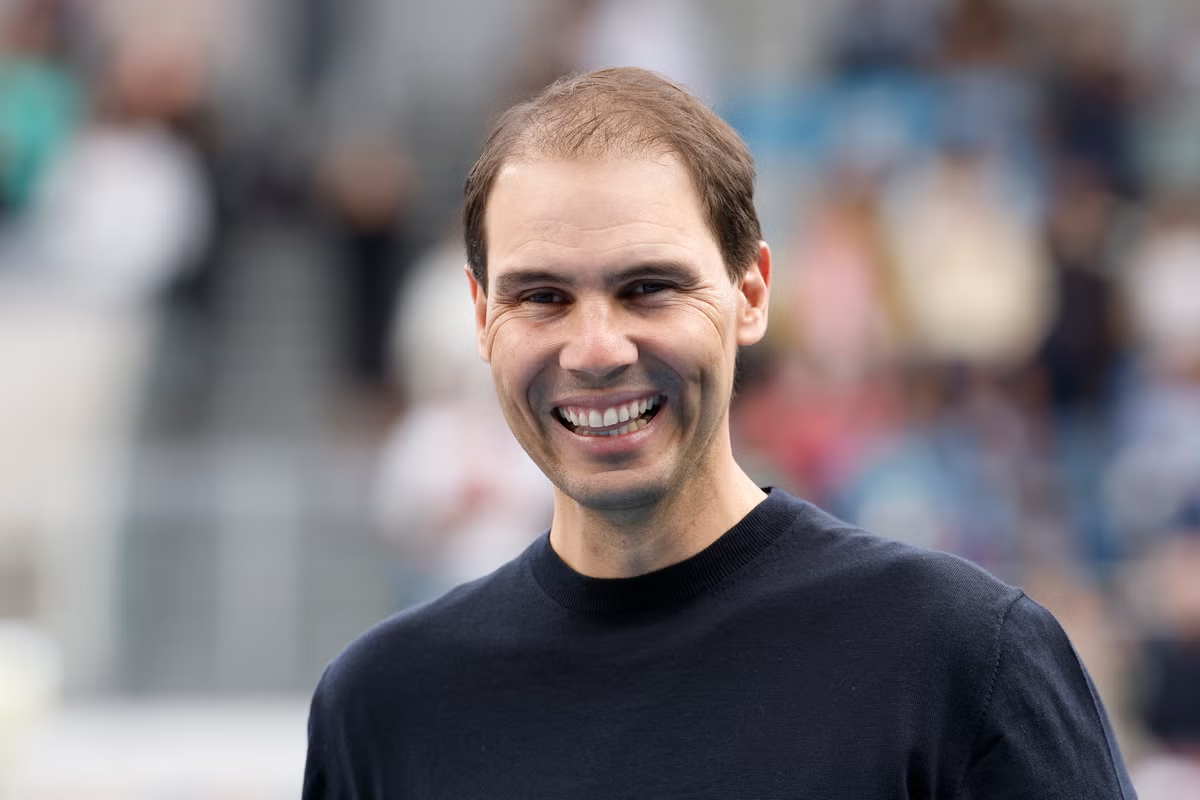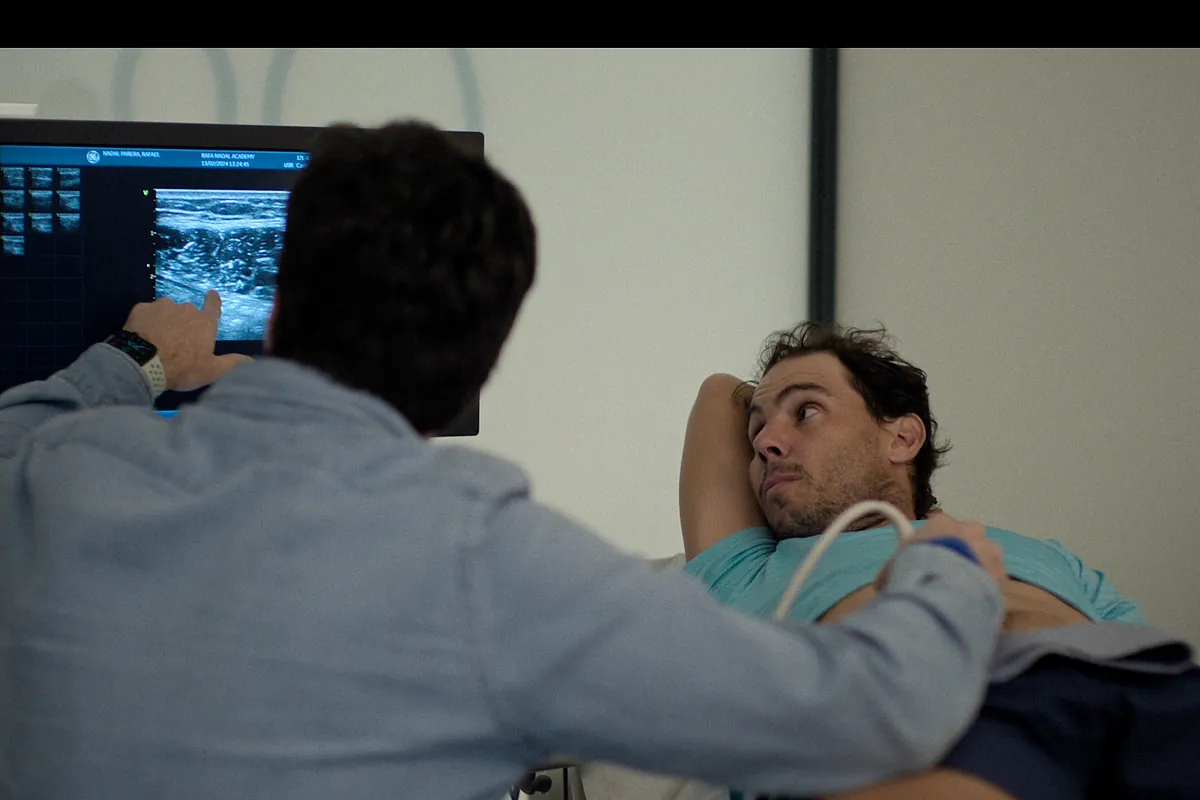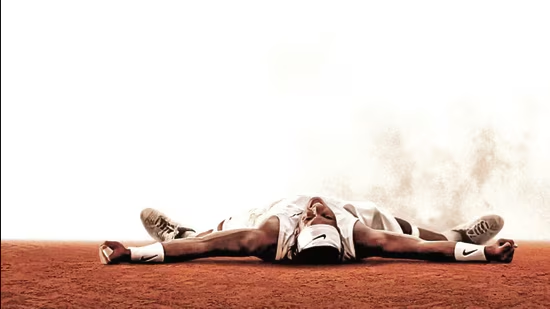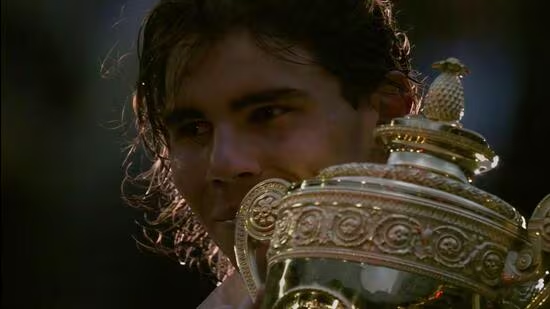
A new Rafael Nadal documentary shows us an old, now unpopular way of building a legacy — powering through suffering and impossible odds The greatest Stoics of ancient Greece and Rome would find kin in Rafael Nadal, a 22-time Grand Slam champion, including a record 14 titles at Roland Garros—also known as the French Open—played on clay, the most physically demanding surface in tennis. Fourteen titles at a single tournament and on a single surface stand as a statistical outlier in all of sport.The greatest Stoics of ancient Greece and Rome would find kin in Rafael NadalBut the Nadal story is more than titles. He is known as much for his ability to storm through pain as for a vicious forehand topspin—“with him, it’s do or die,” Novak Djokovic, one of Nadal’s greatest rivals, chimes in in Rafa, a new sports series on the Spanish champion which drops on Netflix on May 29. Among several endurance gospels playing out in the narrative, its star, now 40 and living his post-professional tennis life with his family in Mallorca, Spain, is this: The man took on suffering just so he could overcome that suffering.Dark stuff. Even as the world navigates war, killings, prejudices and possibly the El Niño moment of truth, a wellness industrial complex keeps rising relentlessly. Several trillion dollars are going into fix-it systems. Wellness and self-improvement are the new luxury. If you have anxiety, you and AI together can regulate your nervous system. If your boss unleashes torture, find longevity via slow living. Mental health means saying no, retreating to soulful caverns that have kitchens with healthy fats and empathy-oozing, soft company.In this age, where tolerance for pain has to be measured against world events as well as personal alienation, the story of Nadal’s 20-year tennis career has messages that can be read as “toxic”—if measured against the Longevity Age’s denigration of suffering, pressure and deference to hard task masters as means of building legacies. Why do you even need a legacy, new adults would likely ask.Imagine this: as an adolescent, Rafa had to train for the first hour of daily practice with his uncle—the famous Uncle Toni, who was not a tennis player but a singularly severe coach to his gifted nephew—without drinking any water. Starting from that age to his life now, the series at times makes Rafa’s decisions and exigencies seem like that of a Greek tragic hero. The elite athlete hardly ever looks like that—especially the gifted ones who radiate the swag of someone born to play tennis.Rafa has something universally human at its kernel: that making friends with pain pays off, that nothing substantial or epic can be built without physical—and emotional—pain.Rafa is anything but a eulogy or celebrity flattery.Director Zach Heinzerling (Stolen Youth: Inside the Cult at Sarah Lawrence, 2023, among other previous work) is interested in eking out every smidgen of Rafa’s pain principle onto the screen. We see him preparing for some of his most memorable wins—with surgeries, tapings, painkillers, nerve-numbing, and hard and frustrating conversations with his inner circle. The non-linear narrative moves through footage of his early years—from his first-ever tournament at 11, his uncle Toni shaping him bit by bit to build his legendarily robust appetite for suffering—to his own victories over his rivals Roger Federer and Novak Djokovic, and finally to the great champ saying ‘I have to stop’ to his family (shown intimately at his Mallorca home) in 2024 after losing to a very low-ranked player on his favourite surface.Rafa is anything but a eulogy or celebrity flattery. The interviews with his family, his coaches and core team, of course Federer and Djokovic, and Rafa himself, reveal a lot a regular tennis fan won’t know. Rafa’s vulnerability is comfortably on display as he talks about how he ended up embodying Uncle Toni’s implacable insistence on powering through and finding a way to win no matter what the circumstance. I am this, I became this, no regrets, but not all of it was good—that’s the subtext. His wife, a childhood sweetheart and mother of his two children, doesn’t have much time on camera, but she comes across as a figure somewhat grudgingly used to Rafa’s appetite for risk and pain.The details of the Rafa axis of pain are textbook fortitude: a lifelong Muller-Weiss syndrome which got Nike to make a special insole for his shoes that allowed Rafa to continue playing, heavily numbed leg parts and nerves just to play a final match, two intestinal perforations after sustained painkiller use, inability to swallow even saliva and exist without a bottle of water in his hands because of mounting anxiety. “I am not a winner. I am a competitor,” he says. “For me, it’s very simple, I am exploring my limits; tennis became a race against time,” he says later. And then he says, about the last phase of his career, when he got Carlos Moyá, Spanish tennis player and one of his childhood idols, and Uncle Toni left the team unceremoniously, “I found a little more freedom.” A story with no room for moderation or balance, Rafa ends with an easy breath. You feel it after the four episodes have already somewhat convinced you that chasing ease is not necessarily the best mental health solution.You don’t have to be a tennis geek or even a tennis fan to be equally riveted and frustrated by this series—the best to have come out in the past two years. You’d figure why the brutal Baby Boomer coach wasn’t necessarily a villain.Rafa streams on Netflix from May 29.See Less
The pain principle
A new Rafael Nadal documentary shows us an old, now unpopular way of building a legacy — powering through suffering and impossible odds | India News
928 words~4 min read