MoneyMagpie founder Jasmine Birtles knows first-hand as both an industry commentator and small business owner07:12, 30 May 2026Millions of small business owners across the UK say they are happier working for themselves than in traditional jobs — even as rising costs, income uncertainty and ongoing financial pressure continue to squeeze finances.Eight in 10 entrepreneurs say they are happy running their own business, according to new research from VistaPrint, with 77% saying they are happier now than when they worked for an employer.The findings suggest that despite a tough economic backdrop, many Britons are still choosing self-employment for one key reason: control.But behind the upbeat headline figures lies a far more fragile financial reality.Nearly half of respondents said income uncertainty is one of their biggest challenges, while others pointed to rising costs, unpredictable demand and the strain of maintaining a work-life balance while running a business.‘You’re in control — but you carry all the risk’For many small business owners, the trade-off is clear: greater freedom, but less financial certainty.That is something personal finance expert and MoneyMagpie founder Jasmine Birtles knows first-hand as both an industry commentator and small business owner.She says the appeal of self-employment often comes down to one factor above all else: control.“Even when money is tight, many small business owners place a high value on autonomy,” she says. “Being able to decide when and how they work, and having direct control over their earnings, can feel more rewarding than a fixed salary — even if it comes with more risk.”“I know from running a small business myself that the freedom is what keeps people going,” she adds. “But that freedom comes with responsibility — you carry the risk as well as the reward.”Why business owners still report higher happinessThe VistaPrint research found that most respondents value being able to set their own hours, choose their work and directly influence their income — even if that income fluctuates month to month.From a personal finance perspective, this shift helps explain why so many say they would not return to traditional employment, even during periods of financial pressure.The hidden financial trade-offWhile optimism remains strong, the data also highlights a clear vulnerability.Six in ten business owners say they feel able to grow or expand over the next year, despite more than half saying they do not feel supported by government policy.But experts warn that confidence can sometimes mask weak financial resilience.“Too many self-employed people focus on growth without building protection,” says Birtles. “That can mean not having enough savings for quieter months, under-investing in pensions, and relying too heavily on a small number of income streams.”AI is becoming a quiet business lifelineOne of the most striking shifts highlighted in the research is the growing role of artificial intelligence.More than half (52%) of small business owners now use AI tools several times a week or more, mainly for writing, marketing and problem solving.Amoung regular users, 63% say it has improved their happiness — suggesting it is not just boosting productivity, but also reducing day-to-day stress.Birtles says this reflects a wider trend towards “DIY efficiency” among small firms.“For many sole traders, AI is acting like a virtual assistant,” she says. “It helps fill gaps where they would previously have needed to hire help or simply work longer hours.”Money pressures still dominateDespite the positivity, financial strain remains the biggest concern for entrepreneurs.Nearly half of respondents cited income unpredictability as a key challenge, alongside rising costs and difficulty planning ahead in an unstable trading environment.It is a reminder that self-employment often delivers emotional rewards that do not always align with financial security.Age and location shape outlookThe VistaPrint research also found clear differences between groups.Younger entrepreneurs, particularly Gen Z, are more likely to prioritise flexibility and learning, while older business owners tend to place greater emphasis on income stability.Confidence about growth is highest among younger entrepreneurs and lowest among Baby Boomers, although this may reflect different stages of business life rather than outlook alone.Regionally, London stands out as the happiest area for small business owners, despite higher costs. The data suggests that access to customers, networks and opportunity may help offset financial pressure in the capital.What it means for your moneyFor anyone self-employed — or thinking about making the leap — the message is clear: happiness and financial security do not always move together.From a MoneyMagpie perspective, the difference between those who thrive and those who struggle is rarely just income — it is financial resilience.That means:Building an emergency fund to cover lean periodsKeeping business and personal finances separatePaying into a pension from day one, even in small amountsDiversifying income streams wherever possibleUsing low-cost digital tools, including AI, to cut costs rather than add themArticle continues belowThe bigger pictureAt a time when many UK households are feeling financial pressure, the data suggests more people are still drawn to self-employment — even with its risks.Ultimately, it points to a simple conclusion: for many small business owners, happiness is increasingly driven not by how much they earn, but by how much control they feel they have over earning it.
'I run a small business - one thing makes it worth it even when money is tight'
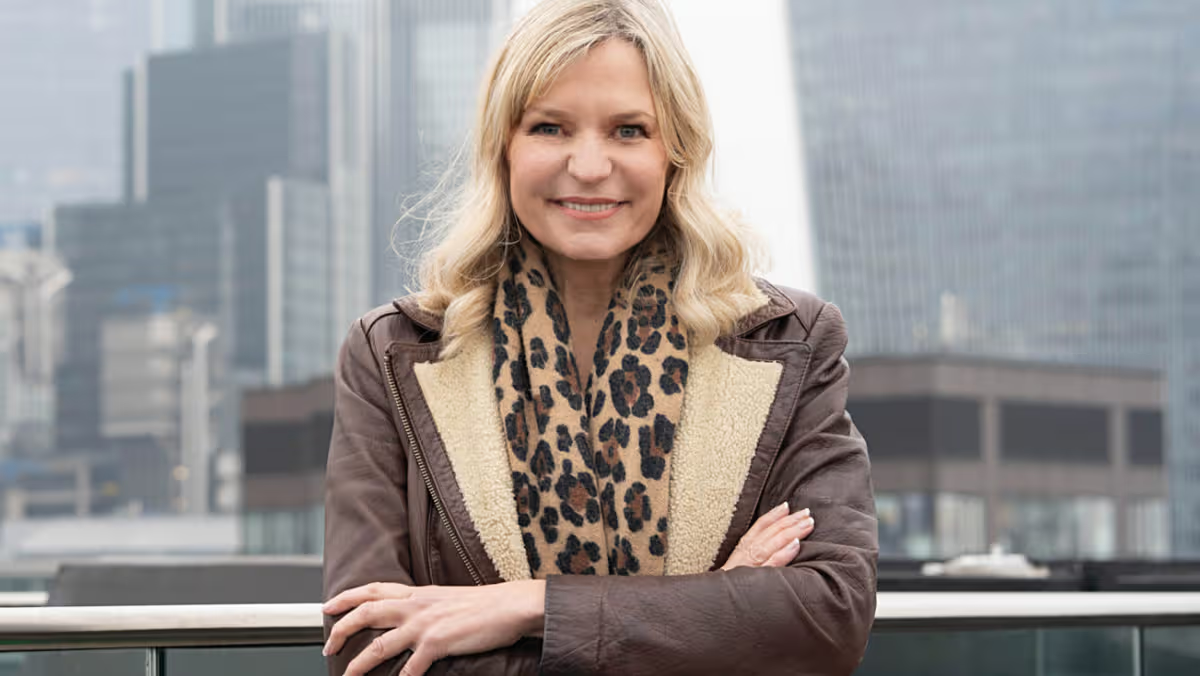
MoneyMagpie founder Jasmine Birtles knows first-hand as both an industry commentator and small business owner
840 words~4 min read