The development of optical fiber was arguably the single most significant enabler of digital communication. It has revolutionized telecommunications by enabling high-speed, long-distance data transmission with immense bandwidth, far surpassing the capabilities of traditional copper wires. It has enabled long-distance communication, fiber-to-the-home (FTTH) services, high-speed internet, on-demand video streaming, and online gaming. It is fundamental to the performance of any data center.
Over the last twenty years the increasing transmission speed of optical fiber has been transformational, evolving from megabits per second (Mbps) in early systems to hundreds of terabits per second (Tbps) in modern, experimental, and high-end commercial applications.
So how has this happened and what is next on the horizon for the future development of optical fiber?
Glass quality
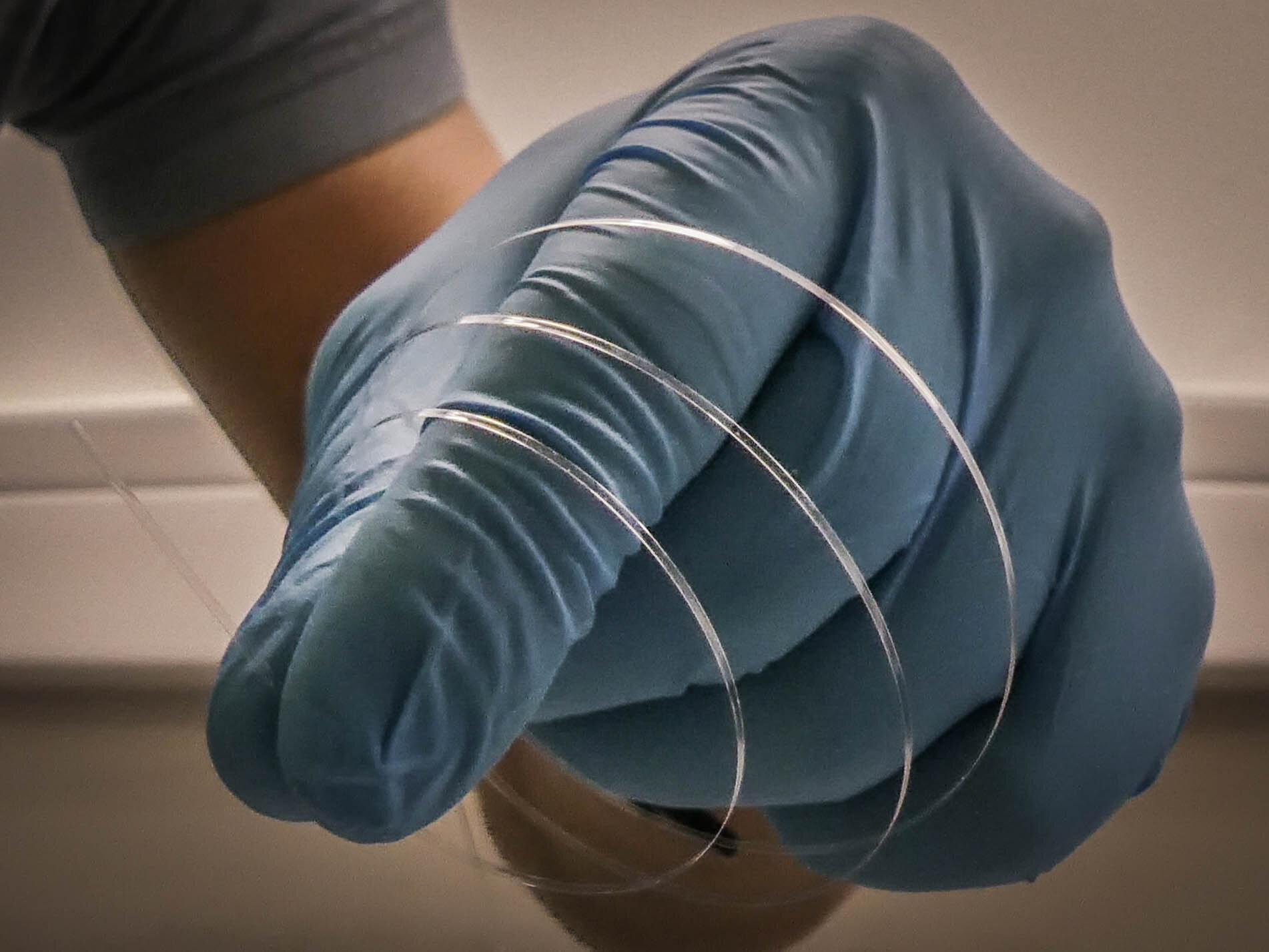
Optical fibers are drawn from a glass rod (or preform) and its quality dictates the performance of the fibers. Modern fibers are very pure and use high-purity silica glass as their base material. Silica is chosen for its exceptional optical clarity, allowing light to travel over long distances with minimal attenuation (loss). Advancements in the quality of the glass and the manufacturing processes used have enabled the development of ultra-low-loss fibers which are crucial today for long-haul, submarine, and high-capacity data center networks, allowing for longer distances between amplifiers or regenerators.