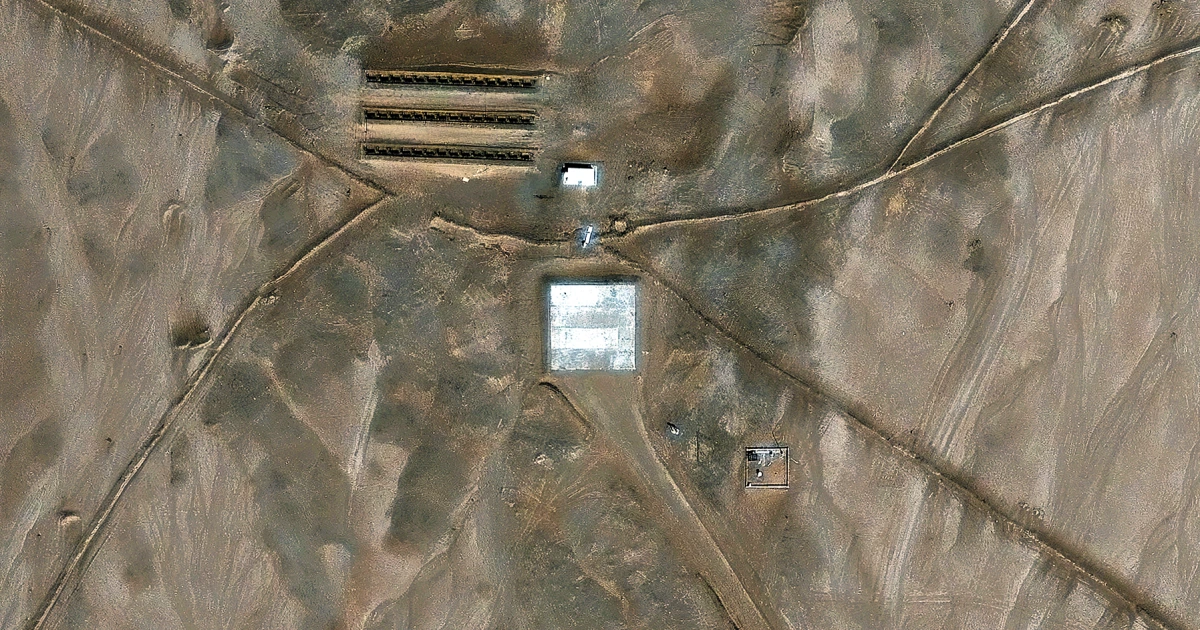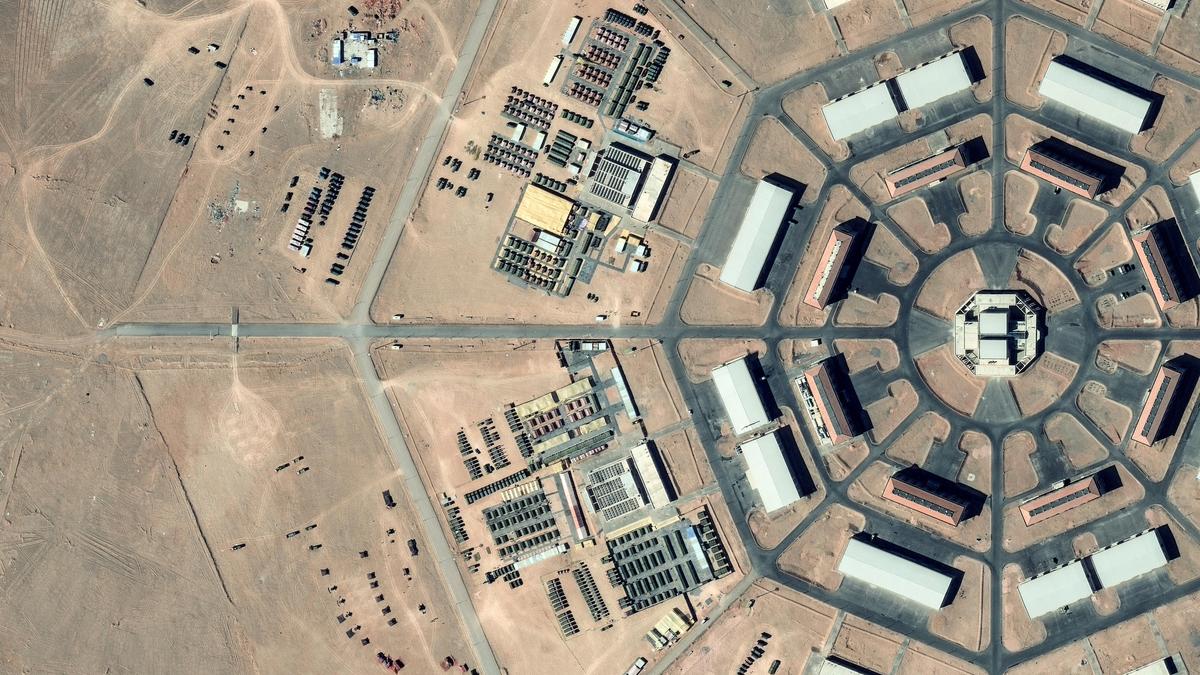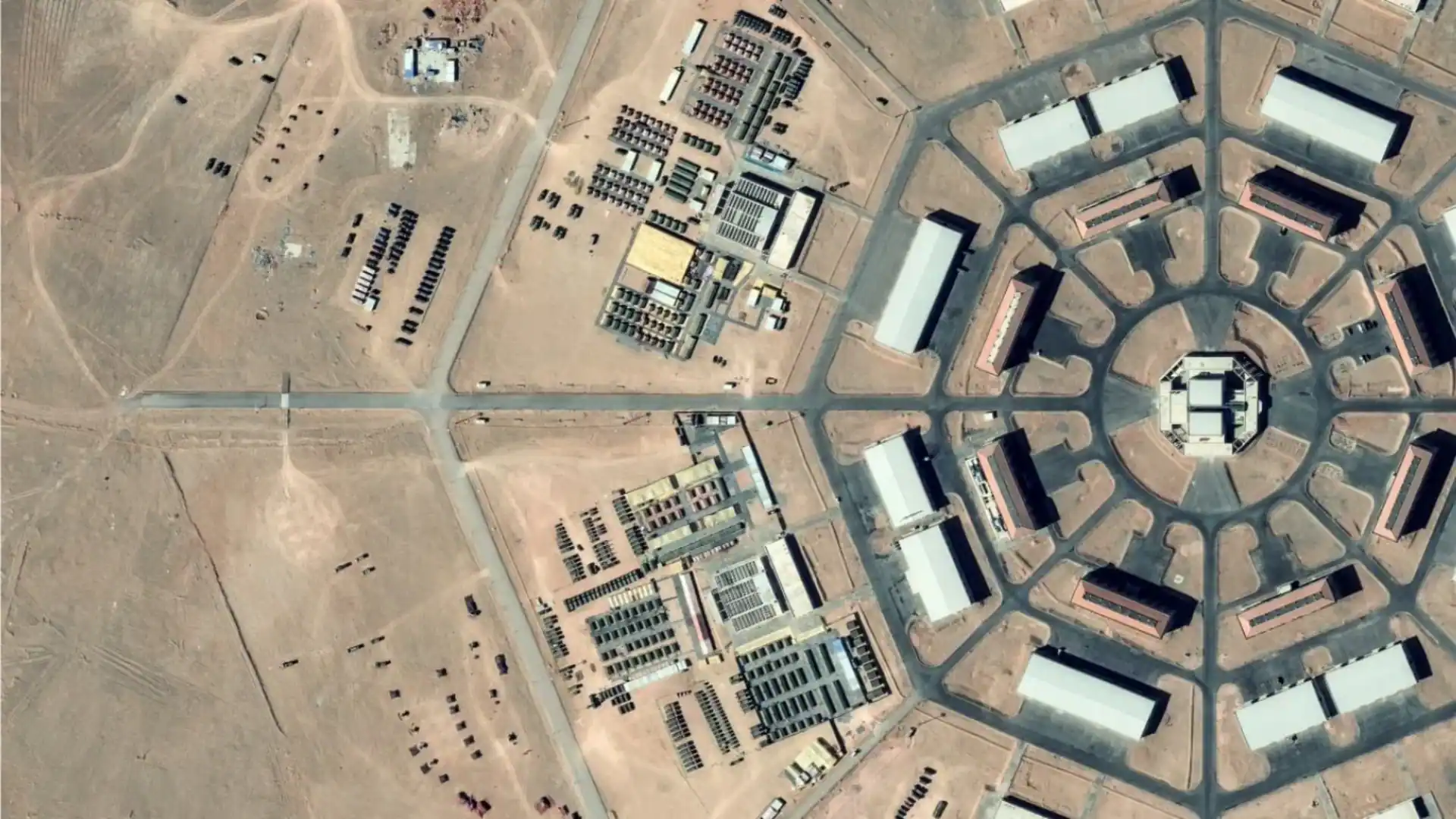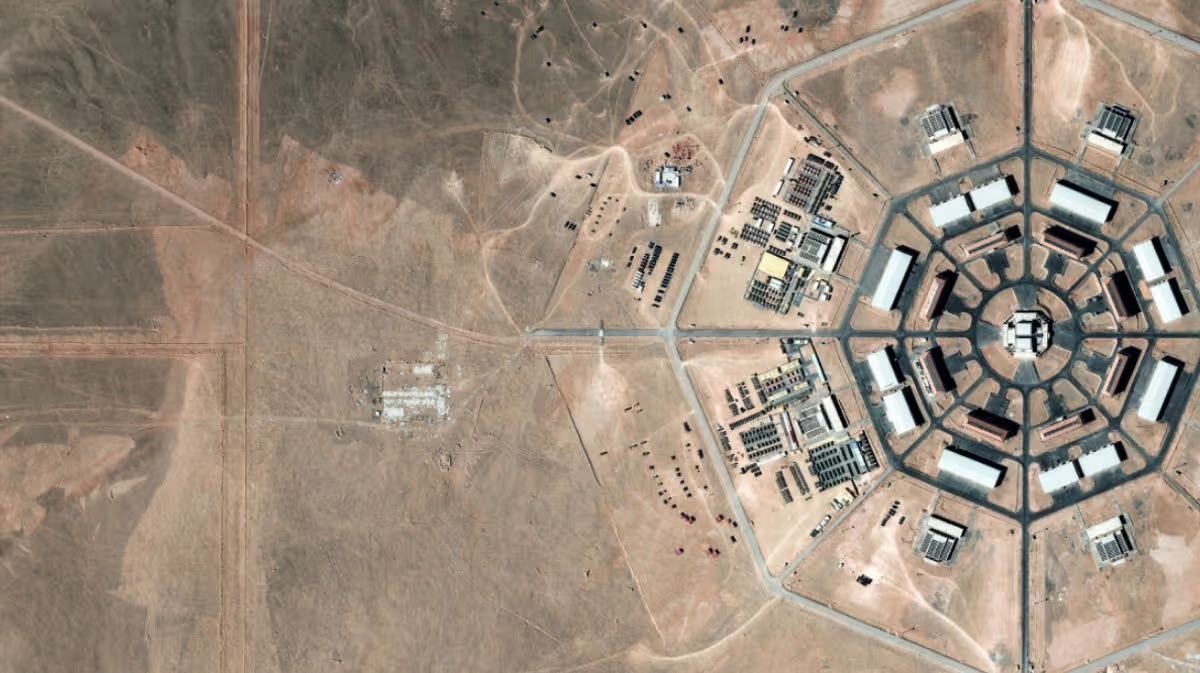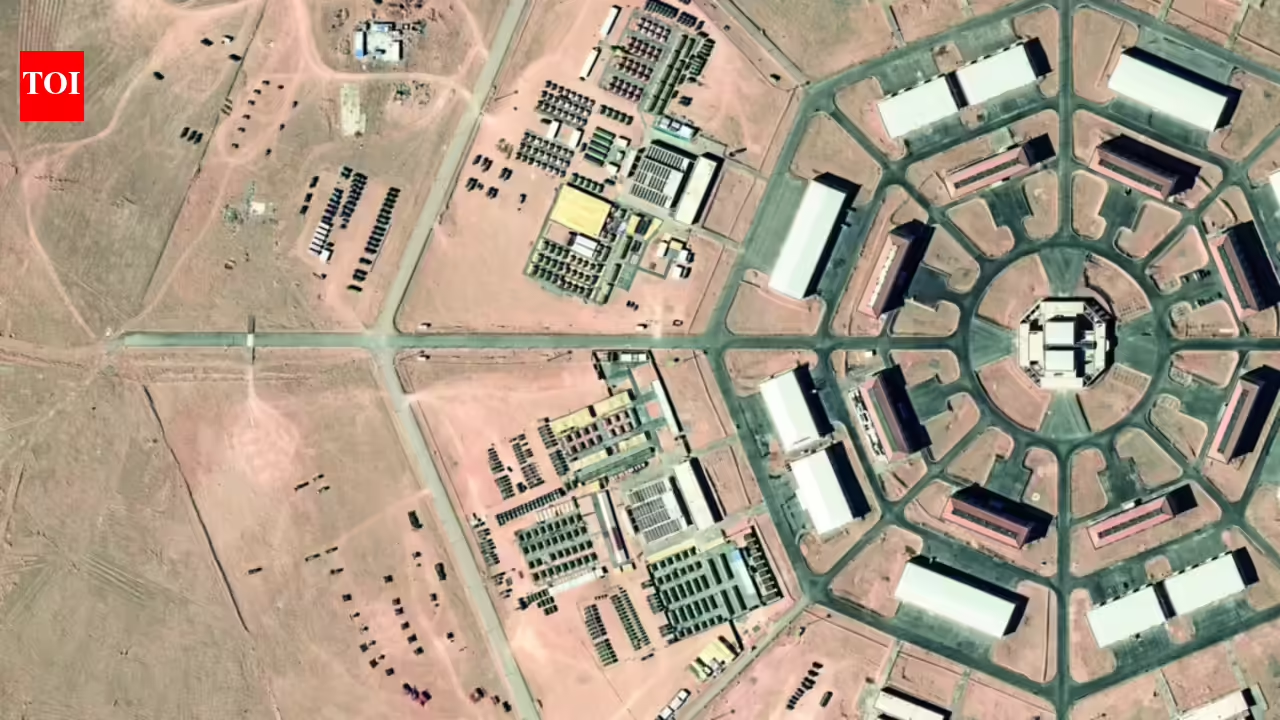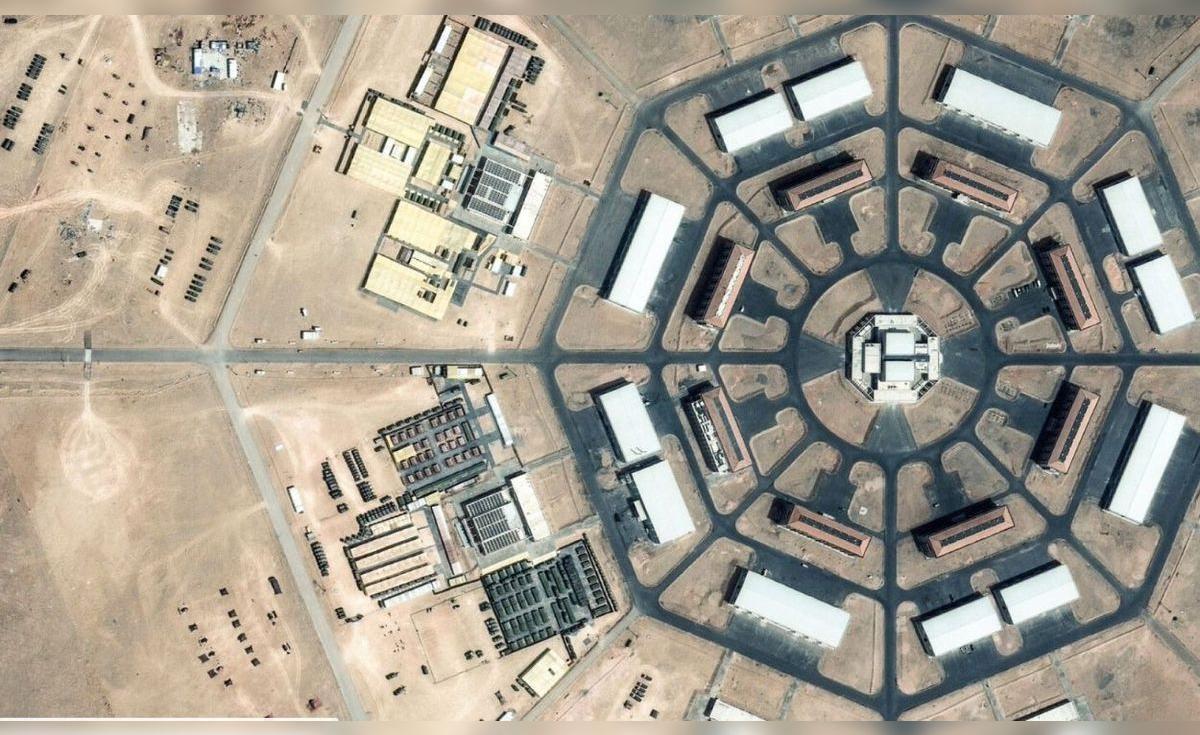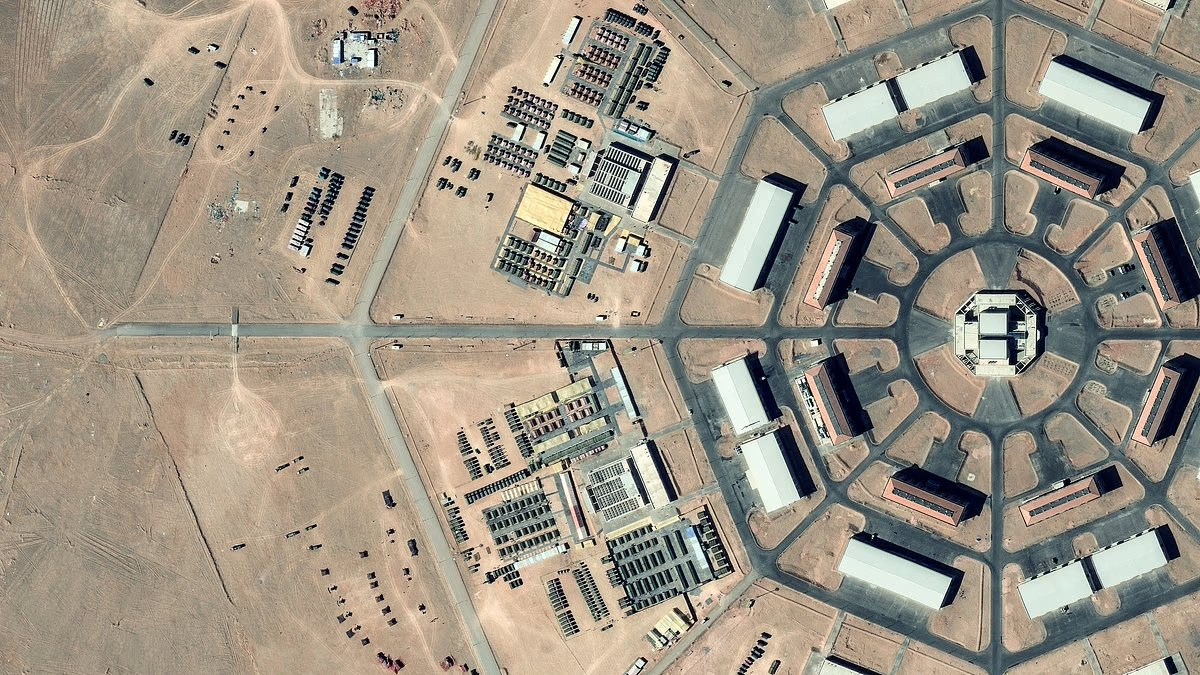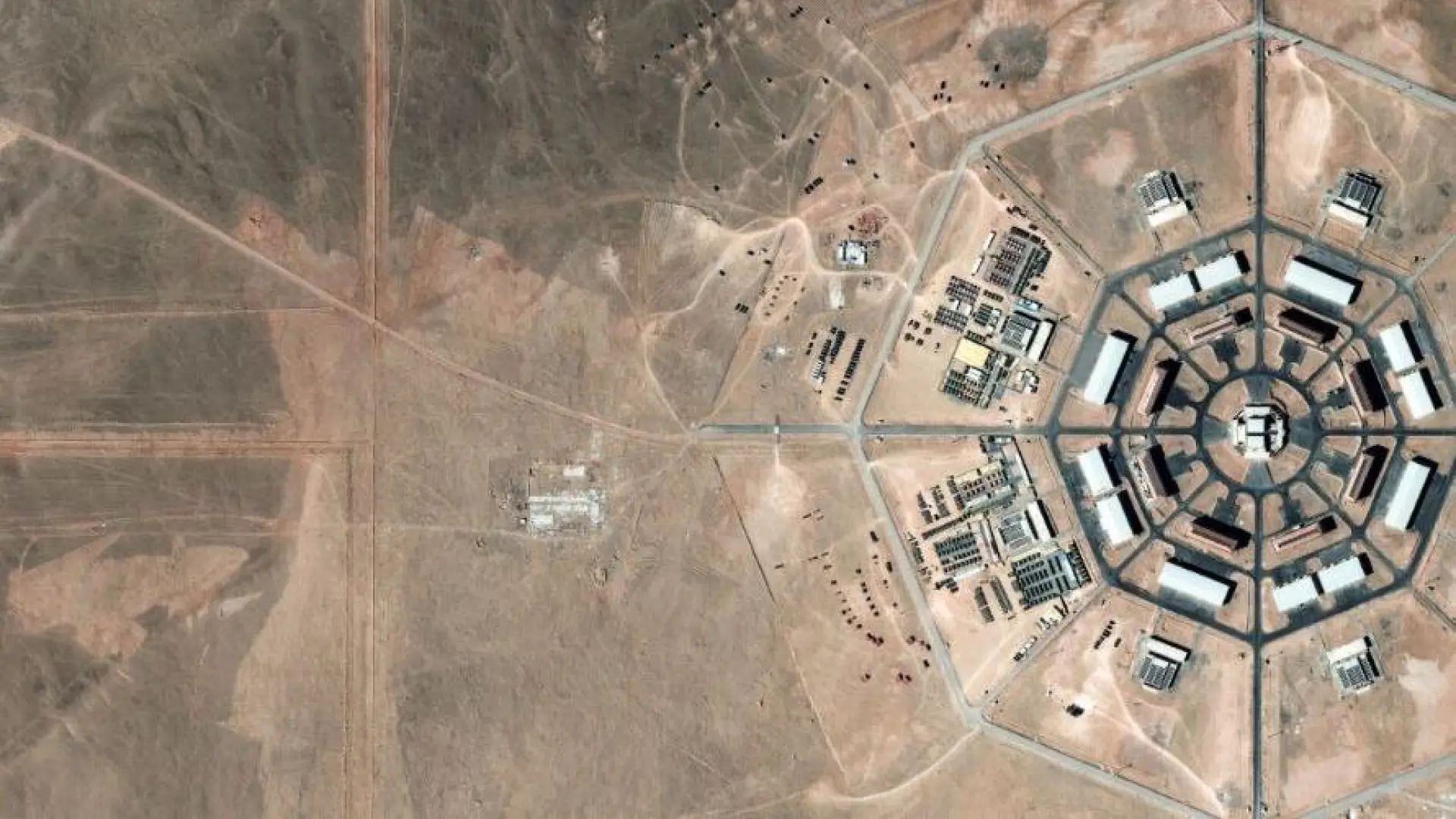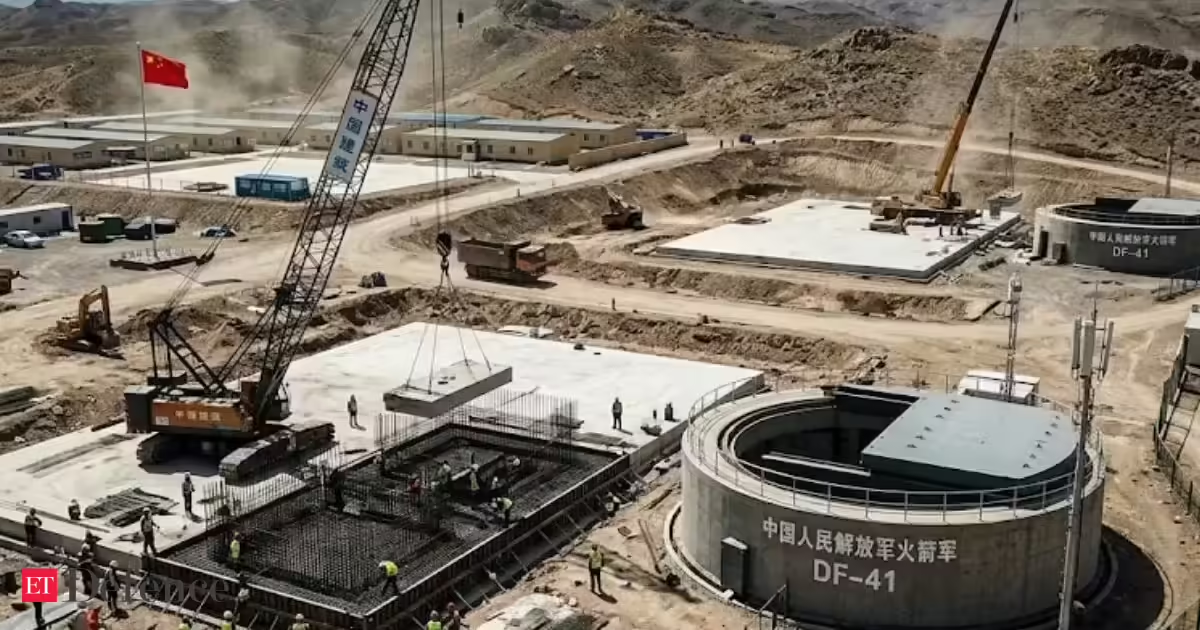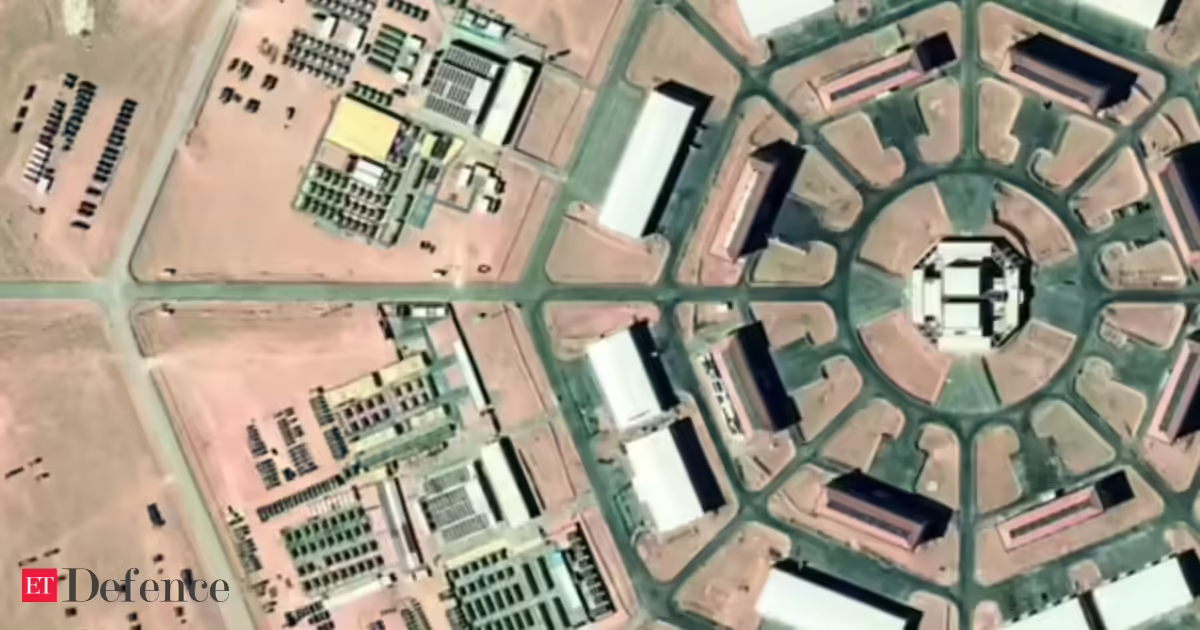
China is building a vast network of military infrastructure deep in its north-western deserts, raising fresh concerns about the growing nuclear rivalry between Beijing and Washington. Satellite images reviewed by Reuters reveal a sprawling system of launch pads, bunkers, communications facilities and support structures near China's nuclear missile silos in Xinjiang and Gansu.Security experts told Reuters that the construction appears aimed at strengthening China's ability to launch a retaliatory nuclear strike even if its nuclear forces come under attack first.What Have Satellite Images Revealed About China's Nuclear Sites?According to Reuters, newly analysed satellite imagery shows more than 80 launch pads that could potentially support mobile missile launchers and air-defence systems. The images also reveal fortified bunkers, weapons storage areas, airfields and communications facilities spread across thousands of square kilometres of desert. Experts cited in media reports believe the network is designed to improve the survivability of China's land-based nuclear forces and make them harder to destroy in the event of a potential conflict.Why Is China Expanding Its Nuclear Infrastructure?China has long maintained a policy of keeping a relatively small but credible nuclear deterrent. The country's nuclear strategy is based on its ability to respond to a nuclear attack rather than launch one first.Reuters quoted Alexander Neill, an adjunct fellow at the Pacific Forum, as saying: "We can see this infrastructure is being built on a grand scale, covering thousands of square kilometers of desert beyond the silo fields."He added that the developments could represent "a very considerable enhancement and diversification of China's strategic nuclear deterrent."What Are The Octagon-Shaped Military Facilities?At the centre of the newly discovered network are two large octagon-shaped military complexes in eastern Xinjiang. These installations were built over the past six years and are located near the Hami missile silo fields.Satellite images reviewed by Reuters show the facilities contain housing for personnel, storage areas, bunkers and infrastructure connected to nearby missile sites through roads and rail links.Recent military activity, including the movement of large vehicles and temporary structures, has also been observed around one of the facilities.Could The Sites Support Mobile Nuclear Missiles?Several analysts told Reuters that some of the launch pads are large enough to support road-mobile intercontinental ballistic missile (ICBM) launchers. Others could be used for air-defence systems, electronic warfare equipment or communications operations.People working in the field caution that the exact purpose of many of the structures remains unclear. However, the scale of the construction suggests they are designed to support strategic military operations, including nuclear deterrence.How Strong Is China's Nuclear Arsenal?China's nuclear arsenal has been expanding rapidly in recent years. According to the latest Pentagon assessment cited by Reuters, China is expected to possess around 1,000 nuclear warheads by 2030.The report also estimates that approximately 100 ICBMs have already been deployed across China's three main missile silo fields.China's missile force includes both silo-based missiles and mobile launch systems capable of reaching targets across the United States.What Role Do Communications And Early-Warning Systems Play?Analysts believe the network includes advanced communications infrastructure designed to support command and control operations. Reuters reported that satellite dishes, towers and underground conduits may be linked to military communications and nuclear force management.Tong Zhao, a senior fellow at the Carnegie Endowment for International Peace, told Reuters: "Taken together, I think there is a real possibility that the octagonal structures and the strange towers are linked to C3 - command, control, and communications."China has also invested heavily in its early-warning capabilities through satellite systems that can detect incoming missile launches within minutes.Why Are Experts Paying Close Attention To The Development?The scale of the construction has surprised many nuclear security specialists.Hans Kristensen, director of the Federation of American Scientists' Nuclear Information Project, told Reuters that the project is unlike anything he has seen before. "I've never seen anything quite like it," he said. "It's an extraordinary effort."The developments come at a time of increasing tensions between China and the United States, particularly over Taiwan. Analysts say the growing infrastructure highlights Beijing's determination to ensure its nuclear forces remain operational under any circumstances.What Does This Mean For Global Nuclear Competition?The new facilities indicate that China is investing heavily in strengthening its second-strike capability, the ability to retaliate after a nuclear attack. Such a capability is considered a key pillar of nuclear deterrence.As China continues modernising its military under President Xi Jinping, the country's nuclear expansion is expected to remain a major focus for defence planners and policymakers around the world.Inputs from TOI and Reuters
Why is China building launch pads near its nuclear missile silos, and what do satellite images reveal about sites with over 80 launch pads?
Satellite images reveal that China is constructing a vast network of military infrastructure in its north-western deserts, including more than 80 potential launch pads and fortified complexes. The expansion appears to be aimed at enhancing China's ability to launch a retaliatory nuclear strike and improving the survivability of its land-based nuclear forces.
741 words~3 min read