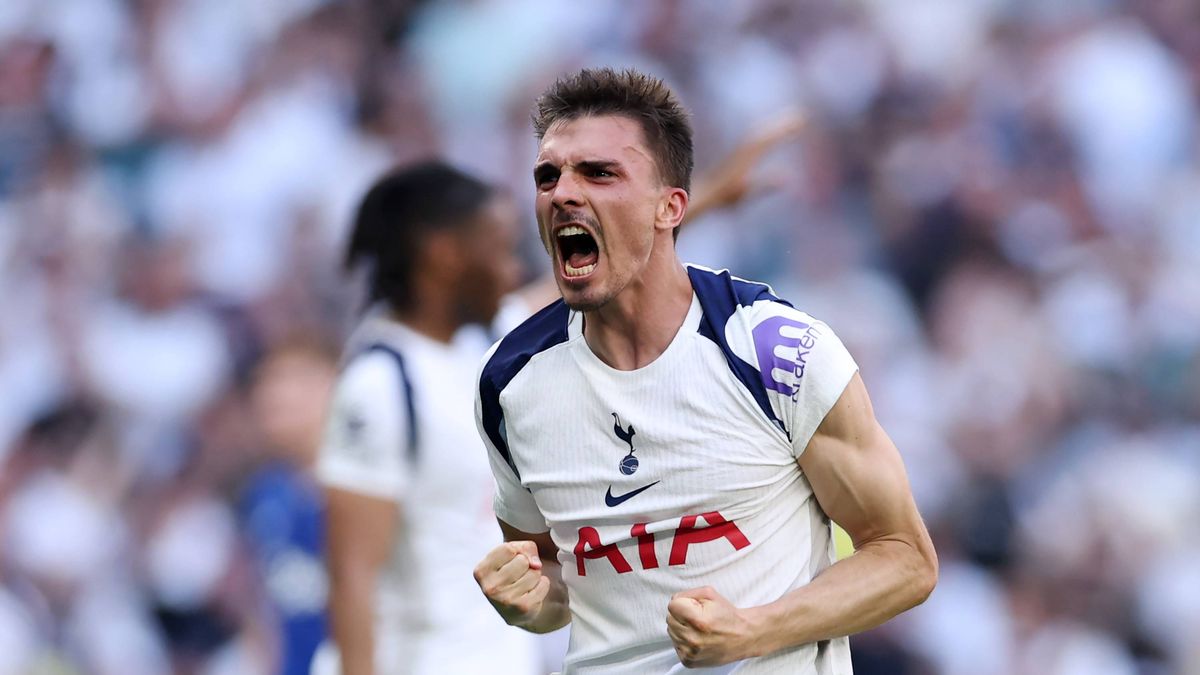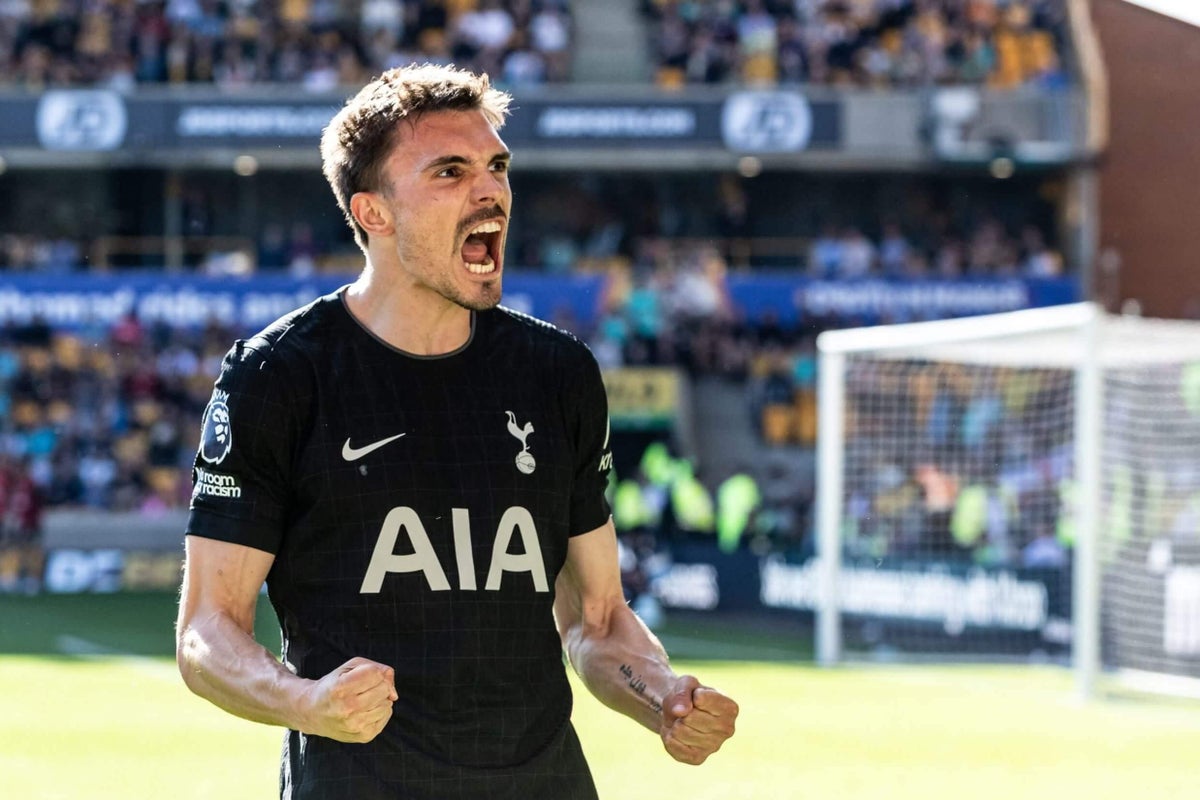
By almost every metric, last season was the worst in almost five decades for Tottenham Hotspur, leaving historically slim pickings for player-of-the-season candidates.While their struggles were club-wide, it is not difficult to find issues with almost every individual who played a meaningful role. Their struggles to build through the lines started with goalkeeper Guglielmo Vicario, who often looked panicked and incompetent in possession. If the ball reached midfield, they lacked the creativity and tactical direction to advance into the final third, where Spurs were disjointed, lacking technical quality, and too often reliant on set pieces to score.In the end, it was their set-piece proficiency that saved them. Tottenham ended the season with 18 goals from corners, the second-highest total in Premier League history. The most important were scored by Joao Palhinha, Tottenham’s player of the season and the playing embodiment of the human qualities Roberto De Zerbi instilled from the dugout.Joao Palhinha wheels away in celebration as his shot against Everton squirms over the line (Marc Atkins/Getty Images)Like De Zerbi, who was drafted in with Tottenham’s season on the brink with seven games remaining, Palhinha was an unlikely hero — not least because his battling, full-blooded game seemed incongruous with De Zerbi’s highly technical, tactical approach.The inquest into Palhinha started before he had even kicked a ball in anger in north London. For some, signing Europe’s most proficient midfield tackler was the obvious antidote to Tottenham’s weak underbelly, adding steel to a side that had conceded 65 goals the season before.His outstanding performance in the 2-0 away win against Manchester City, where he scored his first of seven goals in all competitions, was a strong sign that he would be precisely that. Tottenham ended the season with the sixth-best away record and conceded just 26 goals — only Arsenal, Everton and Manchester City were more impenetrable on the road — and Palhinha’s front-foot defending was a major reason why.But his doubters were not exactly wrong, either. Palhinha failed in his step up from Fulham to Bayern Munich because of his limitations in possession, and, to nobody’s surprise, the 30-year-old did not suddenly evolve into Luka Modric once he pulled on the lilywhite. Palhinha completed just 81.6 per cent of his passes for Tottenham last term, which, if he were an ambitious deep-lying line-breaker like Adam Wharton, you could perhaps excuse, but he spent seven months playing under Thomas Frank, where he did little more than pass safely sideways.Due to their atrocious home form, inability to control matches, and lack of midfield progression, most Spurs fans had justifiably given up on the “Bentinha” pivot by mid-season, which had shown very few signs of successfully functioning together in the Premier League.Yet, with Tottenham’s future on the line, De Zerbi called on Palhinha to be a catalyst for an uplift, and his goals proved the difference between relegation and survival. He was on the bench for De Zerbi’s first game in charge, the away 1-0 defeat to Sunderland, then came off the bench to score the crucial winning goal against Wolverhampton Wanderers in April. He was part of an outstanding midfield performance the following week as Tottenham beat Aston Villa 2-1 at Villa Park, before his final-day goal against Everton, arguably the club’s most important of the Premier League era.
Tottenham Hotspur’s 2025-26 player of the season: Joao Palhinha
A truly world-class ball-winner whose character is cut from the same cloth as De Zerbi
1,041 words~5 min read