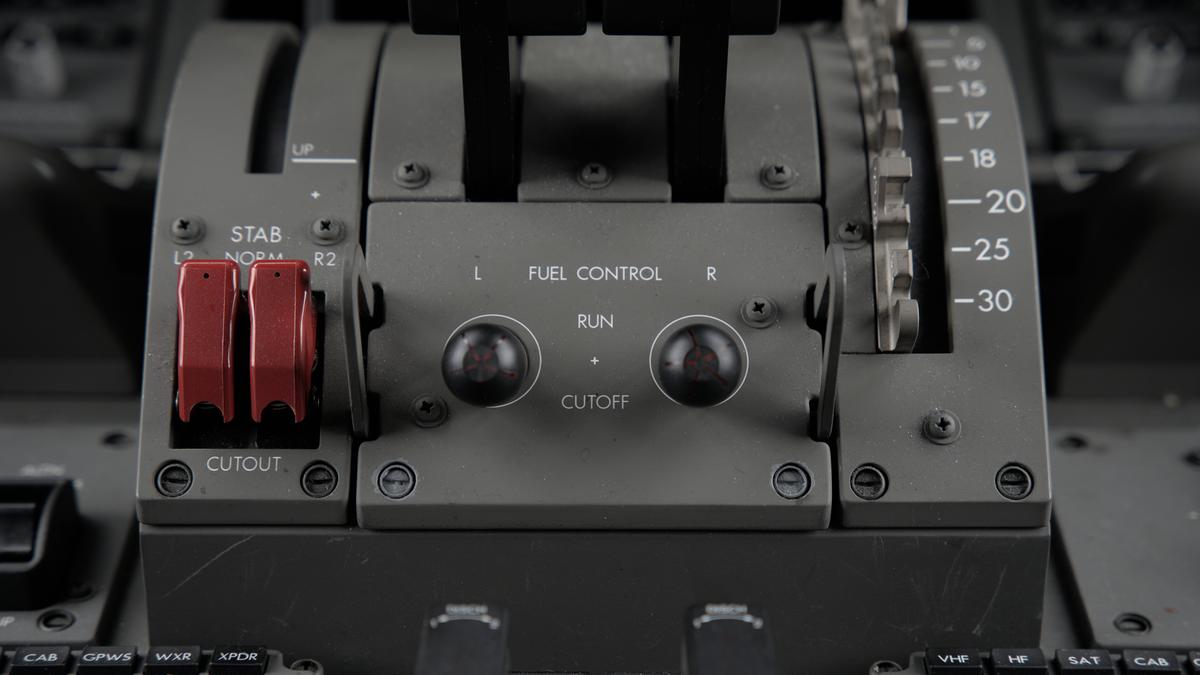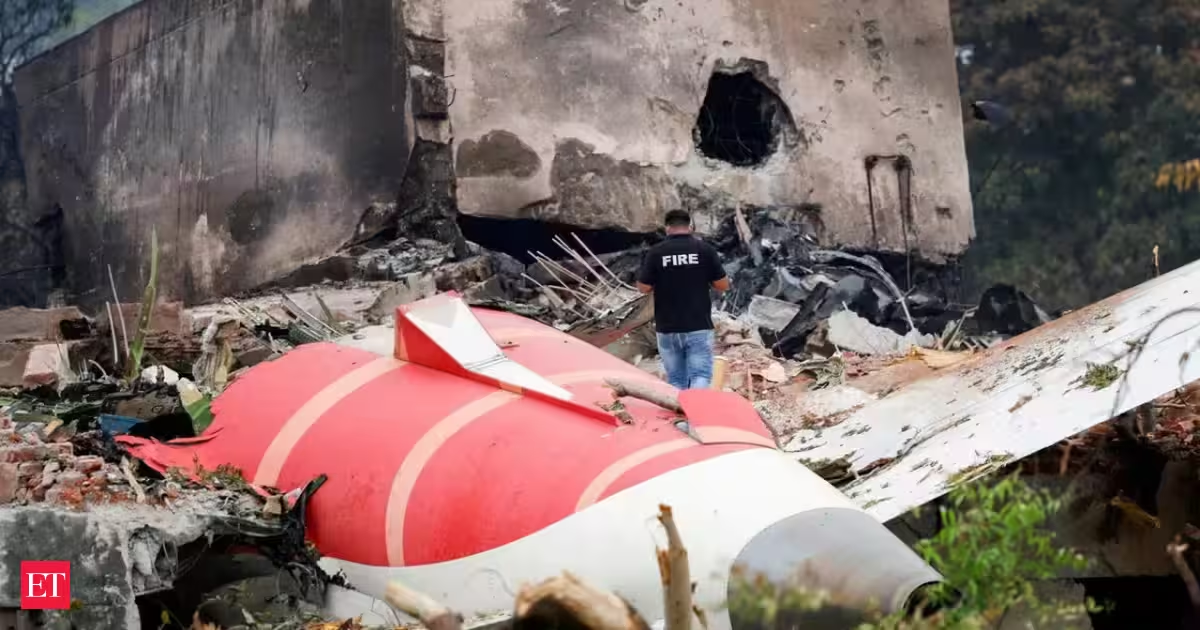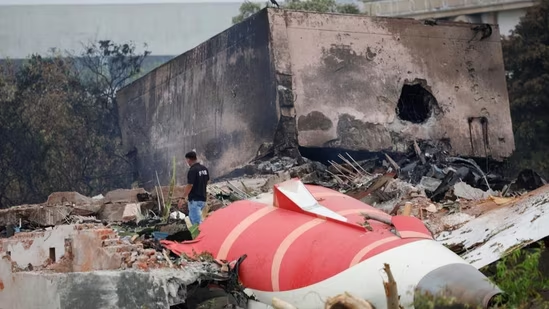
Eight months after the crash of AI 171 in June 2025, an Air India Boeing 787-8 was grounded following its London to Bengaluru flight in February 2026. The reason: a faulty fuel control switch.A fire offical stands next to the crashed Air India Boeing 787-8 Dreamliner aircraft, in Ahmedabad, India, June 13, 2025. (REUTERS)According to the ministry of civil aviation (MOCA), the aircraft was grounded after a report in the ‘Pilot Defect Report’ stated that the fuel control switch slipped from ‘RUN’ to ‘CUTOFF’ when it was pushed slightly. The report mentioned that the switch also did not lock positively in its selected position.Based on recommendations from the Original Equipment Manufacturer (read: Boeing), the airline inspected and functionally tested the fuel control switches (FCS) according to prescribed procedures. They found that the fuel control switch “was mechanically functioning as designed and considered the unit serviceable”. Aviation authorities also resolved to send a fuel control switch from the Boeing 787-8 to the US for further inspection, even though initial checks found no fault. Within days of the grounding, the aircraft was back in operation.While the final word on the switches, which appear to have “developed a mind of their own”, has not yet been heard, various conspiracy theories abound in the industry as it awaits the final report on the cause of the crash of AI 171, another Boeing 787-8 Dreamliner, that resulted in 260 deaths. People outside the investigation but privy to it told this writer the final report is unlikely to be public before August, although those within the investigating team said they were still in the dark about this. News reports have said that the AAIB might publicly present an interim report in June.Meanwhile, two distinct camps with hardening positions on the possible cause of the crash have emerged during the last year.Also Read: AI 171 pilot 'intentionally shut fuel switches’: Italian report’s claim on final probe findingOne is led by the pilot community in India but several others support its theory, including some industry insiders, experienced aircraft engineers and Indian Air Force (IAF) veterans. This group argues that while the “pilot did it” theory might be the most palatable for all, the problem likely began with an electrical short circuit or malfunction of some kind, which led to the Ram Air Turbine (RAT) being deployed almost as soon as takeoff. In the B787, the RAT deploys in case of a dual generator failure or a major electrical failure.Moreover, they argue that all circumstantial evidence –– like the melting of the rear recorder –– indicates a possible electrical fire, which is more lethal than a fuel fire. As one person from this group puts it: “In all the explanations offered by the Aircraft Accident Investigation Board (AAIB) till now, nothing explains why the RAT deployed almost as soon as the aircraft was airborne –– visible even while the aircraft was still just above the runway.” The preliminary report too refrains from giving the time when the RAT deployed. although various post-mortems have pinned the RAT deployment within 4-8 seconds after lift-off.A recent report by the Safety Matters foundation says that four pointers in the preliminary report presented by the AAIB all point to one conclusion: that electrical power failed shortly after takeoff. It argues that the fact that the speed of the aircraft has no source, that one doesn’t know which pilot said what because the pilot boom microphones need power and had died before the conversation, the tail box melted internally, and the gear froze mid retraction all point to only possible explanation: massive electrical failure/malfunction. Moreover, the foundation adds that the Boeing 787 that flew as AI 171 was not an aircraft without a past and had a recorded history of repeated circuit breaker trips, short circuits, overheating events, and a full electrical panel fire in 2022.This camp also argues that the “pilot did it” group is seeking to make a scapegoat of the commander, who cannot speak in his own defence and that this will absolve both Air India and Boeing from all culpability.The second camp blames the crash on deliberate pilot action. This cohort bases its argument heavily on the conversation outlined in the preliminary AAIB report. The report says that the cockpit voice recording captured one pilot asking the other why he cut off the fuel, to which the other replied that he did not. This group assumes that the first officer (Clive Kunder who was the pilot flying) was the one who asked the question of the commander (Sumeet Sabharwal). This is a logical assumption because the First Officer (FO) was busy with takeoff (and focused outside), and the commander or captain was the pilot monitoring (focused on the inside).To buttress this line of argument, this camp argues that this was why the pilot allowed the FO to handle takeoff. “If he had done the same at, say, 30,000 feet there would be enough time for his colleague to notice and reverse the action, allowing the aircraft to recover. At best, it would only fall by a certain number of feet, but reversing the fuel cutoff (back to RUN) would ensure that the aircraft would not crash,” says one person from this cohort.Each theory has a different set of implications.For Boeing, Air India, and Tata Sons, the implications of an electrical malfunction would be severe and far-reaching. The airline was already on the government’s radar for safety concerns before June 2025. In particular, a note prepared by the former director general of civil aviation Vikram Dev Dutt during his tenure at DGCA (2023-2024) had flagged many concerns about the airline’s safety practices. “Any cause that points at Air India culpability would be particularly damaging to the Tata Group because the country’s highest airline safety authority issued a warning before the crash, and (the inaction) could amount to criminal negligence, if pursued in a court of law,” a senior government officer said on condition of anonymity.Whatever the final report finally offers –– when it does see the light of day –– the whole saga promises to leave a bitter taste in the mouths of both the flying public and the industry that enables it.(Anjuli Bhargava writes about governance, infrastructure, and the social sector. The views expressed are personal)
Fuel switches and the competing theories in Air India Dreamliner crash probe
Various conspiracy theories abound in the industry as it awaits the final report on the cause of the crash of AI 171, that led to 260 deaths last year. | India News
1,045 words~5 min read