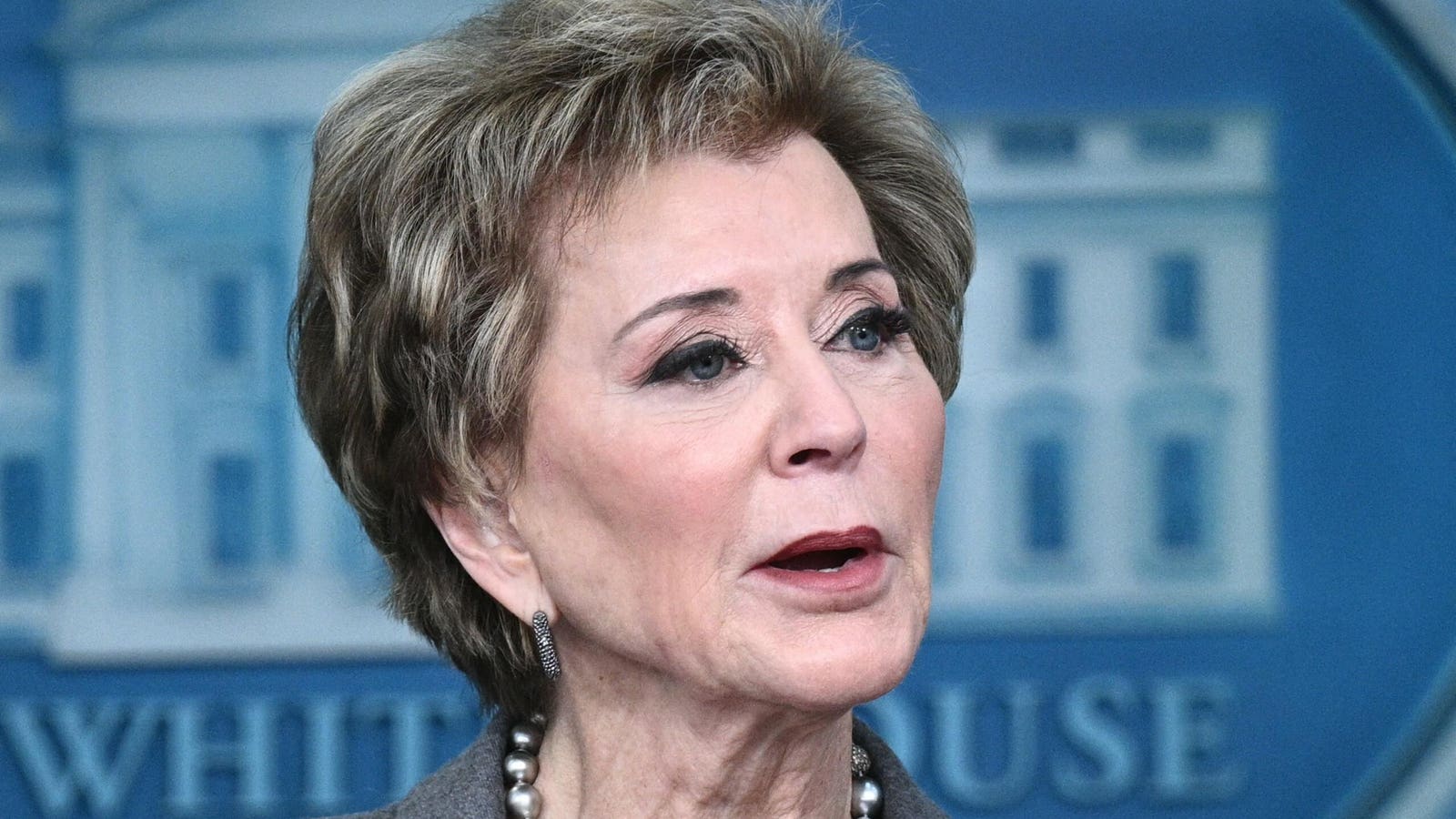
UNITED STATES - APRIL 28: Secretary of Education Linda McMahon at a hearing in the Dirksen Senate Office Building on Tuesday, April 28, 2026. The Education Department is launching new repayment plans for student loans this July. (Bill Clark/CQ-Roll Call, Inc via Getty Images)CQ-Roll Call, Inc via Getty ImagesThe Education Department is preparing to launch two new tiered repayment plan options for federal student loans. The new programs, which are expected to debut on July 1, will be much different from any other current student loan repayment plan in several key ways, and they will also operate very differently from each other.One of the plans is a new Standard plan option, which bases a borrower’s monthly payment solely on their loan balance, interest rate, and repayment term, without regard to the borrower’s income or their ability to afford the payments. The other plan is a new income-driven repayment option that can allow borrowers to make payments based on a formula applied to their income, with the possibility of eventual student loan forgiveness after many years in repayment. Both of these plans, however, are a bit more complicated than existing repayment options in that the plans will treat borrowers differently based on either their overall balance of their federal student loans, or their income bracket. Here’s what borrowers should know about the two new tiered repayment options launching in July, and what the new plans may mean for your student loans.Tiered Standard Repayment Plan For Federal Student LoansOne of the two new federal student loan repayment plans debuting this July is the Tiered Standard plan. A Standard repayment plan is similar to most car loans and home mortgages; monthly payments are fixed based on the balance owed, the interest rate, and the repayment term. The payments don’t depend on the borrower’s income or their ability to pay. But while most Standard repayment plans for federal student loans are on a 10-year term (federal Direct consolidation loans can have Standard repayment terms of as long as 30 years), the new Tiered Standard repayment plan will have varying repayment terms of between 10 and 25 years, depending on the borrower’s total balance. The general rule is the longer the repayment term is, the lower a borrower’s monthly payments will be, but the more interest they will pay in total over time.MORE FOR YOU“Under the Tiered Standard Plan, your required monthly payment amount is based on the amount of your principal balance that you owe at the time that you enter the plan, the interest rate on your loans, and the length of the repayment period,” explains the Education Department in new online guidance. “You’ll make fixed monthly payments and repay your loan in full within the maximum repayment period.”For federal student loan balances that are less than $25,000, borrowers will have a 10-year repayment term. For balances of between $25,000 and $49,999, there will be a 15-year term. For student loans with a total balance of between $50,000 and $99,999, there will be a 20-year term. And for balances of $100,000 or more, there will be a 25-year term.The Tiered Standard repayment plan, like all current fixed plans, require that borrowers pay off their federal student loans in full by the end of the repayment term, with no student loan forgiveness. But unlike the current 10-year Standard repayment plan available for most federal student loans, the Tiered Standard plan will not be a qualifying repayment plan for Public Service Loan Forgiveness, or PSLF.“Payments made while enrolled in the Tiered Standard Plan are not considered qualifying payments for PSLF or Temporary Expanded Public Service Loan Forgiveness (TEPSLF),” says the department.RAP Is A Tiered Income-Driven Repayment Plan For Federal Student LoansThe Education Department is also planning on launching a new income-driven repayment plan for federal student loans on July 1 called the Repayment Assistance Plan, or RAP. Unlike fixed repayment plans, income-driven plans use a formula based on a borrower’s income to calculate their monthly payments. Payments must then be recalculated every year, and will change over time as a borrower’s income changes. These plans also have fixed repayment terms, but if a borrower hasn’t repaid their balance in full by the end of that term, they can receive student loan forgiveness.All current income-driven repayment plans use a fixed repayment formula. Essentially, a portion of a borrower’s income is excluded from consideration based on a percentage of the federal poverty limit tied to the borrower’s family size, and then they must dedicate a fixed percentage of their income above that exclusion toward their federal student loans. All current IDR plans also cap a borrower’s monthly payment at a certain point.But RAP will be different. There is no income exclusion under RAP; the plan will just apply the RAP formula directly against the borrower’s income (typically their Adjusted Gross Income, or AGI) to calculate their monthly payment. Furthermore, the percentage of a borrower’s AGI that must be dedicated to their federal student loans increases at set income levels. This sets RAP apart from other income-driven repayment plans.“Your required monthly payment amount under the Repayment Assistance Plan is a percentage of your annual income, most commonly your adjusted gross income (AGI), divided by 12 to determine the monthly payment amount,” explains the Education Department in online guidance.RAP will require 1% of AGI for borrowers earning $10,000 or less. The percentage then increases by 1% for each additional $10,000 in AGI (i.e., 2% of AGI for borrowers earning between $10,001 and $20,000, 3% of AGI for those earning between $21,001 and $30,000, etc). The repayment formula then maxes out at 10% for borrowers with an AGI of $100,000 or more.But that 10% maximum is not a cap on monthly payments; it’s just a cap on the percentage of AGI. Unlike existing income-driven repayment plans, RAP will have no actual upper limit on monthly payments. That means that even if RAP uses a more affordable repayment formula compared to current income-driven plans like IBR, ICR, or PAYE, some borrowers may end up with higher payments under RAP if they would otherwise be hitting the payment cap under one of the other plans. RAP also will only deduct $50 per dependent child from a borrower’s monthly payment to account for dependent expenses; this is generally a less generous reduction compared to the income exclusion available under IBR, ICR, and PAYE.While payments under RAP will count toward student loan forgiveness under the PSLF program, just like the other income-driven plans (as long as all other PSLF eligibility rules are met), RAP will require 30 years of payments before non-PSLF borrowers can get their student loans forgiven. This is far longer than the other IDR plans, which authorize loan forgiveness after 20 or 25 years. And while historically, payments made under one IDR plan will count toward loan forgiveness under all other plans, payments made under RAP will only count toward student loan forgiveness under RAP; they will not count toward loan forgiveness under other IDR plans (like IBR) if a borrower subsequently leaves RAP.Which Federal Student Loans Are Eligible For New Tiered Repayment PlansMost federal Direct student loans will be eligible for both the Tiered Standard plan and RAP when they launch this July. This includes federal student loans currently in repayment, as well as new loans disbursed in the future. However, there are several important caveats and limitations.First, Parent PLUS loans, and federal Direct consolidation loans that repaid Parent PLUS loans, will not be eligible for RAP under any circumstances. Parent PLUS loans that have already been consolidated can be enrolled in the ICR plan and, following at least one ICR payment, the IBR plan, as long as borrowers complete that transition before July 2028. But Parent PLUS loans cannot be repaid under RAP, even if consolidated.And second, student borrowers who take out any new federal student loans, or consolidate their existing loans, on or after July 1, will only be eligible for the two new tiered repayment plans (Standard and RAP). They will lose access to all “legacy” repayment plan plan options such as the 10-year Standard plan, Extended plan, and Graduated plan, as well as the current IDR plans like IBR, ICR, and PAYE. Borrowers who don’t take out any new federal loans or consolidate can enroll in the Tiered Standard plan or RAP if they want, but they will maintain access to the current repayment plan options, as well (with the exception of ICR and PAYE, which will be phased out for everyone in 2028).
Two New Tiered Repayment Plans For Student Loans Launch In 4 Weeks
The Education Department is launching two new tiered repayment plans for federal student loans this July. But they will be very different from other plans.
1,418 words~6 min read