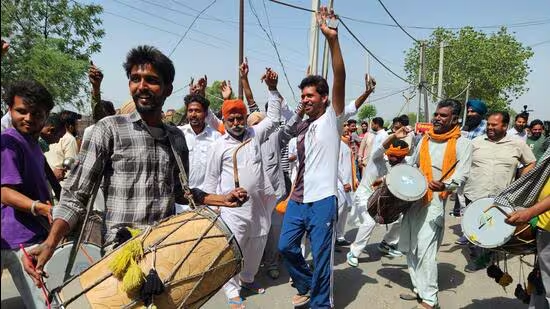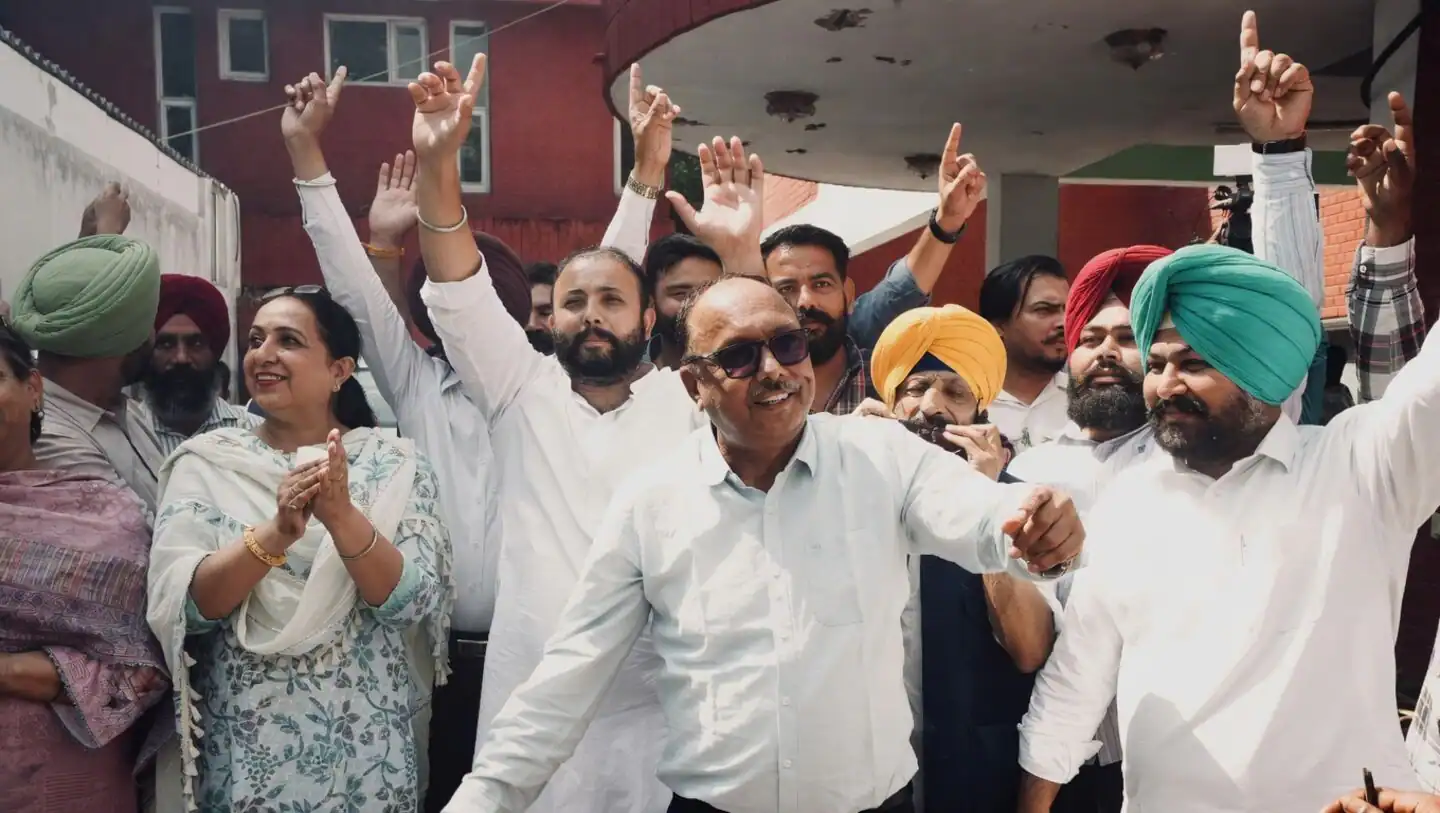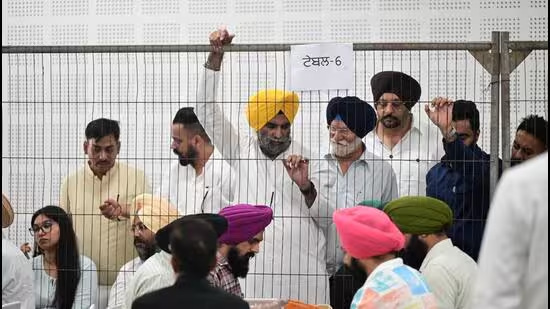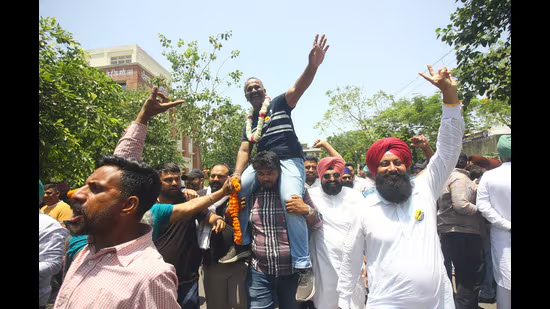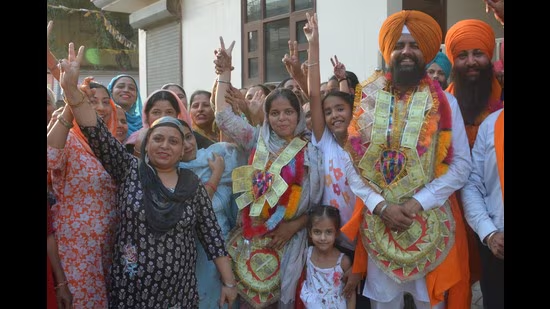
The Aam Aadmi Party’s (AAP) victory in the Zirakpur municipal election has completely reshaped the civic body’s power structure, officially marking the end of the Indian National Congress’s dominance in the town.AAP’s Ward No. 24 candidate, Parvinder Kaur, among supporters celebrating outside the counting centre in Zirakpur on Friday. (Sant Arora/HT)Out of the 31 declared wards, the AAP won 16 seats, crossing the majority mark on its own. The Shiromani Akali Dal (SAD) won six seats, followed by the Bharatiya Janata Party (BJP), which secured four seats. Meanwhile, the Congress—which previously won 23 seats—has been reduced to just four seats, and one seat went to an Independent candidate.A four-way fight between the AAP, Congress, BJP, and SAD—along with independents—turned these elections into highly competitive ward-level battles. Unlike previous elections that saw clear waves, this time the results were decided by micro-level factors, including candidate selection and local issues.Unlike 2015 (SAD-BJP sweep) and 2021 (Congress wave), the 2026 election was marked by fragmented, ward-level contests. Currently, Zirakpur is being represented in the Dera Bassi constituency by AAP MLA Kuljit Singh Randhawa.From sweep to setback for CongressThe results mark a dramatic reversal for Congress, which had swept the 2021 civic polls by winning 23 out of 31 wards. The party’s sharp decline to just four seats reflects anti-incumbency.AAP converts anti-incumbency into majorityAs the ruling party in Punjab, the AAP leveraged state-level visibility while aggressively building a ward-level network. Its win spread across the council, indicating a broad-based rather than clustered mandate. Importantly, the AAP managed to convert voter dissatisfaction with civic issues—such as sanitation, roads, and waterlogging—into electoral gains.SAD’s quiet resurgenceThe SAD’s tally of six seats, including late wins in wards 26, 27 and 29, signals a modest but notable recovery. While far from its 2015 dominance, the party has re-established its presence in select pockets, suggesting that its traditional vote base remains intact in parts of Zirakpur.BJP’s incremental gains, limited spreadThe BJP, winning four seats, has improved from its zero tally in 2021 but continues to struggle to expand beyond specific urban clusters. Its performance indicates pockets of influence rather than city-wide traction.Broken roads, overflowing drainsResidents in Zirakpur, a rapidly expanding satellite town, have been dealing with chronic infrastructure stress. Roads in several areas remain broken or uneven despite repeated repairs, internal streets are often left dug up for utilities, and garbage collection has been irregular, leading to visible dumping points in residential pockets.During the monsoon, large parts of the town face severe waterlogging, with drainage systems unable to handle the load of unplanned urban expansion. Power outages and fluctuating supply in certain areas have added to the sense of administrative neglect.
AAP’s 16-seat victory shatters Congress hold on Zirakpur MC
A four-way fight between the AAP, Congress, BJP, and SAD—along with independents—turned these elections into highly competitive ward-level battles
441 words~2 min read