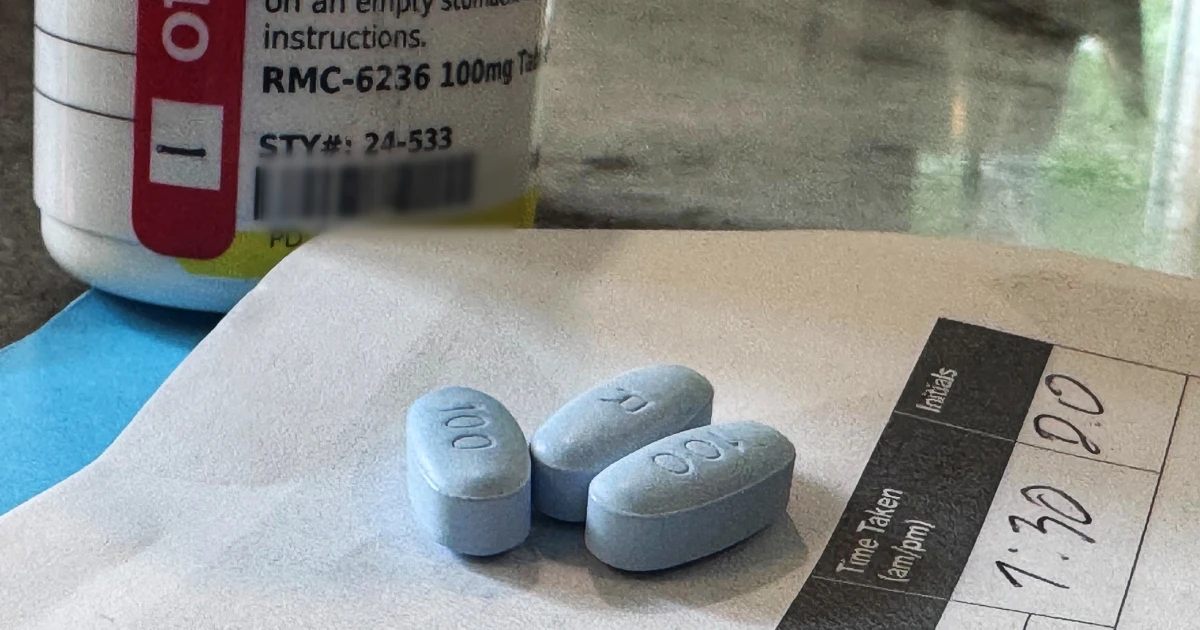
CHICAGO -- An oral targeted drug reduced the risk of disease progression or death by 35% compared with chemotherapy when given as first-line treatment for non-small cell lung cancer (NSCLC) patients with EGFR exon 20 insertions, a randomized trial showed.
In patients with nonsquamous NSCLC, median progression-free survival (PFS) reached 10.3 months with sunvozertinib (Zegfrovy) monotherapy versus 7.5 months with carboplatin-pemetrexed chemotherapy (HR 0.65, 95% CI 0.50-0.85, P<0.001), reported John Heymach, MD, PhD, of the University of Texas MD Anderson Cancer Center in Houston.
Nearly twice as many patients responded to sunvozertinib (58.9% vs 31.1%), and the drug led to longer responses (median 11.2 vs 7.1 months) and greater levels of mean tumor shrinkage (42.1% vs 24.7%), according to findings presented at the American Society of Clinical Oncology (ASCO) annual meeting and published simultaneously in the New England Journal of Medicine.
"These results support sunvozertinib as first-line treatment for non-small cell lung cancer patients with EGFR exon 20 insertions, with the advantage of a single oral agent administration," said Heymach, who added that the common side effects were largely related to wild-type EGFR inhibition and were mostly manageable.