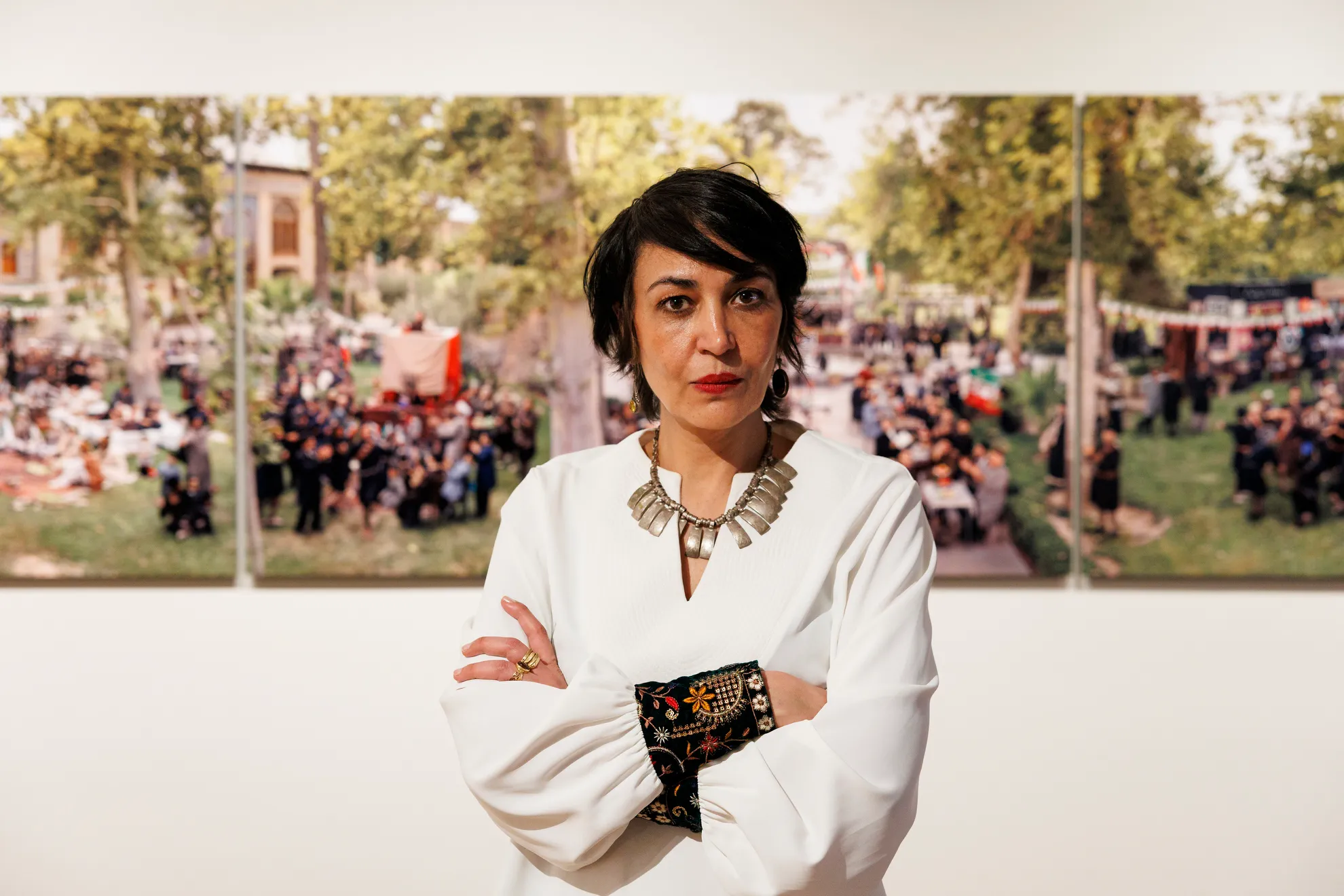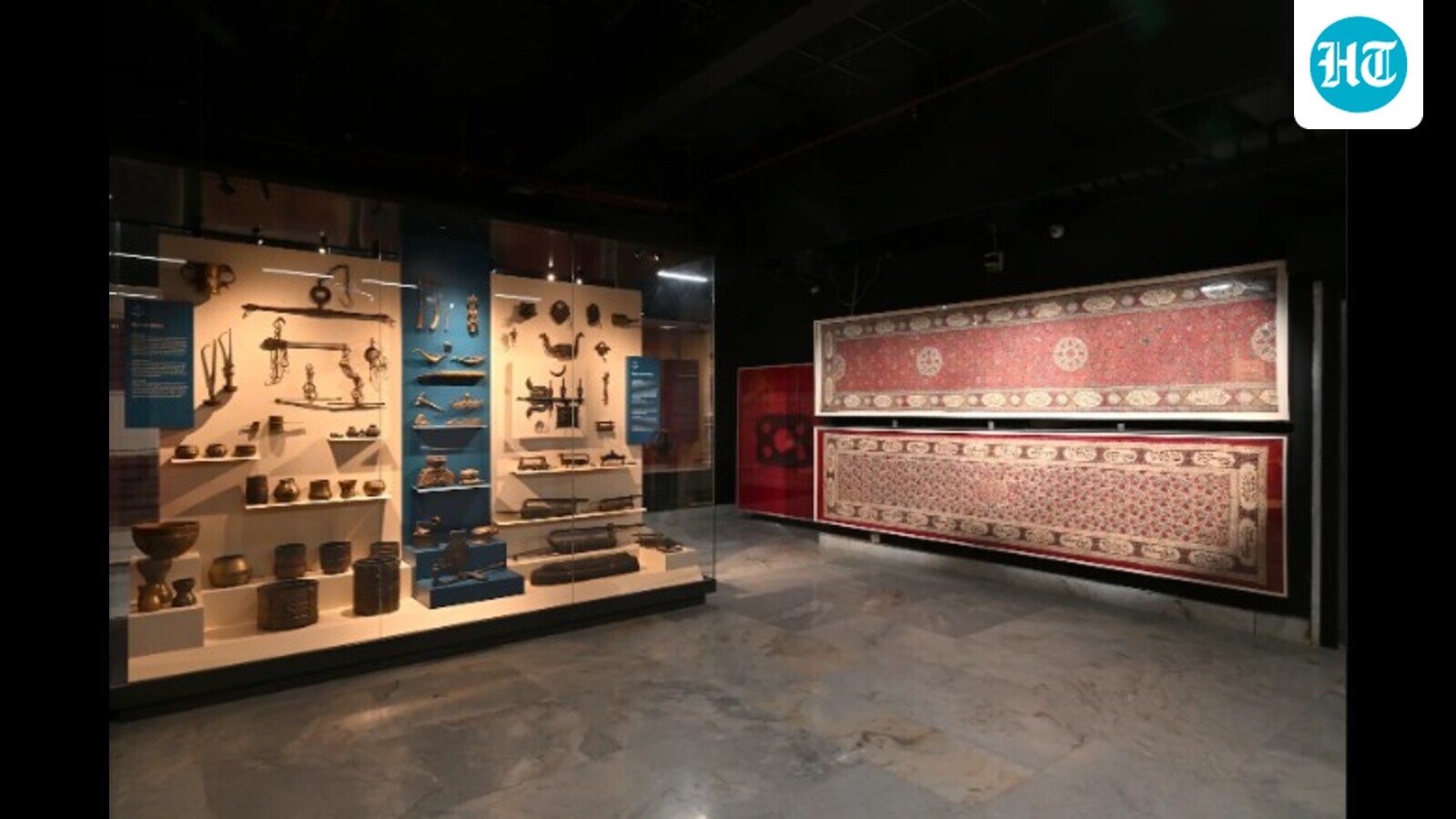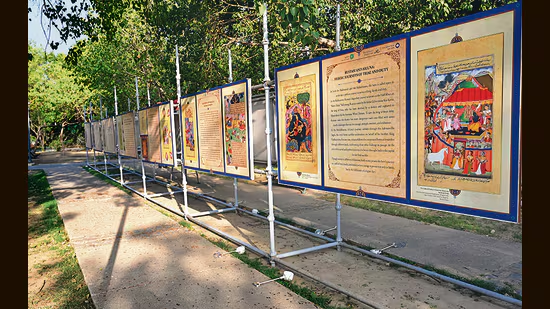
A temporary exhibition at the Sunder Nursery plaza is attracting the curiosity of many Delhiwalas on their evening stroll, who find themselves veering from their straight-angled walking paths towards a set of 18 panels that draw a historic connection not known to many. Sample this: A 19th-century painting depicting the Hindu god of death and justice Yama is juxtaposed with a 17th or 18th century illustration of Yima or Jamshid, a king from Iranian folklore, who is said to have built a refuge known as “the Vara of Jamkard to preserve selected humans, animals, and plants from a devastating winter.” The Mahabharata, interestingly, alsoExhibition depicting the literary, artistic, and cultural connections between the two countries. (Vipin Kumar/ HT Photo)describes Yama’s hall, as a place free from suffering, sorrow, hunger, or thirst.The exhibition titled “Shared Epic Worlds”, depicts the literary, artistic, and cultural connections between Iran and India through comparisons of the Sanskrit epic Mahabharata, and the Persian epic Shahnameh, written by poet Ferdows between 977 and 1010 CE. Each panel offers a visual delight: paintings from the Mughal-era as well as calligraphy displays and works made during the Safavid-era in Iran, depicting scenes from the Shahnameh.“The message of both Shahnameh and the Mahabharata, the country’s respective greatest epics, is also similar, as it focuses on ethics, identity, loyalty, love, and suffering. However, the exhibition is not only about the manuscripts and paintings. It depicts shared stories and ideas across historical civilizations, showing how India and Iran are not connected only by trade and politics, but also by morals, and the shared questions we have asked,” said Shahab Khajeh Piri, the exhibition curator and deputy director of the Noor International Microfilm Centre, which organized the exhibition in collaboration with the Aga Khan Trust for Culture and the Iran Culture House.The idea, Piri said at the launch of the exhibition last week, was to highlight multiple similarities between the two epics, and thus point to the deep cultural connection between Indian and Iran. For instance, both the Mahabharata and the Shahnameh have mythical birds that serve as symbols of liberation and devotion — the celestial bird king Garuda, and the life-saving bird Simurgh. In another panel, we see similarities in the epic heroes, Rustam from the Shahnameh and Arjuna from the Mahabharata, both of whom undergo difficult trials for the fulfillment of a higher duty.Another lesser-known facet of history viewers will be delighted to see is the importance of the Shahnameh in the Mughal dynasty. One of the first panels depicts one page of an old manuscript of the poem, bearing many royal Mughal seals which indicate its possession throughout history, from Mughal Empire’s founder Babur all the way to Shah Jahan. The next panel speaks on another manuscript of the poem produced during the Mughal reign and owned by Jahangir. Containing almost 90 narrative paintings, it is arranged in four gold-ruled columns, containing the ancient preface to the Shahnama and around 51,000 verses.“There have definitely always been strong cultural ties between India and Iran, most of it having to do with a shared linguistic culture. If you look at the mughals, or dynasties that came before them, they came from central Asia and used Persian as a court language. Coming into India, it formed a language of bureaucracy and state as well. Back then, it served the same role that English serves today, of a link language and one of learning and literature, along with administration. Many modern Indian languages such as Bengali and Marathi take a lot of vocabulary from Parsi words,” said historian Swapna Liddle.
At Sunder Nursery, historic Iran-India relations told via art
A Delhi exhibition, "Shared Epic Worlds," explores cultural ties between India and Iran through the Mahabharata and Shahnameh, highlighting shared themes and history. | Latest News Delhi
596 words~3 min read