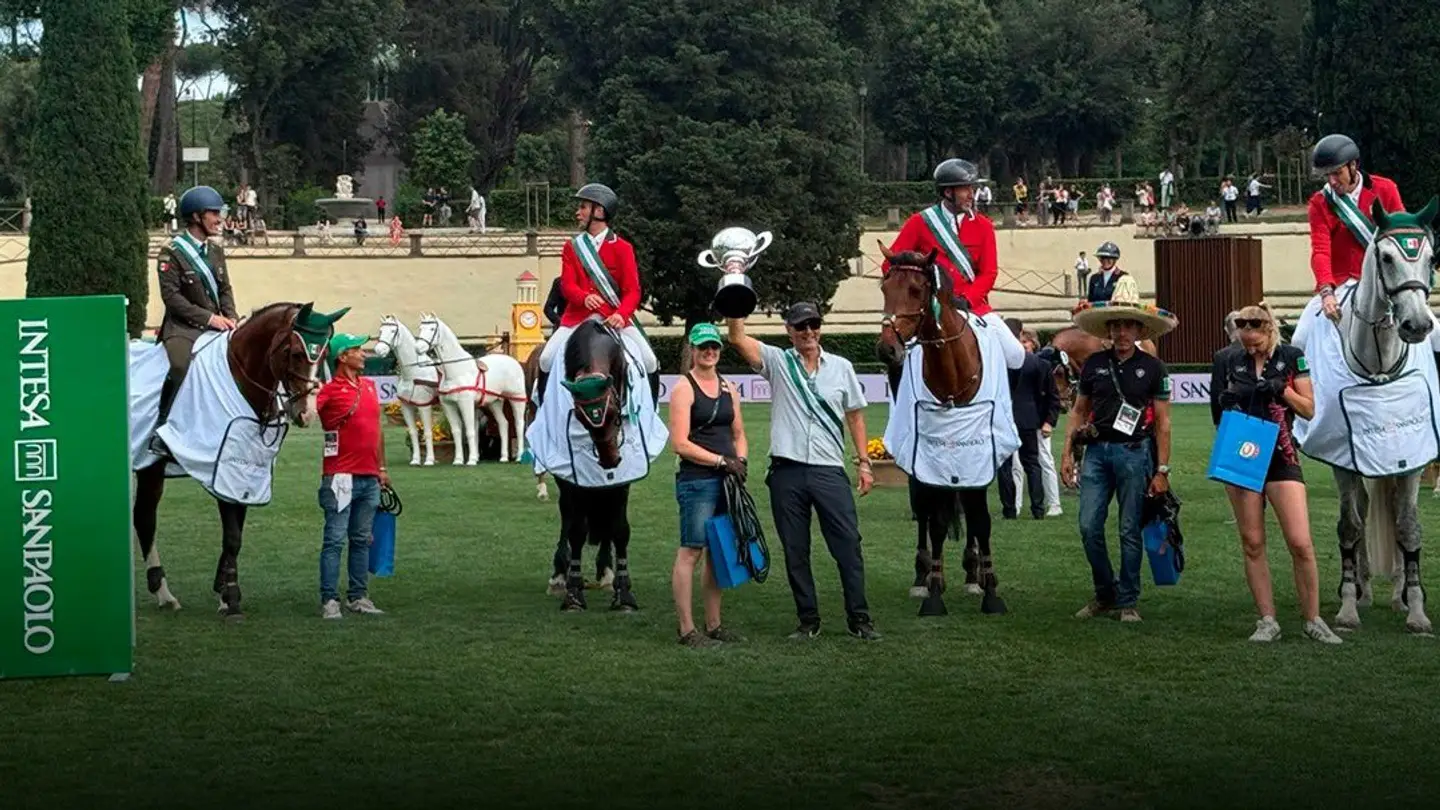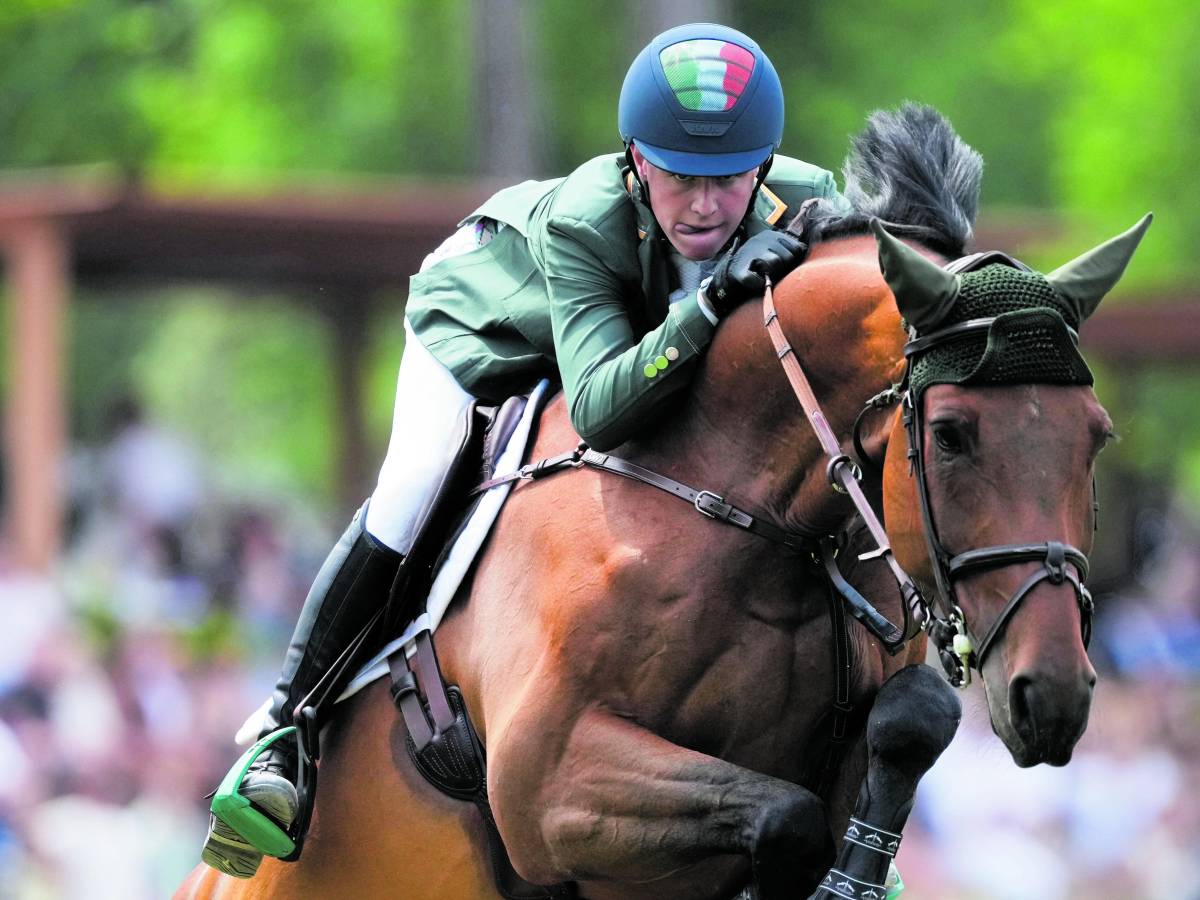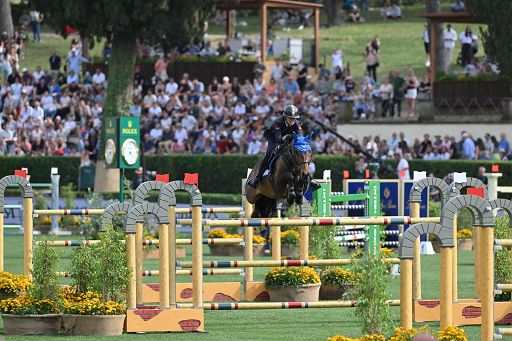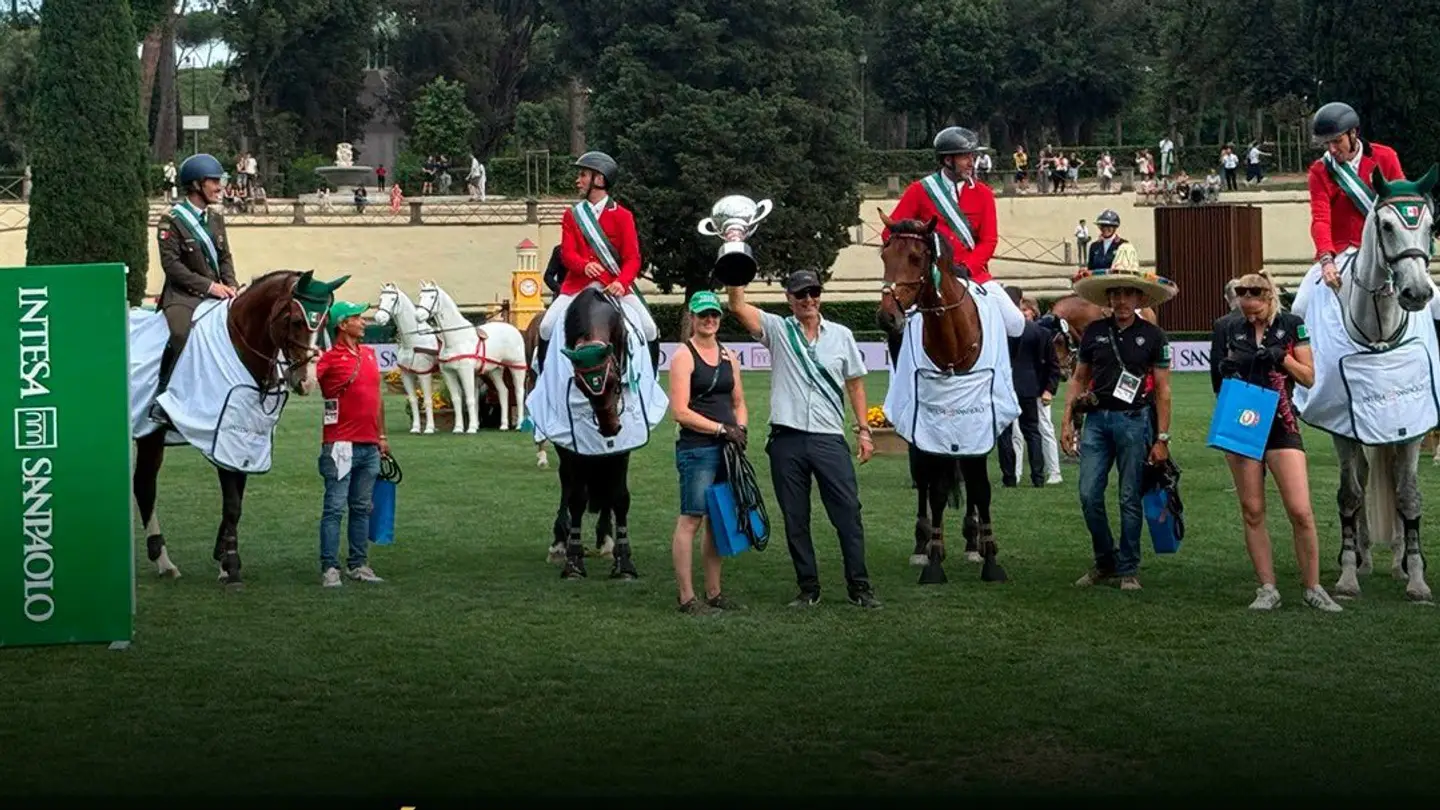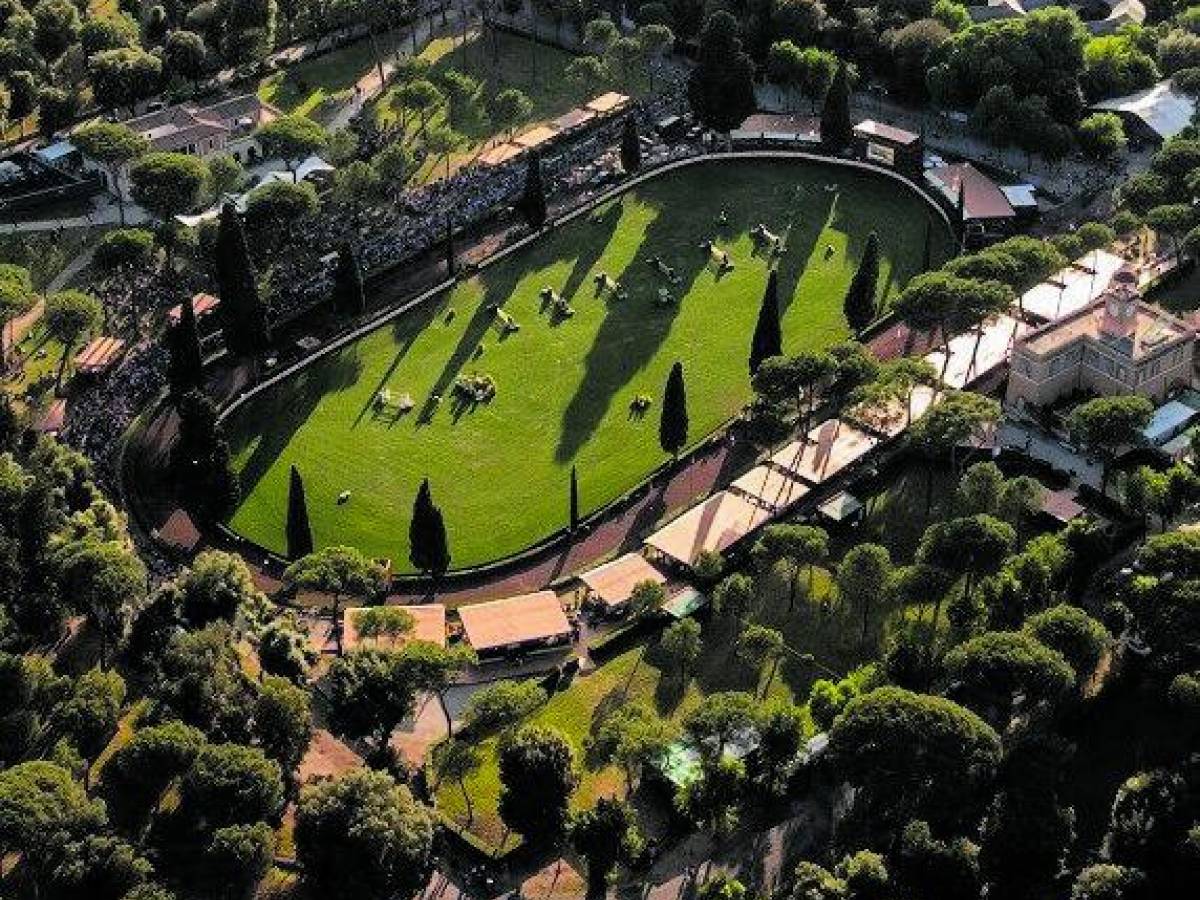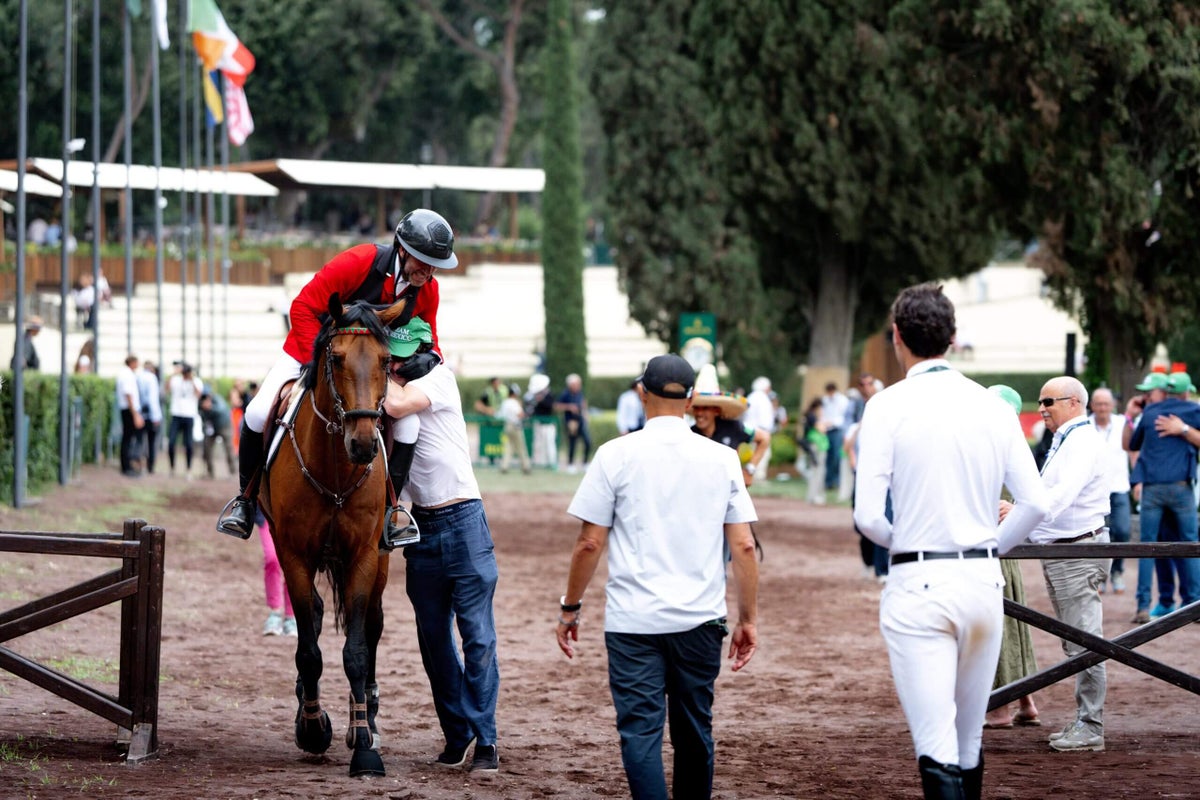
Mexico topped the podium at Rome’s CSIO Piazza di Siena, host of the Intesa Sanpaolo Nations Cup, a CSIO5* show jumping team competition.It was a surprise outcome that could serve as a preview of things to come at the FEI World Championships in August.Of the 10 teams that came forward today, half are behemoths of the Piazza di Siena. Host nation Italy has won this class a record 29 times, France 20, Great Britain and Germany 11 times apiece, and the reigning titleholders, the United States, have won it six times. Meanwhile, Ireland, Mexico, and Spain have won it just once each, while Brazil has never won. Sweden and Belgium have managed sophomore wins but nothing more.What makes a Nations Cup competition so unique is its extraordinary length. While most individual showjumping classes feature either an all-in-one jumping round, with two halves of the course judged on different speed metrics, or a jump-off format, where riders jump a qualifying round to earn the right to come back for another, foreshortened round against the clock, a Nations Cup is a marathon.Each team completes two rounds over a full-length course, and if two or more teams find themselves on the same aggregate score at the end of those rounds, they send a representative forward for a jump-off against the clock over a condensed, technically complex version of the track.The first round of jumping in today’s Nations Cup Intesa Sanpaolo quickly established the bogey line of the course.One would be hard-pressed to spot any variation in the terrain of the Piazza di Siena’s main arena, which is hand-laid with new turf for the week of this show. But as the first round riders battled against the 12-fence course, it became clear that there was a minute, but not inconsequential, downhill pull from fence three, through the technically complex treble combination at five, and down to fence six, after which competitors would need to set up for the wide open water fence at seven.That barely perceptible slope was enough to open horses’ stride patterns, allowing their weight to shift from their hind legs onto their front legs — a flattening that would wreak havoc on riders’ carefully calculated projected stride patterns down the line as horses found themselves running ever closer to the fences.But as team after team knocked rails in that section of the course, Mexico had no such issues. Each of their competitors produced a clear round, putting them in the enviable position of choosing whether or not to send their anchor, Fernando Martinez Sommer and his horse, Joep, into the ring. With three clears already, they didn’t need saving from a drop score; the only thing to be gained was experience in the ring. Fernando decided to ride following a careful discussion with chef d’equipe Mark Laskin.He went clear. As the second round played out, sans France and Sweden, who had both suffered 16-fault first-round tallies, the tide started to shift. Though four-fault rides were the norm in round one, upon returning to the ring to jump the same course, many of those riders adapted to the variable terrain and delivered canny clears. For Mexico, meanwhile, the run of perfect clarity was over.
Mexico’s showjumping team surprise winners at the Intesa Sanpaolo Nations Cup
Mexico topped the podium at the Intesa Sanpaolo Nations Cup, a team competition that could be an early preview of the World Championships.
1,265 words~6 min read