You stopped being the loop
Most people use Opus 4.8 the way they used every model before it: open a chat, type a request, watch the cursor, correct it, repeat. That's a conversation. A dynamic workflow is something else entirely.
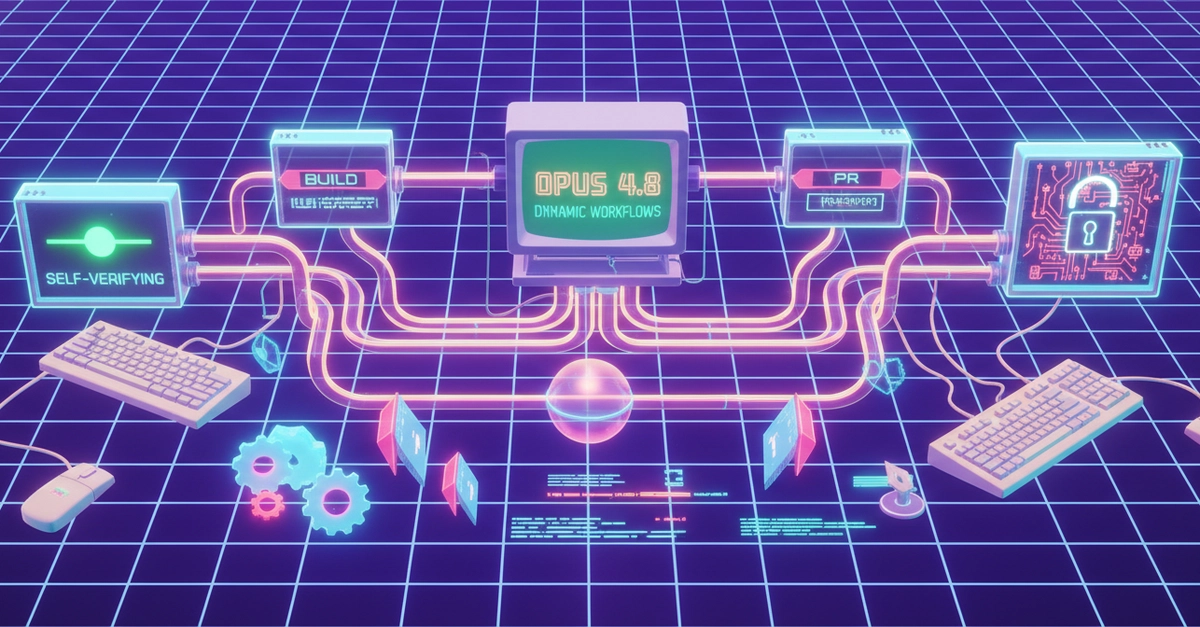
The shift is this: you stop being the loop. Instead, an orchestrator — plain code you control — spawns subagents you design, fanning out work in parallel, running steps in sequence, judging and merging results, and reporting back when the whole thing is done. Opus 4.8 can drive hundreds of parallel subagents inside a single workflow, with effort control per node so cheap steps stay cheap and hard steps think harder.
In this tutorial you'll learn the core patterns by building one concrete thing: a pull-request reviewer that fans out across correctness, security, and performance, then adversarially verifies every finding before it reaches you.
// You design the shape. The orchestrator runs it.