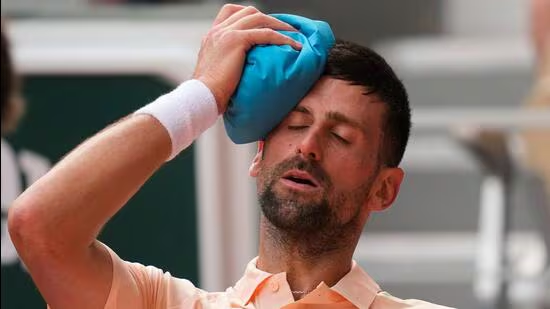
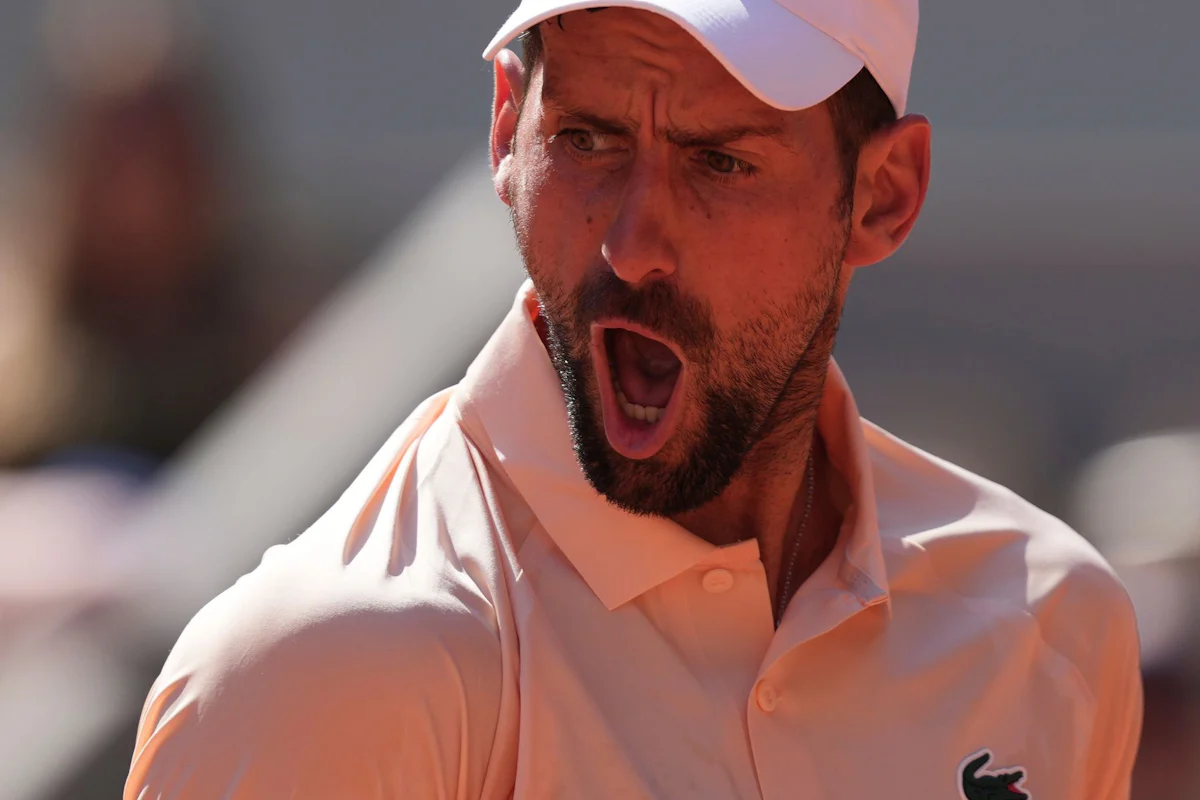
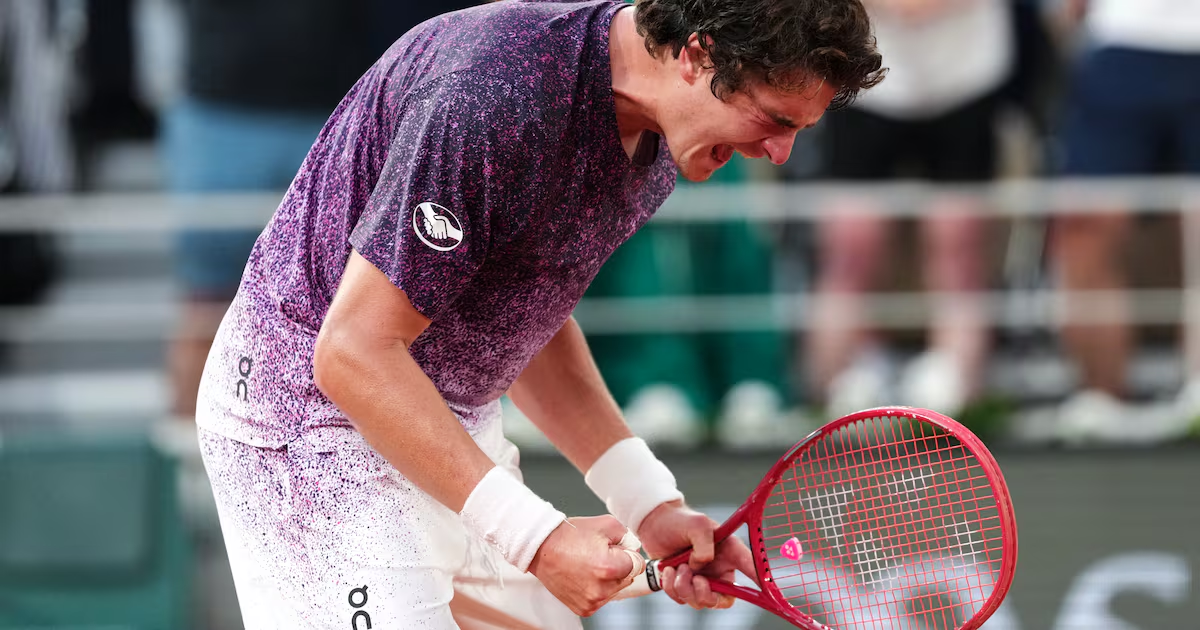
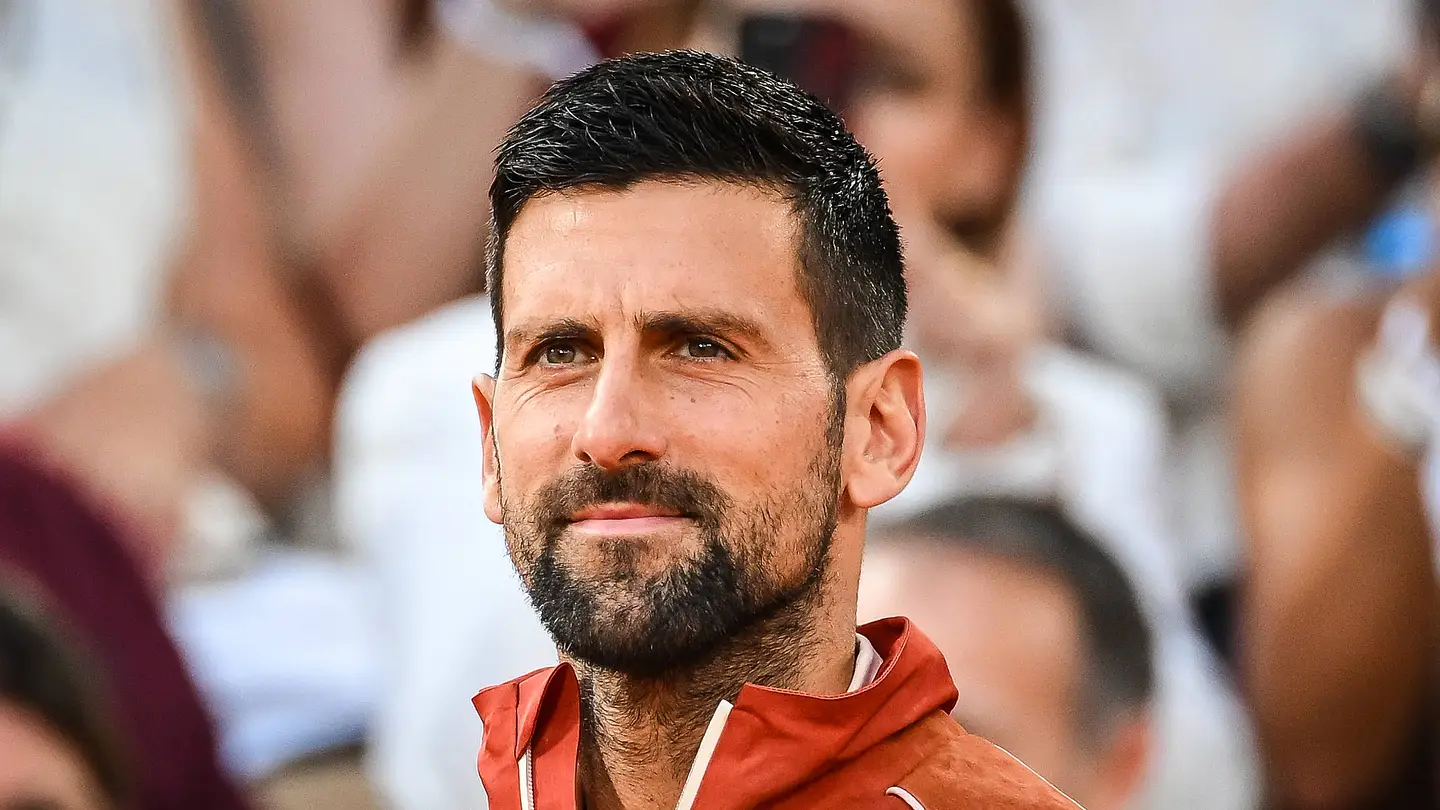
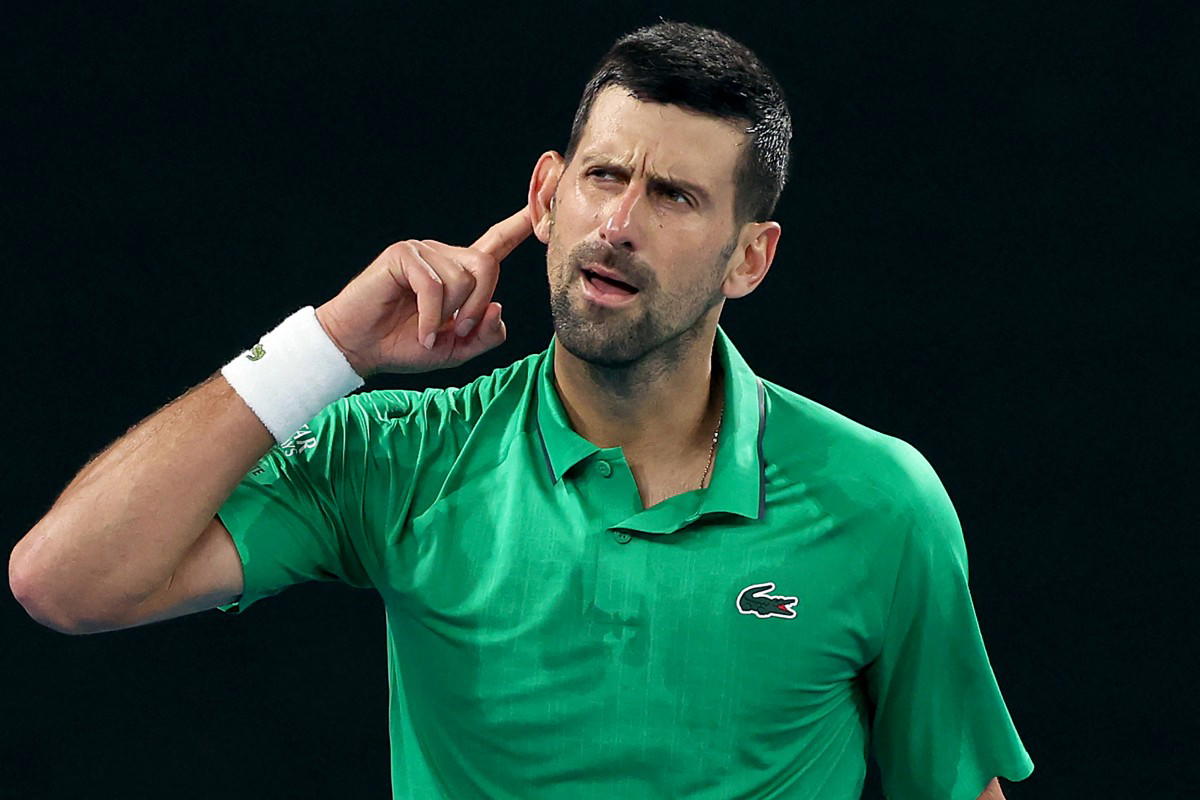
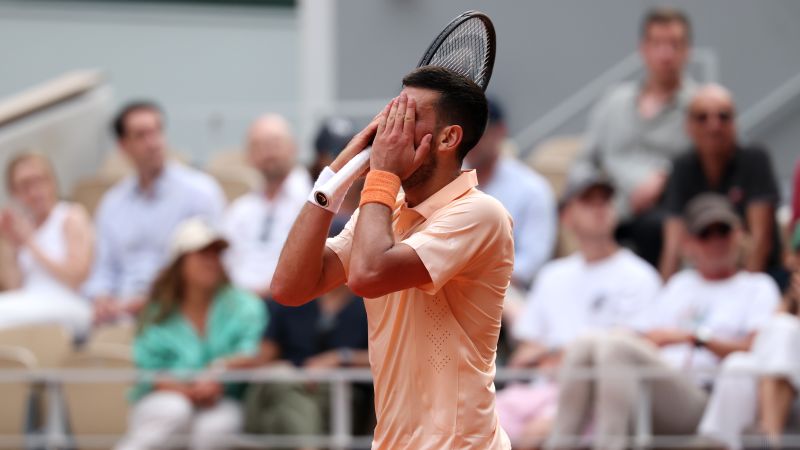
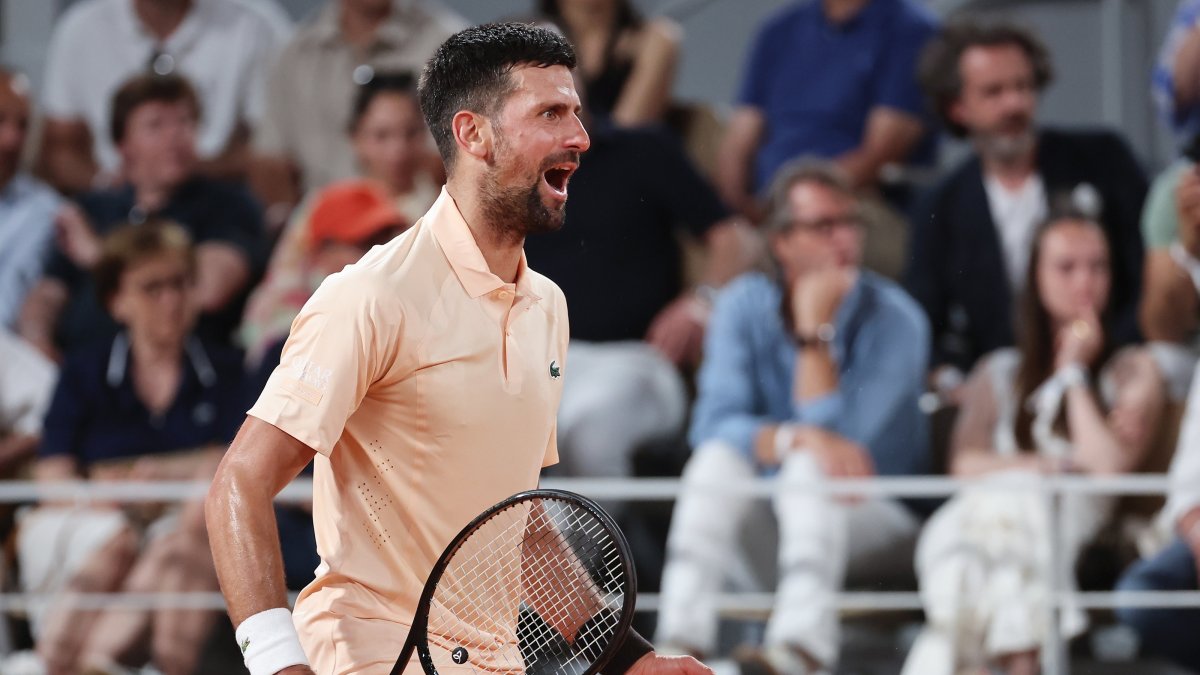
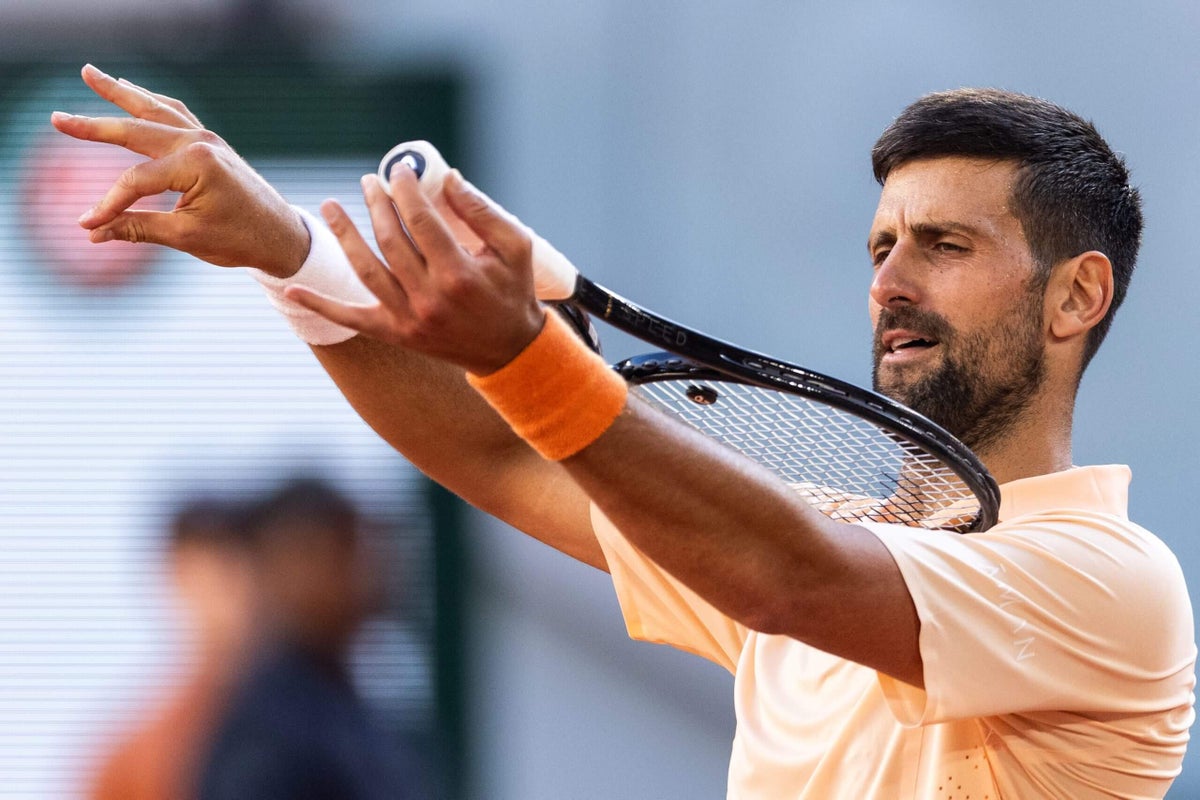
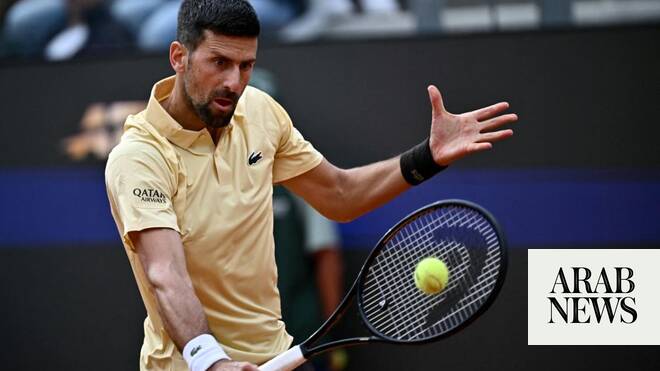
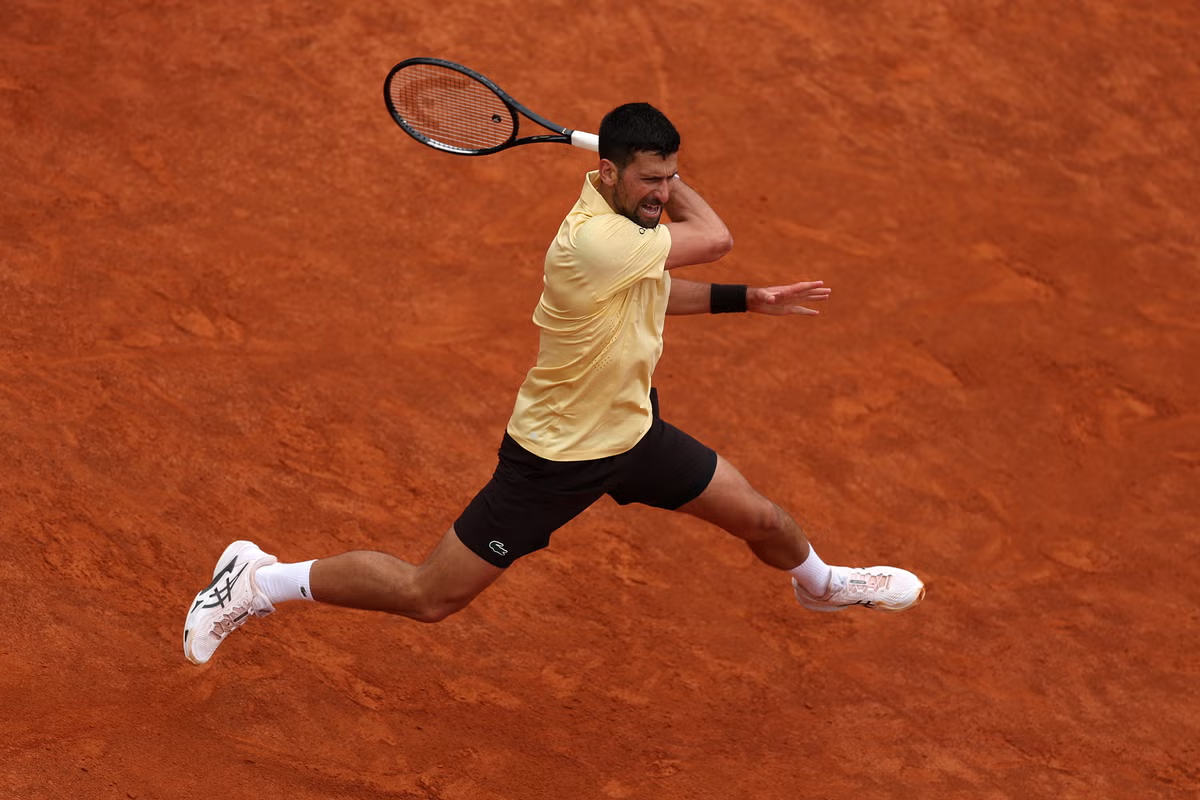
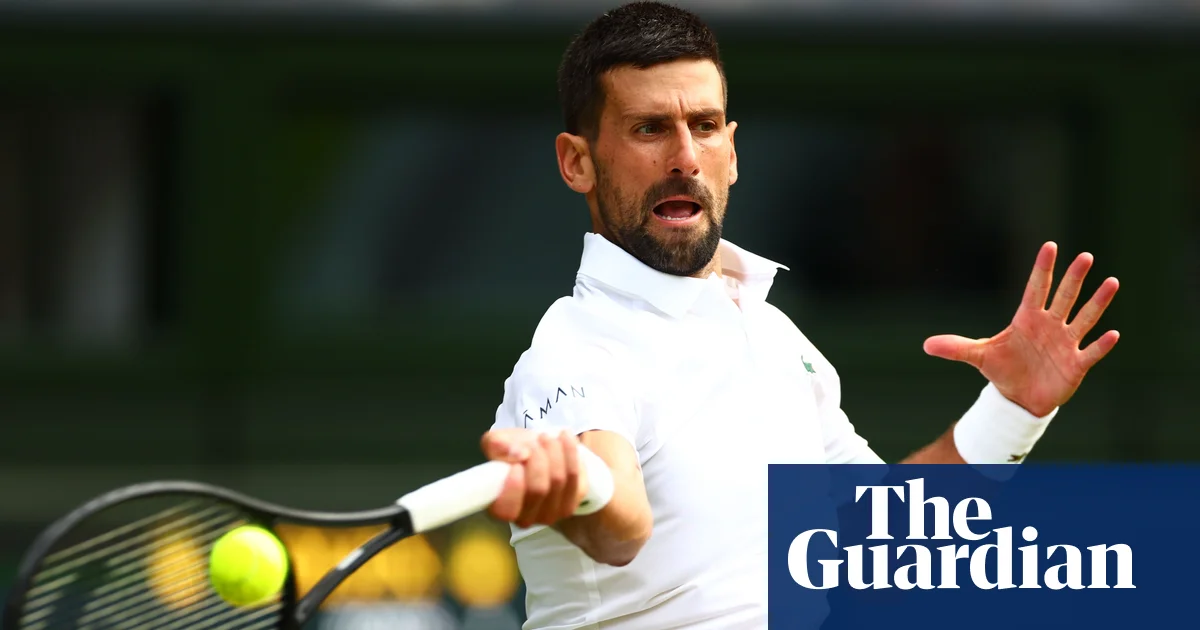
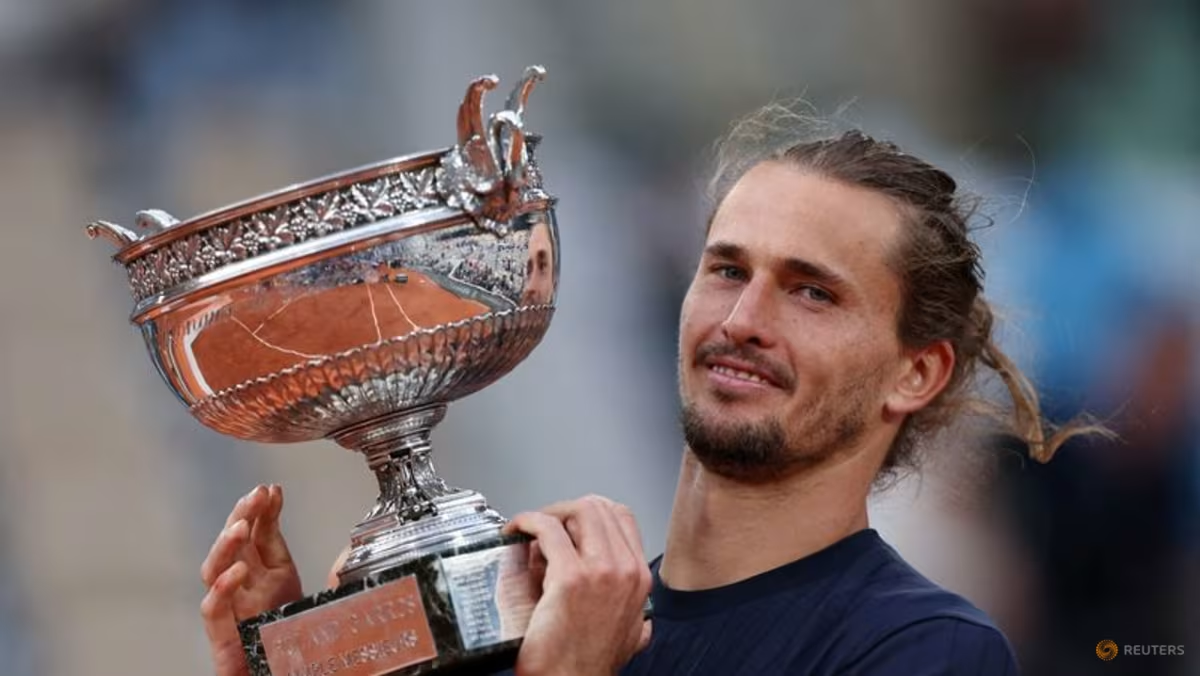
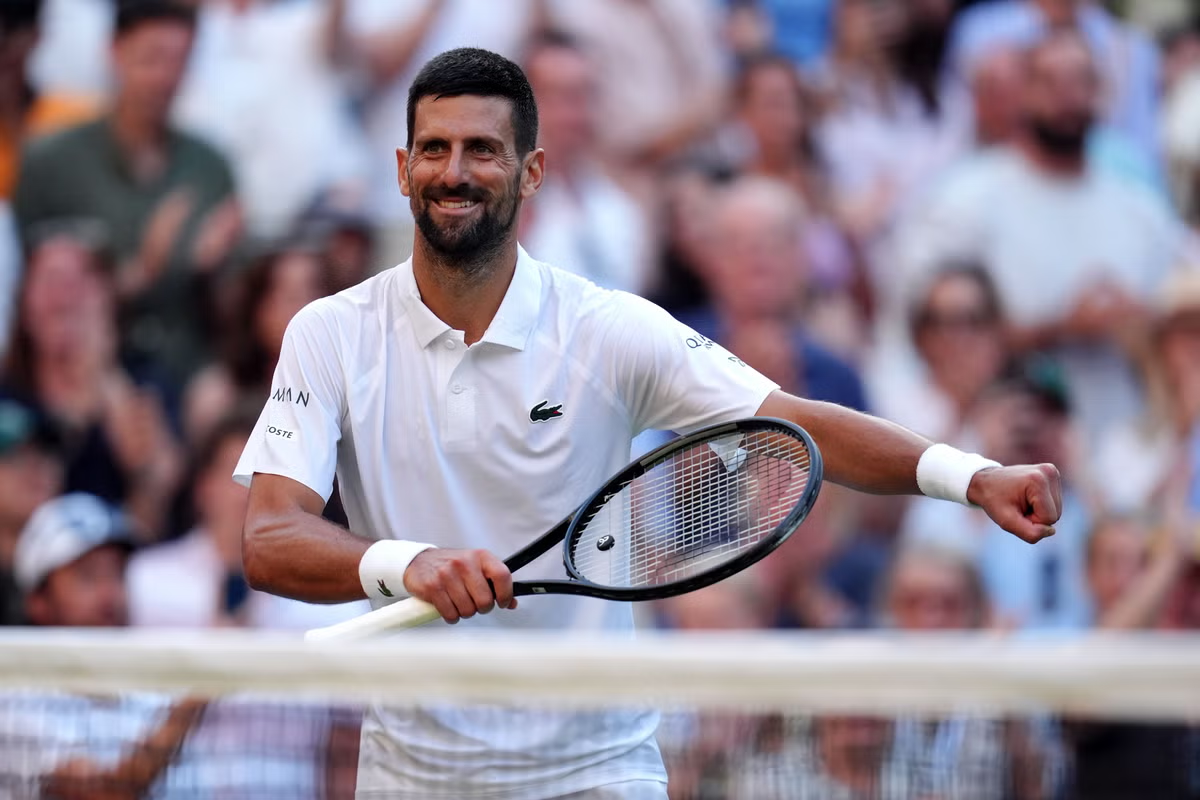
PARIS — There are plenty of reasons why Novak Djokovic keeps playing tennis.The competition keeps him feeling alive. He loves to play in front of his fans and antagonists around the globe, and he knows better than anyone that tennis players are not robots. There was always the chance that the planets might one day align, knocking Carlos Alcaraz and Jannik Sinner out of his way and delivering a clear runway to a 25th Grand Slam title.So he tried to stay fit and in form, without exhausting himself. He searched for the balance between too much and too little tennis, so that he could peak four times a year. And four times out of four in the past 12 months, he ran into Sinner or Alcaraz. Even when he overcame Sinner, in a five-set semifinal thriller at January’s Australian Open, Alcaraz was waiting in the final.Djokovic, 39, could climb one mountain. He could not climb two.Then, a few weeks back, came the news. Alcaraz had a serious wrist problem. It was going to keep him from defending his title at Roland Garros.A little under 30 hours ago, a day of suboptimal health for Sinner and the Paris heatwave did their work. First, there were two mountains. Then, there were none.The road was open. There was nothing but the flat red clay of Court Philippe-Chatrier in front of him, with no generational foes to worry about and cooler weather forecast for the second week. He’d expended a little too much energy by losing a set in each of his first two matches, but his level was rising, and once more, everything looked to be going his way.What terrible tricks tennis can play on its biggest stars.One moment, the elusive glory is right there for the taking. The next, João Fonseca, a highly touted star who still appears a couple of seasons away from fulfilling his scandalous potential, grows up in just three sets of sublime tennis, or perhaps a single game, at 5-5 in the fifth set, when Djokovic has so often dashed his opponents’ hopes.Over the final two and a half hours, the Brazilian delivered the kind of triumph that can accelerate a career. It was a hinge moment that can make someone with Fonseca’s rare gifts believe that he belongs, spelled out in a 4-6, 4-6, 6-3, 7-5, 7-5 win that took four hours and 53 minutes.A lover of first-strike tennis, like so many of his generation, Fonseca has spent most of the last two years winning matches with his arm and his shoulder. Friday, he won the biggest one of his life with his legs and his feet and his brain.In the third set, he said, he focused on putting his returns deep and constructing points with more safety. “Aggressive, but with margin,” he said in a news conference.Shooting at bigger targets let him unleash his power. That power, and Djokovic’s need to defend against it, opened up the front of the court, just as Djokovic has done to so many others for so many years. Fonseca was finally constructing points the way the best ones do.“He, without a doubt, was the better player in important moments in those crucial fourth and fifth sets,” Djokovic said in his news conference.“Some amazing exchanges and points. He just found incredible shots, lines. It was just amazing from his side. Obviously, not great for me to be facing a player playing in such level, but yeah, I don’t think I’ve done too much wrong with my game. It’s just that he was just better.”For two-and-a-half years at the Grand Slams, someone always has been. Now, maybe, someone always will be.No one can predict the future. Stranger things may yet happen. Still, what looked like Djokovic’s best opportunity to claim yet another crowning achievement has evaporated.“It would be nice if it was best-of-three, but it’s not,” Djokovic said. “I ran out of gas.”Djokovic congratulates João Fonseca after their five-set French Open epic. (Mustafa Yalcin / Getty Images)He didn’t want to talk about what had drifted out of his grasp, stopping any discussion of Sinner and Alcaraz no longer being around to cause him any trouble, and the opportunity that everyone knew was there for him.“I don’t care,” he said when asked about the impact of Sinner’s loss on his mindset. “I’ll stop you right there. No. Just lost third round. Let’s just talk about something else.”Fonseca had a different perspective. “The end of the match, I think he was more fit than me,” Fonseca said on Court Philippe-Chatrier, after he had pulled off his miracle comeback and narrowed Djokovic’s record when holding a two-set lead to a mere 301-2.Djokovic played the final two and a half hours like a man desperate not to let this chance slip through his fingers. He wanted to win and win fast, to preserve energy for the second week. He played with an urgency he didn’t used to need, when wear-and-tear wasn’t a concern, when arguably his biggest weapon was his willingness to stick around for as long as it would take, round after round.Urgency can be dangerous, though. It’s hard enough to win matches at Grand Slams without worrying about how long they will last.Still, when the sun was still in the sky over Roland Garros, Djokovic was one set away from delivering a three-set masterclass to a kid still learning how to play against the best of the best on the biggest stages.As the sun lowered in the fourth set, Djokovic was two points away from keeping it from going the distance. Fonseca unleashed a serve and a forehand and snuffed out the danger.Roughly half an hour later, two forehand winners and the umpteenth exquisite drop volley of his career put Djokovic a break up in the fifth set. He was three games from an ice bath and a phone call home to his children, and the moment at which most of his opponents shrivel up and go away had arrived.Instead, Fonseca compressed a year or more of maturation into eight games of tennis. First, he delivered his calling card. A flurry of blistering forehands reeled off nine consecutive points to seize the momentum. Djokovic leaned back on his bench on a changeover, covering his face with a towel, trying to unsee what he’d just experienced. No such luck. He swabbed his head with an icepack.Before Friday, Fonseca had never competed on Court Philippe-Chatrier, or any of the biggest courts at the Grand Slams. He had never played Djokovic. The 19-year-old, who arrived in earnest long after Roger Federer exited, two months removed from Rafael Nadal’s sendoff, and six months after Andy Murray finally called it quits, had missed them. And then the one remaining legend that he watched as a boy was standing on the other side of the net.Late on Wednesday night, after he came back from two sets down for the first time in his career to beat Croatia’s Dino Prižmić, Fonseca said he has long wanted to be in Djokovic’s draw at a major. He knows the GOAT’s career is winding down. He said he wanted the experience of playing him. Then he imagined what that feeling would be like.“Being in Roland Garros, third round, for me it’s just a dream,” Fonseca said. “I’m going to enjoy every moment playing against an idol, the GOAT of the sport. Of course, stepping on the court, of course I’m going to respect him, but trying to make my best and win this match.”It’s hard to believe he envisioned it looking much like this, a climb out of a crazily deep hole. He’d won tournaments before. He’d beaten top-10 players. He’d not done anything like he did once night had fallen, and Djokovic’s tennis witching hour — the final stages of a fifth set at a Grand Slam — had arrived.In the final minutes, the Fonseca and Djokovic fans went into a chant battle. Fonseca got the “Olé” song. Djokovic heard his name bouncing off the stands. It was 5-5. Fonseca, the player who everybody knows can detonate a tennis ball, whom everybody has seen grow too exuberant in tight moments, hit a drop shot. Then he hit another one. Then, after Djokovic had turned 0-40 into 30-40 and was ready to force deuce, he hit another one. Pinned deep, Djokovic could only watch it settle over the net. Fonseca was a game away.When Djokovic got him break point down on the cusp of the statement win his talent has long threatened, Fonseca was unruffled. He hit one ace wide. Then one down the T. And then another in the same spot.João Fonseca earned the biggest win of his career over Novak Djokovic. (Tim Clayton / Getty Images)Djokovic has been in the same spot, with 24 Grand Slam titles, since the end of 2023. He has been unable to hold back the rising tide of Sinner and Alcaraz, and also unable to accept that someone who had pulled off so many impossible triumphs didn’t have at least one more miracle in his racket bag. It’s a truth that every all-time great tries to ignore until they can’t ignore it anymore.Djokovic turned 39 last week, two days before Roland Garros began, and six days before this magical opportunity for more glory came alive.A little more than 24 hours later, with Sinner and Alcaraz far away, he watched another kid who is supposed to help fill the void he will leave, fire three final aces to send him home to Athens.Barring something unexpected, in a month, Djokovic will be at the All England Club for Wimbledon, trying for 25 again. There will be another chance. He’s a grass-court master. Alcaraz will still be absent.But will it be as good as this one? Even if it is, it might be for naught, with Fonseca, or some other young tyro, ready to grow up in real time.
Novak Djokovic’s clearest path to 25 Grand Slam titles gets lost in French Open’s red clay
Djokovic, 39, saw his two biggest tennis mountains — Carlos Alcaraz and Jannik Sinner — fall away. In João Fonseca, another rose up.
1,649 words~7 min read