
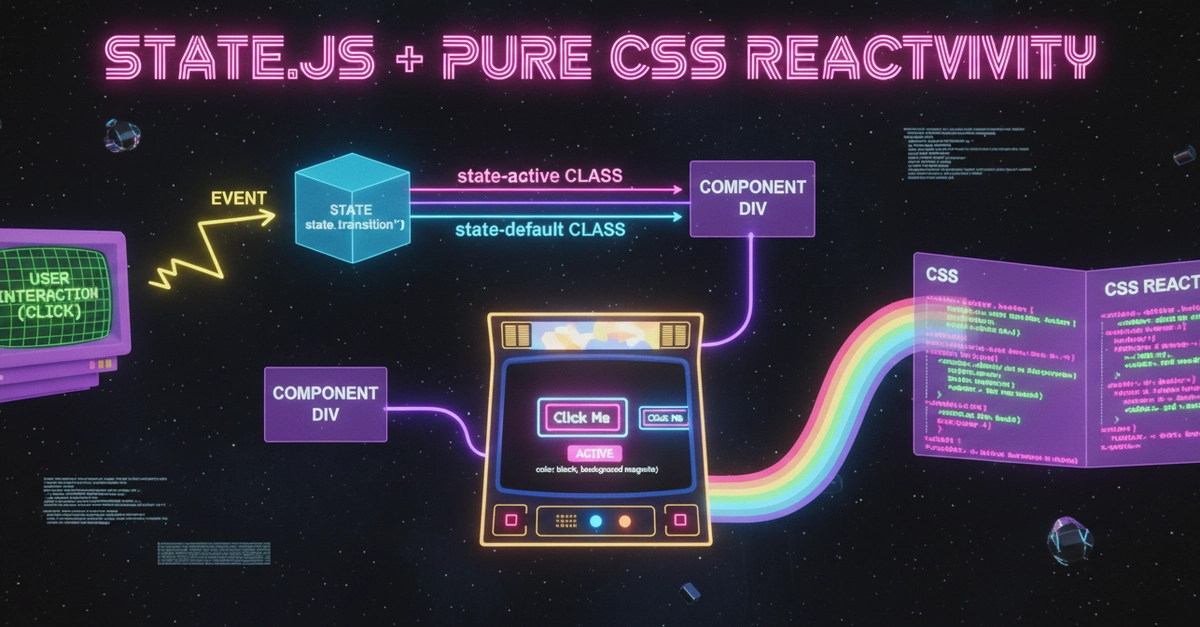
State.js looks simple — just HTML attributes — but it introduces a new mental model for building UI:
HTML holds the data.
CSS reacts to the data.
State.js keeps them in sync.
If you’re used to React, Vue, or Svelte, this feels strange at first.
State.js looks simple — just HTML attributes — but it introduces a new mental model for building...
State.js looks simple — just HTML attributes — but it introduces a new mental model for building UI:
HTML holds the data.
CSS reacts to the data.
State.js keeps them in sync.
If you’re used to React, Vue, or Svelte, this feels strange at first.
Modern frontend frameworks treat components as JavaScript objects, classes, or functions. But what if...
Most frontend tools make you learn a framework, write components, manage state, and fight a build...
I almost skipped past this. It looked like a small refactor. It ended up being the first time React's...

A complete beginner's guide to state management in React/Next.js, Vue/Nuxt, Angular, and...

Choosing a state management library feels a bit like walking into a candy shop. You've got Zustand,...

When I first started learning React, I kept asking myself why everyone was so obsessed with...