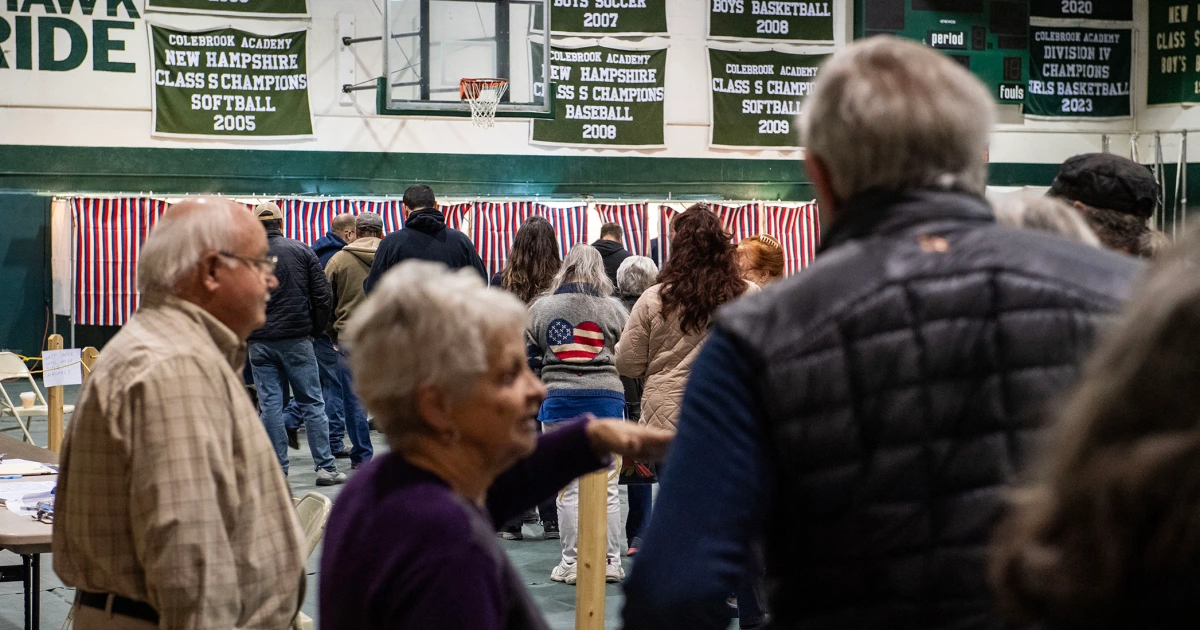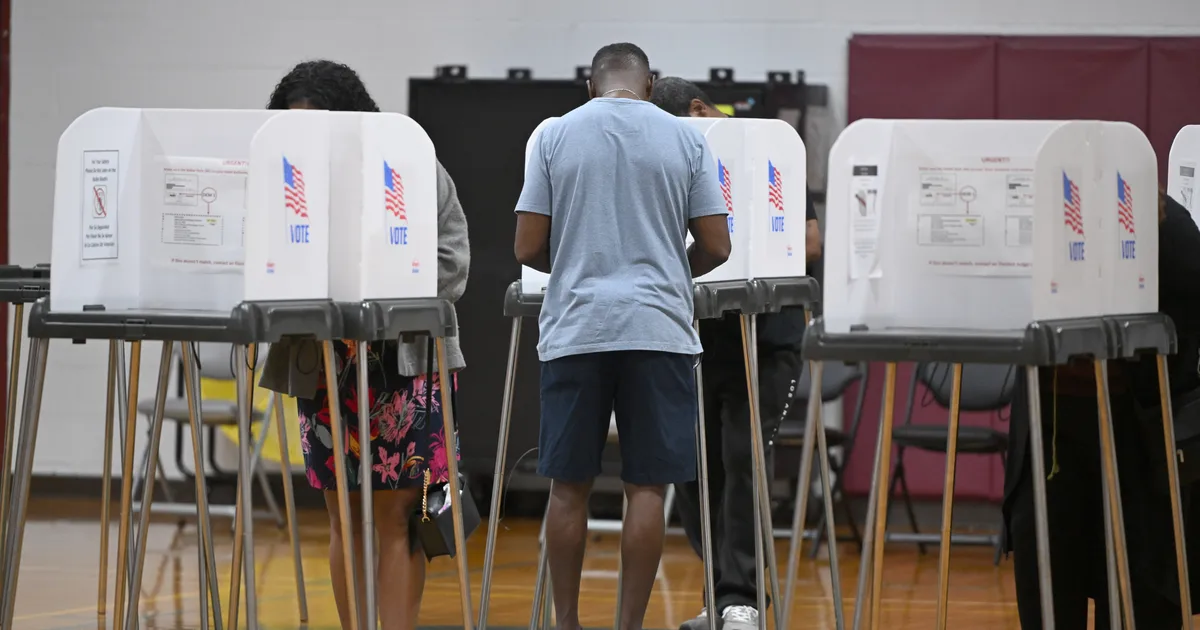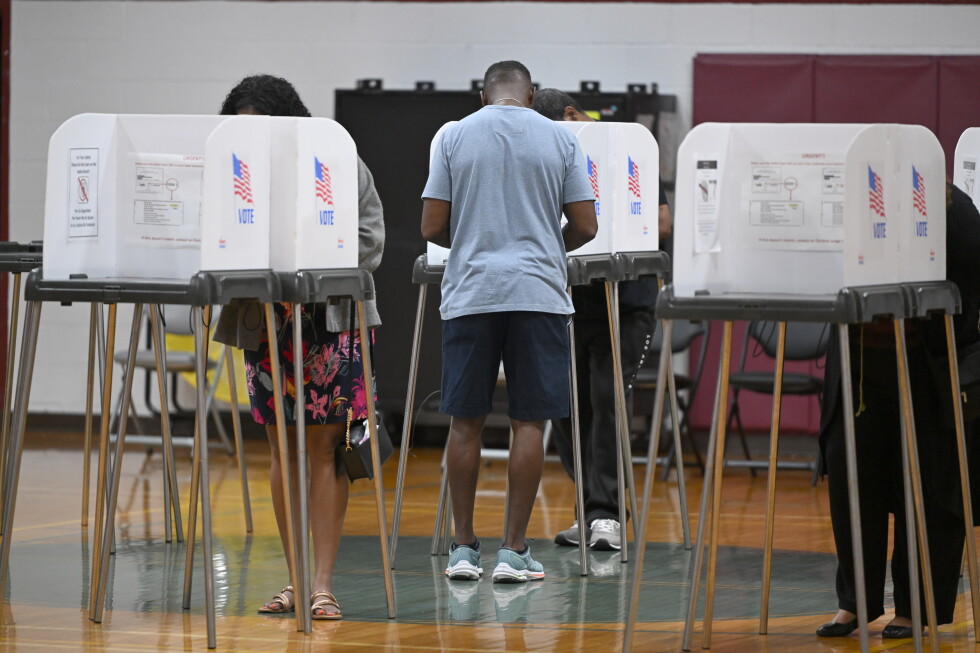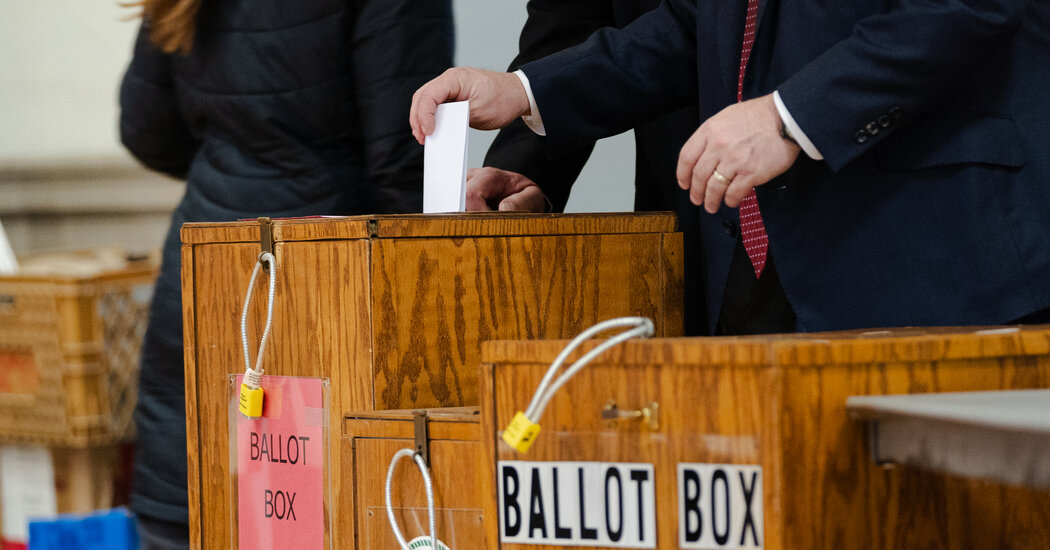
AdvertisementSKIP ADVERTISEMENTThe judge said the 2024 law “constitutes an unjustifiable burden on the right to vote,” and that new voters should be able to prove their citizenship with a sworn affidavit.People cast their ballots in Lancaster, N.H., in 2024.Credit...Sophie Park for The New York TimesMay 29, 2026, 3:10 p.m. ETA federal judge has struck down a New Hampshire law that blocked new voters from using a sworn affidavit to prove their citizenship in the absence of official documents such as a birth certificate or passport.The decision, filed late Thursday by Judge Samantha D. Elliott of the U.S. District Court in New Hampshire, found that “eliminating the affidavits” as a means of proving citizenship “constitutes an unjustifiable burden on the right to vote in violation of the First and 14th Amendments.” The ruling immediately overturned the law, which was passed in 2024 and signed by the Republican governor at the time, Chris Sununu.A spokesman for New Hampshire’s Justice Department said the state intended to appeal the decision.The law “represents a common-sense approach to voter registration and election administration designed to protect the integrity of our elections,” the spokesman, Michael Garrity, said in a statement on Friday.The law, which created some of the strictest voter registration requirements in the country, was challenged by the American Civil Liberties Union of New Hampshire on behalf of several groups, including the League of Women Voters of New Hampshire.“New Hampshire’s elections have always been safe, secure and accurate,” Henry Klementowicz, the state A.C.L.U.’s deputy legal director, said in a statement. “This law could have unconstitutionally and needlessly prevented thousands of eligible voters from casting a ballot.”Reports of wrongful voting in the state did not decline after the law’s passage, Judge Elliott noted, with a similar number of reports filed with the state attorney general in the year before the law was passed, and the year after.The push for proof of citizenship has been at the core of Republican-backed efforts to change voting rules, ever since President Trump and his allies began promoting baseless conspiracy theories over the past decade that there has been widespread voter fraud by noncitizens.Mr. Trump put documentary proof of citizenship at the center of his effort to change the country’s voting laws last year. He first signed an executive order in March 2025 that partly sought to establish such a requirement for federal elections, but that provision of the order was rejected by federal courts.Republicans in Congress then took up the charge, making documentary proof of citizenship central to their federal voting legislation, known as the SAVE America Act. But the measure has stalled in Congress, where Republicans do not have enough votes to overcome a Democratic filibuster of the bill.With the bill in limbo, Mr. Trump has threatened not to sign any other legislation until Republicans reform the filibuster to pass it, a procedural move known as the “nuclear option.” But his threats have not moved many Republicans to make the move.There is no evidence of widespread voting by noncitizens, and the Trump administration’s efforts to prove these conspiracies are not succeeding: Out of 49.5 million voter registrations that have been checked by the beginning of 2026, the Department of Homeland Security referred around 0.02 percent of the names for further investigation. Any actual proven cases are likely to be a fraction of that fraction.Jenna Russell is the lead reporter covering New England for The Times. She is based near Boston.Nick Corasaniti is a Times reporter covering national politics, with a focus on voting and elections.AdvertisementSKIP ADVERTISEMENT
Judge Tosses Citizenship Law Aimed at New Voters in New Hampshire
The judge said the 2024 law “constitutes an unjustifiable burden on the right to vote,” and that new voters should be able to prove their citizenship with a sworn affidavit.
586 words~3 min read