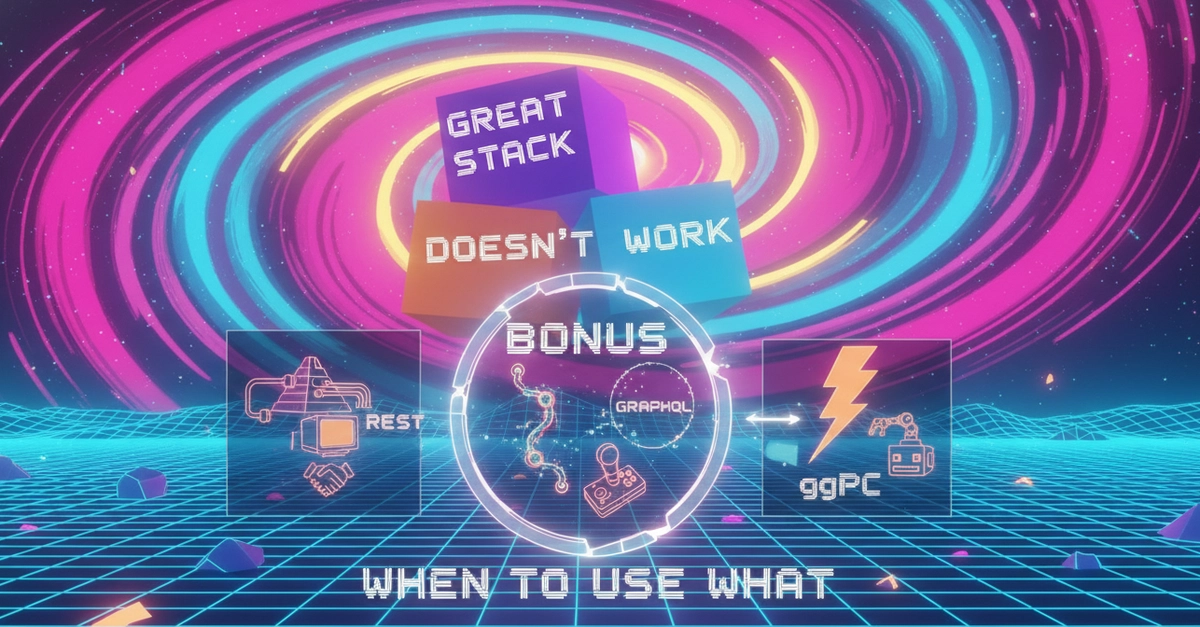
Why traditional REST isn’t always enough and how gRPC is changing the way our microservices talk to each other.
If you are building microservices, mobile backends, or real-time data streams, you have probably hit a wall with traditional API communication. The web has grown, our systems have scaled, and the old ways of doing things are starting to show their limits.
Recently, I had the privilege of presenting a webinar to the Cloud Native Addis Ababa community about one of the most powerful technologies in modern backend development: gRPC. I wanted to adapt that session into a comprehensive article series because understanding gRPC is rapidly becoming an essential skill for any backend engineer.
Before we start looking at lines of code or complex architecture diagrams, we need to set the stage. At its core, modern backend development is entirely about communication. We are not just talking about how we collaborate as humans, but how we enable efficient, strictly typed, and incredibly fast communication between our isolated software services. Finding the right way to manage that constant server-to-server chatter is exactly what solves our biggest performance bottlenecks today.
In this guide, we are going to embark on a deep dive into the world of gRPC. My goal is that by the end of this read, you will not just know what the acronym stands for, but you will know exactly how to architect and build high-performance APIs with it.