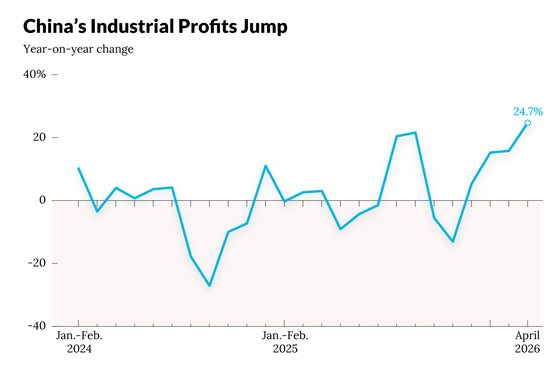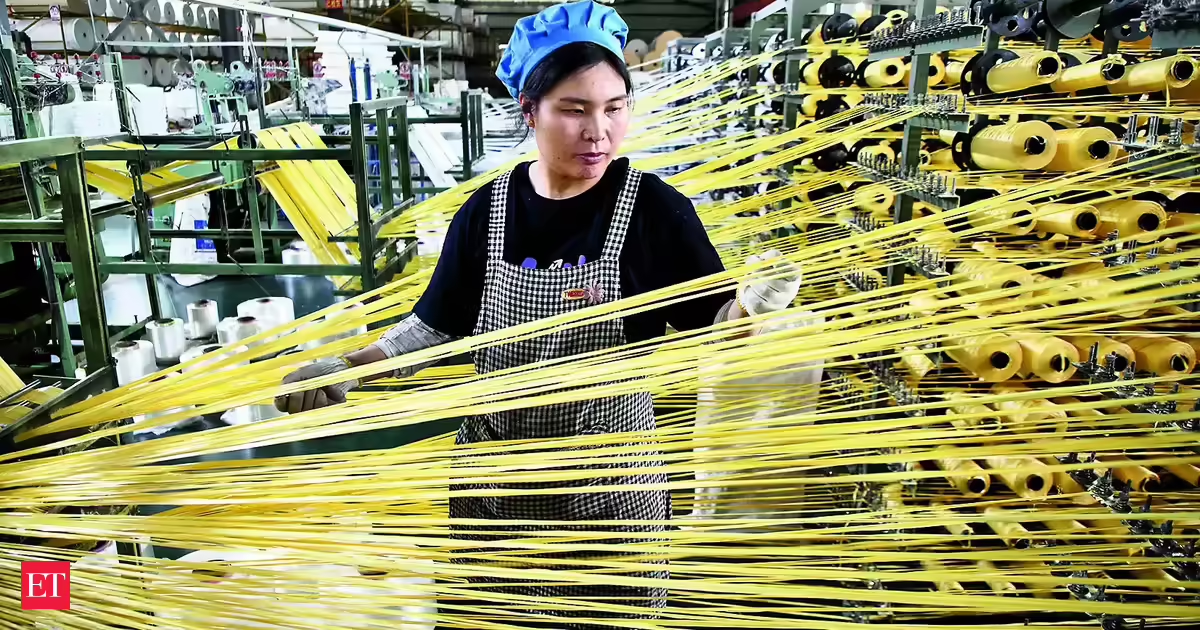
China's export prices jumped at their fastest rate in three years, as a global surge in energy costs and an AI boom broke a long streak of falling prices.Official data released Thursday showed overall export prices rose 5% in April from a year ago, the biggest gain since April 2023 and a reversal from years of almost unbroken contraction.The increases were concentrated in global commodities like crude oil, metals and semiconductors. These goods rallied worldwide as the war in Iran triggered an energy crisis and massive corporate investments in AI prompted global supply scrambles.Outside of these sectors, however, the picture looks very different. Prices for most Chinese goods are still falling, as intense domestic competition and an oversupply of products have limited what factories can charge buyers."Chinese products are not what's driving prices hikes. China is still largely a price taker," said Xing Zhaopeng, senior China strategist at Australia & New Zealand Banking Group. "Even if prices continue to rise down the road, it will be a passive reaction rather than an active choice."The data highlights how conflicts in West Asia affect the world's largest exporter. As higher oil prices lift the cost of things from plastics to chemical fibers, some Chinese factories have started raising prices for consumer items including swimsuits and bandages.This shift, if sustained, could spell trouble for shoppers overseas. For years, international markets relied on cheap Chinese manufacturing to keep their own everyday living costs down.However, a weak domestic economy prevents Chinese factories from passing on all their higher costs. Intense local competition means manufacturers must absorb much of the raw material spike, heavily squeezing profit margins downstream.For China, this profit squeeze threatens to trigger a painful economic loop. Lower corporate earnings will likely depress worker wages, further hobbling the domestic consumer spending that Beijing has been trying to revive.
War & AImpact: China's export-price jump fastest in 3 years
China's export prices surged 5% in April, the fastest in three years, driven by global energy costs and AI demand for commodities like oil, metals, and semiconductors. While these sectors saw price hikes, most Chinese goods remain subject to falling prices due to intense domestic competition and oversupply, limiting manufacturers' ability to pass on rising costs.
304 words~1 min read