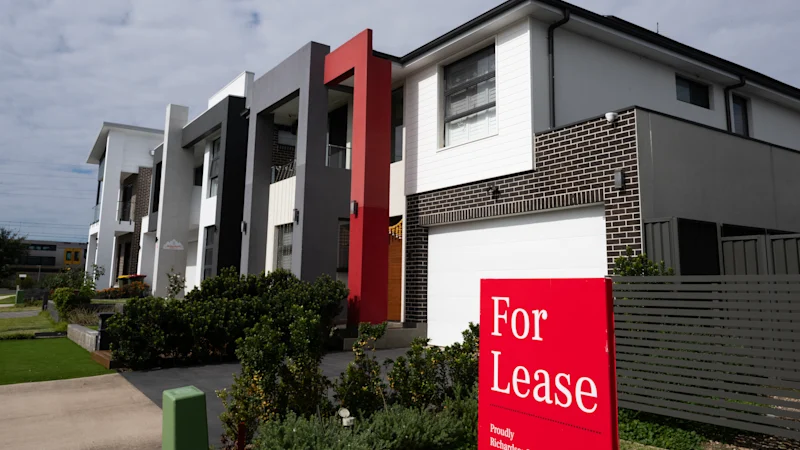
May 30, 2026 — 4:45amMore than 1 million landlords who negatively gear their properties stand to avoid the budget’s overhaul of property taxes while a similar number will have generous capital gains tax concessions locked in due to carve-outs put in place by the federal government.As economists at JP Morgan said the government’s changes could result in property prices falling by 3 per cent on top of a housing market that is already going backwards in Sydney and Melbourne, grandfathering provisions contained in the reforms suggest their initial impact will be muted.The government’s changes to property taxation has prompted widespread debate - but millions of people will be excluded from the reforms.Louise KennerleyTreasurer Jim Chalmers’ budget tax package includes restricting negative gearing to new homes and preventing the use of rental losses to reduce a person’s overall taxable income, a minimum tax rate of 30 per cent on capital gains and the replacement of the 50 per cent CGT concession with inflation indexation of an asset’s value.But the changes also have carve-outs that will affect the breadth of their impact. Properties held before the budget night announcement will be exempt from the negative gearing changes while the CGT reforms will apply only to increases in asset values that occur after July 1 next year.Data from the Australian Tax Office shows that, as of its most recent data in 2022-23, 1.1 million people who own 1.6 million rental properties were negatively geared.Under the proposed laws, these 1.1 million landlords would be able to continue negatively gearing their properties.That number is expected to increase as official interest rates, which finished the 2022-23 financial year at 0.85 per cent, climbed to 4.35 per cent in November 2023. Interest is the single largest tax deduction claimed by the nation’s landlords.As part of its overhaul of CGT, assets held before July 1 will still be taxed at the 50 per cent concessional rate. Any increase in the value of those assets will then come under the proposed inflation-adjusted tax system.About a million people are likely to find themselves retaining at least part of the 50 per cent discount, although CGT collections can vary widely year-to-year.In 2022-23, almost 940,000 Australians declared capital gains of $36 billion on which they faced $12.2 billion in taxes. That included 3182 high-income individuals who enjoyed a combined $16 billion in capital gains.Another 194,000 people had $1 billion of capital gains but avoided paying CGT altogether.But in 2021-22, after the previous year’s surge in property and share prices, almost 1.2 million people declared $49 billion in capital gains.There were 4751 people who made at least $1 million in capital gains. Their combined capital gains reached $19 billion.The government this week introduced the broad structure of its tax changes into the parliament, but they face a short and likely intense Senate inquiry. Talks with small businesses, particularly the start-up sector, are continuing.But Tax Institute head of tax and legal, Julie Abdalla, said the government’s approach to its own laws represented an “alarming shift” in how tax measures are developed.Treasury secretary Jenny Wilkinson this week said government tax changes will help lift home ownership.Dominic Lorrimer“The proposed changes to the CGT discount and negative gearing have far-reaching implications forAustralian taxpayers and our economy. Introducing these measures without consultation is adisservice to the Australian people and the businesses that fuel our economy,” she said.Treasury secretary Jenny Wilkinson this week noted the government’s changes to negative gearing, CGT and trusts were expected to lift homeownership by a full percentage point by the 2030s, reversing a decade of decline in ownership.Owner-occupiers are tipped to own 75,000 more homes than if the changes were never put in place.“This reallocation of housing stock, which improves opportunities for first home buyers, is a result of reduced investor demand in the existing housing market,” she said.JP Morgan senior analyst Ben Jarman on Friday released research showing the government’s negative gearing changes would likely reduce turnover across the property market as investor activity declined.He said this would flow through to property prices.“The resulting price impact is in the 1 to 3 per cent range, similar to Treasury estimates for the entire tax package over the medium term,” he said.“Recall that this estimate is on top of the underlying trajectory for prices, which is already weakening, so could push into modest contraction.”The changes have rejuvenated the Coalition, which has accused the government of lying to voters with a package that will harm economic aspiration.Nationals leader Matt Canavan on Friday likened the government’s actions to King George III and the Boston Tea Party of 1773 as he called for a federal election.“People have fought wars over this before, 250 years ago. It’s the whole reason the American colonies went to war against their British rulers,” he told Sky News.From our partners
How more than 1 million landlords will escape negative gear changes
Overhauling property taxes was key to Jim Chalmers’ federal budget. But grandfathering and carve-outs will leave millions untouched.
TL;DRAI
Australia grandfathers 1.1M landlords from negative gearing reforms; CGT changes apply only to gains accruing after July 1, 2027. JP Morgan estimates 1–3% additional price downside on a market already contracting in Sydney and Melbourne, with near-term impact muted by the broad carve-outs.
797 words~4 min read