Terra Konakan / Getty Images
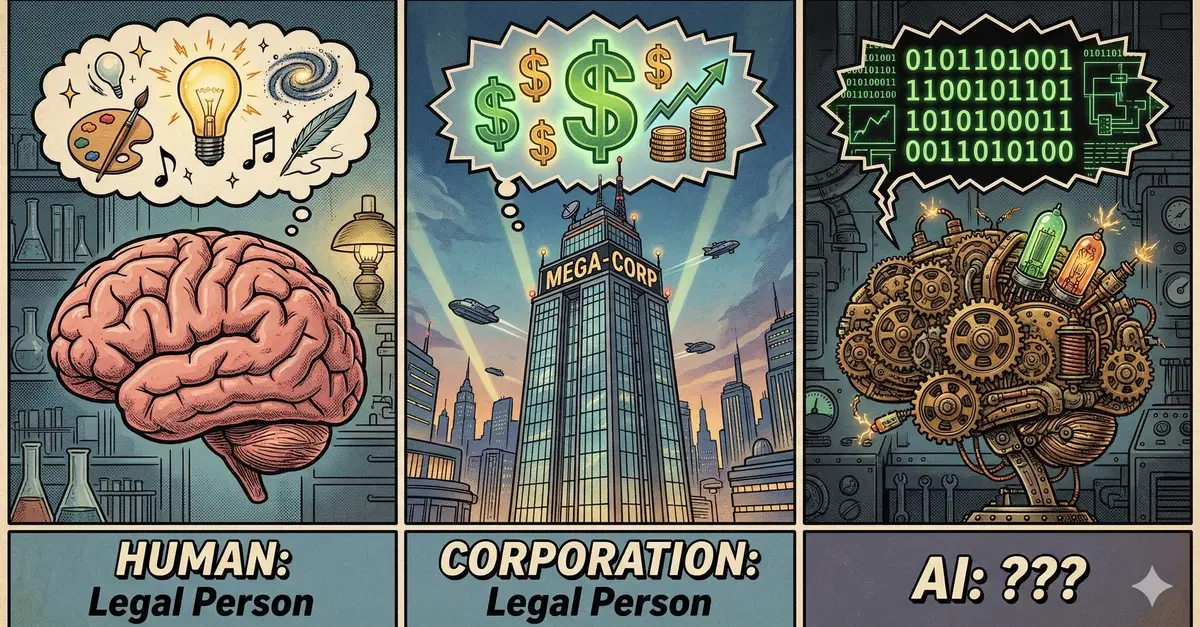
Corporations are persons. Rivers are persons. An elephant at the Bronx Zoo was argued to be a person before New York's highest court. The legal definition of "person" has never been stable, and every expansion has followed the same pattern: It seemed absurd until it didn't.
The question of whether AI systems could accumulate constitutional rights is no longer confined to philosophy seminars. It sits at the center of a live dispute between Anthropic and the Pentagon, in which one of Anthropic's suits alleges a First Amendment violation, arguing that forcing a company to build tools it finds ethically unconscionable amounts to compelled speech. That case turns on a deceptively simple question: What kind of thing is an AI model? The answer, depending on how courts land, could open a door that will be difficult to close.
Legal personhood is a flexible and political concept that has evolved throughout American history, as former federal judge Katherine Forrest argued in the Yale Law Journal Forum in 2024. There is nothing immutable about who falls within the legal definition of "person," or the array of rights that such a designation conveys.
The template is corporate personhood. The 1886 Supreme Court case Santa Clara County v. Southern Pacific Railroad appeared to establish that corporations were "persons" under the Fourteenth Amendment, though the Court's actual opinion never reached that constitutional question. The court reporter, a former railroad executive, inserted into his published notes a statement from the chief justice that the Fourteenth Amendment protects corporations, and, through this irregular move, introduced the idea that corporations had the same rights as individuals into constitutional law.