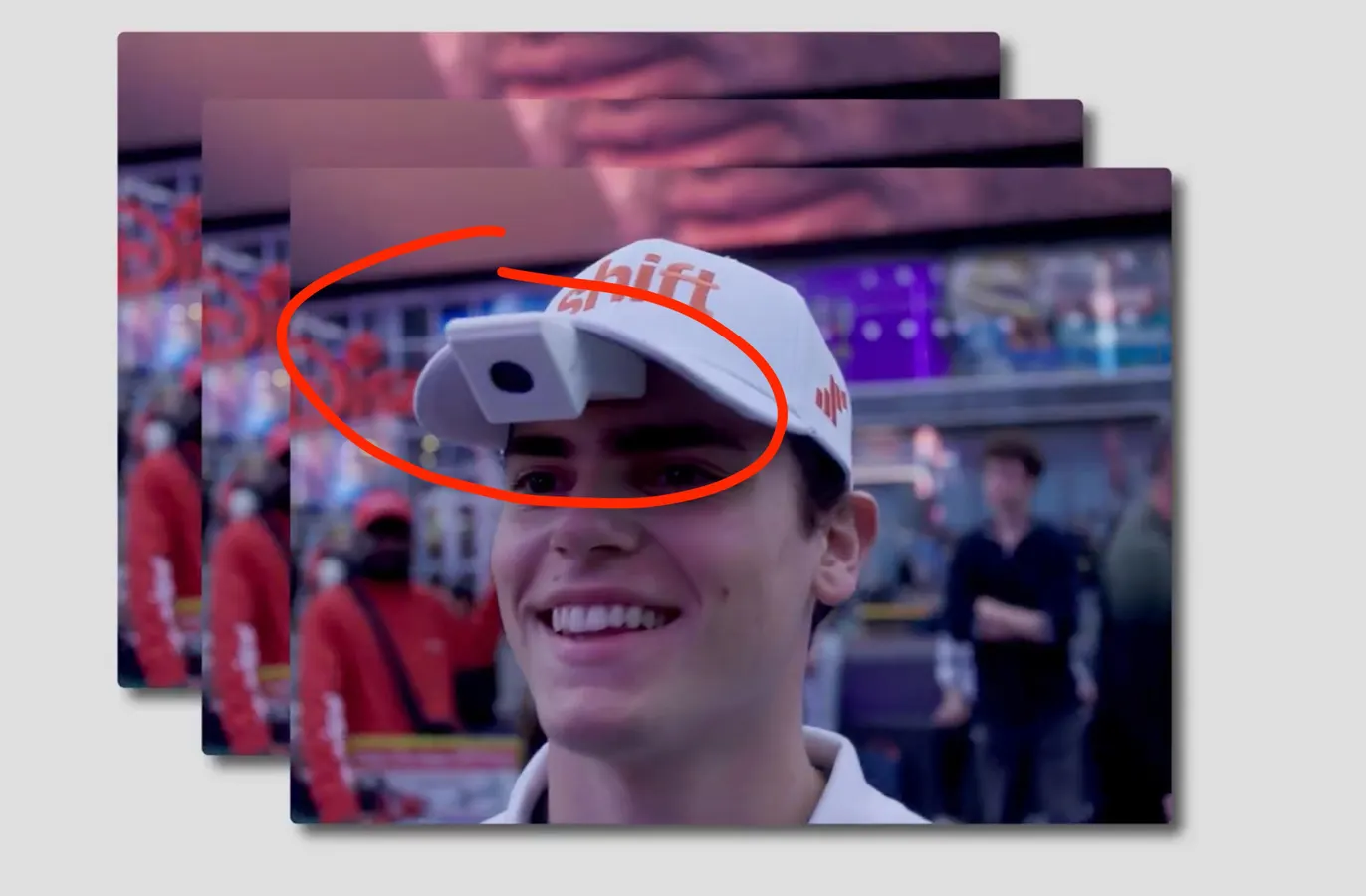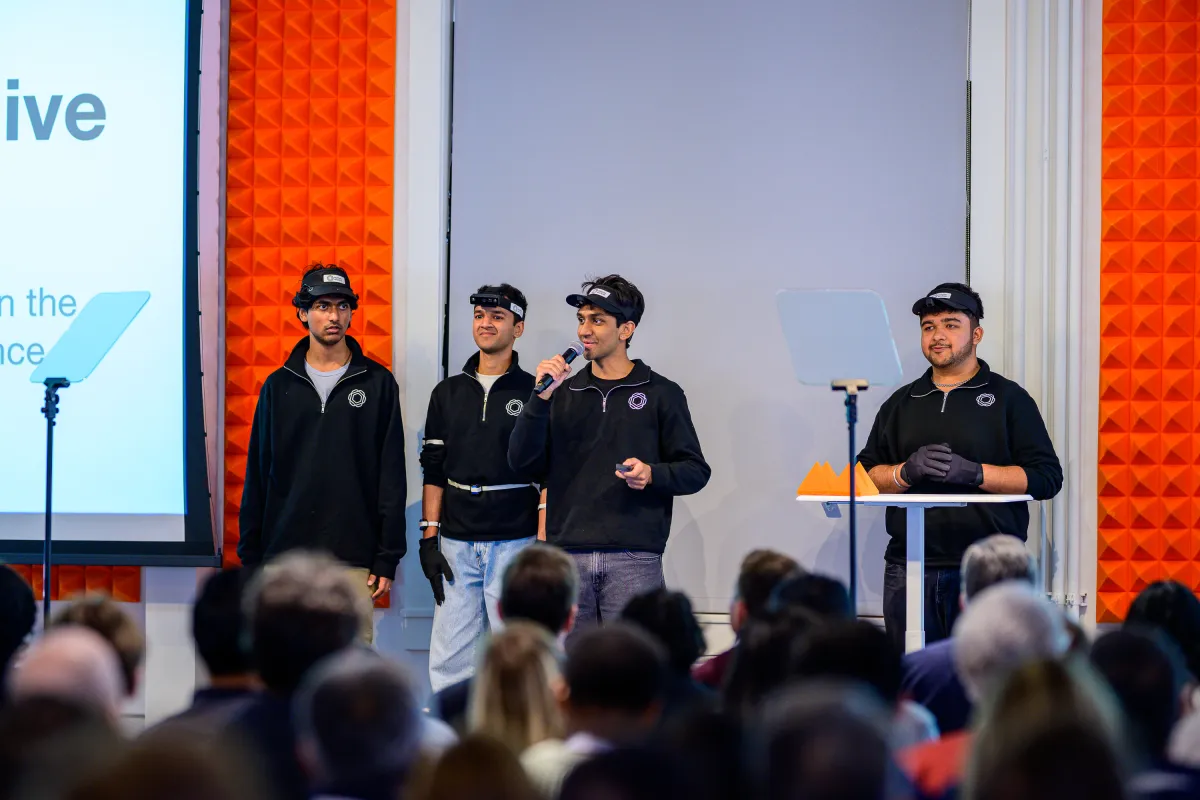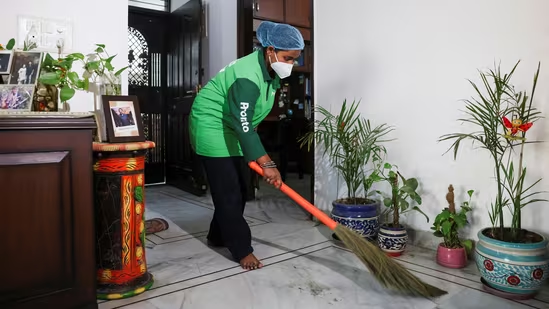
There's a reason why the grid of images that pops up online, when you're trying to gain access to a website or 'prove that you're human', makes you identify motorcycles, buses or zebra crossings. Your labour of picking the right image is being used to train the AI that will drive driverless cars. Our email messages are probably used to train AI that provides auto-complete. The fact is that all around digital space, what we do, and how we do things, are used to train AI.Pronto, a home services startup founded in 2025 by Anjali Sardana, is running a pilot where workers wear cameras inside customers' homes. Pronto's investor Glade Brook Capital describes the footage as training data for physical AI and robotics systems. This has made people uncomfortable with the idea.A few things to consider:We need to understand that Pronto is an AI data collection company masquerading as a home services company. Its real valuation, validated by its investor, lies in collecting data inside homes. Why is this data valuable?Speaking at SuperAI conference in Singapore last year, Persona AI CEO Nicolaus Radford highlighted that home is the hardest environment for humanoid robots to operate in, because the work is unstructured and complicated. Even small changes like different lighting impacts how humanoid robots perceive the environment and act in it. You can't replicate the variance in this environment via simulations.This makes training data inside homes extremely valuable for companies looking to train humanoid robots to operate in homes. Radford pointed out that 'the next 50 years are going to be the ubiquitous manipulation of the physical world', and that includes appropriating data, training models, getting them distilled and deployed to produce action.It's possible to see this as a mere transaction between a company, gig worker and home-owner. Pronto says that it is an opt-in for customers - they get a lower price for allowing recording - and they can choose to decline. While the recording is in a trusted environment for a one-time or short-term transaction, with platforms, there are longer-term consequences that users don't necessarily realise.The home, and placement of items inside it, are being recorded. What precautions does the company take to ensure the footage isn't available to other people? Or that a second camera isn't used to record, and won't aid a crime later?Tech companies, whether Airbnb or Uber, have operated on the principle of avoiding costly protections initially, and fixing issues only after harm. While the burden of proof for protecting against crime lies squarely with Pronto here, its legal terms expectedly absolve itself of all liability of the actions of its 'professionals'. Pronto says that the footage will be deleted in 48 hrs. But we can't just take the claim of a tech company faced by criticism at mere face value.Pronto's pitch to workers - that they 'participate in the AI economy' - rings hollow. Their embodied knowledge of navigating a cluttered kitchen, handling fragile objects in an unfamiliar space, is being extracted, permanently. They're an instrument for AI, not beneficiary. The real commercial value goes to the platform, and possibly will get sold over and over to multiple humanoid and robotics companies, in what is a data arbitrage business.There is potential recording of children, for which Digital Personal Data Protection Act (DPDPA) requires parental consent. Even with consent, you cannot process behavioural data of a child. While Pronto says that it's compliant with DPDPA, the privacy policy on its website, dated November 2024, makes no mention of video recording, parental consent or capturing training data for the purposes of AI training. As such, the purpose limitation requirements are not met, nor are they explicit.The larger problem is that DPDPA is built for the online space and for an individual's user behaviour and personal data collection while browsing. Video recording captures other information inside a private space - of individuals in the house, or guests, who haven't given consent while signing up for Pronto, unless Pronto is getting each person in the house to sign a consent form individually.What's happening inside homes with Pronto is symptomatic of a larger issue that is upon us - of capturing our personal information without consent, as bystanders. Google has just launched AI glasses. Lenskart is launching its B glasses. Sarvam has Kaze. And Meta mainstreamed this with its Ray-Ban and Oakley glasses. Meta was found to be sending private camera recordings from glasses - including explicit content - to annotators in Kenya recently, without the wearers' knowledge.The physical world, including all of us, are becoming training data for AI, and we have no framework for privacy for this. In fact, in DPDPA, MeitY was myopic enough to incorporate a clause stating that publicly available personal data is outside the Act's scope.It's said that on the internet if it's free, you're the product. In the AI age, even if you're paying, you're still the product. Your paid usage of ChatGPT, Claude and Gemini is being used to train LLMs. That paradigm is now being mirrored offline with services like Pronto. And the defanged DPDPA doesn't have the teeth to address this.The writer is founder, MediaNama(Disclaimer: The opinions expressed in this column are that of the writer. The facts and opinions expressed here do not reflect the views of www.economictimes.com.)
The world is becoming training data for AI, for which everyone is unprotected - The Economic Times
Pronto, a home services startup, is facing criticism for using body-camera footage from workers inside customers’ homes to train AI and robotics systems. The company says customers can opt in for discounts, but critics argue the real business is collecting valuable in-home data for humanoid robots.
880 words~4 min read