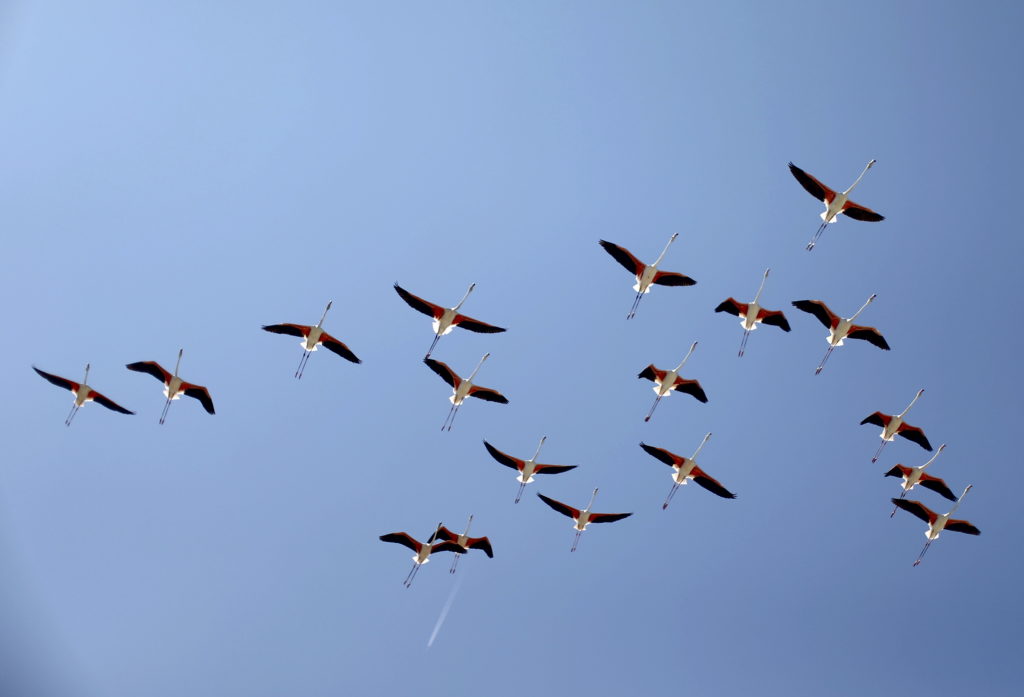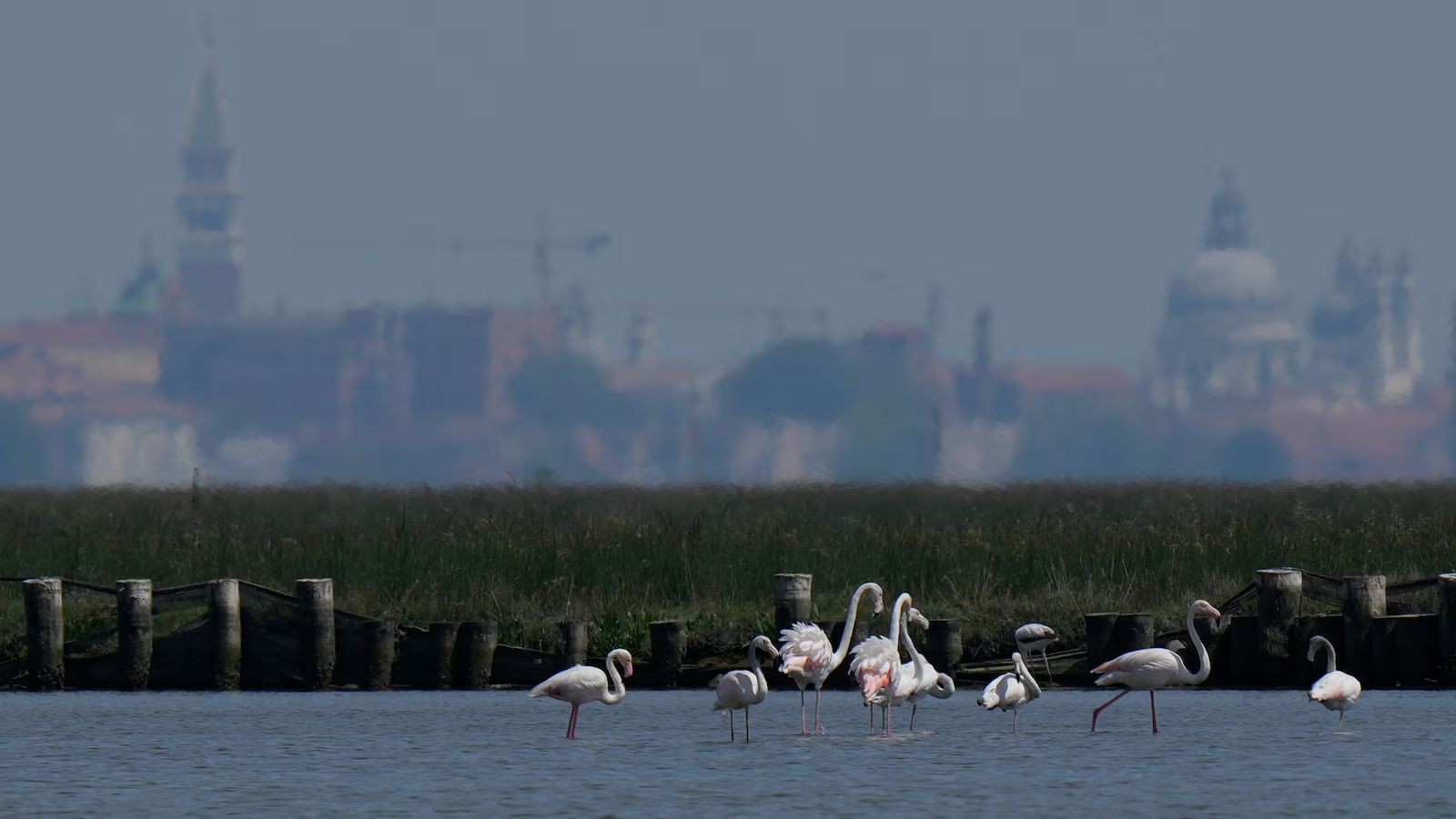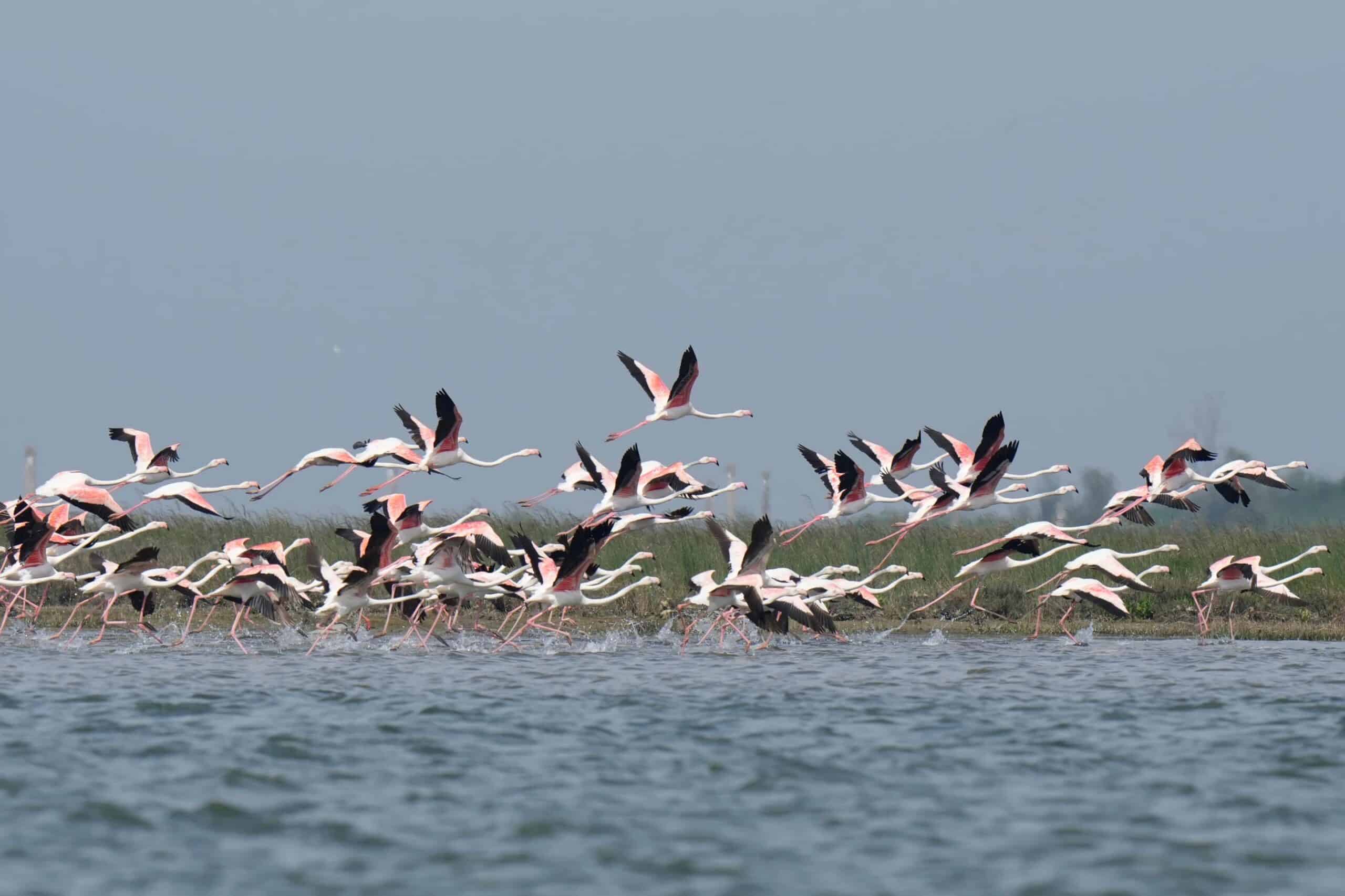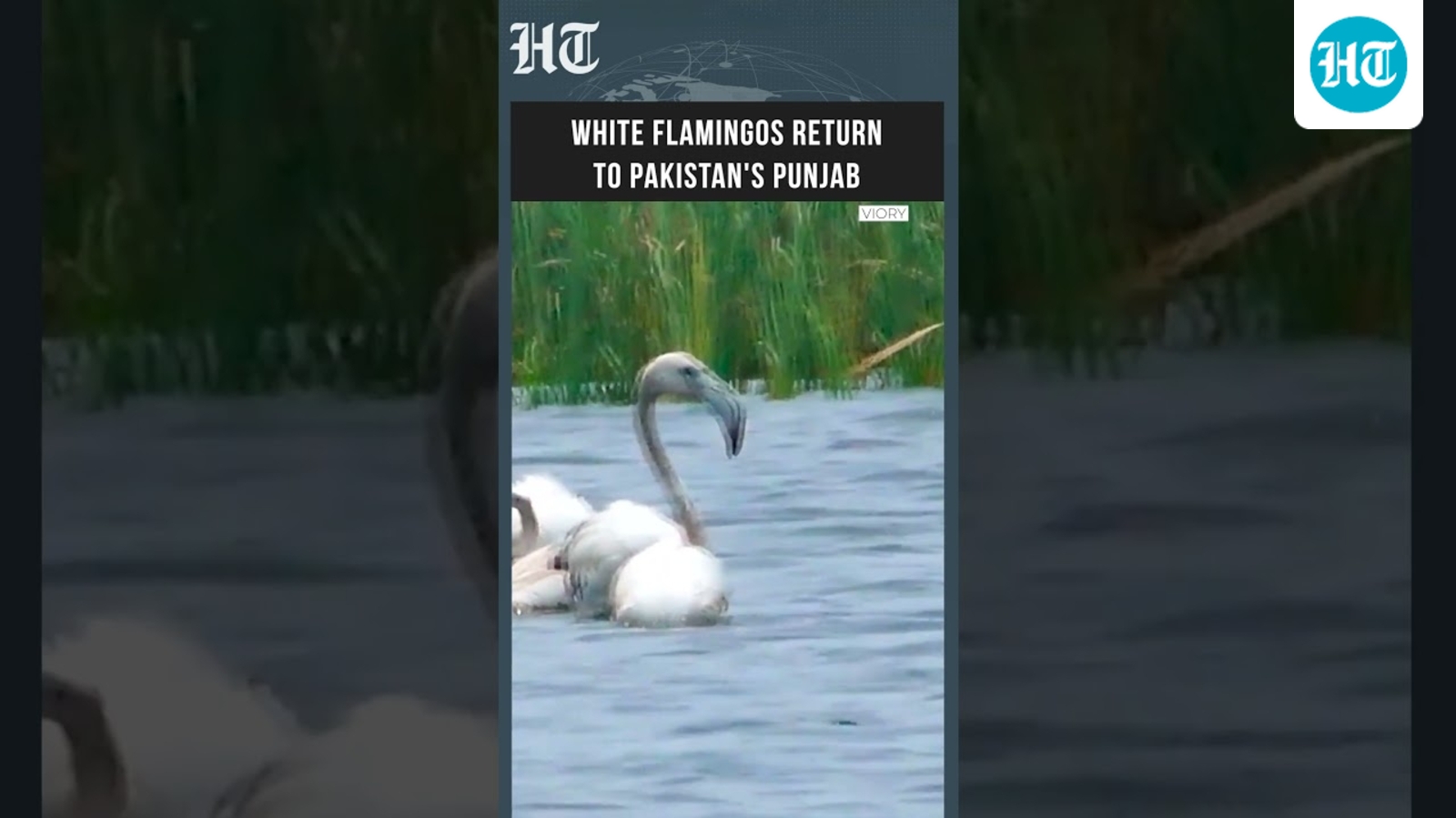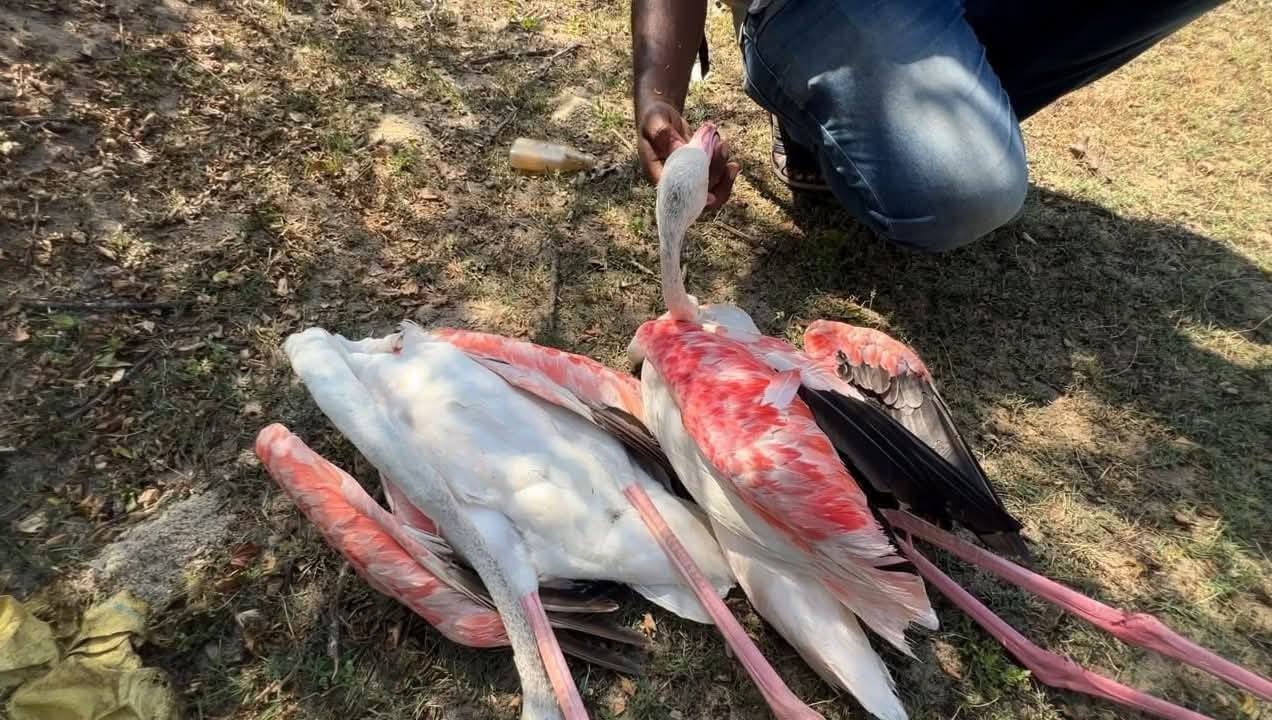
Three flamingos were recently killed following a collision with overhead power lines in Mannar, in northern Sri Lanka, highlighting the threat posed by wind power structures to migratory birds.Flamingos also disappeared from Bundala, a popular Ramsar wetland in the island’s south, after irrigation-driven freshwater changes reduced salinity and eliminated their food base.Globally, flamingos face threats from habitat loss, collisions due to infrastructure, and wetland degradation, despite their ecological and ecotourism importance.Meanwhile, International Flamingo Day is observed on April 26 to honor U.S. ornithologist John James Audubon, whose iconic “American Flamingo” painting helped popularize the bird and has highlighted its global cultural and conservation significance.
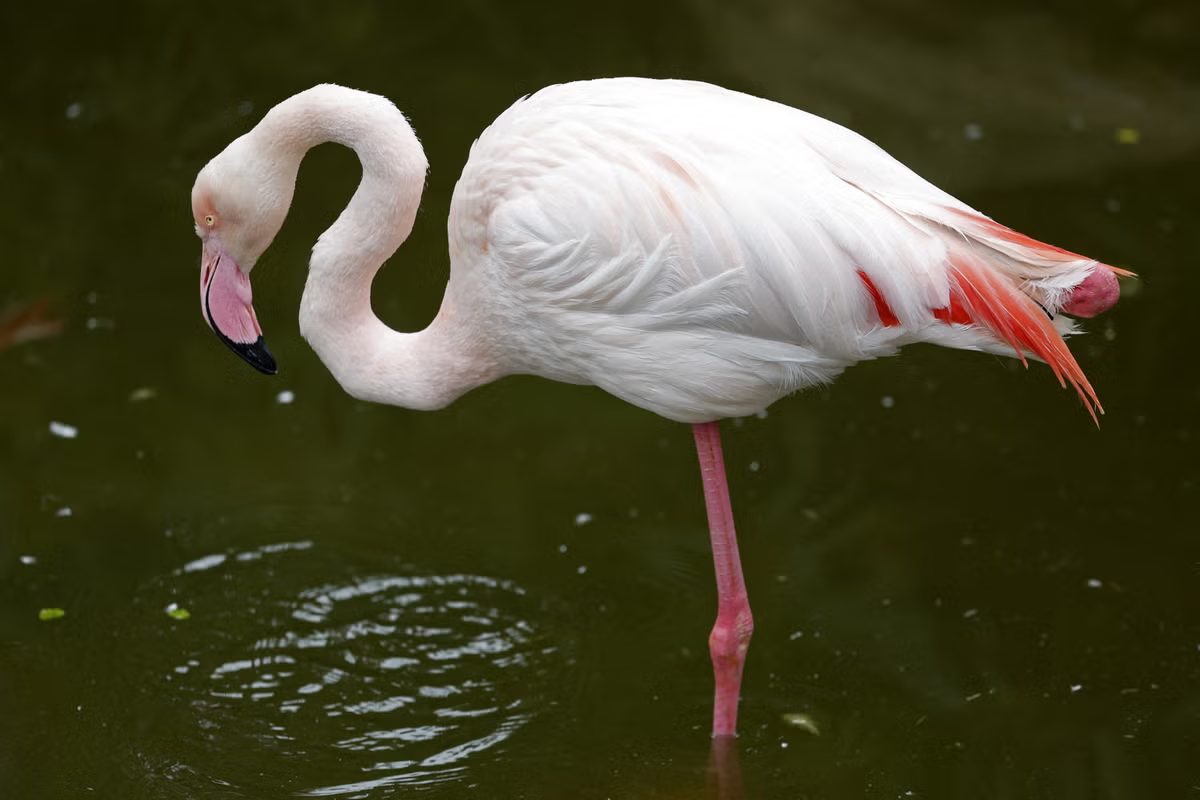
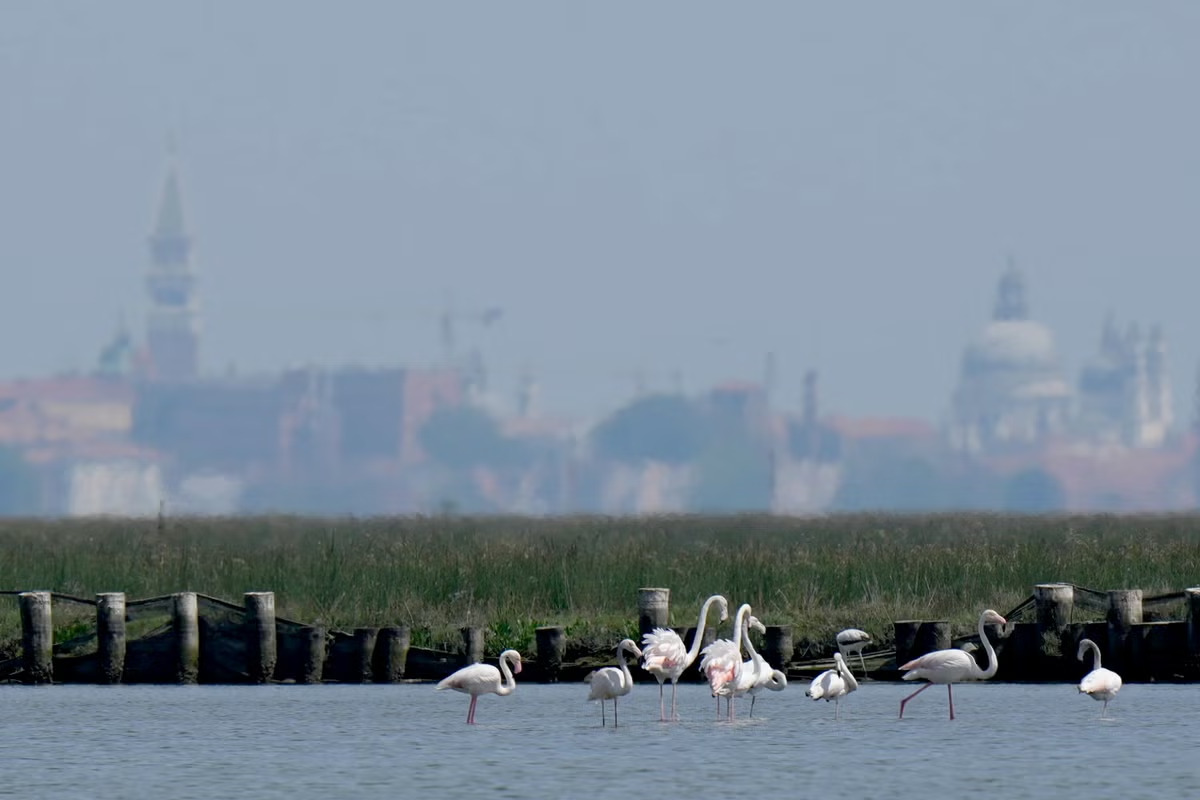
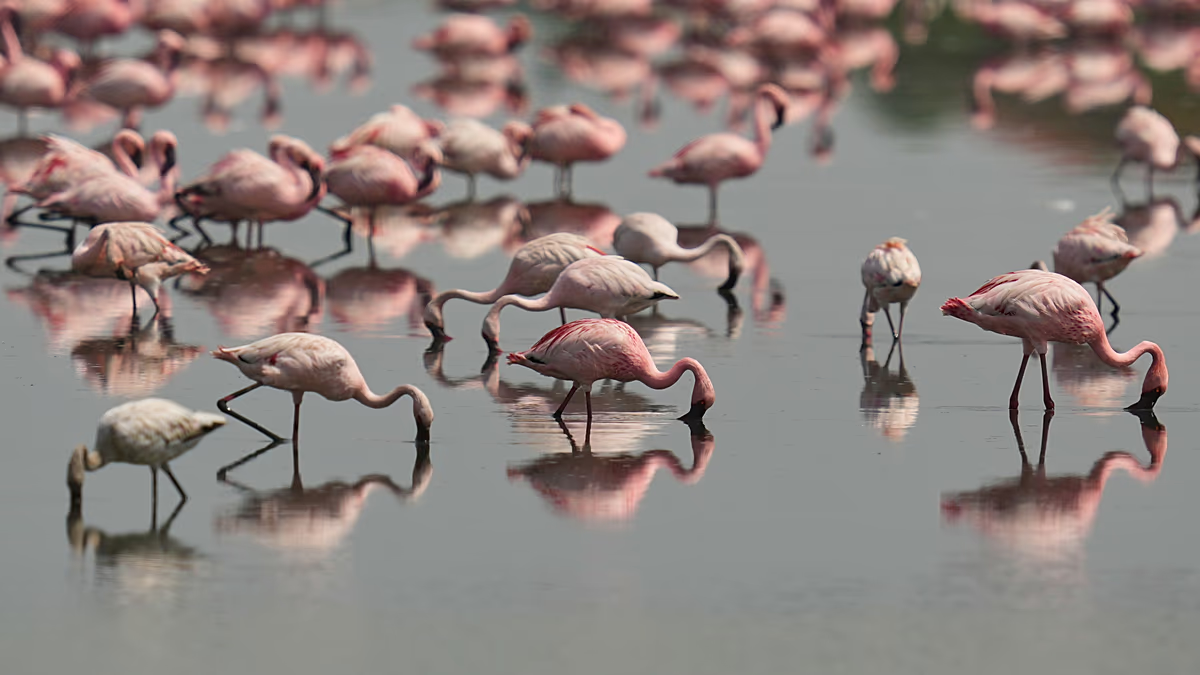
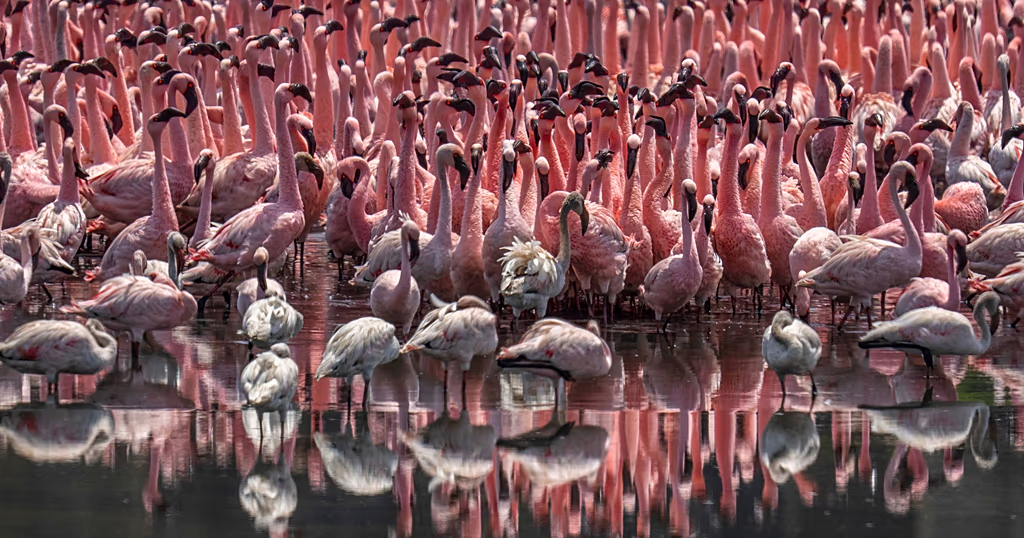
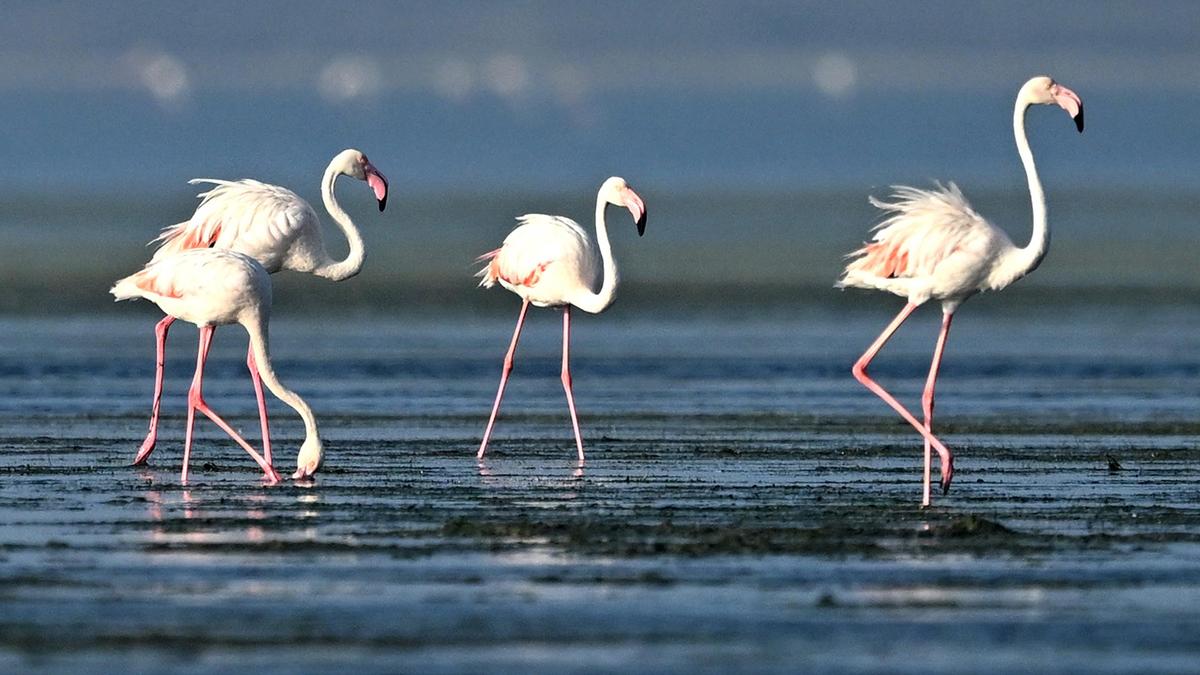
MANNAR, Sri Lanka — Each year, the arrival of greater flamingos transforms the lagoons of northern Sri Lanka into a mesmerizing spectacle of pale pink and white. Their synchronized movements across the shallow waters of Mannar attract birdwatchers, photographers, tourists and nature lovers from around the country and abroad.
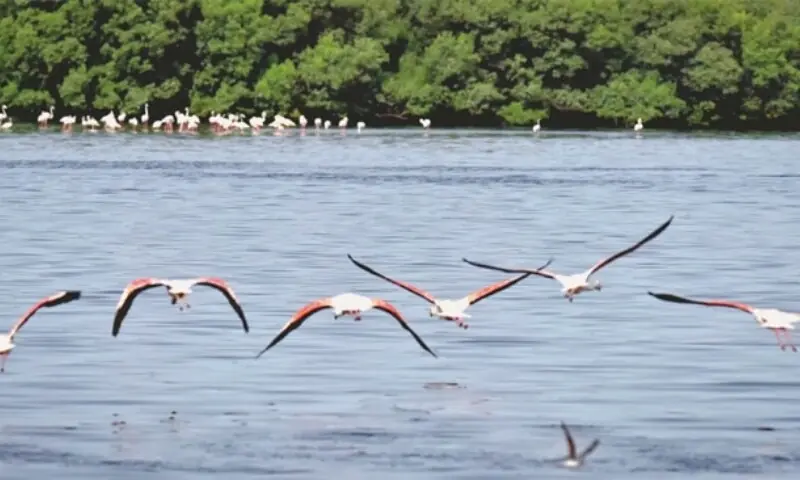
But behind this beauty lies a growing crisis. Recently, three flamingos were killed in Mannar after a collision with overhead power lines that crossed their flight path. Initial reports suggested electrocution, but according to Department of Wildlife Conservation (DWC) veterinary surgeon Balachandran Giritharan, who conducted the necropsies, the birds were not electrocuted. Instead, their long necks were slashed mid-flight when they struck the cables.