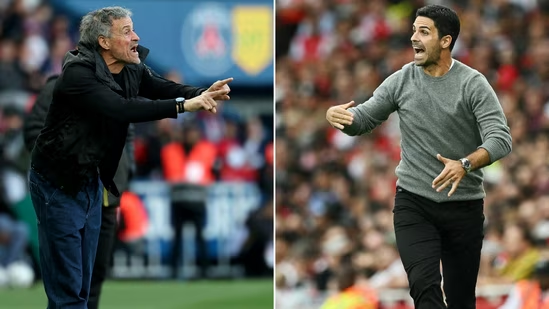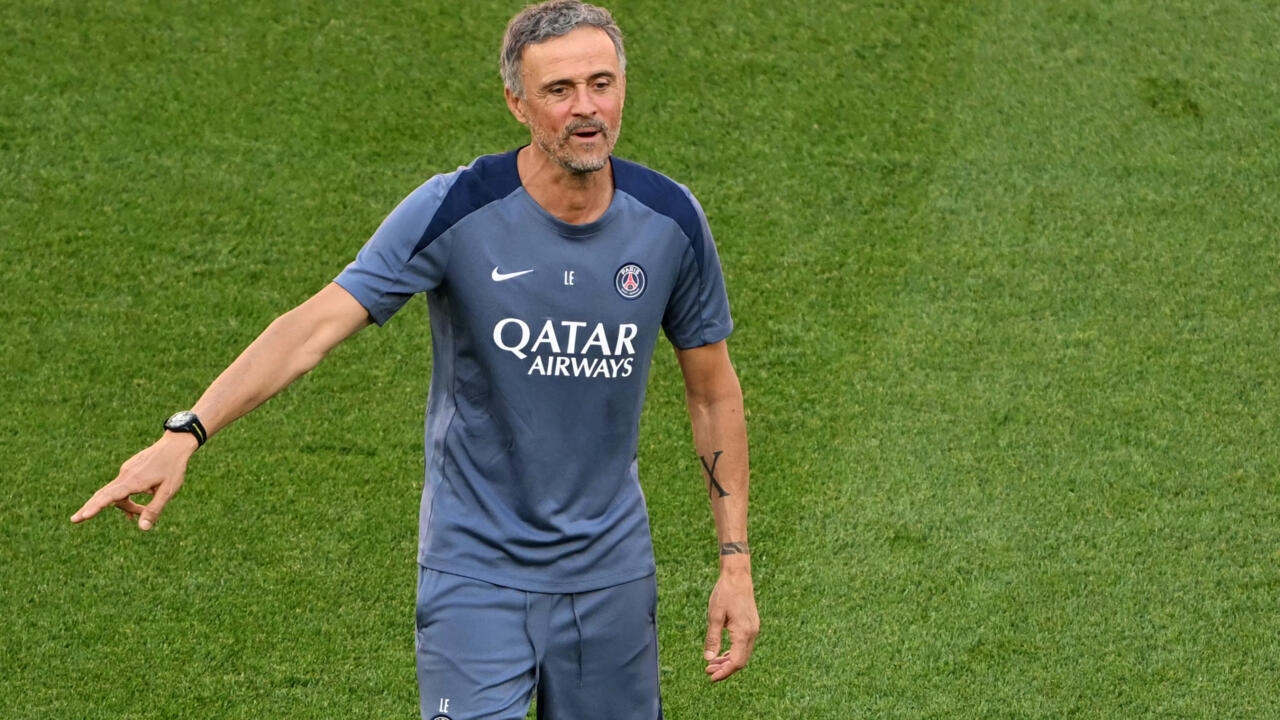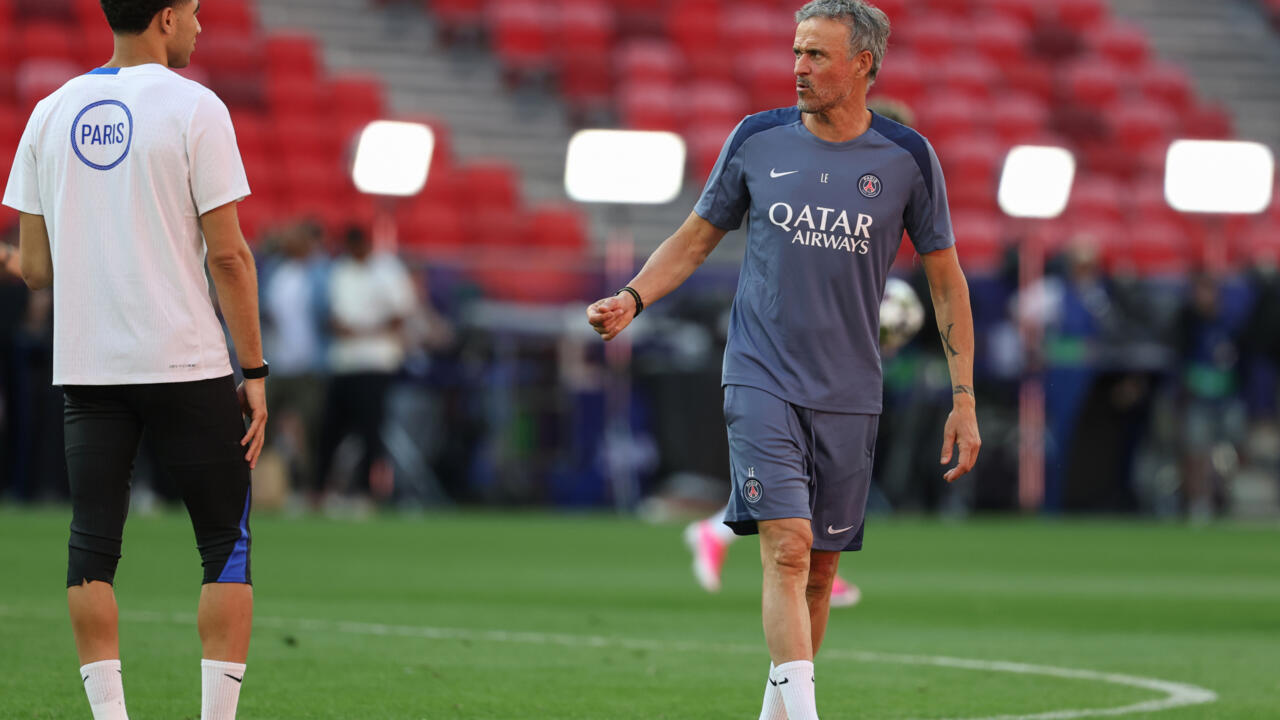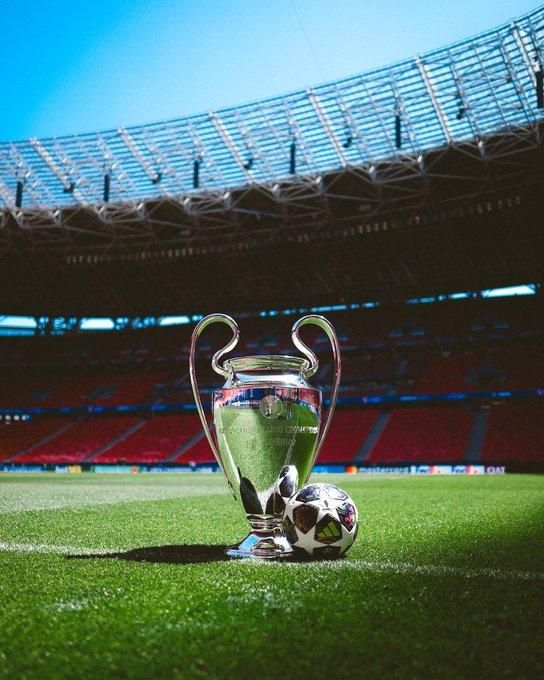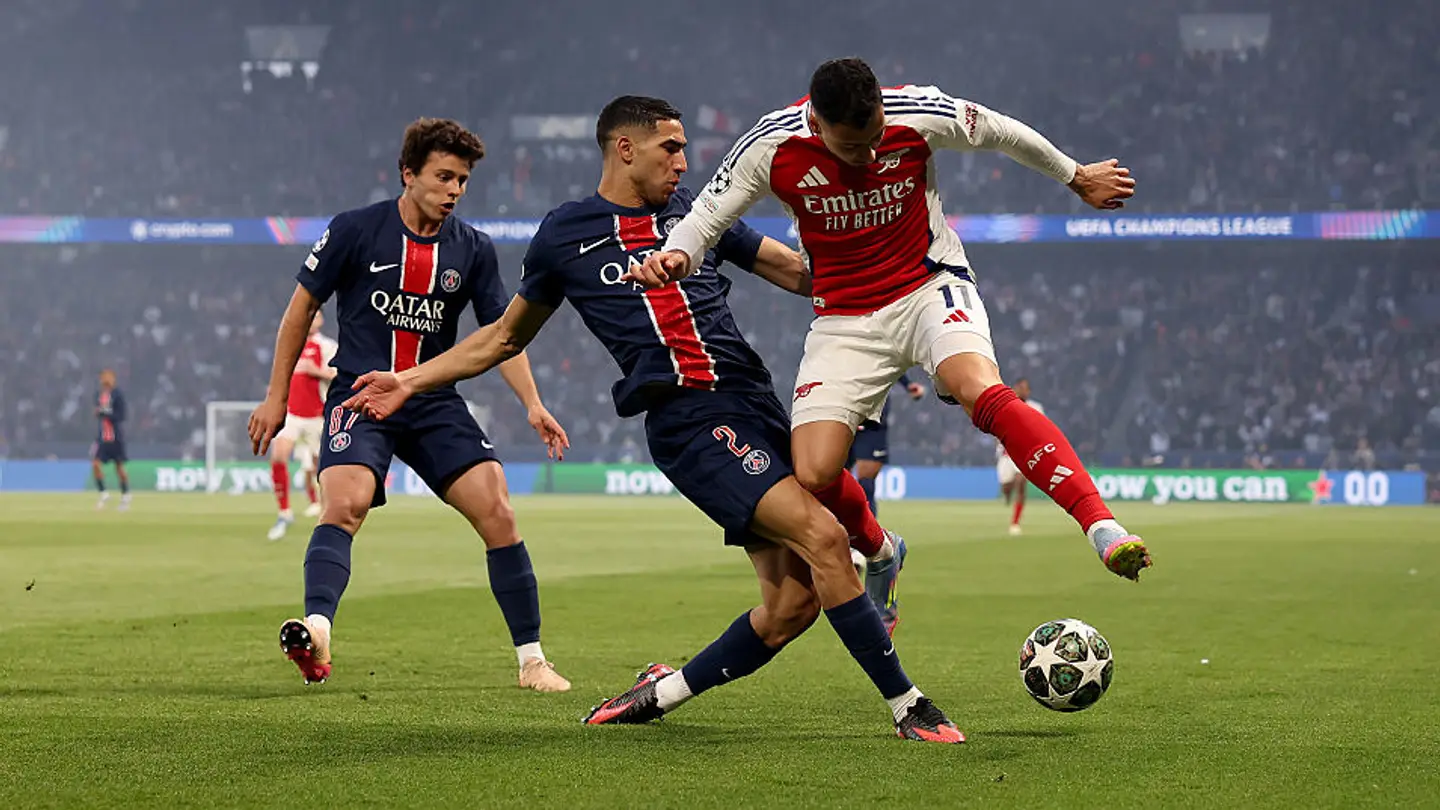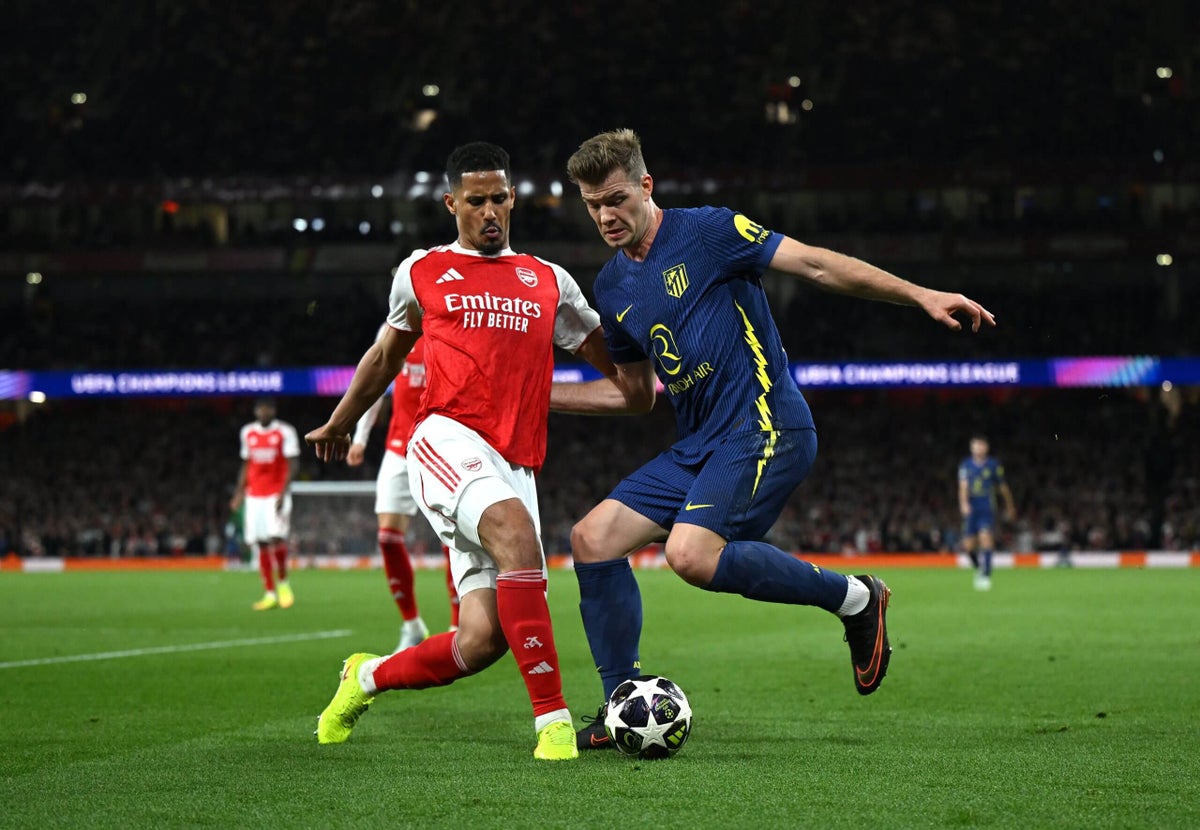
Arsenal’s Champions League final with Paris Saint-Germain this weekend feels like a fitting end to the season in the wider football landscape.The newly-crowned champions of England meet the newly-crowned (yet again) champions of France but, more importantly, their match in Budapest, Hungary, today (Saturday) is arguably the most intriguing tactical battle we could have hoped for.Luis Enrique’s side are looking to retain the title with a fluid attacking unit based on relentless rotations, particularly across their forward line. Meanwhile, Mikel Arteta’s Londoners have found success based on rock-solid defensive foundations and a set-piece threat few teams in European football can match.Styles make fights, with the contest at the Puskas Arena likely to look significantly different from PSG’s semi-final with Bayern Munich — one of the best two-legged ties in the past decade — where the two sides went toe-to-toe, particularly in a first leg that finished 5-4 to the Frenchmen, both playing with an aggressive, swashbuckling style that was fraught with calculated risk.Expect a slightly cagier affair in the final. This is not quite unstoppable force meets immovable object, but it’s pretty damn close.Only Bayern have logged higher than PSG’s 2.8 goals scored per game in the Champions League this season, with the latter’s 44 shared among 13 players. The combined attacking threat of Khvicha Kvaratskhelia, Ousmane Dembele, Desire Doue and Bradley Barcola is enough to give any defence nightmares — pulling opponents out of position at will, with the freedom to pop up anywhere across the pitch.PSG’s attacking threat is well-known, and much-feared (Catherine Steenkeste/Getty Images for Qatar Airways)However, they will be facing a side with the strongest defensive record across Europe’s top five leagues. No team have conceded fewer goals in domestic competition than Arsenal (0.71 goals per 90 minutes), with Arteta’s side improving upon those numbers in Europe — nine clean sheets in 14 games, and a rate of just 0.43 goals against per 90.As shown by their non-penalty shots conceded, Arsenal have also been helped out by a bit of good fortune and some strong goalkeeping, with the quality of chances conceded suggesting they should have surrendered closer to only 10 non-penalty goals.Still, it only reinforces how strong their rearguard has been.With the qualities of Declan Rice, Bukayo Saka, Martin Odegaard and friends, it would be unfair to suggest that Arsenal do not have enough attacking strength to give PSG plenty of trouble, but the facts are also laid bare.Arsenal have the lowest goals-per-game rate (1.9 per game) among the title winners across Europe’s top five domestic leagues. A rate of 2.1 goals per game in the Champions League was a slight improvement, but 10 teams (among those with six or more matches played in this season’s competition) had a higher attacking output by this measure.This all leads to the crux of the debate — does a strong defence or a strong attack win you the Champions League?When mapping out the top attacks across all Champions League finalists since 1992-93 (the season that the competition was rebranded from the European Cup), nine of the top 10 sides lifted the trophy.Bayern Munich’s 2019-20 team provided the strongest attack in the dataset, averaging 3.9 goals per game in a pandemic-disrupted season. Incidentally, just 0.73 goals conceded meant that Hansi Flick-managed team have the best goal difference (3.2 per game) of any side across the 34 seasons — making them arguably the Champions League’s most deserving victors in recent history.Liverpool 2017-18 are the only side in the top 10 to lose the final having had a superior attacking record to their opponents. Jurgen Klopp’s team outdid Real Madrid with 3.2 goals scored per Champions League game that season (to the Spaniards’ 2.5) but were on the wrong end of a 3-1 scoreline when they went head-to-head in Kyiv.Incidentally, Liverpool bounced back from that defeat to lift the trophy the following season, with a notably lower rate of 1.8 goals scored per game on the way to beating Tottenham Hotspur 2-0 for their sixth European title.At the other end of the pitch, a look at the strongest defences makes for interesting reading.Of the top 10 finalists with the lowest goals conceded per game, six wound up winning the tournament. The four runners-up include Arsenal’s only appearance to date in a European Cup/Champions League final in 2006 — a 2-1 defeat to Barcelona.Milan’s 4-0 thumping of Barcelona in 1994 was anomalous compared with the rest of their European campaign that season, but their defensive foundations were strong — with half of their six group games finishing 0-0. Their rate of 0.25 goals conceded per match remains the lowest across our 34-year sample.Interestingly, Milan had a near-identical defensive record the season before, where a rate of 0.29 goals conceded per game was still not enough to lift the trophy as they were edged out 1-0 in the final by Marseille.That rate is marginally beaten by Ajax in 1996, who remain the finalists with the lowest goals conceded per game (0.29) who did not win the tournament. Perhaps it was fitting that they did not lose the final in the 90 minutes or after extra time, as their 1-1 draw with Juventus saw them eventually beaten 4-2 on penalties.Milan’s defence in 1992-93 was parsimonious but they did not land the Champions League (Patrick Hertzog/AFP via Getty Images)Arsenal’s rate of 0.43 goals conceded per game in Europe this season would make the top 10 list of finalists to have the strongest defensive record. Coupled with those 2.1 goals scored per game, that goal difference would be ninth on a list of 68 finalists.By comparison, this season’s iteration of PSG would be 19th within that cohort.Which gets at the crucial point here. That it is — of course — how you perform in both boxes rather than simply a strong attack or defence in isolation. Luis Enrique’s PSG side are breathtaking going forward, but you only have to look at that first leg of their semi-final with Bayern last month to show that they do possess frailties at the back.Combining the attacking and defensive records since 1992-93, would you rather be in Arsenal’s or PSG’s camp when looking at what it takes to get over the line?PSG did make a mockery of the “attack vs defence” narrative last season, with Inter reaching the final with a similarly strong foundation to Arsenal’s — conceding just once in the eight-game league phase. The result? Simone Inzaghi’s side were duly demolished 5-0 in the most one-sided final in the competition’s history.So while “attack wins games and defence wins titles” might be a good phrase to use in domestic league campaigns, the evidence is a little more mixed on the European stage.Many neutrals are giving the edge to PSG to hang onto their title for another 12 months, but Arsenal fans have every reason to argue that their own record in both boxes should be respected.
Arsenal have the defence, Paris Saint-Germain have the attack: Which wins you the Champions League?
Inter came into last year's final with a strong defence and duly lost 5-0 to PSG – but the history of the competition shows some variation
1,147 words~5 min read