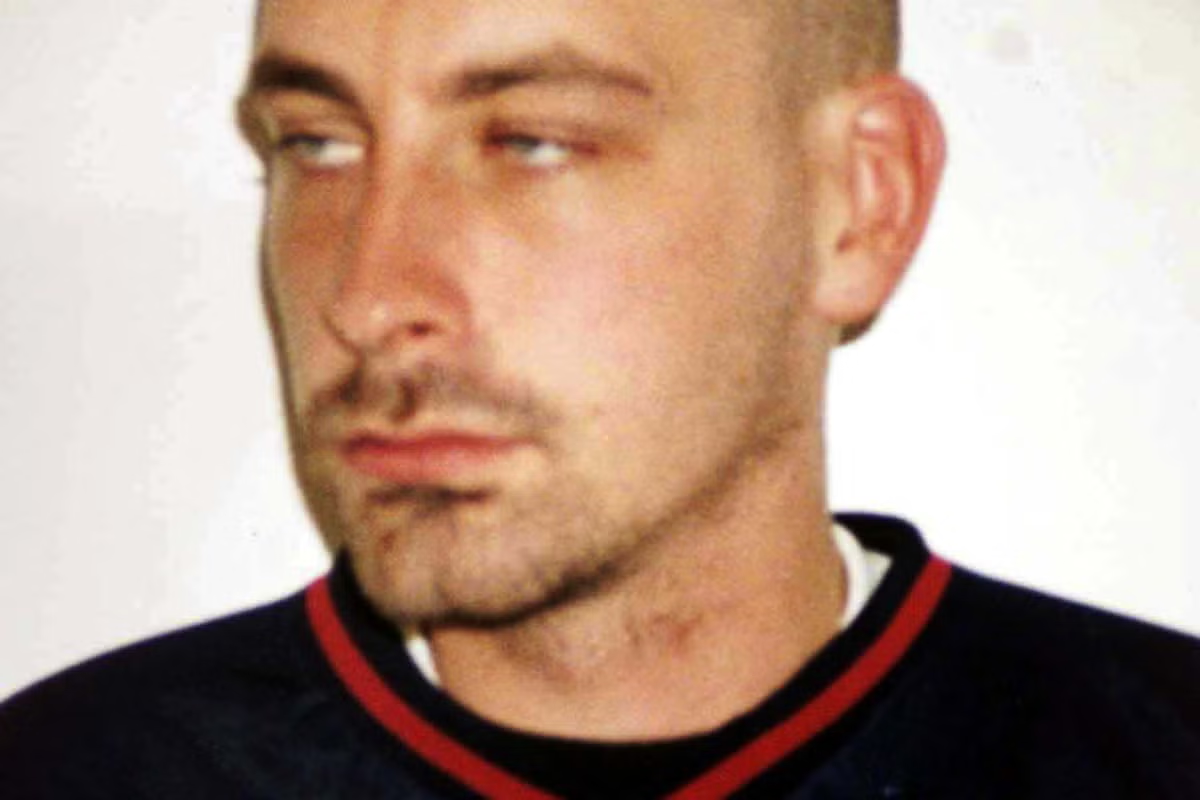
A killer who boasted about eating parts of his victim with a plate of pasta has had parole refused for a ninth time.David Harker, now 51, killed mother-of-four Julie Paterson, 32, in Darlington 28 years ago and only some of her remains have ever been found.He is serving a life sentence following Paterson’s death in 1998 after admitting manslaughter on the grounds of diminished responsibility.It later emerged Harker had told friends and psychiatrists that he had fried part of her thigh and eaten it with pasta and cheese.He has been eligible for parole since 2013 and this month a ninth hearing was held to determine whether he should be freed or sent to an open prison.Julie Paterson was killed by Harker in 1998 (Family handout)The Parole Board said it was still not considered safe to allow him to be released or to be transferred, based on the continuing need to protect the public.Harker was 24 when he was sentenced in 1999. Psychiatrists agreed he had a severe psychopathic disorder when he killed Ms Paterson, meaning he was not guilty of murder.The Parole Board said the law required Harker’s case to be assessed regularly.A report into his recent behaviour found that his behaviour in custody had “significantly improved”, with no disciplinary findings over the past 11 years.Previous decisions have been made using documents but the latest, ninth, heard oral evidence. Harker did not attend or make representations.The panel considered a dossier containing 356 pages of reports, including submissions on behalf of the Secretary of State arguing against release.It heard from the person responsible for managing Harker in jail, two probation officers who would be responsible for managing him in the community, a psychologist and someone who worked with him on a programme in prison.While the person who worked with him on the programme was not allowed to recommend a course of action, the others said Harker did not pass the test for release.In its conclusion, a Parole Board summary of the decision said: “The panel carefully analysed all the evidence and formed its own independent assessment of risk.“It decided not to direct the release of David Harker, nor to recommend to the Secretary of State that David Harker should be transferred to open conditions.”
Cannibal killer who bragged about eating his victim with pasta denied parole again
David Harker killed mother-of-four Julie Paterson in Darlington in 1998
373 words~2 min read