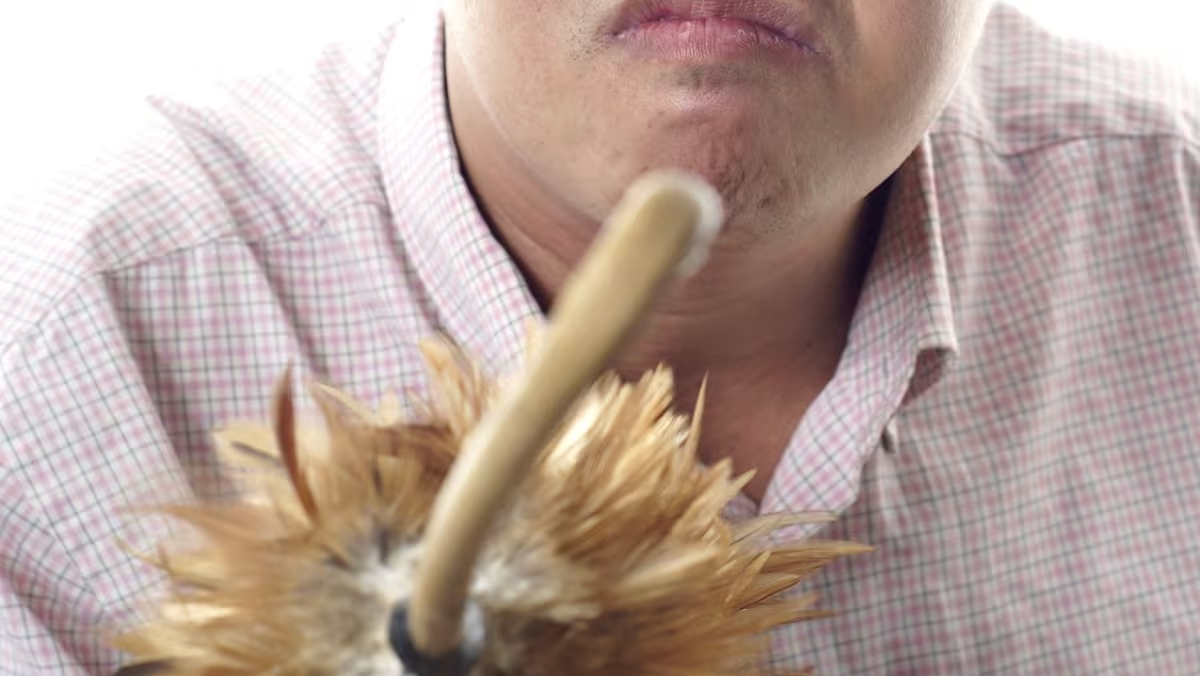
When Ms Joline Lim's mother was spring-cleaning her family home a few years ago, she discovered a dusty stash of canes in different lengths and thicknesses, strategically hidden behind a large wardrobe.As a child, Ms Lim was caned by her mother for being naughty. To avoid being punished, she would hide the canes behind the cupboard or lock herself in a room.Her mother did not catch on to the graveyard of canes, but she did remove the locks on every room in the house – bathrooms included – so that her daughter could not hide in a locked room.To Ms Lim's mother, caning as a disciplinary tool was only the "natural" course of action because she herself was caned as a child.Ms Lim recounted: "I remember thinking we were like Tom and Jerry, as she chased me around the dining table with a cane in hand." She was only spared the rod when she turned nine years old.
Now 40 years old, Ms Lim is the director of social enterprise Chapter Zero, and she can look back and laugh at these memories today. However, the tears she shed while being caned and the fear she felt were enough for her to decide that she would never use the same tool on her son, aged 10, and daughter, seven.The debate around corporal punishment for children has returned to the public spotlight, after the Ministry of Education (MOE) last month announced stricter disciplinary measures to tackle bullying and serious student misconduct.First-time offenders of serious misconduct face one to three days of detention or suspension, or both, as well as an adjusted conduct grade. Older boys may receive one stroke of the cane if aggravating factors are present.In parliament earlier this month, Education Minister Desmond Lee said that caning is used alongside a suite of restorative and disciplinary measures.