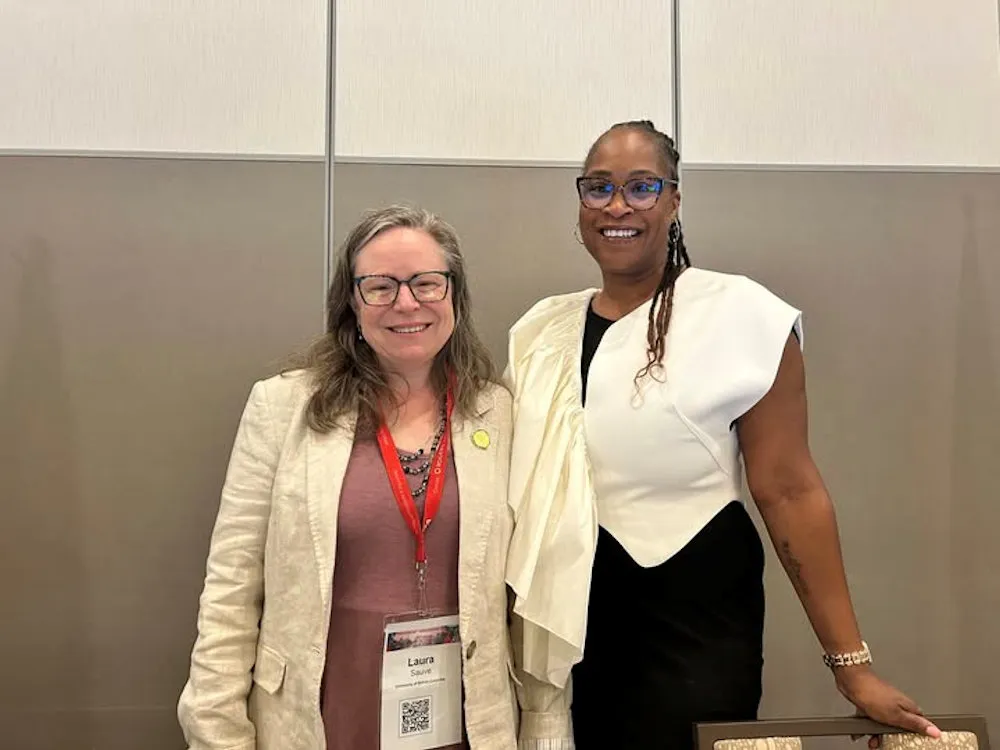
Skip to Content Subscribe Our Offers My Account Manage My Subscriptions FAQ Newsletters Canada Canadian True Crime Canadian Politics Health World Israel & Middle East Financial Post NP Comment Longreads Puzzmo Diversions Comics NP News Quiz New York Times Crossword Horoscopes Life Eating & Drinking Style Sponsored Play for Ontario Travel Travel Canada Travel USA Travel International Cruises Travel Essentials Culture Books Celebrity Movies Music Theatre Television Business Essentials Advice Lives Told Tails Told Shopping Buy Canadian Home Living Outdoor Living Tech Style & Beauty Kitchen & Dining Personal Care Entertainment & Hobbies Gift Guide Travel Guide Deals Savings National Post Store More Sports Hockey Baseball Basketball Football Soccer Golf Tennis Driving Vehicle Research Reviews News Gear Guide Obituaries Place an Obituary Place an In Memoriam Classifieds Place an Ad Celebrations Working Business Ads Archives Healthing Epaper Manage Print Subscription Profile Settings My Subscriptions Saved Articles My Offers Newsletters Customer Service FAQ Newsletters Canada World Financial Post NP Comment Longreads Puzzmo Diversions Life Shopping Epaper Manage Print Subscription HomeNP CommentFIRST READING: Child sex change advocate appointed head of Canadian Paediatric SocietyCanada an outlier as much of world retreats from policy of prescribing medical interventions to gender dysphoric children You can save this article by registering for free here. Or sign-in if you have an account.Laura Sauvé, left, and Natasha Johnson, right. The outgoing and incoming presidents of the Canadian Paediatric Society. Photo by via FacebookFirst Reading is a Canadian politics newsletter curated by the National Post’s own Tristin Hopper. To get an early version sent directly to your inbox, sign up here.Enjoy the latest local, national and international news.Exclusive articles by Conrad Black, Barbara Kay and others. Plus, special edition NP Platformed and First Reading newsletters and virtual events.Unlimited online access to National Post.National Post ePaper, an electronic replica of the print edition to view on any device, share and comment on.Daily puzzles including the New York Times Crossword.Support local journalism.Enjoy the latest local, national and international news.Exclusive articles by Conrad Black, Barbara Kay and others. Plus, special edition NP Platformed and First Reading newsletters and virtual events.Unlimited online access to National Post.National Post ePaper, an electronic replica of the print edition to view on any device, share and comment on.Daily puzzles including the New York Times Crossword.Support local journalism.Create an account or sign in to continue with your reading experience.Access articles from across Canada with one account.Share your thoughts and join the conversation in the comments.Enjoy additional articles per month.Get email updates from your favourite authors.Create an account or sign in to continue with your reading experience.Access articles from across Canada with one accountShare your thoughts and join the conversation in the commentsEnjoy additional articles per monthGet email updates from your favourite authorsSign In or Create an AccountorAs much of the world retreats from the idea that gender dysphoric children should be “affirmed” with medical interventions, the Canadian Paediatric Society has appointed one of its acolytes as their new president.In 2016, Natasha Johnson founded the Gender Diversity Clinic at McMaster Children’s Hospital. According to a 2022 profile, the clinic provides “gender-affirming healthcare” to between 85 and 100 youth per year.This newsletter from NP Comment tackles the topics you care about. (Subscriber-exclusive edition on Fridays)By signing up you consent to receive the above newsletter from Postmedia Network Inc.We encountered an issue signing you up. Please try againShe has also delivered public comments dismissing fears that such interventions risk yielding regret in adulthood, or that patients should wait until adulthood until pursuing irreversible interventions.In a 2021 profile by CTV’s W5, Johnson said that children as young as 13 could consent to procedures such as hormones, puberty-blockers or surgery, suggesting that the alternative is heightened risk of death by suicide.“I think to assume that, in general, thirteen-year-olds have no knowledge of the future or of the consequences of decisions, I think would be overstatement,” she said.“I think that each young person needs to be assessed. It would be also important to share stories of the thousands of people who are satisfied with transition and report that the interventions were lifesaving.”On May 23, the Canadian Paediatric Society announced that Johnson had been appointed its 2026/2027 president. “We look forward to the expertise and passion she brings to the role,” read a social media post.Johnson’s appointment comes as the Canadian Paediatric Society has already emerged as one of the world’s few remaining outliers to the idea that children reporting symptoms of gender dysphoria should be immediately “affirmed” with medical treatment.While the U.S., Australia, New Zealand and much of Europe all once similarly adhered to a Canada-style “affirmation” approach for gender dysphoric youth, all have walked back the policy in recent years.The most dramatic example being the U.K., which in 2024 released the Cass Review, a comprehensive government-ordered review of the country’s program of “gender identity services” for minors.Among its finding were that thousands of British minors had been prescribed hormonal treatments to block puberty, despite “remarkably weak” evidence of their effectiveness or long-term consequences.More recently, in February both the American Society of Plastic Surgeons and the American Medical Association issued statements urging surgeons to stop performing irreversible gender surgeries on minors, suggesting that most cases of gender dysphoria are temporary.“Available evidence suggests that a substantial proportion of children with prepubertal onset gender dysphoria experience resolution or significant reduction of distress by the time they reach adulthood, absent medical or surgical intervention,” reads a Feb. 3 position statement by the American Society of Plastic Surgeons.The Canadian Paediatric Society, meanwhile, has specifically rejected the findings of the Cass Review, and continues to urge Canadian medical professionals to follow its 2023 position statement recommending an “affirming approach to caring for transgender and gender-diverse youth.”The statement says that children as young as two years old may begin feeling a “mismatch” in their gender, and that transgender identity can be diagnosed in children by such factors as “a strong preference for playmates of the other gender” or “a strong preference for the toys, games, or activities stereotypically used or engaged in by the other gender.”It advises Canadian pediatricians to meet such feelings with “inclusive and affirming approaches” that allow the child to decide whether to pursue hormone therapies or even surgery.“While gender-affirming surgeries are less commonly performed in the adolescent population, (transgender or gender diverse) youth may identify surgery as one of their transition goals,” it reads.In a 2018 bio published by Hamilton Health Sciences, Johnson provided her estimate that “about one per cent” of the population is transgender.“And once they are able to access treatment, they are very dedicated to it … these youth want treatment and they are very keen to come,” she said. With Tim Hortons getting most of the heat for the massive expansion of the temporary foreign worker program, the number-crunchers at Open Data Canada have calculated that the doughnut chain isn’t actually the program’s heaviest user. That would be McDonalds, whose locations brought in 907 TFWs between 2023 and 2024 as compared to 747 brought in by Tim Hortons. If this trend hasn’t been noted previously, it’s because many McDonalds franchisees file their TFW papers under company names without the word “McDonalds” in it, such as “Les Restaurants Dubillard Inc.”In the 2000s, the government of then prime minister Stephen Harper was roundly accused of breakthtaking hypocrisy for championing Quebec asbestos exports while simultaneously overseeing multi-million-dollar asbestos removal operations on Parliament Hill.“Hazardous hypocrisy,” was the headline on a 2008 profile in The Economist detailing how Canadian parliamentarians were strenuously removing every atom of asbestos from their own workplaces while subsidizing its export to South Asia.The issue became moot in 2012 following the collapse of the Quebec asbestos sector, but 2026 Canada has yielded another example of politicians enthusiastically exporting a product while deeming it much too dangerous to use at home.On Tuesday, B.C. Premier David Eby boasted about a new agreement to export natural gas to Germany, writing in a statement “B.C. has championed this project for years and we successfully pushed for it to be added to the federal major projects list.”At the same time, new buildings in B.C. must adhere to the Zero Carbon Step Code, a provincial regulation that, at its highest tier, forbids the use of natural gas.Although, the announcement of the German export deal just so happened to coincide with a vote this week by the City of Vancouver to reverse its own much stricter ban on the use of natural gas heating in new construction.And since we’re on the subject, one of the weirder details of Canada’s federal ban on single-use plastics is that the prohibition does not extend to the export sector. Thus, Canadians can manufacture and export plastic straws abroad, but they’re not allowed to use them in their own country lest the straws damage the environment. Frank McKenna is about as much of a Liberal Party insider as they come. A former Liberal premier of New Brunswick, he was ambassador to the U.S. under prime minister Paul Martin and of late has been chair of Brookfield Corporation, Prime Minister Mark Carney’s most recent employer. In a recent podcast interview, McKenna said his “greatest regret” was helping to sink the Meech Lake Accords, then prime minister Brian Mulroney’s proposed package of amendments to the Constitution. Among other things, it would have given the provinces greater power over immigration as well as judicial and Senate appointments – all very relevant points of contention in 2026 Canada as both Alberta and Quebec deal with ascendant separatist movements.First Reading is a Canadian politics newsletter curated by the National Post’s own Tristin Hopper. To get an early version sent directly to your inbox, sign up here. Get the latest from Tristin Hopper straight to your inbox Join the Conversation This website uses cookies to personalize your content (including ads), and allows us to analyze our traffic. Read more about cookies here. By continuing to use our site, you agree to our Terms of Use and Privacy Policy.
FIRST READING: Child sex change advocate appointed head of Canadian Paediatric Society
Appointment occurs as much of world retreats from policy of prescribing medical interventions to gender dysphoric children
1,657 words~8 min read