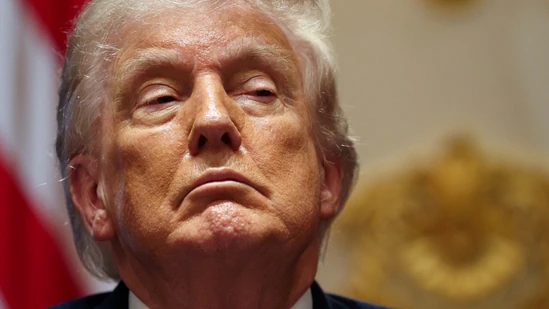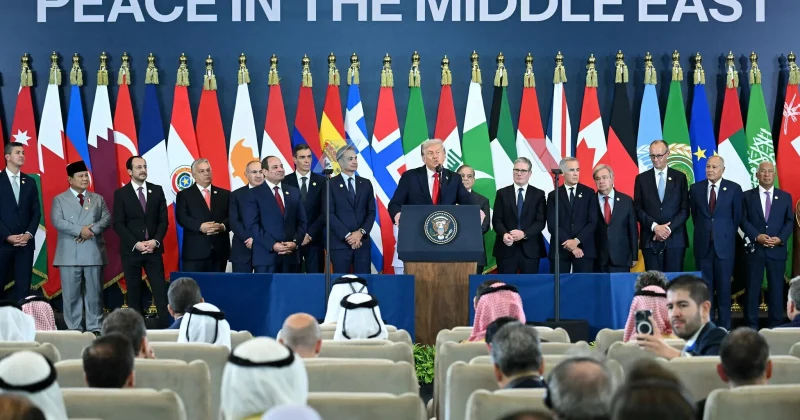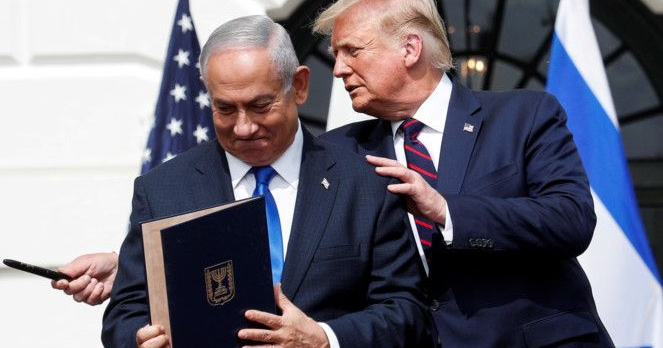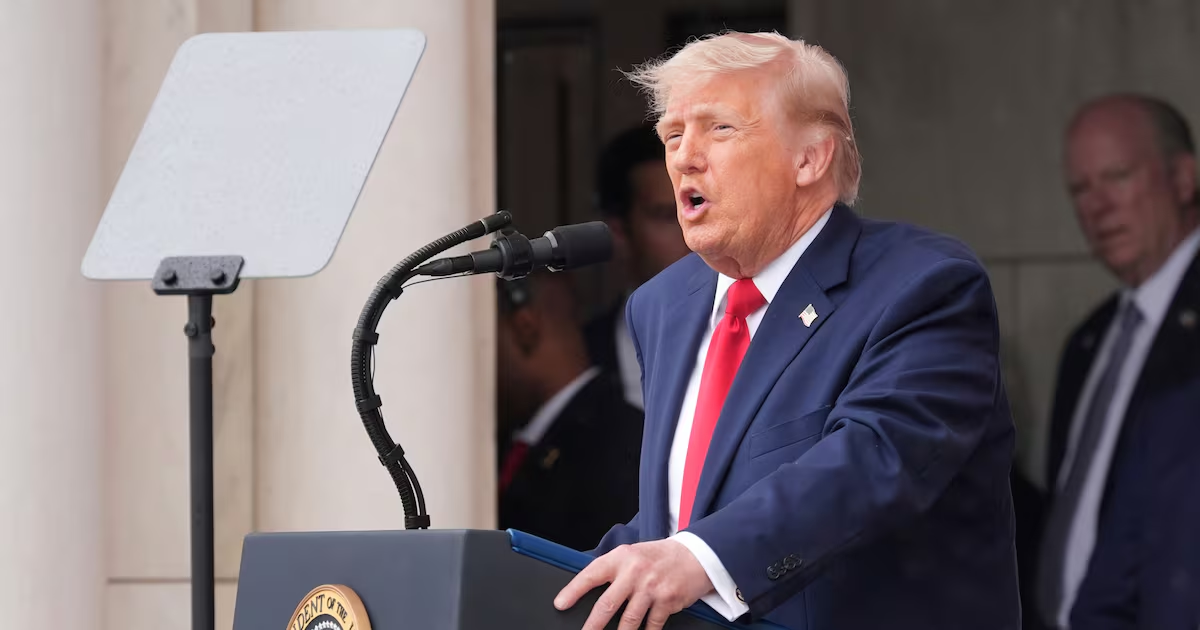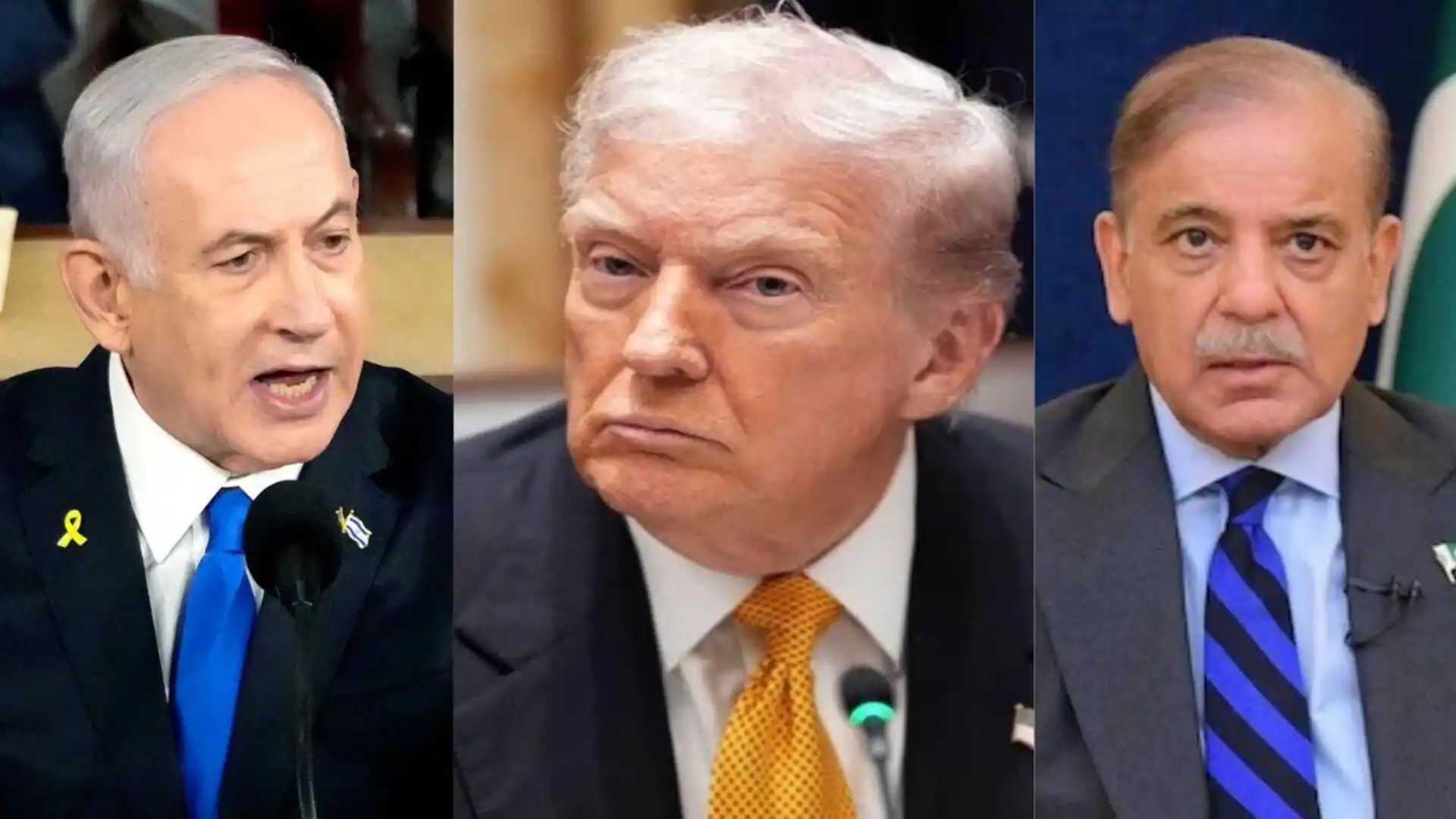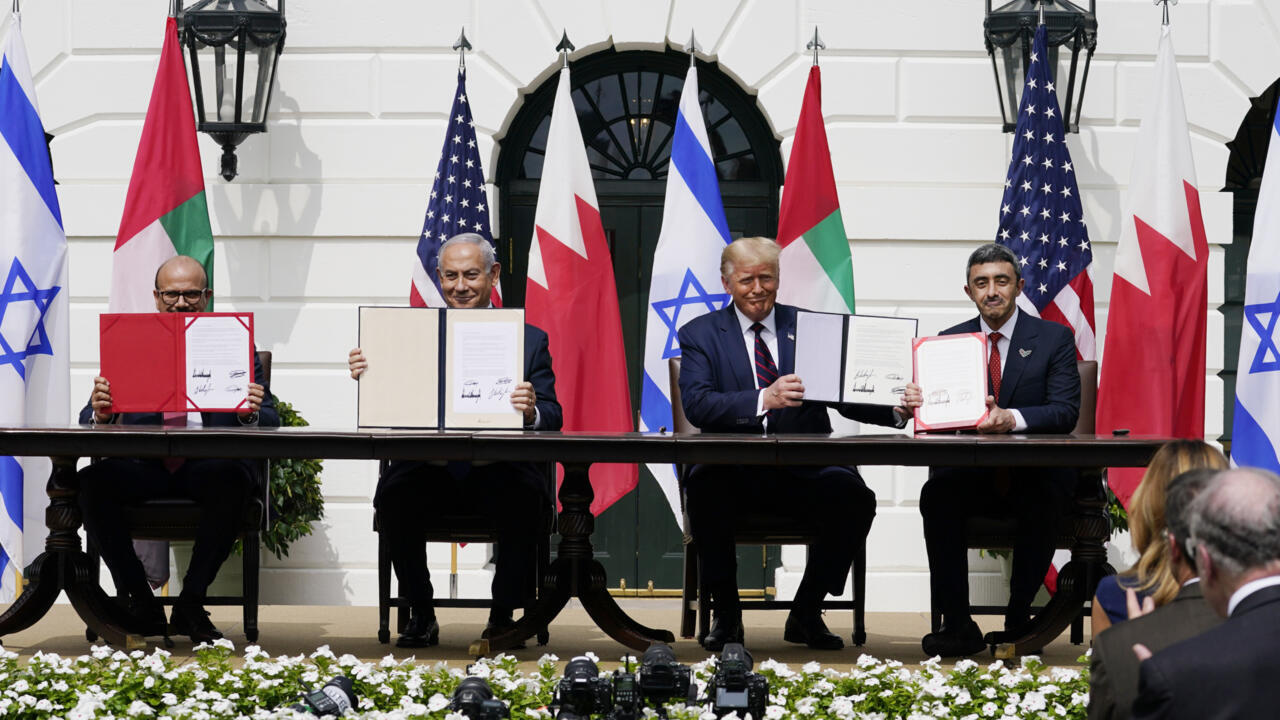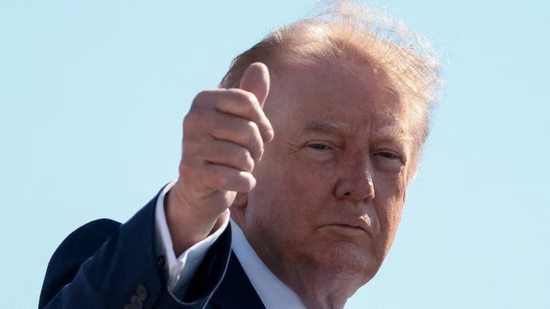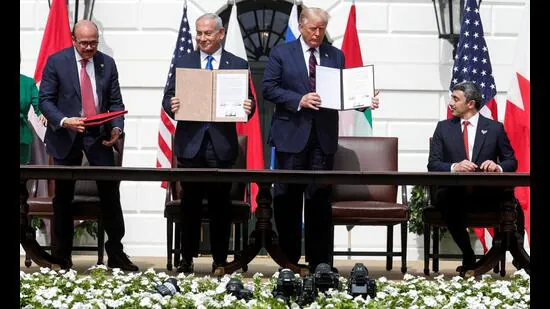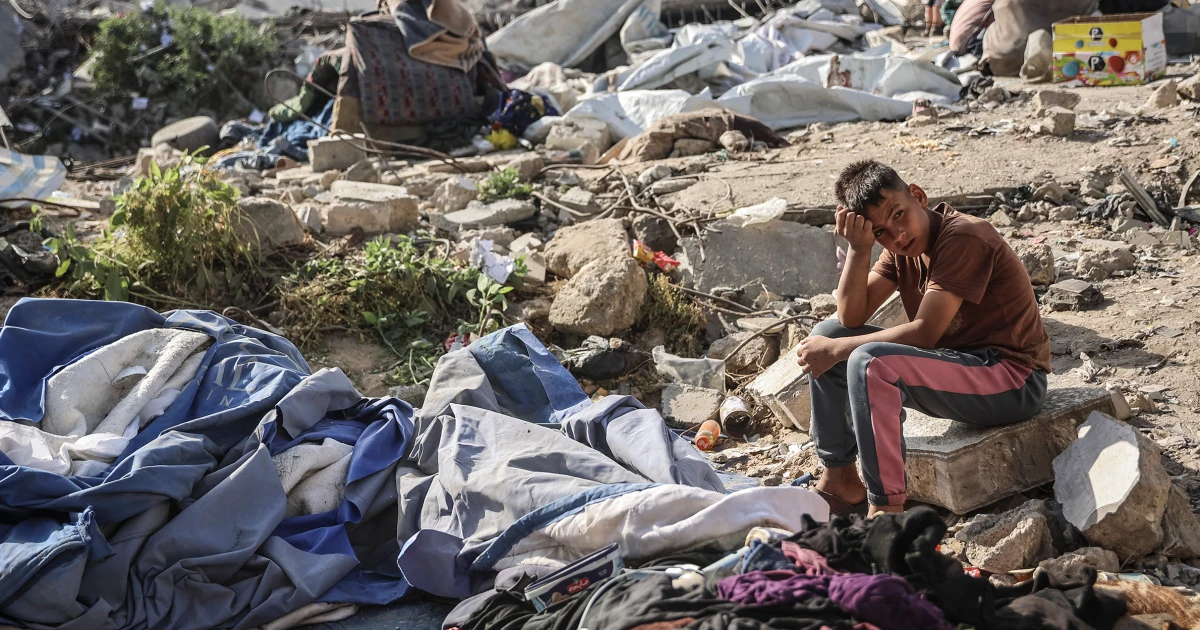
May 29, 2026, 8:24 AM EDTBy Matt BradleyTEL AVIV, Israel — It was the kind of sweeping, last-minute demand that would have torpedoed most diplomatic talks: President Donald Trump insisting this week that in exchange for him ending the war with Iran, several Arab and Muslim countries should sign on to his Abraham Accords to normalize their diplomatic relations with Israel.But there’s been almost no response from any of the countries that Trump mentioned by name — more than half of whom already have diplomatic relations with Israel — and no statement of support from an Israeli government that would reap enormous benefits from such a deal.Analysts said Trump’s last-minute condition was so sudden and unworkable, it would appear to most diplomats as a kind of cry for help from a leader who is desperate to wring a legacy-defining victory from his unpopular war. And instead of imperiling delicate negotiations by offending the countries Trump needs to help him make a deal, regional observers and diplomats said those countries simply aren’t taking Trump’s demand seriously at all.“It’s gaslighting,” said Aaron David Miller, a senior fellow at the Carnegie Endowment for International Peace and a former senior State Department official under several American presidential administrations.A Palestinian boy sits at the site of an overnight Israeli military strike on structures and tents housing displaced families, in Gaza City on Thursday.Omar Al-Qattaa / AFP via Getty ImagesMiller likened Trump’s sudden focus on the Abraham Accords to his pledge to transform the Gaza Strip into a highly-developed luxury “Riviera” — a plan the administration has continued to advance even as Gaza’s humanitarian crisis persists amid gridlocked diplomacy. A senior Arab official directly involved in mediating peace talks between Washington and Tehran told NBC News that Trump has brought up the Abraham Accords during the negotiations. “Someone is misunderstanding the situation in a big way,” the official said of the Trump’s comments. “We should be paid back, not paying the price.”Indeed, several of countries the president mentioned, such as Turqiye, Saudi Arabia, Qatar, Egypt and Pakistan, may expect gratitude from the U.S. for having played crucial intermediary roles toward negotiating an end to the fighting. “The Gulf states have already borne the economic and security costs of escalation,” said Asif Durrani, a Pakistani diplomat who once served as the country’s ambassador to Iran, on X. “Asking them to absorb additional political costs by normalising ties with Israel amid the Gaza tragedy risks deepening regional fault lines rather than healing them.”And countries such as Saudi Arabia, the United Arab Emirates, Qatar, Jordan, and Bahrain have faced sustained Iranian counter-attacks even though they didn’t participate directly in the initial U.S. and Israeli attacks on Iran.A black plume of smoke rises from a warehouse at the industrial area of Sharjah in the United Arab Emirates after Iranian strikes on March 1.Altaf Qadri / APAsked to explain Trump’s comments, White House spokeswoman Anna Kelly said in a statement this week that “expanding the Abraham Accords has been a priority for President Trump since his first term,” making it “a natural complement to a peace deal between the United States and Iran.”Trump first proposed the unusual quid-pro-quo to eight Middle Eastern and South Asian nations in a post Monday, saying he had spoken with leaders from the countries over the weekend.“After all the work done by the United States to try and pull this very complex puzzle together, it should be mandatory that all of these Countries, at a minimum, simultaneously, sign onto the Abraham Accords,” Trump wrote in a post on Truth Social, specifically calling on Saudi Arabia and Qatar to sign the accord.Trump even said that the Middle Eastern leaders would welcome Iran’s membership in the accords. “Wow, now that would be something special!” the president wrote.The Abraham Accords were the signature foreign policy achievement of Trump’s first term. It saw several Arab countries, beginning in 2020 with the United Arab Emirates and Bahrain and later including Morocco, extend official diplomatic relations to Israel and vice-versa.From left, Bahrain Foreign Minister Abdullatif al-Zayani, Israeli Prime Minister Benjamin Netanyahu, President Donald Trump, and UAE Foreign Minister Abdullah bin Zayed Al-Nahyan participate in the signing of the Abraham Accords, at the White House in 2020.Saul Loeb / AFP - Getty ImagesThe Abraham Accords represented a fundamental shift in the region’s geopolitical alignment as Arab countries that once saw Israel as their sworn enemy grew increasingly wary of Iran’s growing power.Two Middle Eastern diplomats who spoke to NBC News said they did not feel substantial pressure from the administration to join the accords.Despite years of warming relations on the official level, Israel’s war in the Gaza Strip that followed the Hamas-led attacks in October 2023 have sparked outrage against the Jewish state throughout the Muslim world. And while many governments in the Gulf region now see Iran as the far greater threat, Israel remains deeply unpopular.Trump expanded on the idea again on Wednesday night, when he told reporters in the Oval Office that he wasn’t “sure we should make the deal” with Iran if the countries refused to sign on to the accords. None of the eight countries Trump mentioned have responded officially. Even Israel’s Prime Minister Benjamin Netanyahu, for whom expanding the Accords has become a singular foreign policy ambition, said nothing about the comments, nor did any of his top allies.When asked about Trump’s comments, an Israeli government official replied in a statement that “Israel is keen on expanding the circle of peace, which will be most beneficial to all signatories of the Abraham Accords. Trump has been and continues to be a major force for promoting these prospects”.The lack of official Israeli enthusiasm is another telling sign, analysts said, of the extent to which diplomats on all sides of the conflict have begun to ignore some of Trump’s requests and comments.“I’m not sure how much Israelis take this seriously, to tell you the truth,” said Yoel Guzansky,a senior researcher and expert on the Gulf states at Israel’s Institute for National Security Studies. “Trump’s comments often come and go. Maybe in a week’s time we’ll hear something opposite, or different.”A woman walks among buildings destroyed in a U.S.-Israeli joint attack in Tehran, Iran.Majid Saeedi / Getty ImagesAs for the three countries on Trump’s list who don’t currently maintain diplomatic relations with Israel, they see the Abraham Accords as completely distinct from the war with Iran, analysts said. Saudi Arabia and Qatar have said they will consider awarding Israel with formal diplomatic recognition after the latter recognizes Palestinian statehood — a concession successive Israeli governments have rejected.In that sense, Israeli leaders might not view Trump’s relentless focus on the Abraham Accords as entirely welcome, particularly if it contains an implicit understanding that Israel will have to compromise on Palestinian statehood.President Donald Trump during a Cabinet meeting at the White House on Wednesday.Win McNamee / Getty Images“Obviously the Israelis would love to have an expansion of the Abraham Accords and obviously they would love to normalize with Saudi Arabia,” said Michael Koplow, the policy director for the Washington-based Israel Policy Forum. “But I think they also understand that linking these things — the Iran issue to normalization — doesn’t serve their interests as well.”
Why U.S. allies pushed back on Trump’s bid to make Iran deal a package with Israeli normalization
“Asking them to absorb additional political costs by normalising ties with Israel amid the Gaza tragedy risks deepening regional fault lines rather than healing them,” a senior Pakistani diplomat said.
1,202 words~5 min read