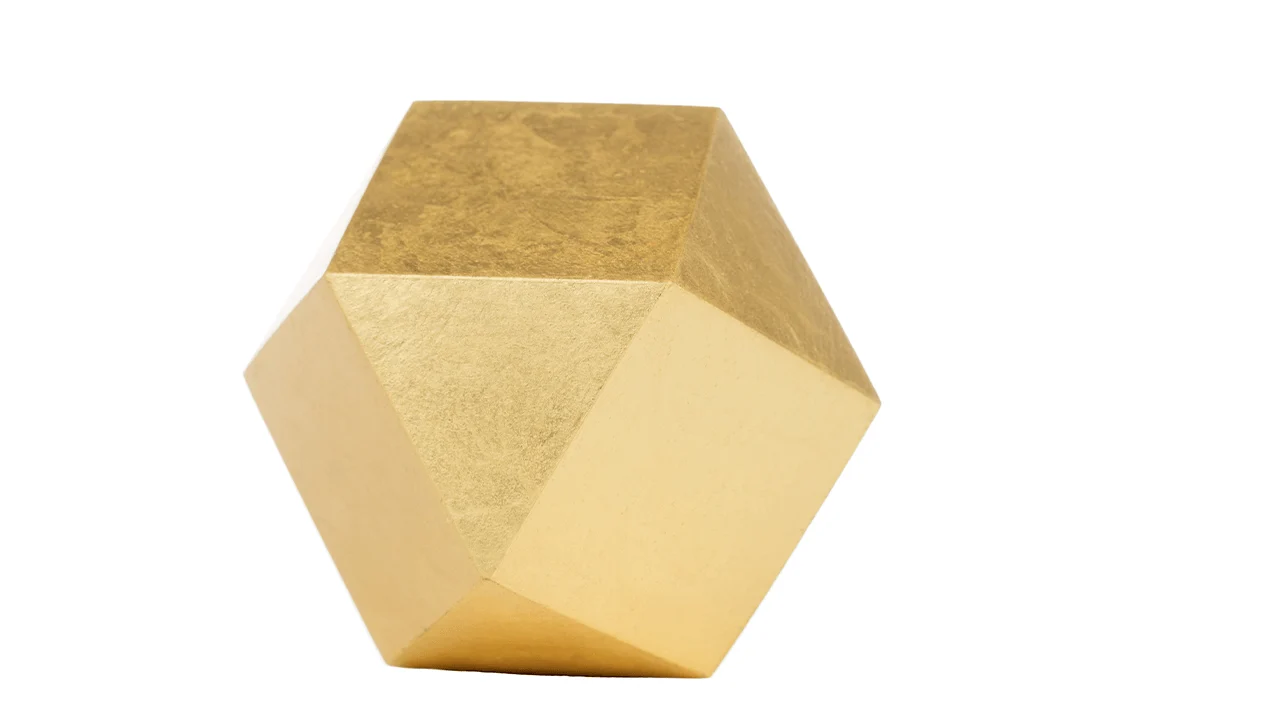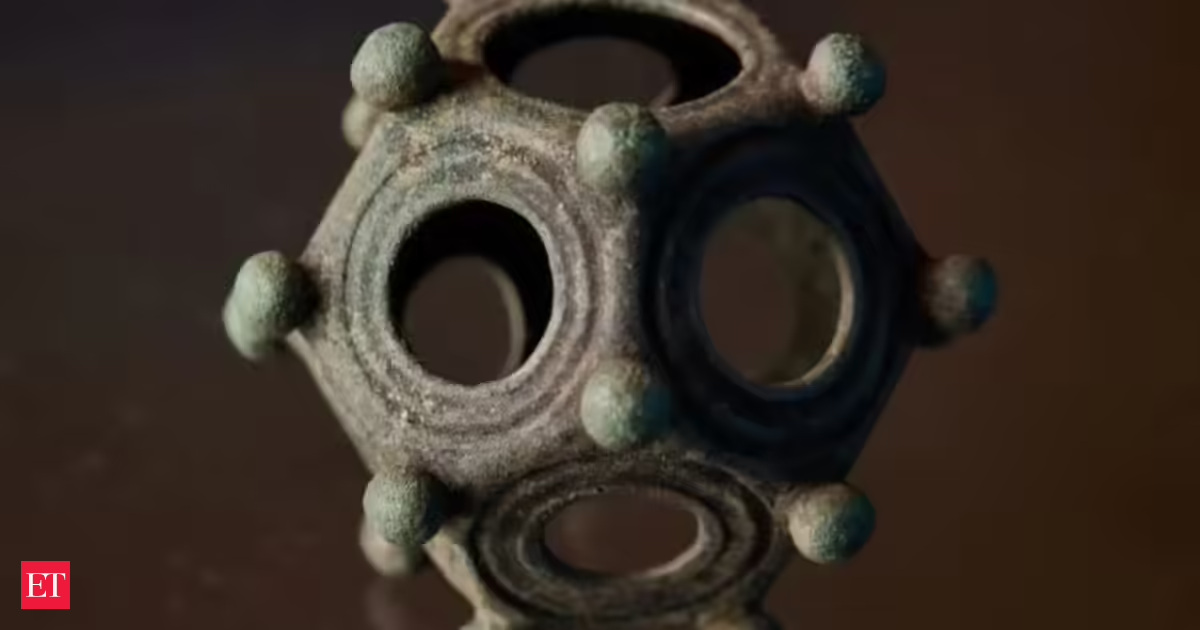
A bronze artifact found in a field in Lincolnshire has reignited an old debate in Roman archaeology. The artifact in question is a Roman dodecahedron discovered during excavation works at Norton Disney in England and quickly made headlines owing to the excellent state of preservation it had endured over almost 1,700 years buried underground.Having such a relatively well-preserved item presented archaeologists with a rare opportunity to examine it thoroughly without being able to answer the burning question about its purpose, which is the main issue associated with similar discoveries. The nature of the artifact can be determined easily – its dimensions, materials, and age have been firmly established, but explaining its exact purpose seems to remain a challenge for researchers.A rare find in impeccable conditionNorton Disney artifact is an especially well-preserved hollow bronze dodecahedron with twelve pentagonal faces. These faces have holes, as well as knobs at each corner. The artifact in question was found in 2023 by Norton Disney History and Archaeology Group in cooperation with Allen Archaeology, according to the University of Nottingham.As mentioned by the University of Nottingham, only about 130 such artifacts exist across the globe, making them rare indeed. What makes this artifact unique, however, is its incredible condition compared to similar finds. According to the University of Nottingham press release on the excavations, it is among the best finds of these items in Britain.Dating back to the times of ancient Rome, the dodecahedron was most likely produced between the second and fourth centuries AD. It is not clear what the dodecahedron was used for despite having been found in an archaeological setting.Reasons why archaeologists are interested in this archaeological findIt is interesting due to the fact that unlike other artifacts found, this one has been recovered via a professional excavation. This means that researchers are able to gather much more detailed information regarding the artifact. According to Newcastle University, the Roman dodecahedron was recovered at the Roman site in the Lincolnshire region. It may provide some clues as to whether the dodecahedron was associated with Roman culture somehowIn case of most artifacts, archaeologists use additional artifacts, soil context and other factors as well as the way in which people inhabited a particular area. Unfortunately, the context in this specific case still has not provided many insights regarding the artifact. Among other things, it makes the Roman dodecahedrons even more mysterious.Richard Watts, who found the dodecahedron. Image credit - Norton Disney Archaeology GroupThe lack of explanationsOne of the issues that causes difficulties when trying to understand the artifact's meaning is its purpose as no information was provided in literary sources. The University of Nottingham states that there is not a single piece of information available on the matter of Roman writings or drawings related to the use of the artifact.Usually, different hypotheses have been brought up. Some scholars have suggested that these items were used as instruments of measurements, decorations, sacred objects, candle holders, or devices connected with weaving. However, none of these hypotheses have been proven to be valid. Anglia Ruskin University calls Roman dodecahedrons "one of archaeology's enduring mysteries". Norton Disney discovery is yet another perfect example of these mysterious items.Why the strange shape causes speculationsFirstly, it is necessary to pay attention to the geometrical aspect of the issue. Roman dodecahedrons are shaped according to the pattern of a dodecahedron that belongs to the group of so-called Platonic solids characterized by its symmetry. This ideal shape provokes people to make guesses. It looks quite natural that the item was invented to serve some purpose.Archaeologists state that a specific design doesn't necessarily indicate the purpose for which an object was used. The example of the Norton Disney artifact can illustrate this statement very well. Archaeologists have received an outstanding specimen of the artifact supported by convincing evidence. However, the purpose for which the object could be used remains unexplained.An enigma which simply won't go awayWhat makes the discovery so remarkable is that rather than solving the riddle, it posed more questions in the eyes of archaeologists. The finding has shown that those dodecahedra are real products of antiquity and represent highly valuable objects made with a high degree of care in various parts of Europe and Britain.However, it has demonstrated at the same time how much we don't know yet even after conducting extensive excavations. Usually, archaeology is the science of elimination rather than giving direct answers to questions. In this case, the object is authentic, there is plenty of evidence, and the riddle is still there. That is why the story of the artifact discovered in one corner of England is so fascinating.
Archaeologists found a mysterious Roman bronze object buried for over 1,700 years, and experts still cannot explain its purpose
A remarkably preserved Roman bronze dodecahedron, unearthed in Lincolnshire, has reignited a centuries-old archaeological puzzle. Despite its excellent condition and clear Roman origin, its exact purpose remains unknown. This rare find, dating between the 2nd and 4th centuries AD, offers a unique opportunity for study, yet continues to baffle experts with its enigmatic function.
770 words~4 min read