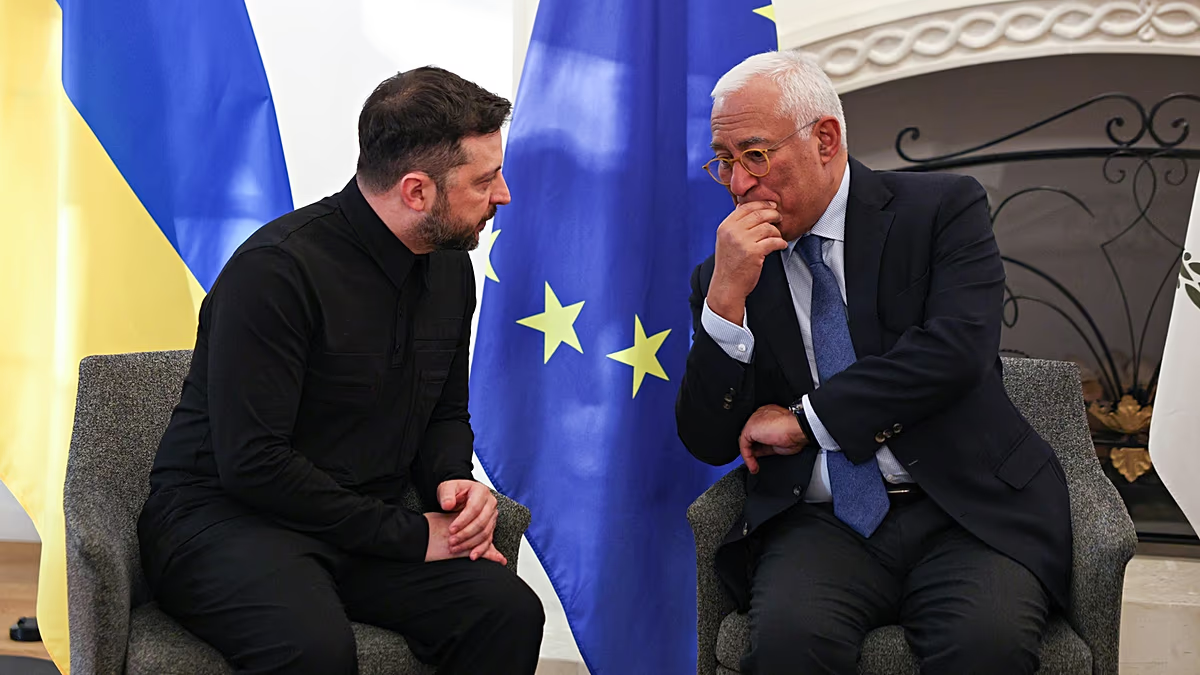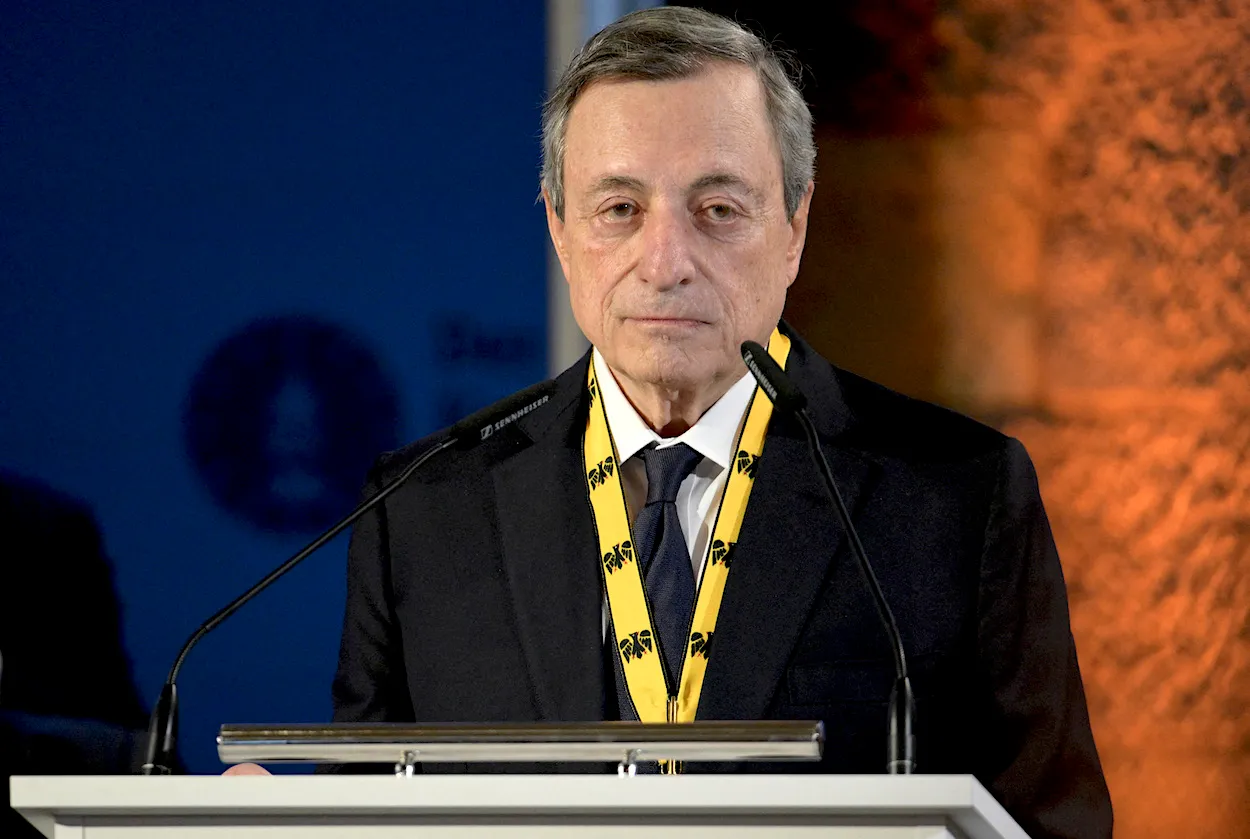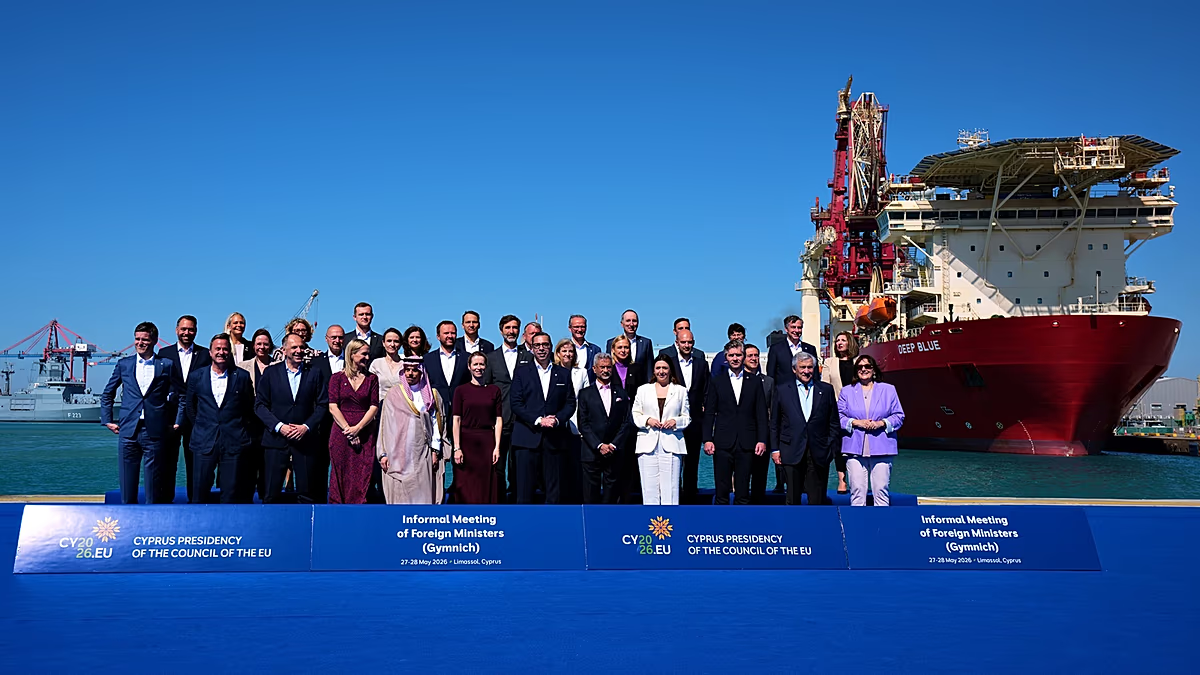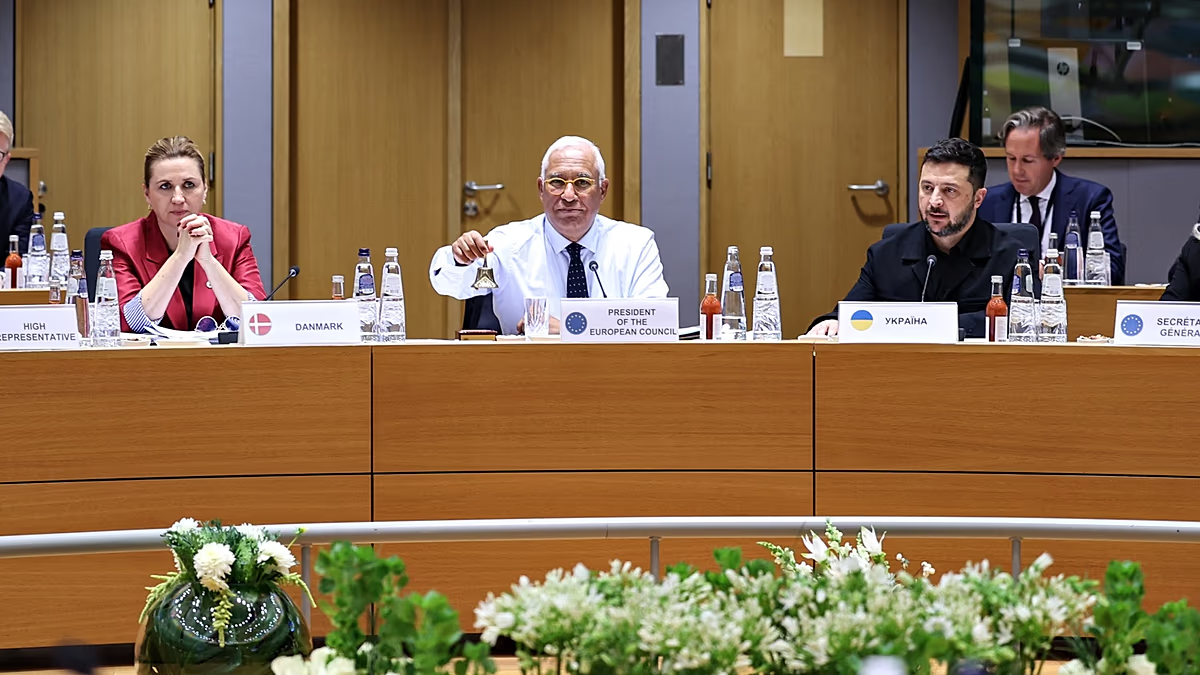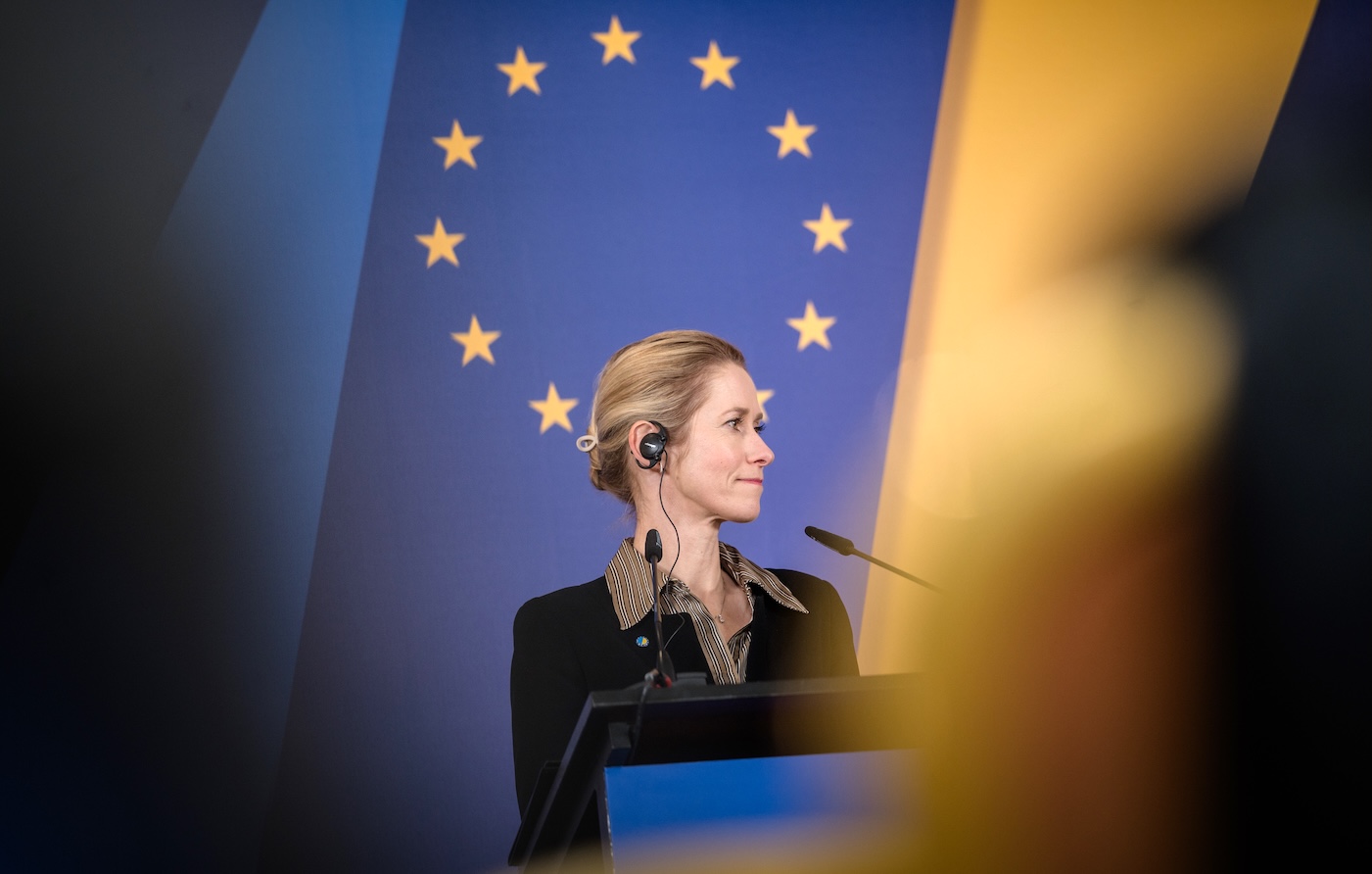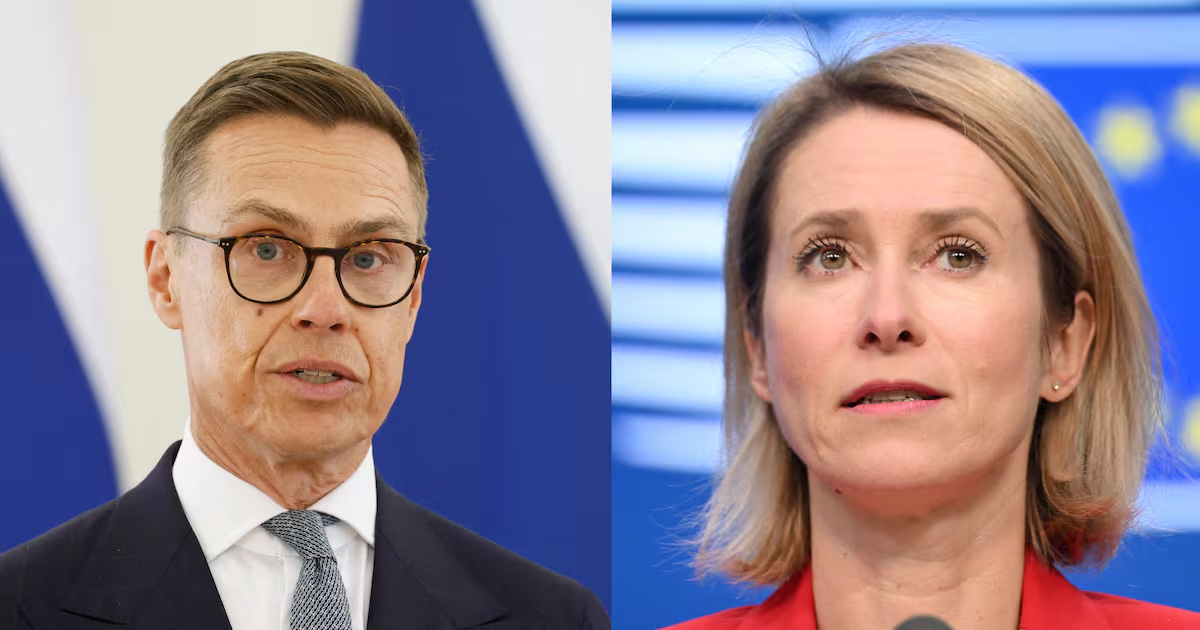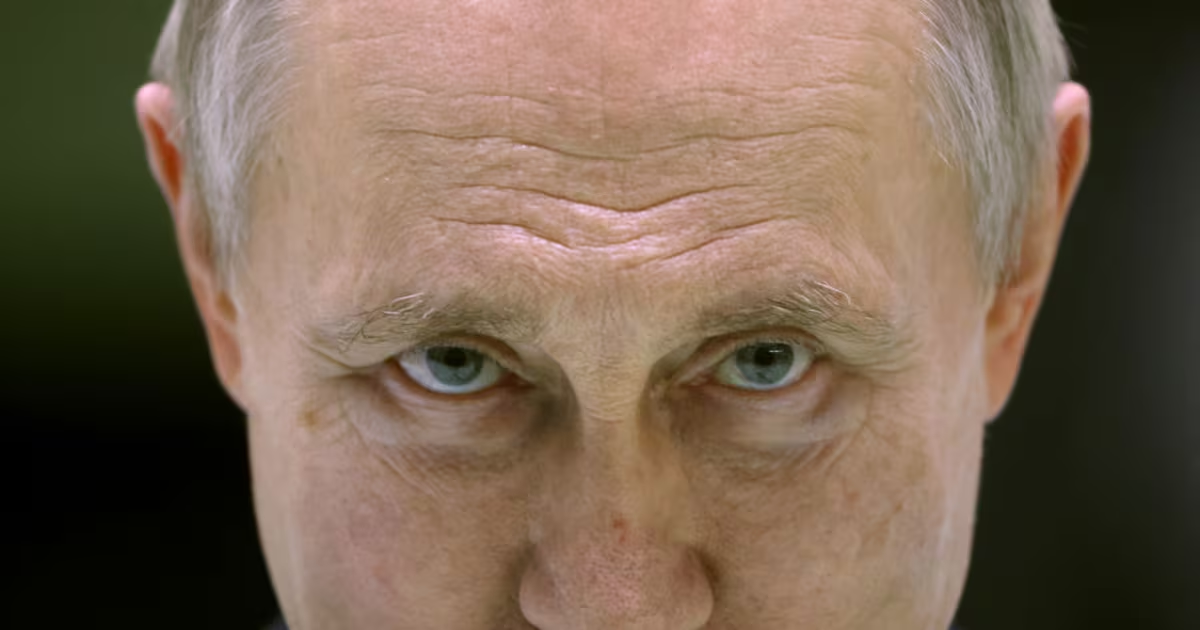
It’s a painfully overused but probably still apt remark attributed to Henry Kissinger: who do I call if I want to call Europe? European governments have been toying with the idea of picking an envoy who would represent their interests in any restarted negotiations between Ukraine and Russia, to end the deadliest conflict on the Continent since the second World War. Setting aside the Kissingerism about Europe’s fractured leadership, the more pressing question at the moment is what does Europe want from a peace deal? And maybe more pertinently, is Vladimir Putin under any pressure to listen?Momentum behind the US-brokered negotiations has faded. Those talks have been on pause while the Trump administration tries to bring the war it started in Iran to an end.Finnish president Alexander Stubb, former German chancellor Angela Merkel and former European Central Bank chief Mario Draghi are among the names floating in media speculation, as possible candidates to be an European envoy when negotiations restart. There’s also the option of picking someone from the EU’s institutions, such as Kaja Kallas, the bloc’s high representative on foreign affairs, or António Costa, European Council president. [ Russia will not choose who speaks for Europe in potential Ukraine talks, EU ministers sayOpens in new window ]Multiple diplomats and politicians insist there have been no substantive discussions about tapping someone to speak for Europe in any settlement negotiations, yet. Several European governments are wary of falling into a “trap” set by Putin, by expending energy squabbling over possible names, or trying to find a candidate deemed “acceptable” to the Kremlin. There is a fear that putting a representative forward too early will allow Moscow to pull the Europeans into time-wasting talks that Putin has no real intention of leading anywhere.A meeting of foreign affairs ministers at the port in Limassol, Cyprus, on Thursday. Photograph: EPA A meeting of the union’s foreign ministers in Limassol, Cyprus, on Thursday, debated how Europe could make sure they had a seat at the table when peace talks eventually came to the crunch. “At the moment there’s no table,” one senior European official privately remarked afterwards, a reference to the fact the steam has gone out of US-led dialogue. It is understood that no names were put forward for any envoy role during the closed-door meeting in Limassol.“Everybody is talking about who will be the person who is going to talk to Putin. The reality as you know is Putin doesn’t want to talk ... So we need to focus on how can we make the European position strong,” says Estonia’s foreign minister, Margus Tsahkna. Foreign ministers have agreed to intensify economic sanctions putting pressure on Russia. “It’s important that [the Europeans] insert themselves into the process,” says Amanda Paul, a senior policy analyst on Ukraine at the European Policy Centre think tank.Any European envoy or negotiator had to have a “clear idea” about what they were looking for before they got to Moscow, she says. It is vital the union’s point-person in truce talks is someone who can “read” the Russians’ tricks and tactics, she says. “It won’t be an easy task for sure.” One senior source directly involved in previous negotiations with the Kremlin describes the Russians as “tough and slippery” diplomatic adversaries. “It’s like trying to grasp a wet bar of soap,” the former official says. “You never quite know what you have, then it’s out of your hands.” It is common to feel progress had been made boxing off several points, only for Putin’s representatives to reopen everything again from the start, the source says. Retired German ambassador to Russia, Rüdiger von Fritsch, has warned any future envoy to be prepared to meet at least two Putins.“First he comes across all agreeable, then suddenly comes an unbelievable aggression,” he told the Bild tabloid. “With no warning, he pulls out the dagger.”Russian president Vladimir Putin in China. Photograph: Alexander Kazakow/Pool/AFP via Getty Trump’s man mediating the previous talks, real-estate developer Steve Witkoff, appeared to have been outmanoeuvred by the Russians at times, which stressed European officials and politicians looking on from afar. The erratic nature of Trump’s hot-and-cold approach to foreign policy, and his tendency to pivot from one thing to the next and regularly make contradictory pronouncements to the press or on Truth Social, may also be inadvertently frustrating the Kremlin’s negotiators, however. Amanda Paul said Putin appeared to come away from his sit-down with Trump in Alaska last year believing the US would ease up western sanctions choking Russia’s economy, which didn’t happen. Trump’s campaign trail promises about ending the Ukraine war in 24 hours spooked European capitals, which feared Kyiv would be pressed into a bad deal that favoured Russia. The huge flow of military aid Joe Biden’s administration extended to Kyiv has dried up, but the US still shares vital military and satellite intelligence with Ukrainian forces.European countries believe a settlement requiring Ukraine to cede heavily fortified territory it still holds in the eastern Donbas region, or peacetime limits on the size of its armed forces, could leave it vulnerable to another Russian attack in a few years’ time, undermining Europe’s security. EU states want a deal that sticks. [ Ireland steps up for Ukraine in EU as domestic support wanesOpens in new window ]Having been unable to pressure the two sides into a quick agreement, the US administration has disengaged from the talks in recent months, causing dialogue between Kyiv and Moscow to peter out for now. Sources at the top of the European Commission, the EU’s executive branch based in Brussels, believe Trump will turn his attention again to Ukraine following a resolution in Iran. The Europeans hold one big bargaining chip worth about €210 billion. That’s the value of Russian state assets frozen in EU financial institutions by sweeping economic sanctions levied in the early weeks of the war. Moscow wants the money back and for the wider web of measures blacklisting Russian companies from the European market and banking system to be lifted. Recent developments have strengthened Europe’s hand. Hungary’s hard-right former prime minister Viktor Orbán had a close relationship with Russia and regularly threatened to veto the rollover of the sanctions regime, a decision that required unanimous EU agreement.Orbán’s defeat to Péter Magyar’s new pro-EU government removes that risk and also means the job of agreeing further sanctions harming Moscow won’t be as painstaking. EU states cut off high-level contact with the Kremlin after the 2022 full-scale invasion.French president Emmanuel Macron and others have privately been wondering about the wisdom of continuing with that strategy. European leaders are judging when might be the most politically opportune time to open up a direct line of negotiation. Speaking to The Irish Times, Minister for Foreign Affairs Helen McEntee says Europe has been saying from the start that it needs to be part of any talks. A peace settlement would reshape the security architecture of Europe and potentially involve the enlargement of the EU, she says. “We must be part of those discussions, but when and what shape they take is something which has to be discussed further.” Only then it seems a proper debate might kick off about whether the EU needs to appoint a special envoy to fight its corner. EU’s negotiator: who’s in the frame? Angela Merkel. Photograph: Sebastien Bozon/AFP via Getty Angela MerkelThe name mentioned most often as a potential envoy is former German chancellor Angela Merkel. A fluent Russian speaker, Merkel wrote in her memoirs of having unfinished business with Russia and Putin. Germany’s eastern neighbours are wary of her, however, given her role in building Berlin’s Russian energy dependency. And what does Merkel say about Merkel? In recent weeks she was quick to rule out serving as Germany’s next federal president. Yet the 71 year-old has left ajar the door to serving in a peace envoy role. In a series of public remarks, she said she had never thought she would be considered. At the same time the former leader said it would be a “mistake” to underestimate Putin.While not ruling herself out entirely, Merkel suggested Putin was only impressed by power, making a sitting leader a better fit.Mario Draghi: seen as a safe pair of technocratic hands. Photograph: Frederick Florin/AFP/Getty Mario DraghiMario Draghi is another name mentioned regularly, particularly in Ukrainian circles. The former Italian prime minister and European Central Bank president is seen as a safe pair of technocratic hands.As ECB president he is used to weighing his words, which might count with Russia. However, as prime minister he cut Italy’s reliance on Russian natural gas, pushed for Ukraine’s EU candidacy and drove the initial sanctions plan targeting €200 billion of Russian assets.Finland's former prime minister Alexander Stubb. Photograph: Jussi Nukari/Lehtikuva/AFP/Getty Alexander StubbFinnish president Alexander Stubb, who speaks some Russian and has served as Finland’s prime minister and foreign minister, is another who has support.When Stubb was asked by Finnish public broadcaster YLE if he could envision playing peace envoy, he said: “If I’m asked, that’s probably a question that can’t be answered in the negative.”On Thursday Elina Valtonen, Finland’s current foreign minister, called him a “very qualified person”. Some Helsinki analysts suggest their country’s recent entry to Nato might rule out any Finnish candidates. Finland's former president Sauli Niinistö. Photograph: Petras Malukas /AFP/Getty Sauli NiinistöSome suggest ex-Finland president Sauli Niinistö would be more of a match for Putin than Stubb.The neighbours met regularly during Niinistö’s 12-year tenure, which lasted until 2024. Things became chilly after Niinistö called the Kremlin in 2022 to inform Putin that Finland had decided to join Nato.His Russian counterpart remained “surprisingly calm”, Niinistö wrote: “He simply said, ‘You are making a mistake.’”Speaking for Niinistö as envoy is his international expertise and his grasp of security and defence issues, evidenced by his 164-page report for the European Commission on boosting EU civil and military preparedness.Without mentioning Putin by name, Niinistö suggested “today’s opportunistic actors use the same method” as Lenin’s instruction to the Bolsheviks in the Russian civil war: “Probe with bayonets: if you find mush, you continue. If you find steel you stop.”A year ago, Niinistö said he was “annoyed” that Europe had yet to find an envoy to talk directly with the Kremlin. “We should be involved,” he said. “Trump is going to talk to Putin. Do we complain that Europe should be in those discussions? I find this a bit of a strange construction.”In Helsinki, a diplomatic source added a note of caution: “He is 77 and has an eight year-old son, so he may have enough on his hands.”Former German chancellor Gerhard Schröder. Photograph: Getty Gerhard SchröderWhat of Putin’s original envoy suggestion: his friend and former Social Democrat (SPD) chancellor Gerhard Schröder?Even his own former SPD allies have dismissed the proposal as Russian trolling, given Schröder ongoing pro-Russian stance and work as a board member of a state-controlled Russian energy company.A senior SPD official said: “Schröder has chosen his role, which is not acceptable to anyone else. Given Putin’s latest bombardment of Kyiv, though, it doesn’t look at all like he is interested in talking.”
‘It’s like trying to grasp a wet bar of soap’: EU prepares for potential talks with Putin
Before deciding on the name of any envoy to do the talking, European governments are weighing up what they want from Ukraine settlement
1,846 words~8 min read