Is the internet losing its soul? A collaborative study by UC Riverside computer and social scientists suggests so. As artificial intelligence increasingly answers our online questions with quick summaries and polished explanations, we may be gaining efficiency while losing something distinctly human in the process.
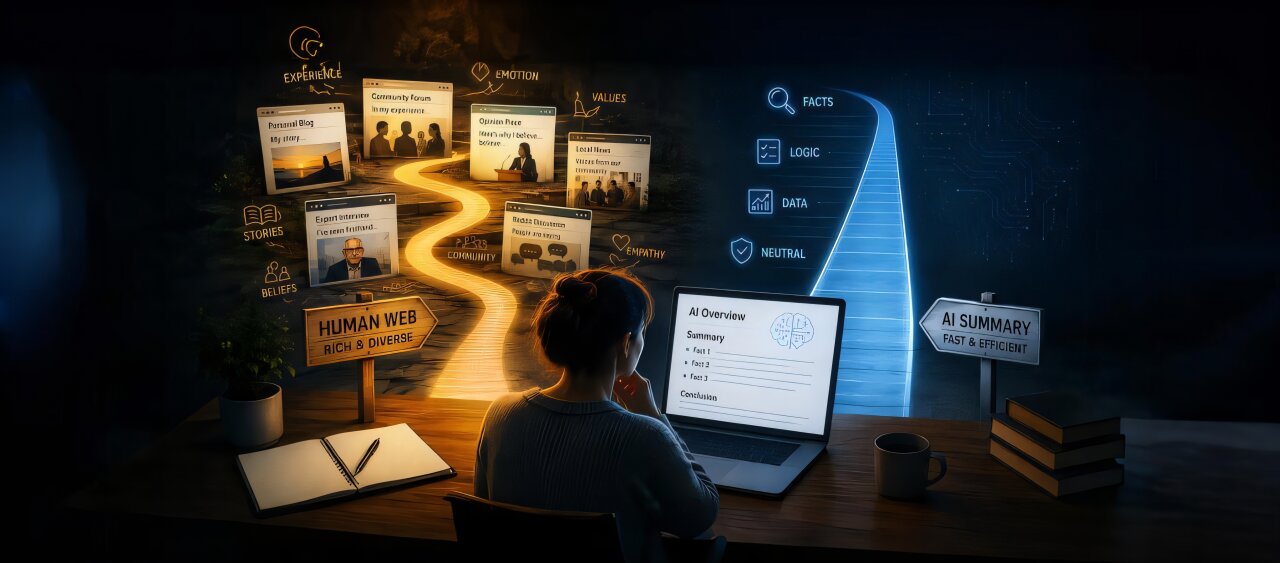
The study found that large language models, or LLMs, such as ChatGPT and Gemini overwhelmingly rely on logic and factual consistency when responding to subjective questions, while web pages written by humans draw from a richer mix of reasoning that includes emotion, lived experience, ethics, and personal authority.
"As people increasingly rely on AI systems for information discovery at the expense of traditional web searches, the web may gradually lose its soul and cease to reflect the human nature that has shaped it over the past 25 years," said co-author Vagelis Hristidis, a computer scientist at UCR's Bourns College of Engineering. "This may give rise to new information dissemination platforms in the future."
Another co-author, Kevin Esterling, a professor of public policy and political science, added, "As humans, we're hardwired to think that anything producing language has human cognition behind it, but this paper is showing that machines produce language that doesn't have human qualities when it comes to reasoning and argumentation."