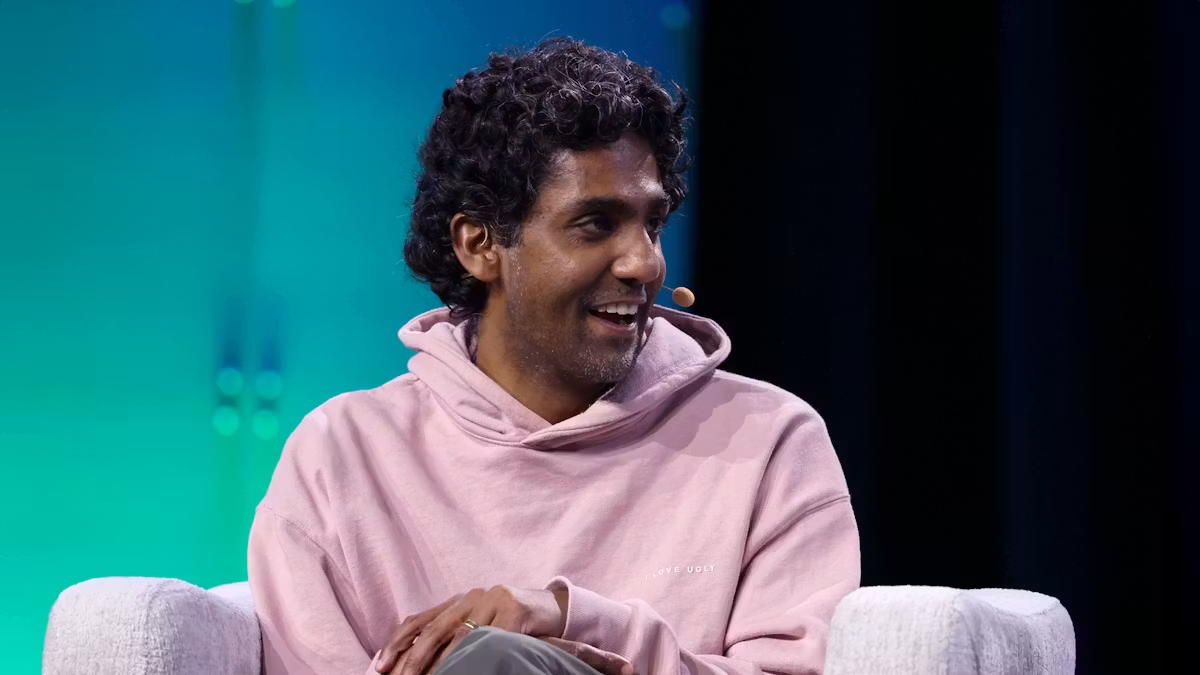
Ankur Jain wants everyone to know the Bilt card is “less than 11%” of his business.
Sitting across from me, the hospitality platform CEO and co-founder kept returning to a metaphor: his company’s flagship card—the thing that made Bilt and gets it tagged, tweeted, and torched on Reddit—is the tip of an iceberg. The rest is a B2B platform that, according to Jain, will clear $1 billion in revenue by the end of this year, up from roughly $200 million in 2024.
The company is valued at $10.75 billion after a $250 million round in July 2025—more than 3x its August 2024 mark. According to him, Bilt sits inside one in four U.S. apartment buildings, processing more than $100 billion in annual housing spend, and routing nearly $20 billion in spend to neighborhood merchants in the last year.
Now the part Jain would rather not relitigate: In February, Bilt launched Card 2.0 from a new issuer, Cardless, replacing the Wells Fargo Mastercard. Wells Fargo, which had issued the Bilt Mastercard since 2022, exited early on the partnership that was meant to run through 2029. (The program turned into a money-loser for the bank.) Bilt’s response was Card 2.0, a three-tier lineup with annual fees of $0, $95, and $495, and a rewards structure built around a parallel currency called Bilt Cash.