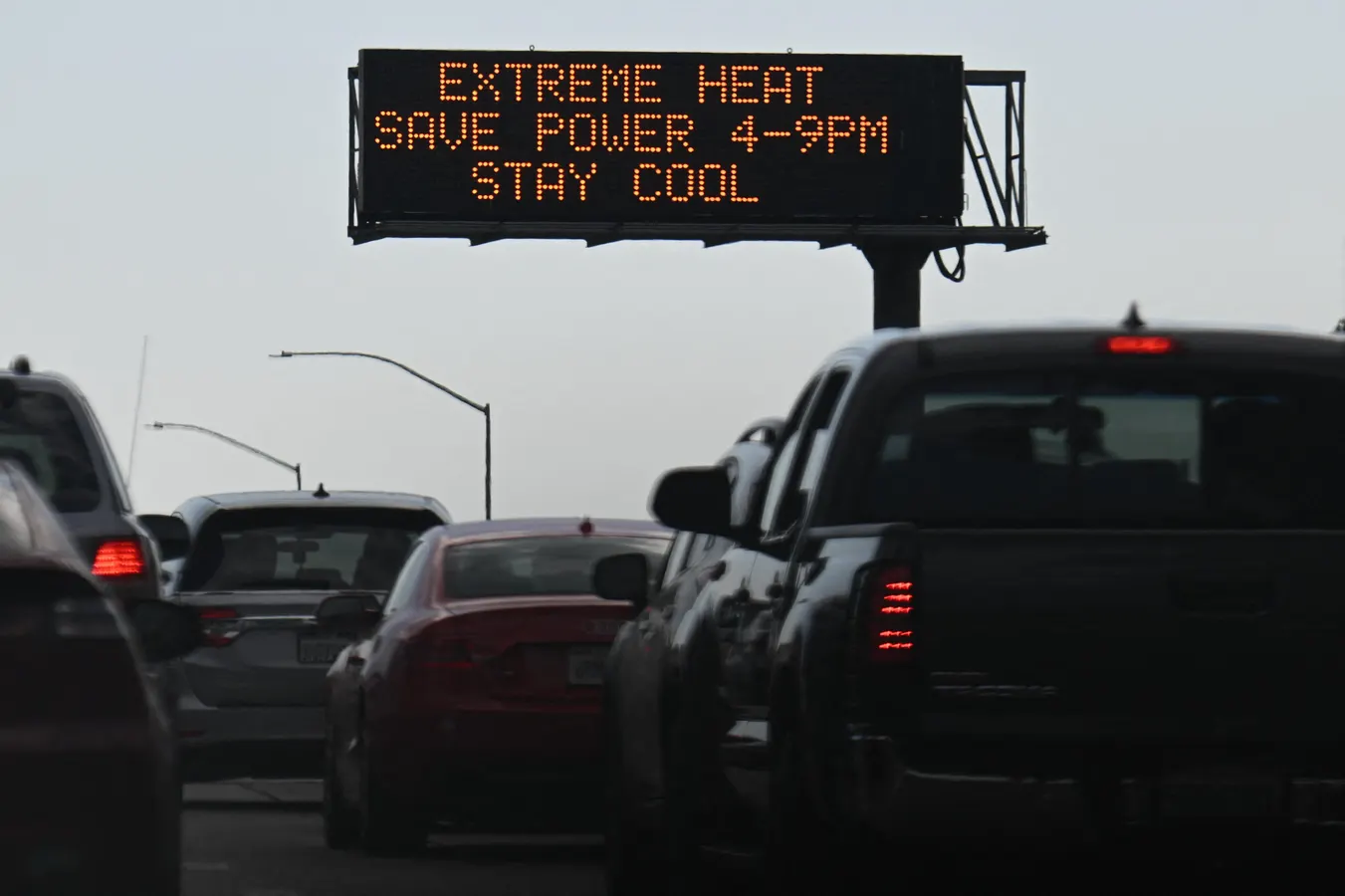
TOPSHOT - Vehicles drive past a sign on the 110 Freeway warning of extreme heat and urging energy conservation during a heat wave in downtown Los Angeles, California on September 2, 2022. - A "dangerous" heat wave has taken hold of the southwestern US. Forecasters said the mercury could reach as high as 112 Fahrenheit (44 Celsius) in the densely populated Los Angeles suburbs as a heat dome settles in over parts of California, Nevada and Arizona. (Photo by Patrick T. FALLON / AFP) (Photo by PATRICK T. FALLON/AFP via Getty Images)AFP via Getty ImagesNearly 600 million people are living in conditions, which make them severely vulnerable to extreme heat, according to a new analysis. The report by the Euro-Mediterranean Center on Climate Change (CMCC) highlights the growing problem of “systemic cooling poverty”, describes situations in which people cannot stay thermally safe because of various overlapping factors.According to the study, almost 600 million people live with severe systemic cooling poverty across multiple dimensions.The researchers found education and working standards were the main drivers of this form of poverty, followed by climate exposure, infrastructure and health.The study also highlights how heat risk is not determined by climate or income alone. For example, it says some hot countries - notably Indonesia, Egypt and Jordan - have relatively low system cooling poverty values because, they perform better with infrastructure, access to services and policy frameworks.In contrast, countries like Ethiopia and the Democratic Republic of Congo, where average temperatures are less extreme, emerge as highly vulnerable due to deep infrastructural gaps, social inequalities and health and work‑related deprivations.One of the report’s co-authors, Dr. Antonella Mazzone from the University of Bristol and the CMCC, said the concept of systemic cooling poverty refers to several factors, which prevent people from being thermally safe, in an interview.MORE FOR YOUDr. Mazzone added these factors could include access to water, public spaces and public toilets, along with other issues like maximum temperature regulations in the workplace.“It's not just about air conditioning, or if you have the money to pay for electricity bills, it's everything else that is supposed to be there in place to keep you thermally safe,” she told me.Dr. Mazzone cited the example of Rio de Janeiro, where public toilets are very scarce and are only found in the wealthier parts of the city.She said the lack of access to public toilets can mean trans-women and people with disabilities can struggle to hydrate themselves properly during heatwaves.“The characteristics we found in Rio de Janeiro are very similar to many places in the Global South, including water security and whether people can afford fresh fruit, which could help people stay hydrated,” Dr. Mazzone added.She said a lack of basic infrastructure and basic services is a common problem in the Global South, but the researchers also noted a “lack of preparedness” in some cities in the Global North, where people often do not have access to information in order to keep themselves safe during the heatwave.Another of the report’s co-author’s, Enrica De Cian, CMCC researcher and professor in environmental economics at Ca’ Foscari University of Venice (Italy), said recent energy price rises can also impact whether people are thermally safe.De Cian added some recommendations may work across the board, while some cities and locations may need more tailored support as temperatures continue to rise.She added extreme heat can impact everything from power grid resilience to urban planning, but policy makers often operate in separate rooms and do not talk to one another.“We still believe that something simple as raising awareness is really important, because people largely underestimate the health risks associated with heat, and raising awareness is a relatively easy, low-cost intervention,” said De Cian.“There is also a lack of awareness in some areas about the need to drink water and the need to be in temperature safe spaces at certain times of the day, so it really requires an integrated approach.”
More Than 600 Million People Facing Severe ‘Cooling Poverty’, Study Finds
The report highlights the growing problem of “systemic cooling poverty”, describes situations in which people cannot stay thermally safe because of various factors.
653 words~3 min read