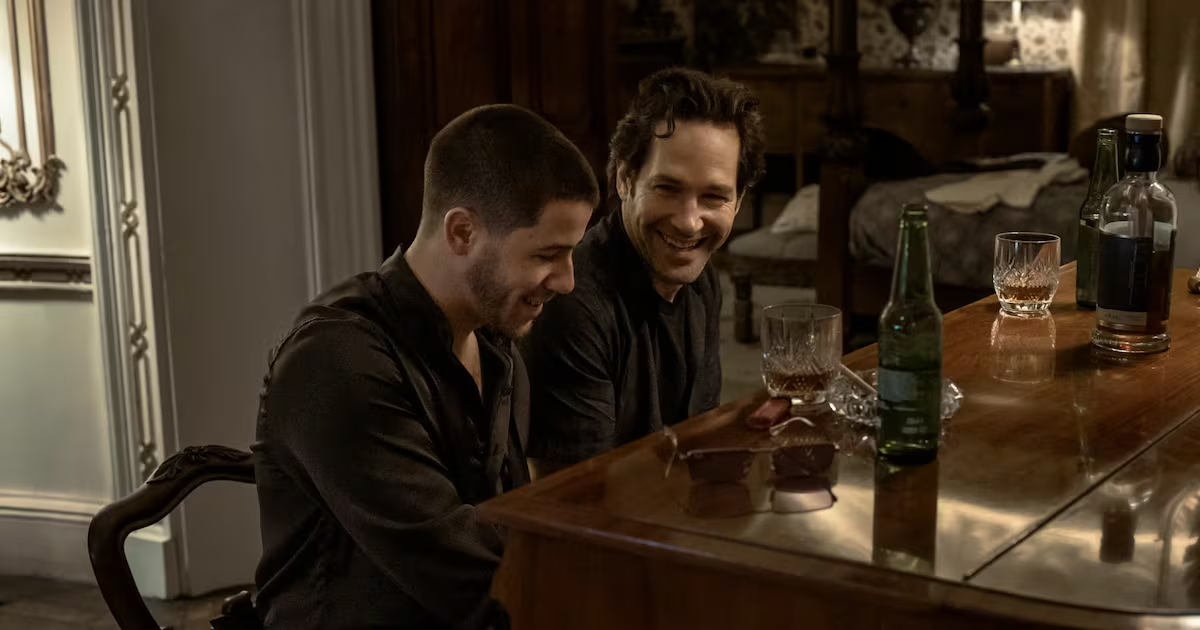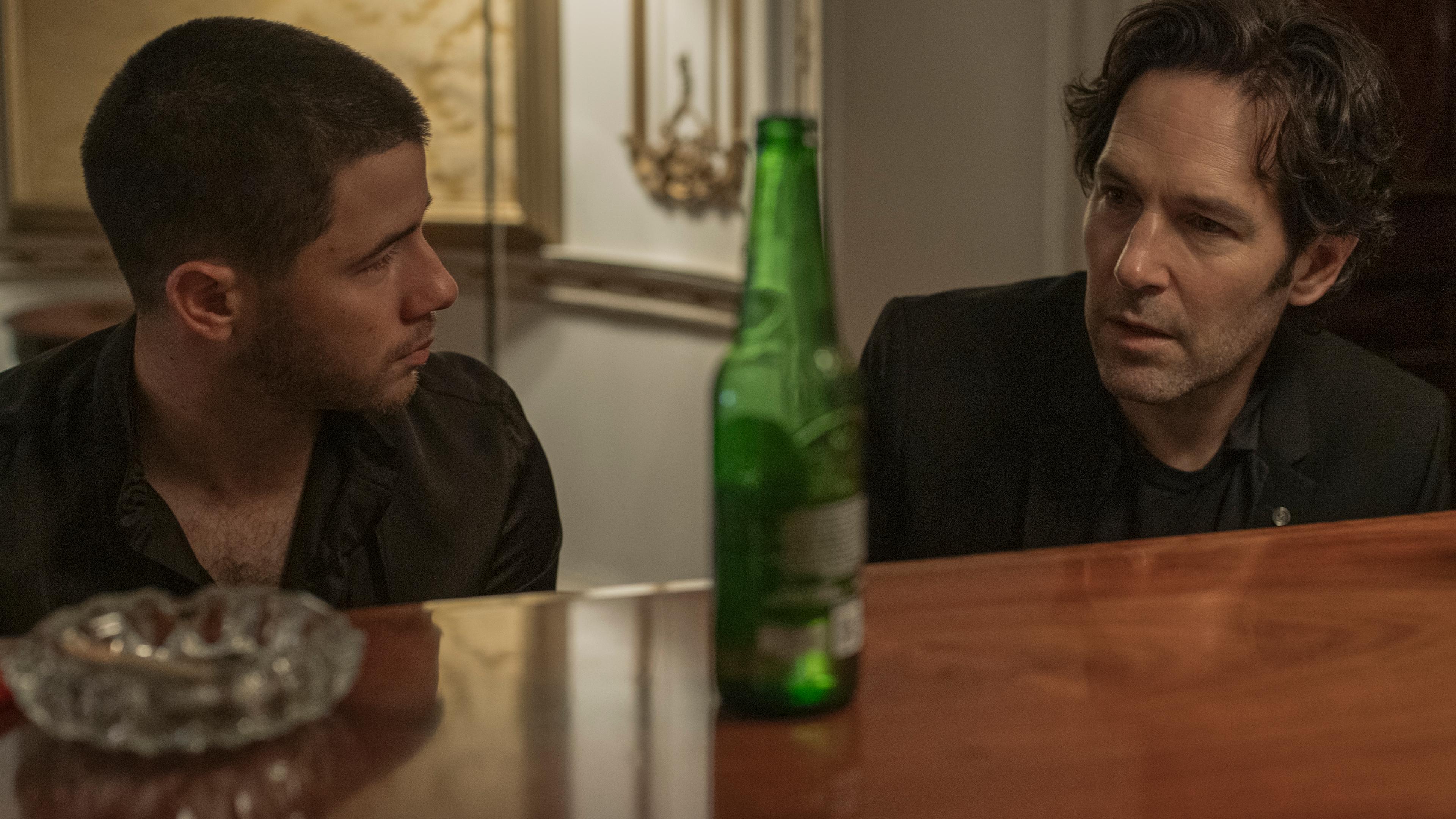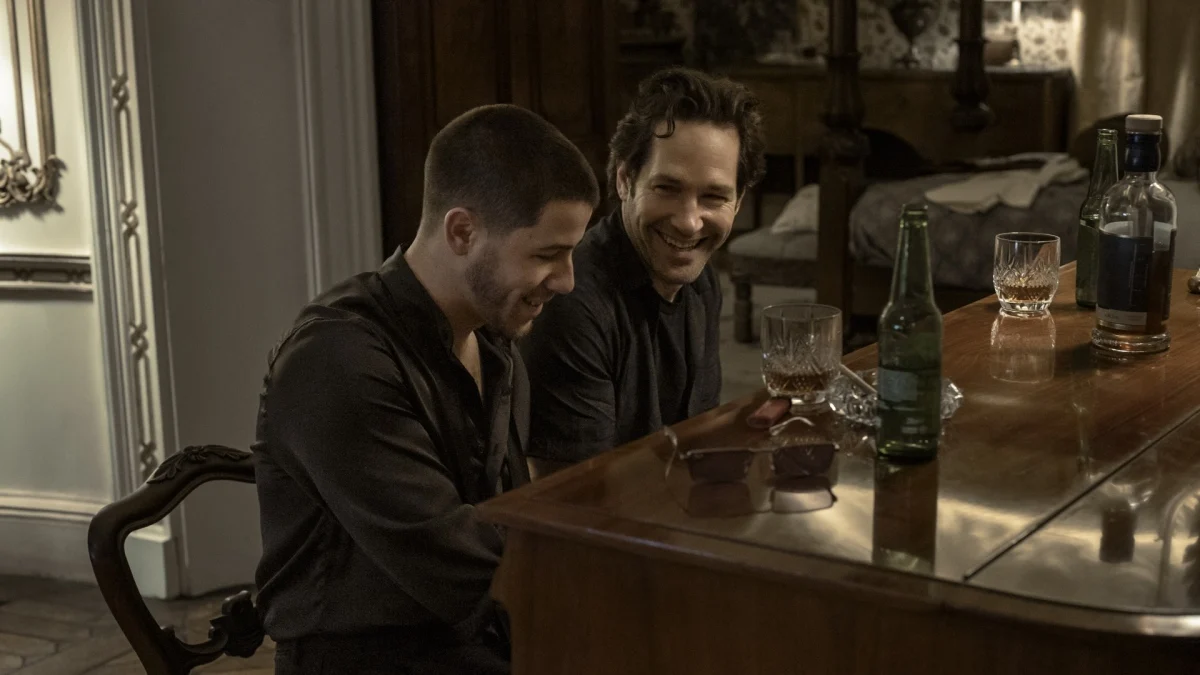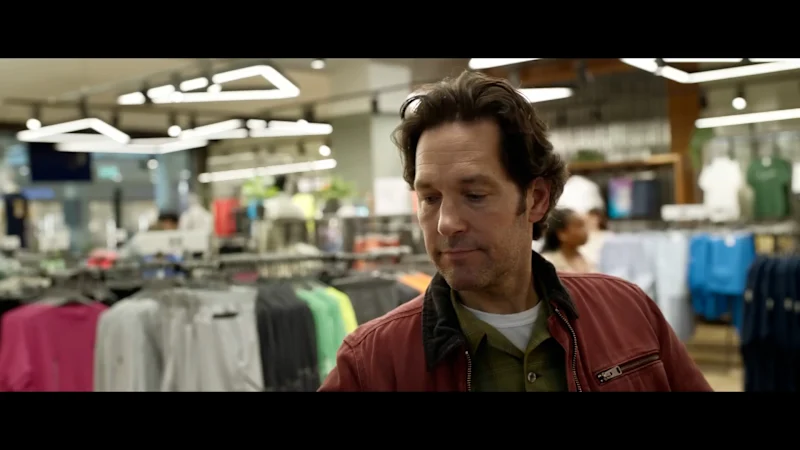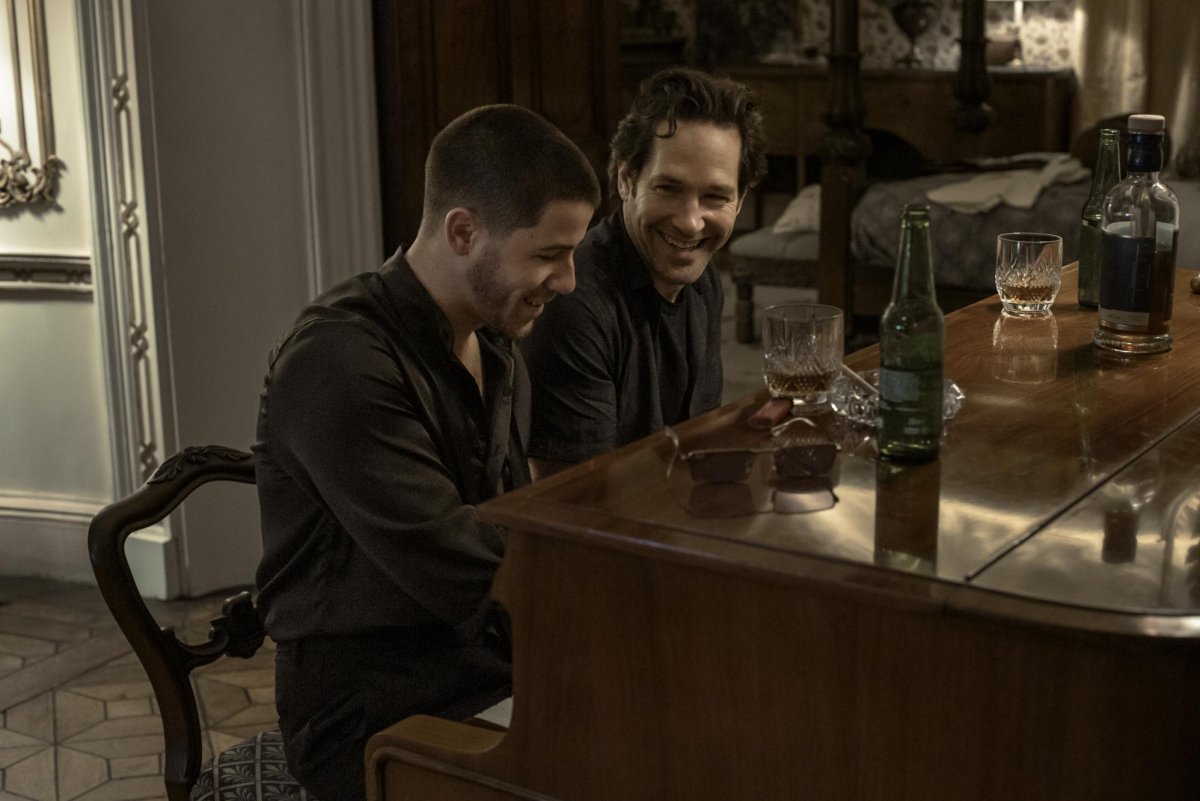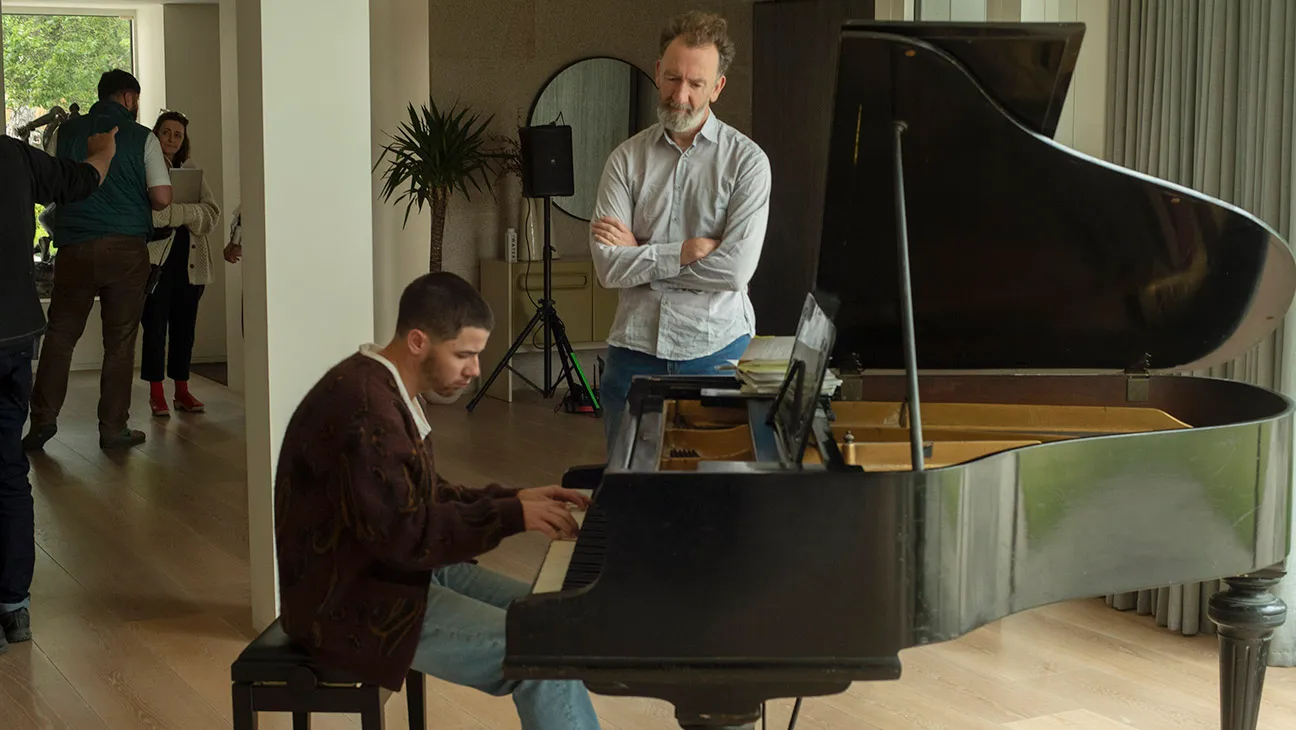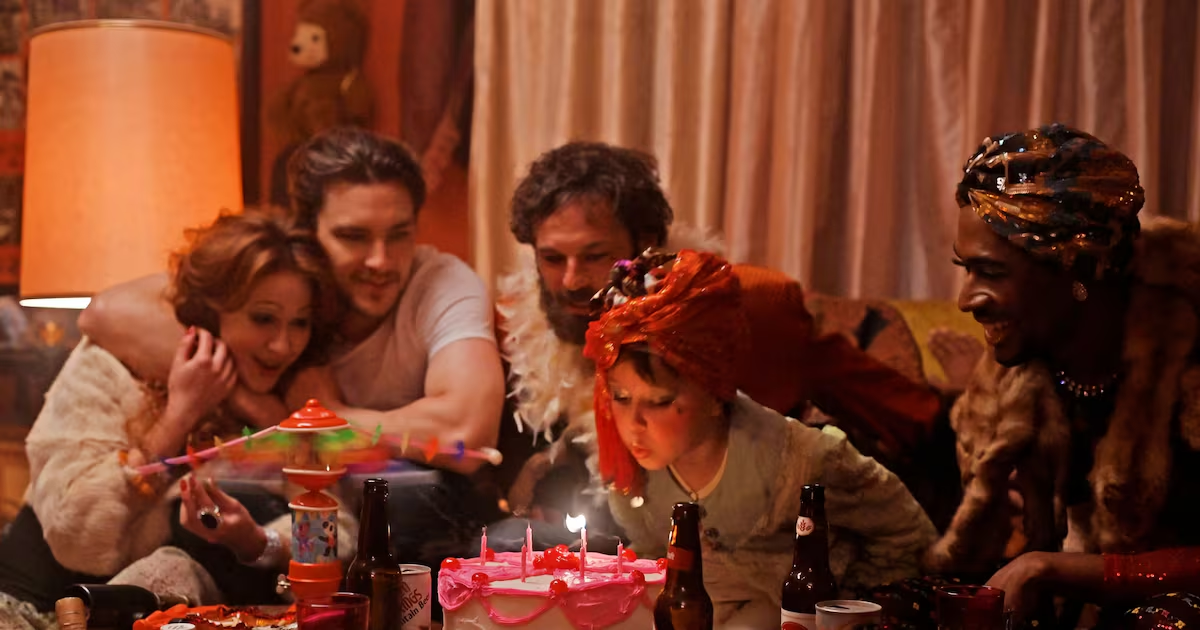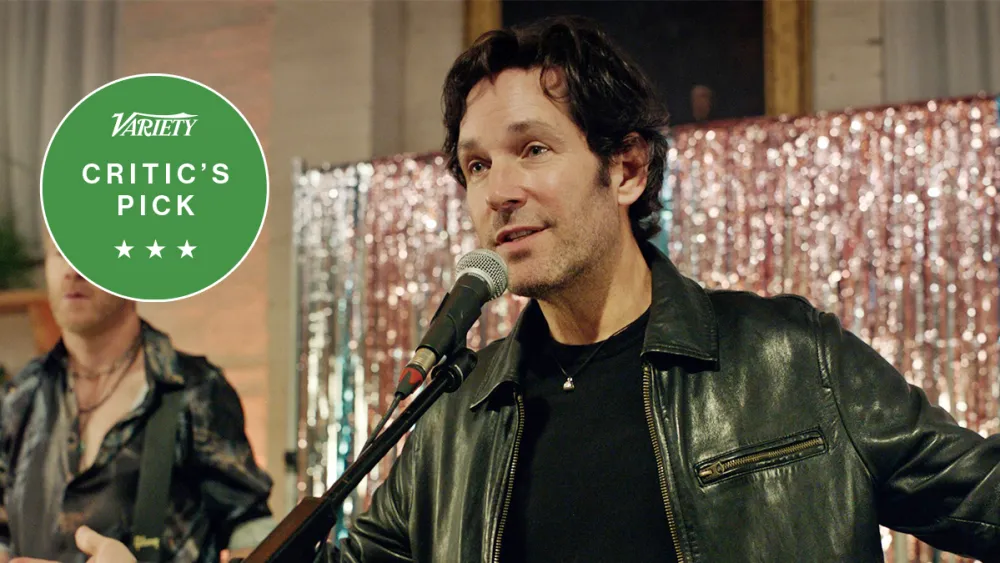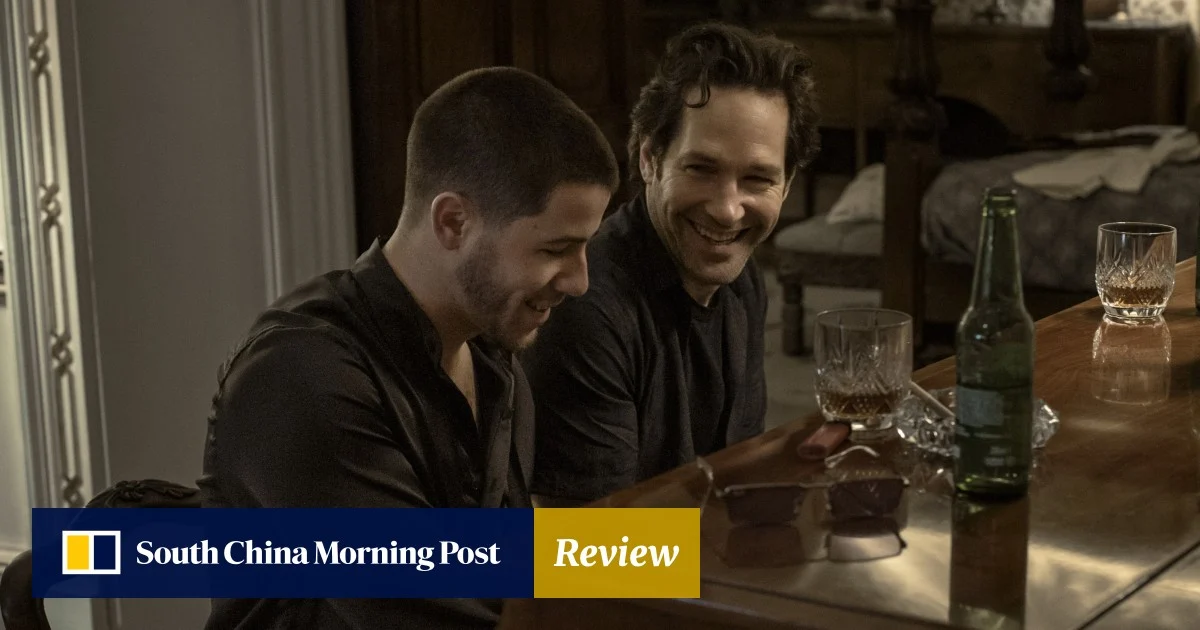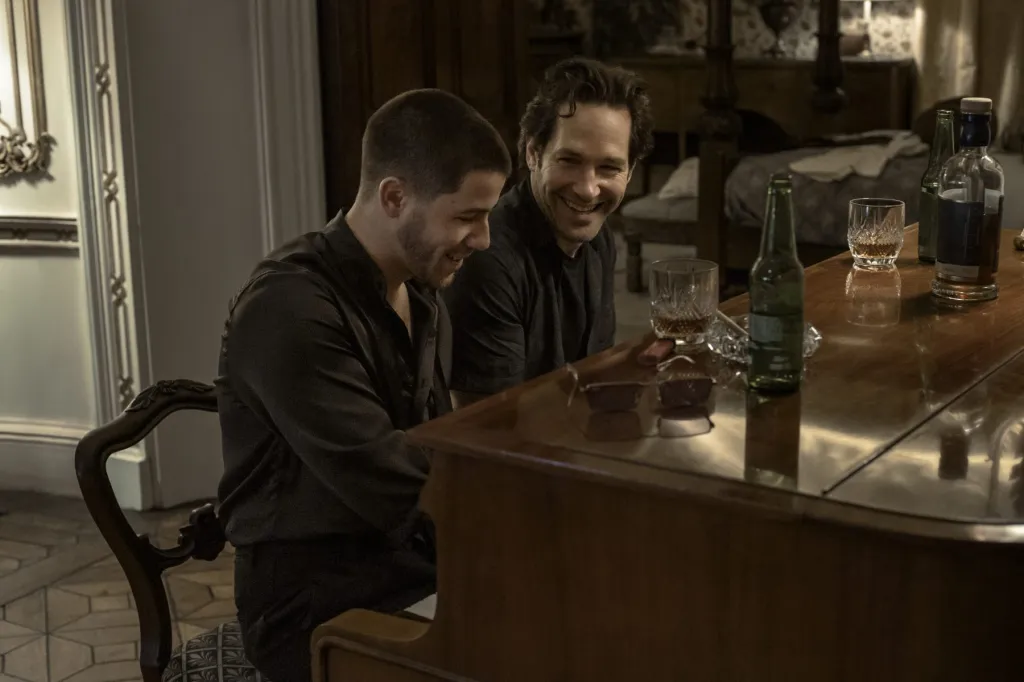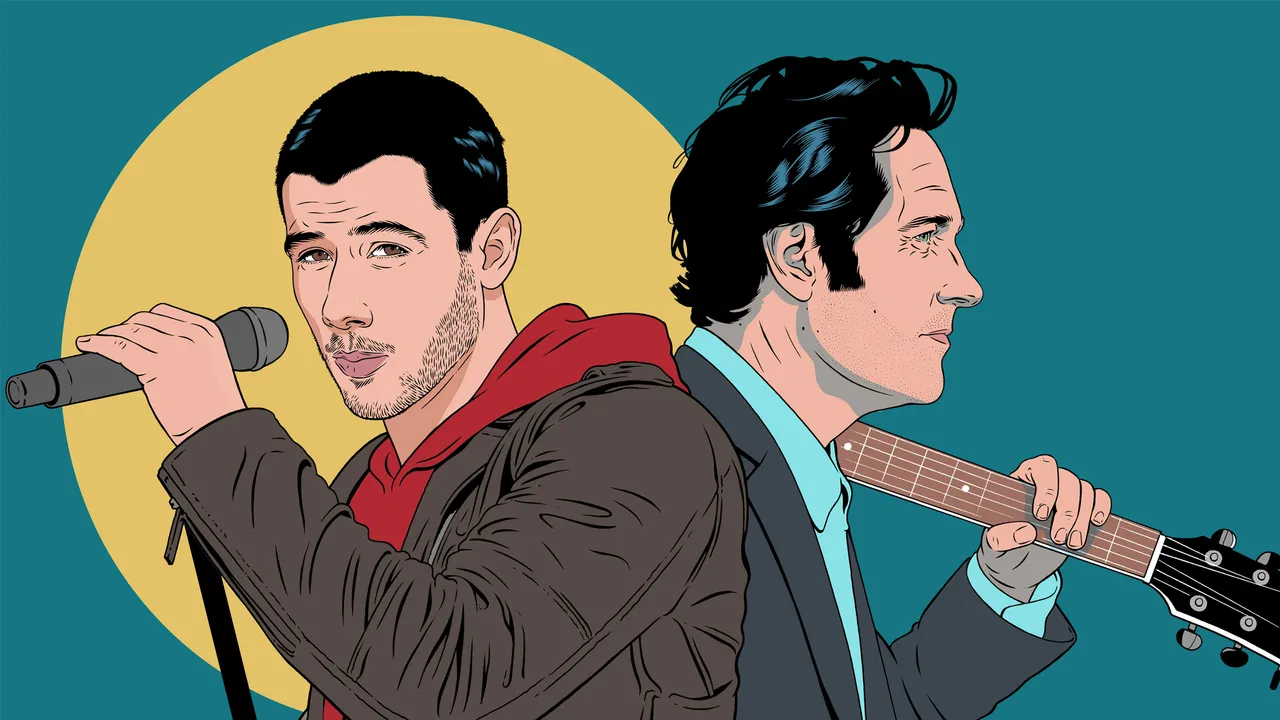
The myth of untapped genius runs rampant through mass culture, whether on talent-scouting shows like “American Idol” and “Shark Tank” or in the transformation of “real” people into celebrities on reality TV. Genius hiding in daily life is similarly at the heart of the Irish director John Carney’s new film, “Power Ballad,” a musical dramedy starring Paul Rudd as an American rocker in Ireland who crosses paths with a former boy-band star (Nick Jonas) in search of a solo career. It’s the story of what happens when an unrecognized artist’s great work is appropriated without credit by another artist who’s rich and powerful. In “Power Ballad,” this premise (a version of which, oddly enough, also appears in Boots Riley’s new film, “I Love Boosters”) is worked into a plot that’s admirably tight and irresistibly catchy. But Carney, who wrote the script with Peter McDonald, develops it in one and only one register: warmhearted populism. “Power Ballad” is a sentimental tale of family and friends both fostering and thwarting a dream. It finds an unusually strong current of authentic (if narrow) emotion while leaving wilder ideas and feelings trapped beneath its surface.Rudd plays Rick Power, a middle-aged American wedding singer living in cozy domesticity in Crumlin, a suburb of Dublin. Formerly part of an American band that toured in Ireland, he’s married to an Irish woman, Rachel (Marcella Plunkett), with whom he has a fourteen-year-old daughter, Aja (Beth Fallon). Rick is a devoted family man who organizes his life rigorously and cheerfully around each morning’s school drop-off, but he has a nagging frustration: he prides himself on his songwriting, yet his music career is limited to playing in a cover band called the Bride and Groove. The movie’s first scene, in which the band plays a wedding at a lavish country estate, highlights his problem. He gets the crowd moving with a vigorous rendition of “Celebration,” but when he leads the band through one of his own songs the dance floor quickly empties.The event, however, has an unusual guest, one Danny Wilson (Jonas), a friend of the groom’s and an ex-member of a successful boy band, who’s now struggling to go solo. (Jonas’s character’s name matches that of the protagonist in the musical film noir “Meet Danny Wilson,” a scuffling but ambitious singer played by Frank Sinatra.) To amuse himself, Danny joins the band onstage, and hits it off with Rick on a duet of Stevie Wonder’s “I Wish.” After the bash, when all are chilling, Danny invites Rick to his luxury suite on the property, where they jam, drink, and have a bromantic heart-to-heart. Danny despairs of finishing some songs he’s writing; Rick has a few ideas that he’s glad to contribute, and he plays some of his own tunes for his new friend. On parting, Danny gives Rick a fine old acoustic guitar and asks him to stay in touch. Six months later, Rick is at a shopping mall when he hears a song of his, sung by Danny, who has turned it into a major-label release with a grandiose pop production.Unbeknownst to Rick, the track, a love song, is a phenomenon, with millions of streams. It becomes a No. 1 hit, and everyone—including Aja and Rachel—is crooning along to it everywhere. Rick is, in effect, secretly a world-famous songwriter, and, though he’s happy that Danny has managed to reinvent himself, he is resentful that he hasn’t got the acclaim, the money, or the career that writing a hit song should bring. There’s no paper trail to show that the song is his, and no proof that Danny ever heard him play it. What’s more, Rick can’t get through to Danny, because the pop star’s brash and aggressive manager (Jack Reynor) refuses to put Rick through, and responds to his claims with threats. Direct action is required: Rick and his bandmate and best friend, Sandy (Peter McDonald), head to Los Angeles to confront Danny in person.Rudd’s natural air of genial tension, of neurosis without an edge, plays into his character’s rigidly disciplined but relentlessly upbeat domesticity. Rick is tightly scheduled, punctilious to a fault, endowed with verbal wit that gently but firmly shapes and smooths social interactions. Warm and wise with Aja, and never nonplussed when she out-cools him or simply fails to flatter, he also performs middle-aged hotness just self-deprecatingly enough. His charming but locked-in sense of commitment makes him an apt front man of the Bride and Groove—he glows with a little more wattage than his bandmates do—but it’s also why he’s not the group’s real leader. That would be the drummer, Binzer (Rory Keenan), who sits at the back of the stage, surveys the group and the roomful of revellers, and pliably makes adjustments that keep the party going. Rick’s taut precision, by contrast, can cause trouble at the mike; when Danny first asks to join in on a song or two, Rick—fiercely protective of the band’s routine and his place in it—refuses, until Binzer firmly implores him to be a sport. There are roots to Rick’s extreme defensiveness. The American band that he’d been part of in his youth, called Octagon, had been big enough to sign with a record label, but when Aja was born Rick took a year off and the label dropped him. He’s been fortunate enough to make a living as a musician, but his bitterness about the loss of that big break lingers.When Danny performs, though, something startling is revealed, something that’s built into the casting. Rudd just sings, but Jonas is a singer: Rick delivers songs, whereas Danny makes them his own. Performing “I Wish,” Danny approaches melody, rhythm, and lyrics with a sense of freedom that transcends the sheet music and gives the composition a three-dimensional life. What Danny does, Rick can’t. Their respective performances mark the difference between a mere professional and a star, with one caveat: if not for Rick, Danny would have no new song to infuse with life. Danny’s gift is what he does onstage; Rick’s is what he does sitting alone in a room.Unfortunately, the movie doesn’t follow through on this idea, and Rick’s hidden aptitude remains largely invisible. When he sings his own song at the wedding in the opening scene, a bandmate reproaches him, implying that Rick has tried out his own material before with similarly dismaying results. (The bandmate tells him to sing only “the hits” and reminds him that their job is basically to be “human jukeboxes.”) The setup is too pat. In Rick’s many years as a wedding singer, has he never won any admiration for his songs? Not even at home? Has he kept going with no positive reinforcement at all, based on nothing but his own confidence in his talent? The film’s themes of creative frustration and unmet potential are fruitful and fascinating but are left undeveloped, and the movie is painfully short on psychology. What takes its place is feel-good human connection and reconciliation, whether found in unlikely places—such as in a climactic showdown between Rick and Danny in Los Angeles—or in its familiar setting, at home.Sentimentality has been a consistent strain in Carney’s directorial career. He won international recognition for the 2007 romantic musical drama “Once,” set in Dublin, about an encounter between an Irish and a Czech musician. His 2013 drama, “Begin Again”—which he’d originally titled “Can a Song Save Your Life?”—is the story of a man who loses his job as a record executive but gets his musical mojo back when he connects with a young woman singer-songwriter. In those films, as in “Power Ballad,” music serves not to undo and reshuffle romantic relationships but to restore and reinforce them, even as it forges new emotional bonds. Carney is a moralist, a filmmaker of fidelity—and of renunciation, depicting the romantic near-misses and what-ifs that his characters leave behind.In “Power Ballad,” Carney’s musical moralism remains superficial, worked out neither in the detailing of his characters nor in his pragmatic, efficient direction. Rick’s unyielding faith in his own artistic powers is a weighty secret and a constant burden; his absence of torment in the face of it, his apparently content and unruffled life with his friends and family, ultimately suggests less about Rick’s temperament (which gets an all too scant workout) than about Carney’s own mild-mannered aversion to such inner conflicts. The story’s most powerful and expressive possibilities go unexplored, in a way that reflects the substance of the movie itself: just as “Power Ballad” emphasizes the difference between a songwriter and a singer—between the creation of formidable raw material and the amply imaginative realization of it—it also unwittingly displays the distinction between screenwriting and directing, between potent ideas and their bland development. The movie is more than a celebration of persistence in the face of rejection, of faith in oneself, or of the power of love. It exalts, above all, the practical genius in the division of labor. ♦
“Power Ballad,” Reviewed: A Bromantic Conflict Over a Hit Song
In John Carney’s dramedy, a thwarted songwriter, played by Paul Rudd, crosses paths with a former boy-band star in search of new material.
1,486 words~7 min read