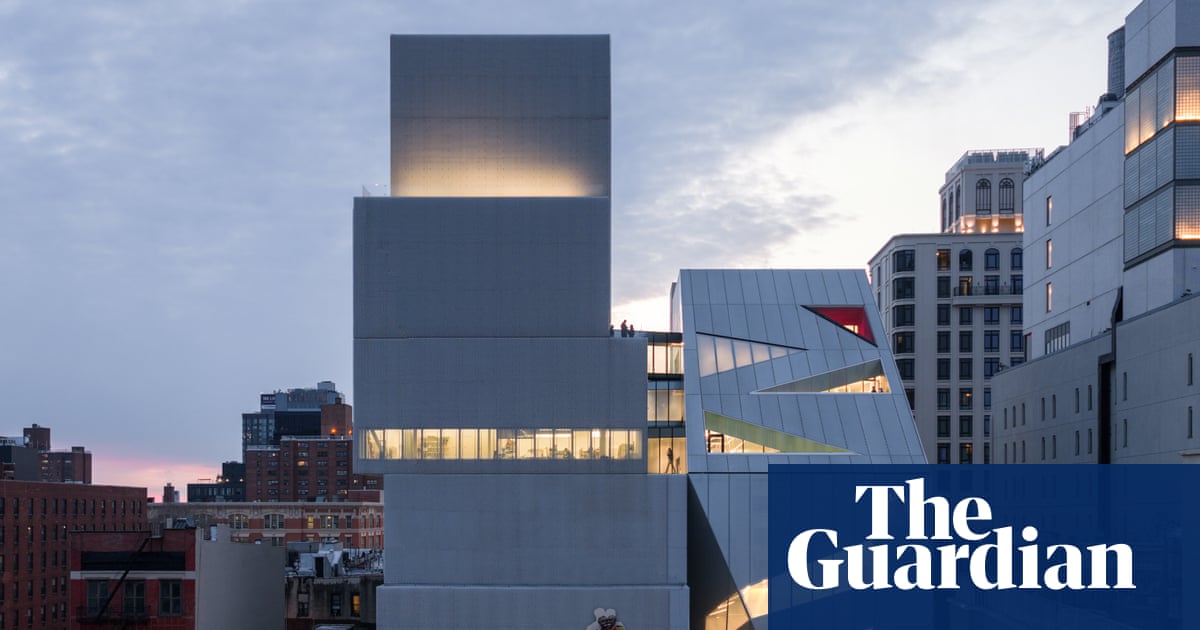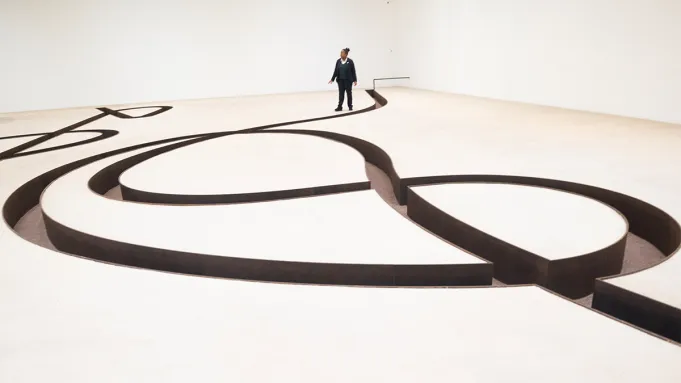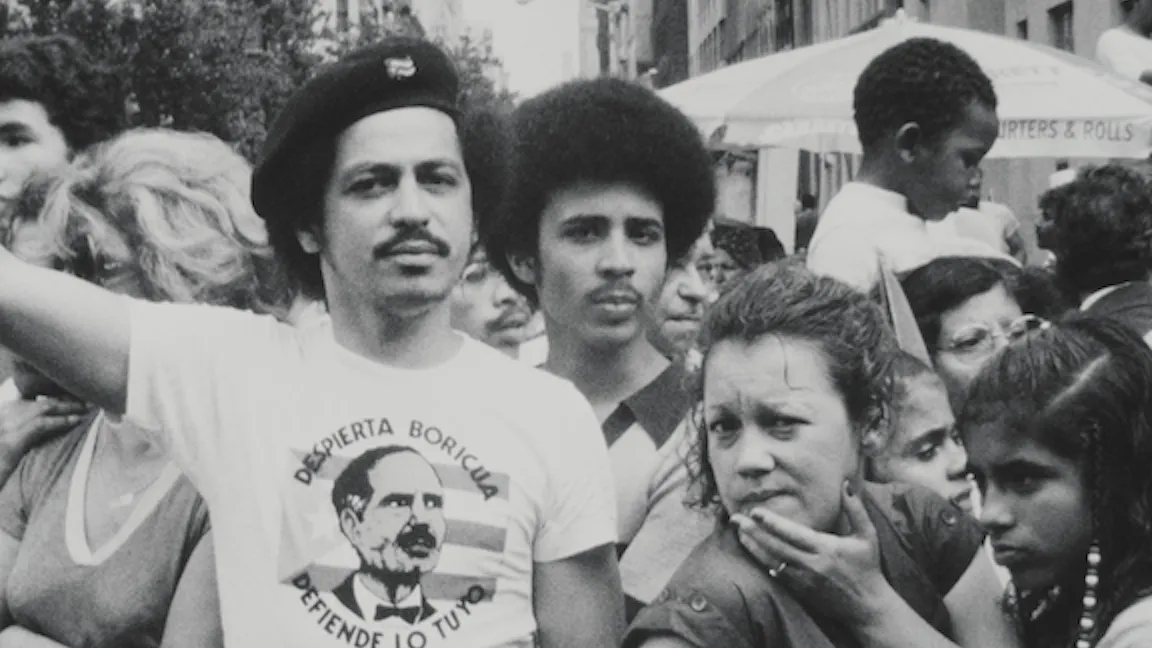
Also: the megawatt hip-hop of Baby Keem, the buzzy period reimaginings of Scottish Ballet, the time-capsule documentary “With Hasan in Gaza,” and more.May 29, 2026One of my visits to the exhibition “Greater New York,” at MOMA PS1, just so happened to be on the day of the museum’s block party—a proper urban carnival. Initially, I lamented the noise and the sweat, but then I thought, Isn’t this the perfect occasion to honor the phenomenon of the swarm, to be among the rough exuberance and excess that organizes (and disorganizes) so much of life in New York? As it should, the quinquennial showcase (running through Aug. 17) reels with the density and difference that tessellate this city; the placid veneer holding together the hushed galleries of Chelsea and Tribeca is here shattered to expose the clamor of the nervous system underneath. The fifty-three artists in the show are all living and working in New York (though of vastly varied origins); many of them are young, doing their best in a city that seems to valorize yet beleaguer youth.A still from “Down the Barrel (of a Lens),” from 2023.Art work by Kameron Neal / Courtesy the artistThe art works display the emotional range of the city, from ebullience to alienation. Some moments are ample with mirth: take, for example, the saccharine grit of a sculpture installation by Louis Osmosis, which includes assemblages of found objects and looks a bit like the dishevelled morning after a party, confetti dappling the gallery floor and several of the art works; or the vernacular realness of Piero Penizzotto’s papier-mâché sculptures, one of which depicts four women sitting in lawn chairs and shooting the shit—all that’s missing is a sidewalk underfoot and the humid clasp of New York summer. But there is also room for the sobriety and pain that sharpen the city’s social economy: Kameron Neal’s two-channel video utilizes surveillance footage from the N.Y.P.D.’s archive, in which we repeatedly witness pedestrians realize that they’re being watched. Kenneth Tam’s video work dwells with a community of taxi-drivers struggling with the erosion of their trade in the wake of rideshare apps.“Greater New York”—like the city it is made in the image of—leaves you drained and energized at once. It moves between oppositional realities: of a country suffocating beneath its own political weight, of a city still staggering from the thrill of November’s mayoral turn, of an art world stuck in the exhausted jaws of the same old market. And yet, the show is blessed with the fortune of artists continuing to turn over the mercurial stone of curiosity, finding yet more questions underneath it.—Zoë HopkinsAbout TownDanceIn her first season as the artistic director of Alvin Ailey American Dance Theatre, Alicia Graf Mack is still finding her footing. The program for the company’s spring engagement at BAM centers on a revival of “Hymn,” a 1993 tribute to the troupe’s founder created by one of Mack’s predecessors, Judith Jamison. Text assembled by the playwright Anna Deavere Smith voices the sentiments of past dancers while the current Ailey crew demonstrates its strength. Medhi Walerski’s “Blink of an Eye,” an import set to Bach, is, in contrast, a flashy but shallow specimen of recent trends. And then, as ever, there’s Ailey’s “Revelations.”—Brian Seibert (Howard Gilman Opera House; June 4-7.)FolkThe singer-songwriter Anjimile budded in 2020 with the gentle, ruminative “Giver Taker.” Largely written while in rehab for drug and alcohol abuse, it’s an album about coming out as trans and nonbinary, weaving both journeys into a folk story of self-realization. After signing to the label 4AD, in 2021, they underwent yet another transformation for “The King” (2023), which brought the solitary, inward-looking acoustic music of its predecessor into a more dramatic context with a tenser, more imposing sound, robust in its expression of pent-up exasperation. The most recent Anjimile album, “You’re Free to Go,” is composed of resilient yet restrained songs teeming with activity beneath the surface.—Sheldon Pearce (Union Pool; June 5.)Hip-HopBaby Keem.Photograph courtesy pgLangBaby Keem was well on his way long before he made it known that he was kin to Kendrick Lamar, one of the defining rappers of his generation, but, since the Pulitzer winner has thrown his weight behind his talented little cousin, who joined Lamar’s pgLang creative production company in 2020, Keem has levelled up to star in the making. His breakthrough album, “The Melodic Blue,” from 2021, loosely outlined a technicolor style powered by its creator’s megawatt personality and flashy performance sense, as a chaos agent who sees variability as his primary artistic ethic. After a five-year absence, the Las Vegas native’s new album, “Ca$ino,” brings narrative focus to a neon sound, assessing the Strip’s emotional fallout to sobering effect.—S.P. (Brooklyn Paramount; June 4.)ArtOver thirty years ago, the American maverick David Hammons and the Greek-born visual poet Jannis Kounellis (1936-2017) developed a friendship at the American Academy in Rome. This show works to understand how those two minds—both devoted to upending the art market by making work that’s not easily categorizable—entertain certain themes simultaneously. Although each creator is devoted to irony, especially Hammons, that love of play is often integral to their discussions of political theory, and of race. How and where do you assign value to any of this, the artists ask, a point driven home when we see a clear bowl containing water—a reference to Hammons’s famous snowballs—and a note from potential buyers, saying that no insurance company would cover the now melted object.—Hilton Als (White Cube; through June 13.)DanceScottish Ballet performs “Mary, Queen of Scots.”Photograph by Andy RossIn the past few years, Scottish Ballet has generated some buzz in Europe with its contemporary reimaginings of period narratives—“Coppélia,” “The Crucible”—choreographed by women. The first to arrive in New York is “Mary, Queen of Scots,” by the company’s resident choreographer, Sophie Laplane. She and the director, James Bonas (who was partly responsible for the murk of American Ballet Theatre’s 2024 “Crime and Punishment”), have conceived the ballet as the fractured memories of Elizabeth I. Much of it is purposely anachronistic and self-seriously quirky, with a dancer on stilts and a baby represented by a balloon.—B.S. (David H. Koch Theatre; June 4-7.)MoviesThe backstory of the Palestinian filmmaker Kamal Aljafari’s documentary “With Hasan in Gaza” is built into its simple but far-reaching action. In Gaza, in November, 2001, Aljafari used a small video camera to record his search for a man he’d met in 1989, while he was imprisoned in Israel. The footage, which he only recently rediscovered, is an exploration of the daily lives of Gaza residents under occupation, as artillery fire from Israeli forces shatters homes and stokes fear. Amid his voyage, in cars and on foot, through markets and at beaches, visiting homes and perched in locations deemed safe during attacks, Aljafari creates what he described, to residents, as a time capsule meant to be seen in the distant future. The result is an audiovisual restoration of places and ways of life obliterated by Israel’s war of destruction.—Richard Brody (Metrograph.)Bar TabTaran Dugal stops by a bookish dive bar.Illustration by Patricia BolañosThe advice “don’t judge a book by its cover” has never really applied to dive bars. In fact, the inverse logic is usually true: what you see is pretty much what you get. The Library, a delightfully ratty East Village hole-in-the-wall, is no exception. Recently, a newcomer locked eyes with a faux-bronze unicorn standing behind the bar’s glass façade, its neck bow-tied, its rump draped with a pride flag. The guest’s entrance was soundtracked by the home-town wails of the Ramones’ “Blitzkrieg Bop,” the de-facto national anthem for such establishments. Inside, the place was nearly empty, save for a half dozen tattooed regulars sporting the millennial-hipster uniform of thick-framed eyeglasses and scruffy beards in varying degrees of neglect. Joining them at the bar, the newcomer was confronted by a dizzying array of curios: a Darth Vader helmet, a miniature sasquatch, yellowing human skulls, a pastel painting of Jesus in his crown of thorns. A homemade sign advertising pickleback shots hung mere inches from a flyer warning against drinking while pregnant. The guest opted for a Guinness; it was served alongside a toy Brontosaurus, which, the bartender explained, was good for a free drink. On shelves in the back piled with tattered books, the newcomer was thrilled to find “The Complete Poems of D. H. Lawrence” in close proximity to the 2005 classic “Bob Greene’s Total Body Makeover.” Elsewhere, “Fundamentals of Tibetan Buddhism” and “The Communist Futures Trading Guide” collected dust. Pint glass empty, the guest cashed in his Jurassic friend as Motörhead’s “Stone Deaf in the U.S.A.” began to play: “Oh Lord, thou who has seen the trouserless, and had compassion . . . thank you.” Nursing his beer, the newcomer glanced around the room. Not one person, he realized, had yet picked up a book.A scientist with a Ph.D. from Harvard fatally shot three of her colleagues. Then revelations about her family history came to light.Zoë Hopkins is a contributor to Goings On who writes about art.Brian Seibert has been contributing to The New Yorker since 2002. He is the author of “What the Eye Hears: A History of Tap Dancing,” which won an Anisfield-Wolf Book Award. His writing appears in the New York Times and the New York Review of Books. A Guggenheim fellow, he teaches at Yale University.Sheldon Pearce is a music writer for The New Yorker’s Goings On newsletter.Taran Dugal is a member of The New Yorker’s editorial staff.
“Greater New York” Takes the Pulse of the City
What to do this week, in New York City and beyond.
1,577 words~7 min read