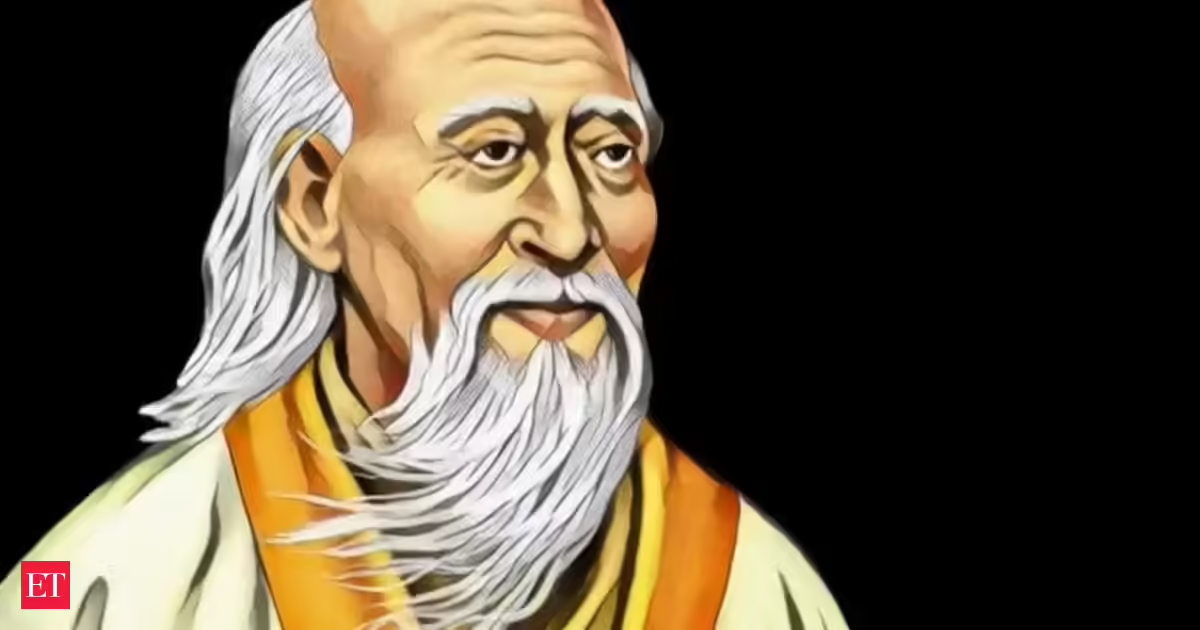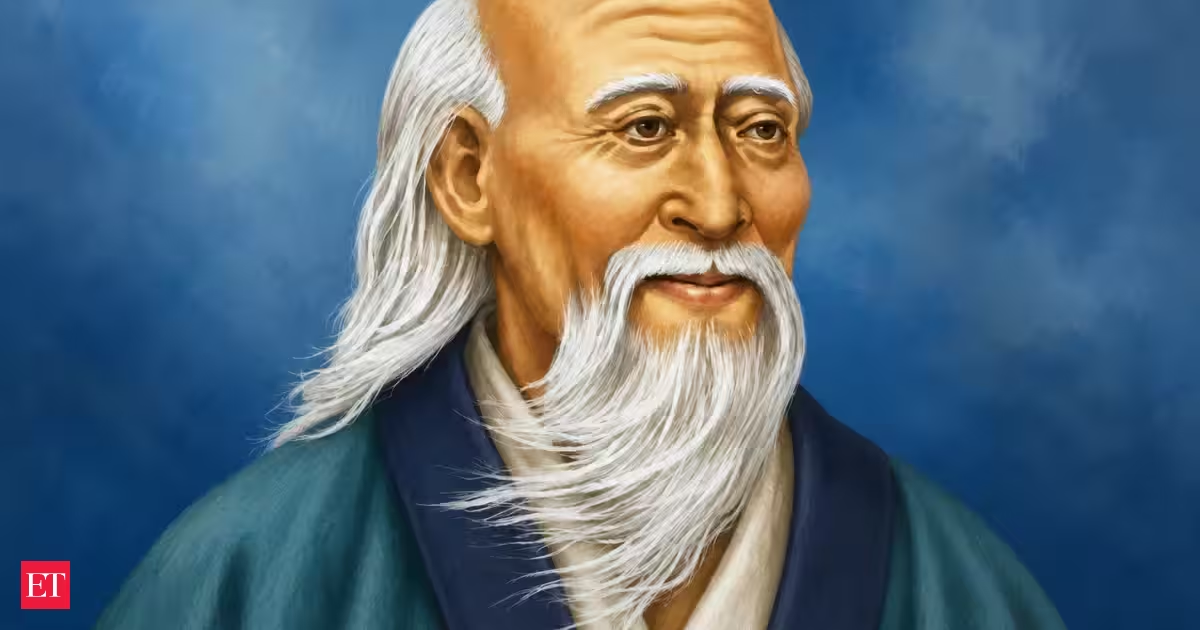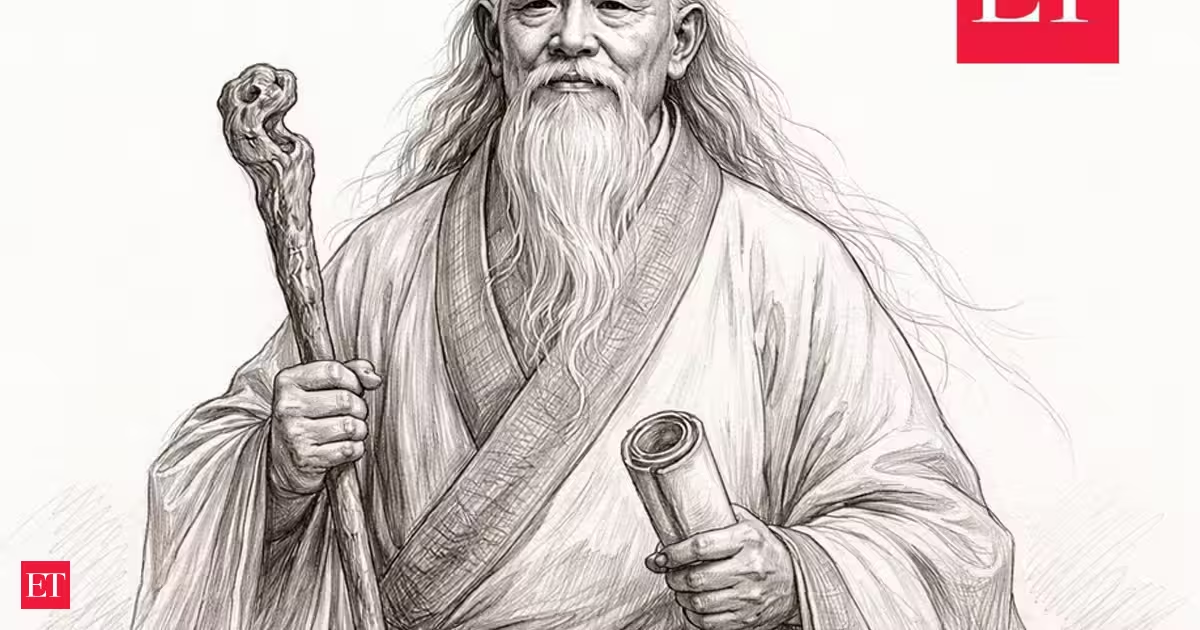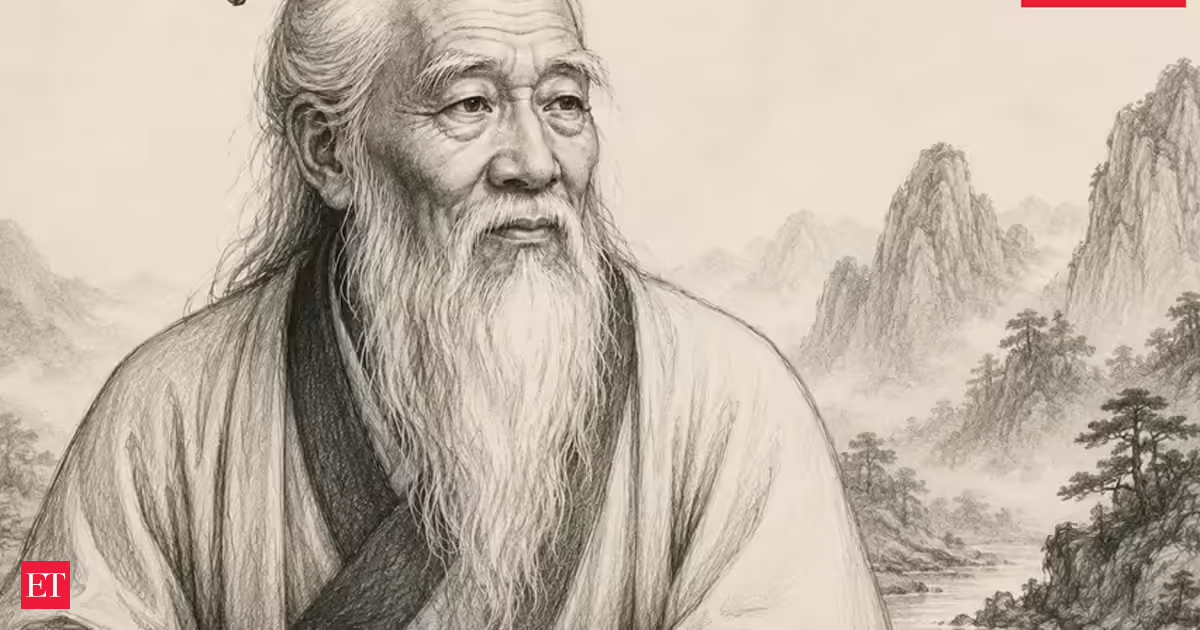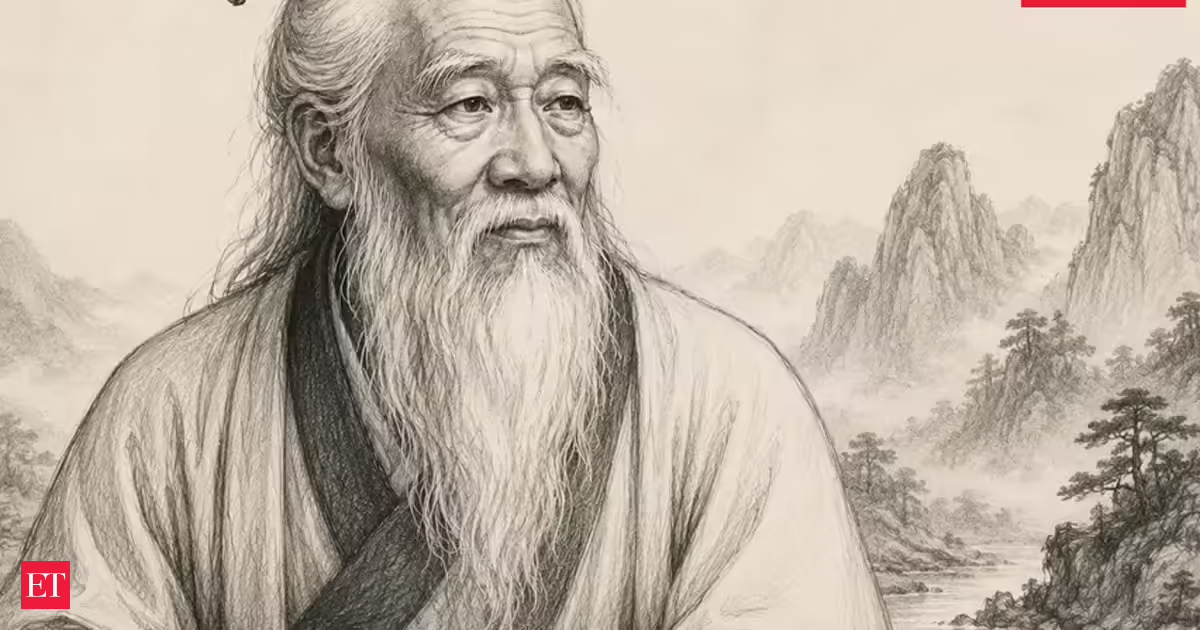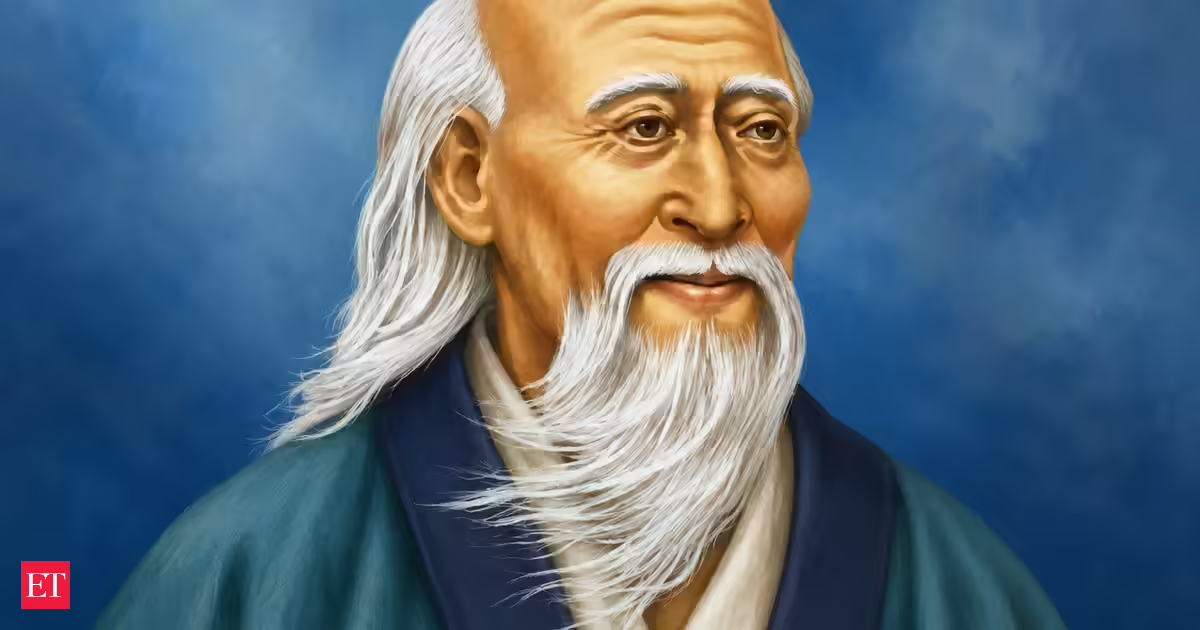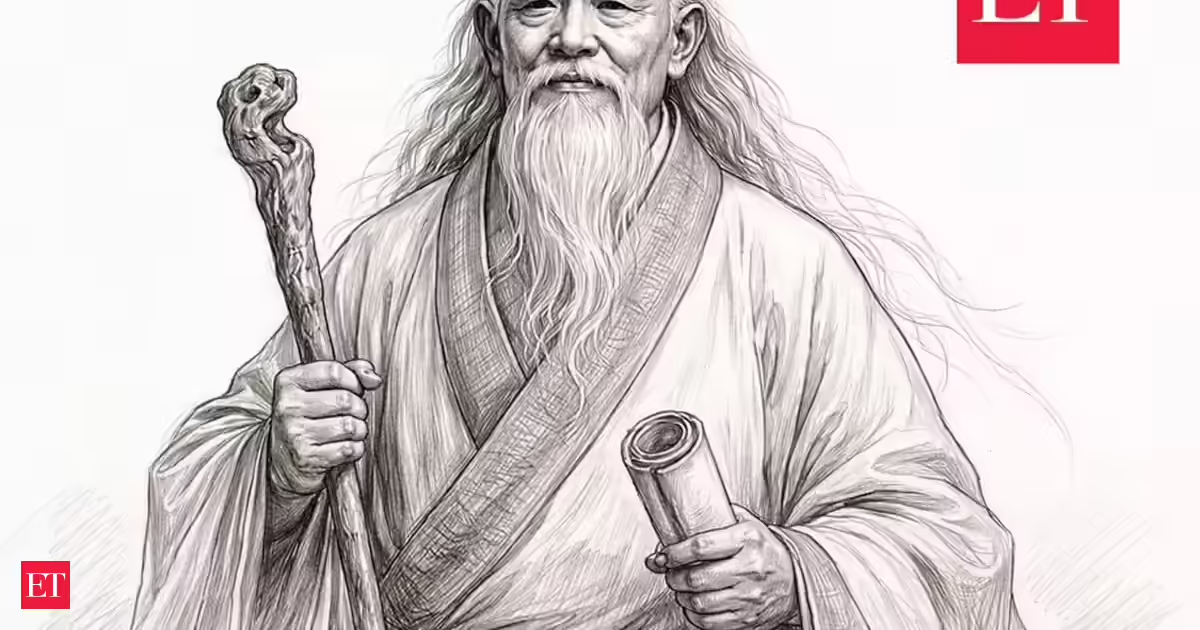
Why do so many people today feel emotionally exhausted despite having more technology, convenience, and opportunities than ever before? Why does life often feel rushed, impatient, and disconnected even when people are constantly surrounded by others online? Centuries ago, Chinese philosopher Lao Tzu offered a remarkably timeless perspective on simplicity that still resonates deeply today.Quote of the Day by Lao Tzu: “I have just three things to teach: simplicity, patience, compassion. These three are your greatest treasures.”The quote is widely associated with Lao Tzu, the ancient Chinese philosopher linked to the foundations of Daoism, also known as Taoism. Though written thousands of years ago, his words continue to inspire readers seeking balance, emotional clarity, and peace in modern life.Also Read: Quote of the Day by Italian-born photographer Nadia Meli: ‘The more I heal, the less ambitious I become’ - Why hustle for success will not bring peace for burned-out professionalsWhy Lao Tzu’s quote on simplicity and compassion matters todayLao Tzu’s quote feels especially relevant in today’s fast-moving world, where stress, burnout, comparison, and emotional fatigue have become increasingly common. Modern society often rewards speed, ambition, and constant productivity, leaving little room for patience or reflection.His message reminds people that true fulfillment may not come from accumulating more wealth, attention, or success but from developing inner calm and treating others with compassion. Simplicity, patience, and kindness are presented not as weaknesses, but as powerful strengths that help people navigate life with clarity and emotional stability.The quote also resonates because it encourages balance. Instead of constantly chasing external validation, Lao Tzu suggests focusing on qualities that create lasting peace within oneself and healthier relationships with others.What Lao Tzu’s quote means in real lifeAt a practical level, the quote encourages people to simplify their lives and priorities. Simplicity does not necessarily mean giving up ambition or comfort. Instead, it means avoiding unnecessary chaos, overthinking, and emotional clutter. It is about recognizing what truly matters and letting go of what drains mental peace.Patience, meanwhile, teaches people to accept that meaningful growth often takes time. In relationships, careers, parenting, or personal healing, impatience can create frustration and conflict. Lao Tzu’s words suggest that slowing down emotionally can lead to wiser decisions and stronger connections.Compassion is perhaps the most powerful part of the quote. In daily life, compassion means understanding others without rushing to judge them. It also means showing kindness toward oneself during failure, stress, or uncertainty. Lao Tzu believed that compassion creates harmony not only between people but also within the individual.Together, these three values offer a quieter and more grounded way of living, one that contrasts sharply with modern culture’s constant pressure to compete and perform.Who was Lao Tzu?Lao Tzu was an ancient Chinese philosopher and guiding figure behind Daoism. Historians believe he may have lived during the 6th century BC and worked as a recordkeeper in the court of the Zhou Dynasty. He is also believed to have been an older contemporary of Confucius; however, little is known about him with certainty.However, some scholars argue that Lao Tzu may not have been a single historical person at all. Much like Homer in Western tradition, he may have become a legendary figure whose teachings evolved through generations of writers and followers.According to popular legend, Lao Tzu grew disillusioned with corruption in the Zhou court and decided to leave civilization behind. Riding westward on a water buffalo, he was reportedly stopped at the border by an official who recognized him as a wise man and asked him to record his teachings before departing.The writings he left behind are believed to have become the Tao Te Ching, one of the most influential philosophical texts in Chinese history. After that, Lao Tzu supposedly vanished from history, perhaps choosing the life of a hermit.Lao Tzu’s legacyLao Tzu’s influence extends far beyond philosophy. His teachings shaped Daoism, a spiritual and philosophical tradition centered on harmony, balance, humility, and living in alignment with the natural order of life.Over centuries, his ideas influenced Chinese culture, spirituality, literature, politics, martial arts, and meditation practices. Even today, the Tao Te Ching remains one of the world’s most translated and widely read philosophical works.What makes Lao Tzu’s legacy remarkable is the timelessness of his ideas. In every generation, people return to his teachings during periods of stress, uncertainty, or social change. His words continue to resonate because they address universal human struggles, the search for peace, wisdom, compassion, and a meaningful life.
Quote of the Day by ancient Chinese philosopher Lao Tzu: ‘I have just three things to teach…’ - The wisdom our materialistic lives forgot
Quote of the Day by ancient Chinese philosopher Lao Tzu on simplicity, patience, and compassion remains relevant today. His teachings offer a path to inner peace amidst modern life's rush and disconnection. These virtues are presented as powerful strengths for clarity and stability. Lao Tzu's legacy, rooted in Daoism, continues to inspire millions seeking balance and a meaningful existence.
739 words~3 min read