If you've set up a server, debugged a firewall rule, or tried to share a local game with friends, you've run into TCP and UDP. They're the two core transport protocols - but they work in fundamentally different ways. This guide breaks down each protocol, when to use which one, what ICMP ping actually is, and how to set up port forwarding correctly.
TCP vs UDP - The Core Difference
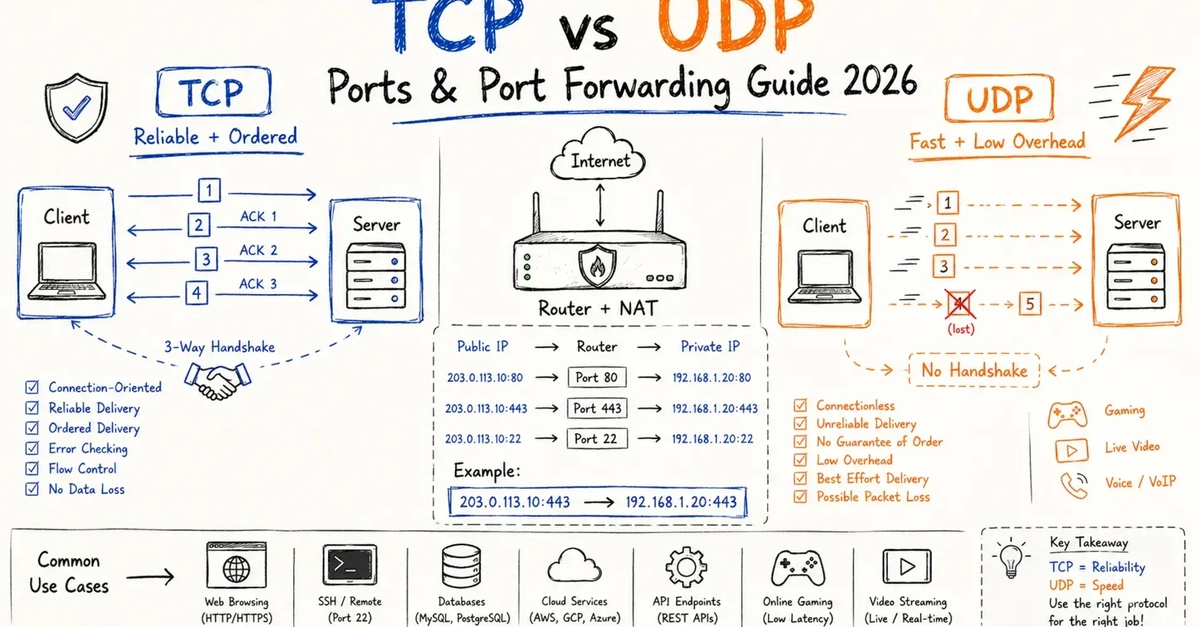
TCP (Transmission Control Protocol) guarantees your data arrives in order, complete, and without errors. It establishes a connection before sending anything and retransmits lost packets automatically.
UDP (User Datagram Protocol) is a fire-and-forget protocol. It sends packets as fast as possible without confirming they arrived - trading reliability for raw speed.
Key differences at a glance: