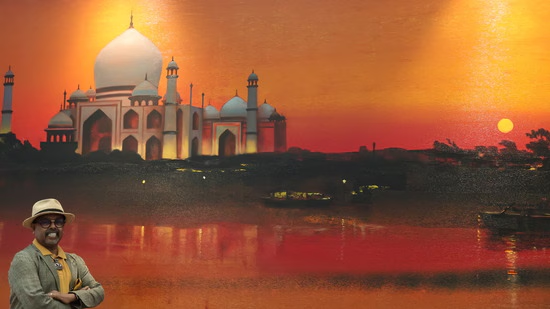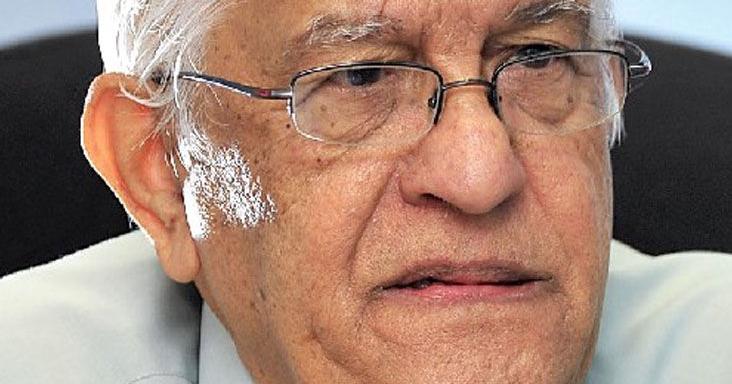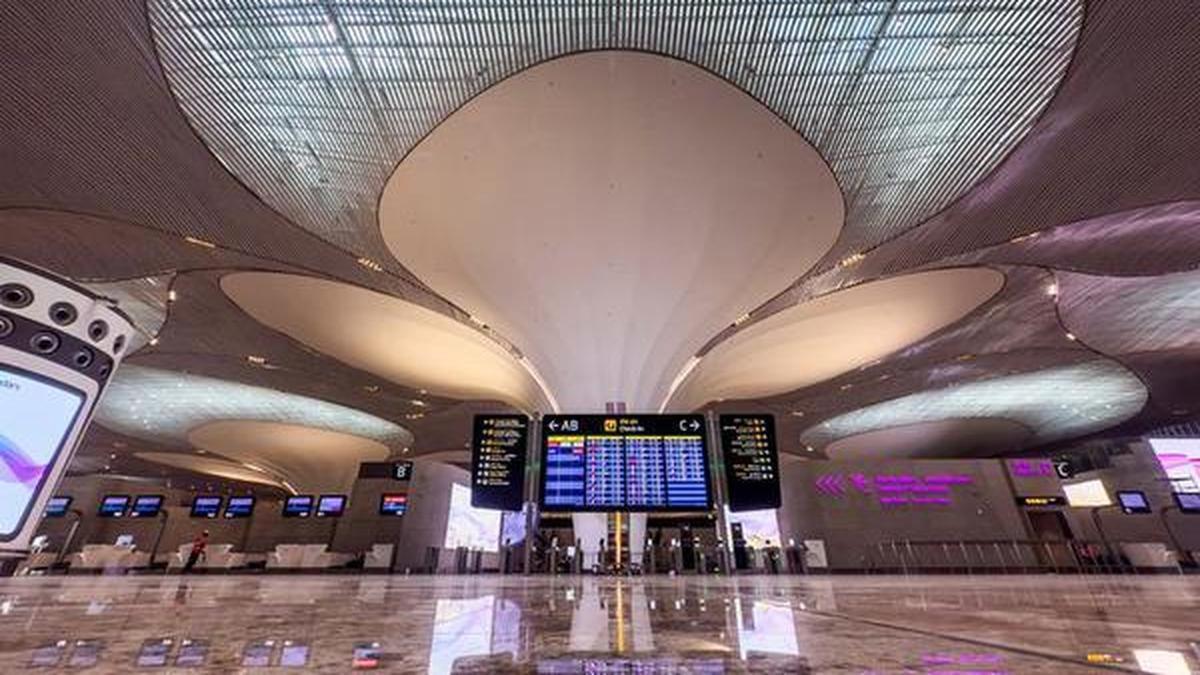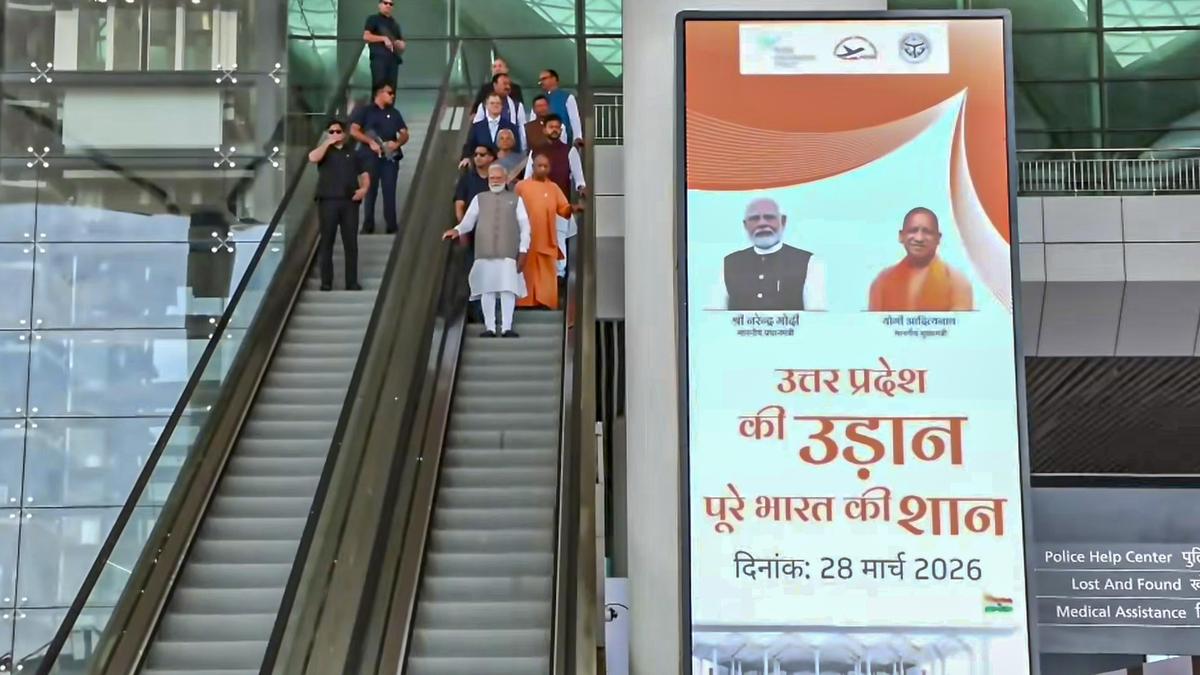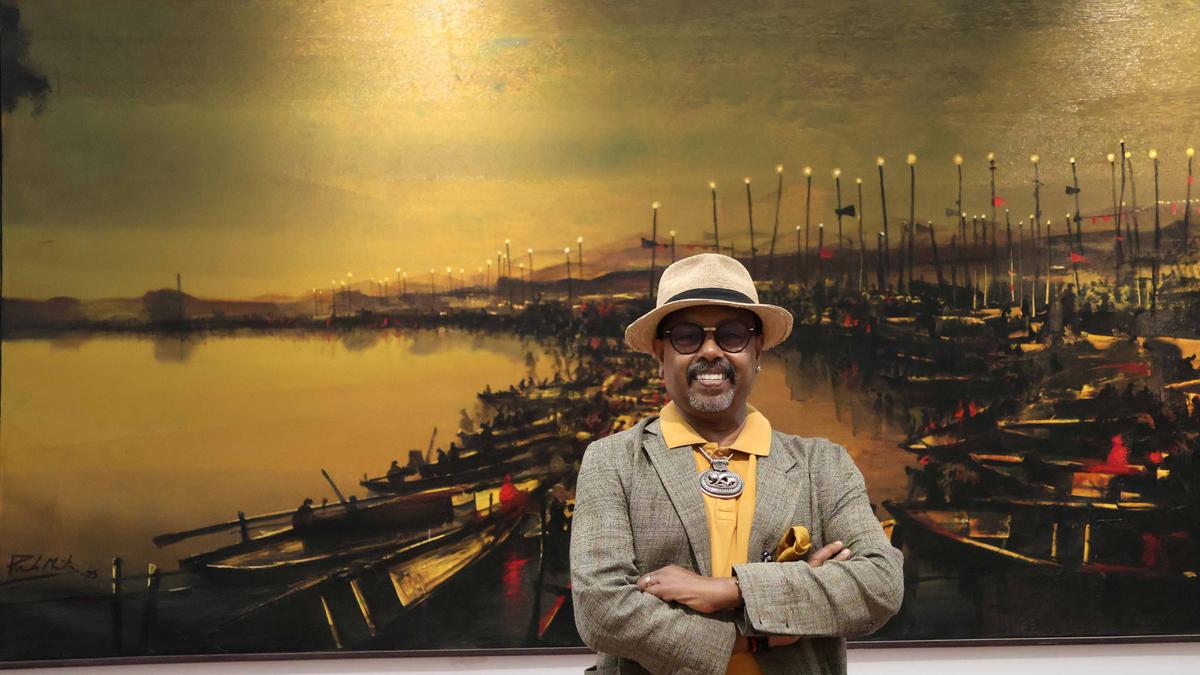
Airports, for travellers, are usually for making connections between destinations. But when Padma Shri awardee and painter Paresh Maity brings his art “to add soul” to a modern hi-tech building, the generic transit hub turns into a welcoming and engaging space.Maity believes that airports make for a unique venue and allow artists to introduce cultural richness and depth of a place to people who may not be from the region or who may not visit museums and galleries. Two years ago, he was commissioned for a project at the upcoming Noida International Airport (NIA) at Jewar in Uttar Pradesh. And, he has come up with what he is best known for — his skill with oil and acrylic on canvas.When the NIA becomes partially operational from June 15 with its first flight to Bengaluru, passengers can experience Maity’s artistry in the main hall of the terminal and carry with them memories of places the State is famous for. He has done a series of six paintings that merge into a single monumental 8x100 ft canvas titled Jagriti (Awakening).What makes his work unique is his colour palette that intuitively moves between the six panels depicting the Taj Mahal in Agra in western UP to the Kumbh Mela in Prayagraj in eastern UP. The vibrant visual narrative also creates scenes from the ghats of Varanasi, the Dhamek Stupa of Sarnath, the Kusum Sarovar near Goverdhan Hill in Mathura, and the old city of Ayodhya.Striking as they are in his inimitable flourish of paint strokes, Maity draws attention to two most important things in his colossal frame, during an art walk at the Noida airport. The six panels are connected by the sacred water bodies – Ganga, Yamuna, Saraswati, and the Sarayu river, he says. “Also, I have depicted all the cities glowing in the magical light of the rising sun; it signifies energy and awakening.”The flow of water and the marvel of sunlight are painted in a way that they appear to move seamlessly from one painting to the next, which starts with the temple-lined ghats in the city of Kashi Vishwanath and ends with the vigour of the biggest gathering of faith, the Mahakumbh. The artwork is grounded in the principle of sadanga. According to traditional Indian philosophy, the classical framework of art has six limbs, namely the form, measurement, expression, the use of colours to create depth, light, and texture, the aesthetic beauty, and similarity to the original.“If you look at the panel, you will see the serenity of our historically rich and culturally significant places, feel the spiritual energy, a sense of tranquility, and an element of devotion,” Maity says. The panel speaks in a distinct visual language of colours and shades reminding viewers of love, simplicity, detachment, the splendour of traditions, and legacy.Maity has also done a 12-and-half-foot experiential installation, the Mystic Abode, with 8,500 brass bells. In the shape of a hut, it is an interactive space with gentle sounds of bells playing in the background. “It represents India’s spiritual and cultural energy. Bells ring in positive energy and create a meditative sensation. People can pause and sit inside to contemplate, reflect within, find solace in chaos; it is transformative,” says Maity, who holds the record for creating the most expansive and individual artworks in Indian airports.His earlier works can be seen at T3 in Delhi’s Indira Gandhi International Airport, where he created an 850-foot-long continuous mural, The Indian Odyssey, that highlights India’s festivals and monuments from Assam to Gujarat and Kashmir to Kanyakumari. At Terminal 1, he has five sculptures, including The Sound of Silence, using 4,000 brass and copper alloy bells to create a human face and, Life’s Journey, a pair of fibre glass white elephants painted in colourful hues. In Mumbai’s T2 of Chhatrapati Shivaji Maharaj International Airport, he has done a three-km art corridor. Maity says every good artist creates what he is. And, his use of colours and larger-than-life figures is his strength.Airports are the finest art galleries that give free access to art for all. The immersive public art not only creates a culture-connect but also helps to ease travel anxieties, reduce stress due to delayed flights, and spark curiosity about vibrant destinations before passengers exit the terminal.Maity’s artworks align with the design philosophy of the state-of-the-art Noida airport building that has included red granite steps in its architecture to reflect the ghats of Benares; the generous roof heights and the aangans (open courtyards) are inspired by the region’s havelis; the seats inside are made of sustainable bamboo material.“Art is universal and meant for all. It brings optimism and puts us face-to-face with our deep-rooted history, culture, and the glory of heritage. In Noida airport, I have created the culture and spirit of Uttar Pradesh,” says the very hands-on artist.
The new Noida International Airport is graced with Paresh Maity’s paintings
Experience Paresh Maity's captivating art at Noida International Airport, blending culture and tranquility for travelers.
799 words~4 min read